Nir Kossovsky - Böcker
Visar alla böcker från författaren Nir Kossovsky. Handla med fri frakt och snabb leverans.
5 produkter
5 produkter
Del 294 - NATO Science Series E:
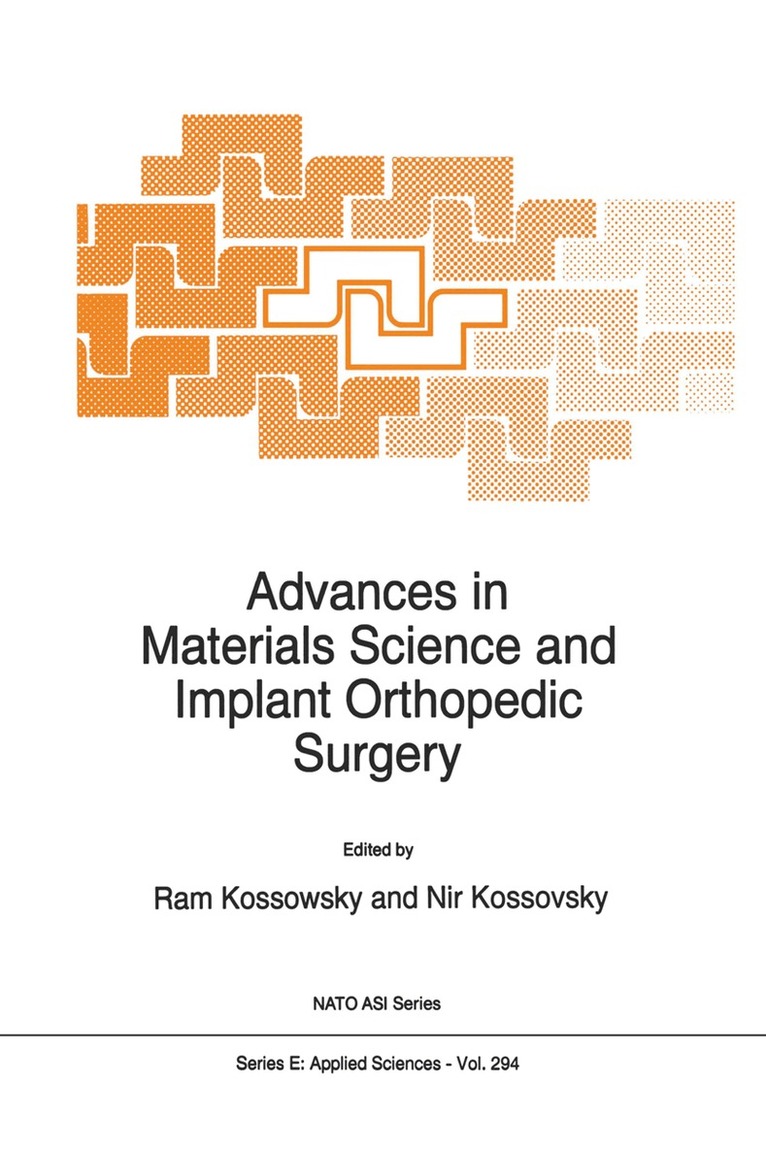
Advances in Materials Science and Implant Orthopedic Surgery
Inbunden, Engelska, 1995
2 164 kr
Skickas inom 10-15 vardagar
This text documents the advances in materials science and implant orthopaedic surgery. Issues addressed include: mechanisms of fixation; foreign-body immune response; generation and consequences of ionic and wear debris; materials selection, design and manufacturing schemes; and surgical techniques to maximize the safety and efficacy of the devices.
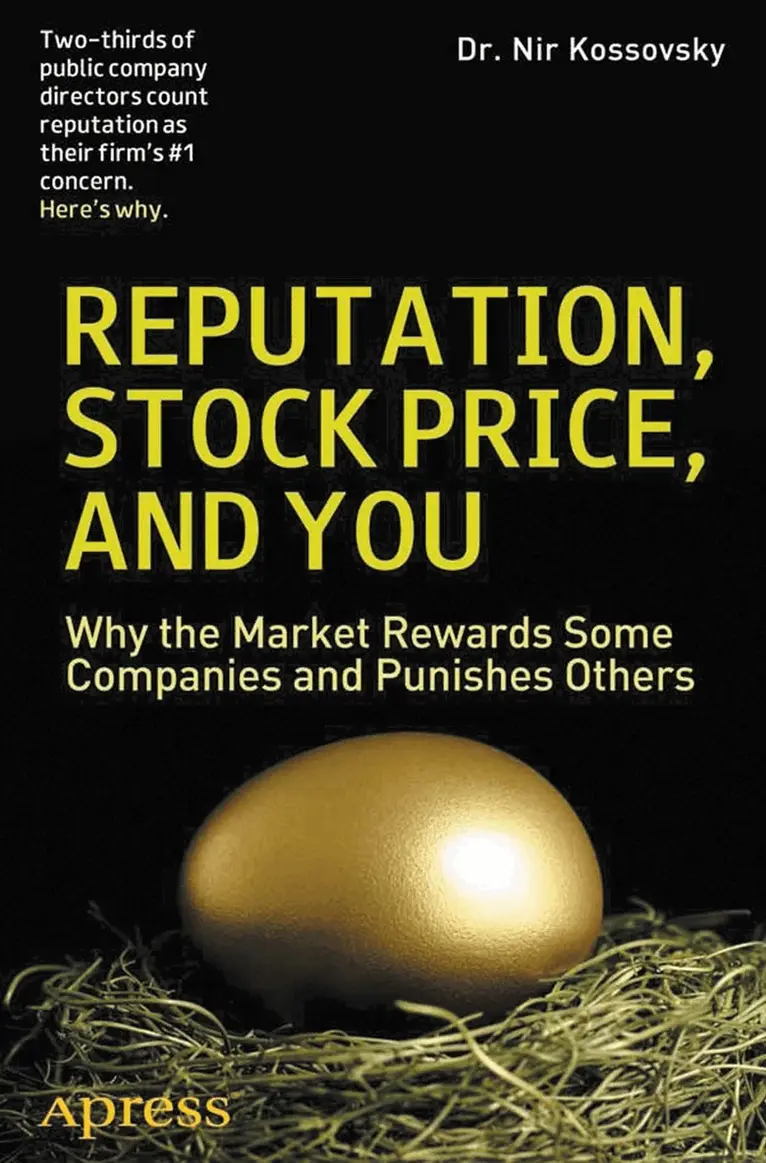
Reputation, Stock Price, and You
Why the Market Rewards Some Companies and Punishes Others
Häftad, Engelska, 2012
386 kr
Skickas inom 10-15 vardagar
“All of our working lives we have heard the mantra, ‘a reputation lost is never regained.’ Still, the firms we work for, admire and invest in seem to take costly reputation hits all too often. Everyone interested in managing, regulating or investing in public firms will find Nir Kossovsky’s book a wonderful read through reputations won, lost and regained over the last 20 years. This is the first book which goes beyond platitudes to explain how to spot value-destroying reputation risk and how to manage it or live with its consequences. Couldn't be more timely.” —Tom Skwarek, Managing Director|Structuring and Solutions Group, Unicredit Bank AG; previously Managing Director|Corporate Strategic Solutions, Swiss Re. “There are fiduciary reasons why corporate directors would benefit from reading this book. There is also a personal benefit. The collapse of a company’s reputation can stain the personal reputation of its directors.”—George Miles, Member of the Board of Directors, AIG, EQT, Harley Davidson, HFF, and Wesco. “Nir Kossovsky has written a gripping tale, first educating the reader by distinguishing between corporate branding and reputation, then alarming us with case histories of mismanagement of corporate reputational crises, and finally reassuring all with a unique solution, i.e., insuring against the risk of reputational loss.”—John H. Bennett, Partner, Global Brand Positioning, previously Chief Marketing Officer, Visa, Inc. “While directors know reputation is important, it often is treated as a vague ‘good’ until something bad happens. Nir Kossovsky does a great job, with many examples, of connecting reputation to stock price and to behaviors, before and after crises. If you are a director, a senior manager, or a regulator, you should read this book and remember the lessons it offers. There is no office which will restore reputation, but careful planning and quick response, as Nir points out,can make a big difference.”—Herbert S. Winokur, Jr., former chairman on Enron’s Board Finance Committee and a director of many for-profits and non-profits A company that takes a hit to its reputation—BP after the Gulf oil spill, Barclays after fiddling LIBOR, News Corp after the phone hacking scandal—enters a world of grief: market value falls along with employee morale, regulatory scrutiny increases, and customers defect and boycott. Reputation, Stock Price, and You: Why the Market Rewards Some Companies and Punishes Others shows how a company’s reputation is created and how reputational value impacts corporate P&L and the personal finances of its many stakeholders. Better yet, it shows what you can do to profit from, increase, protect, monitor, evaluate, restore, and even insure reputational value. If your job, bonus, options, salary, or investments depend on the stock price of a public company—or on the sales, profitability, or value of a private company—you need to read this book to understand the concrete steps you can take to improve your firm’s reputation, reduce risks to its finances and industry standing, and reap the highest reputational dividends. Using dozens of case studies, Reputation, Stock Price, and You: Explains how stakeholders, and their expectations, both shape and are shaped by a company’s reputation Describes how reputations for ethics, innovation, good governance, quality, safety, sustainability, and security are created and lost Explains why both corporate and individual stakeholder behavior affect reputational value Shows how you can influence the expectations and behaviors of stakeholders, which in turn can improve corporate finances, reduce operational risk, and increase stock price or market value Provides sensitive tools for tracking and predicting stock price as a function of reputational value metrics Themajority of directors at U.S. public companies now count reputation as their firm’s #1 concern, and with good reason. A firm with a superior reputation gains many benefits: Customers are more willing to pay higher prices, vendors and employees offer better terms for their services, creditors and equity investors offer better terms for capital, and regulators tend to be more forgiving. This book shows how to achieve and sustain a stellar reputation and how to convert it into its tangible form: reputational value.
Del 116 - NATO Science Series E:
Materials Sciences and Implant Orthopedic Surgery
Inbunden, Engelska, 1986
2 101 kr
Skickas inom 10-15 vardagar
Combining experts from the medical and materials sciences, the Institute considered current concepts in medical and materials sciences as they relate to implantable prostheses in orthopedic surgical practice. The syllabus included theory and applications of materials properties, physiological function, and host response to metal and non-metal materials. Total hip prostheses are the most common orthopedic device implanted today involved in over 200,000 operations. Failures occur at the rate of 10~-40~ at ~ to 10 years. Failures are due to loosening, infection, fracture of femoral components, or destruction of the pe 1 vi c components .' All these, and other problems related to the implantation of the devices, the surgical procedures, and device pathology, were. discussed in light of current, as well as, emerging technologies and scientific knowledge. Repeatedly, scientists designing prostheses became aware of a lack of understanding of physiological phenomena associated with biocompatibility; the interchange among practising physicians, basic scientists, and pathologists at this Institute was appreciated. We thank all the contributors and participants for their effort. Thanks are also due to the personnel of the Scientific Affairs Division of NATO. The daily routines of running the Institute were greatly facilitated by the efforts of Pedro Cuevas, M.D, Jose Gutierrez Diaz, M.D, and Dr. Hanita Kossowsky. The devoted help of Nir Kossovsky, M.D, in setting the conference and in editing this book, is sincerely appreci ated.
2 164 kr
Skickas inom 10-15 vardagar
Advances in Materials Science and Implant Orthopedic Surgery brings together experts from major university hospitals, materials scientists specializing in bio-materials, and development engineers working for implant manufacturers to address such issues as: mechanisms of fixation; foreign-body immune response; generation and consequences of ionic and wear debris; materials selection, design and manufacturing schemes; and surgical techniques to maximize the safety and efficacy of the devices.
2 101 kr
Skickas inom 10-15 vardagar
Combining experts from the medical and materials sciences, the Institute considered current concepts in medical and materials sciences as they relate to implantable prostheses in orthopedic surgical practice. The syllabus included theory and applications of materials properties, physiological function, and host response to metal and non-metal materials. Total hip prostheses are the most common orthopedic device implanted today involved in over 200,000 operations. Failures occur at the rate of 10~-40~ at ~ to 10 years. Failures are due to loosening, infection, fracture of femoral components, or destruction of the pe 1 vi c components .' All these, and other problems related to the implantation of the devices, the surgical procedures, and device pathology, were. discussed in light of current, as well as, emerging technologies and scientific knowledge. Repeatedly, scientists designing prostheses became aware of a lack of understanding of physiological phenomena associated with biocompatibility; the interchange among practising physicians, basic scientists, and pathologists at this Institute was appreciated. We thank all the contributors and participants for their effort. Thanks are also due to the personnel of the Scientific Affairs Division of NATO. The daily routines of running the Institute were greatly facilitated by the efforts of Pedro Cuevas, M.D, Jose Gutierrez Diaz, M.D, and Dr. Hanita Kossowsky. The devoted help of Nir Kossovsky, M.D, in setting the conference and in editing this book, is sincerely appreci ated.