Nitis Mukhopadhyay - Böcker
Visar alla böcker från författaren Nitis Mukhopadhyay. Handla med fri frakt och snabb leverans.
11 produkter
11 produkter
928 kr
Skickas inom 10-15 vardagar
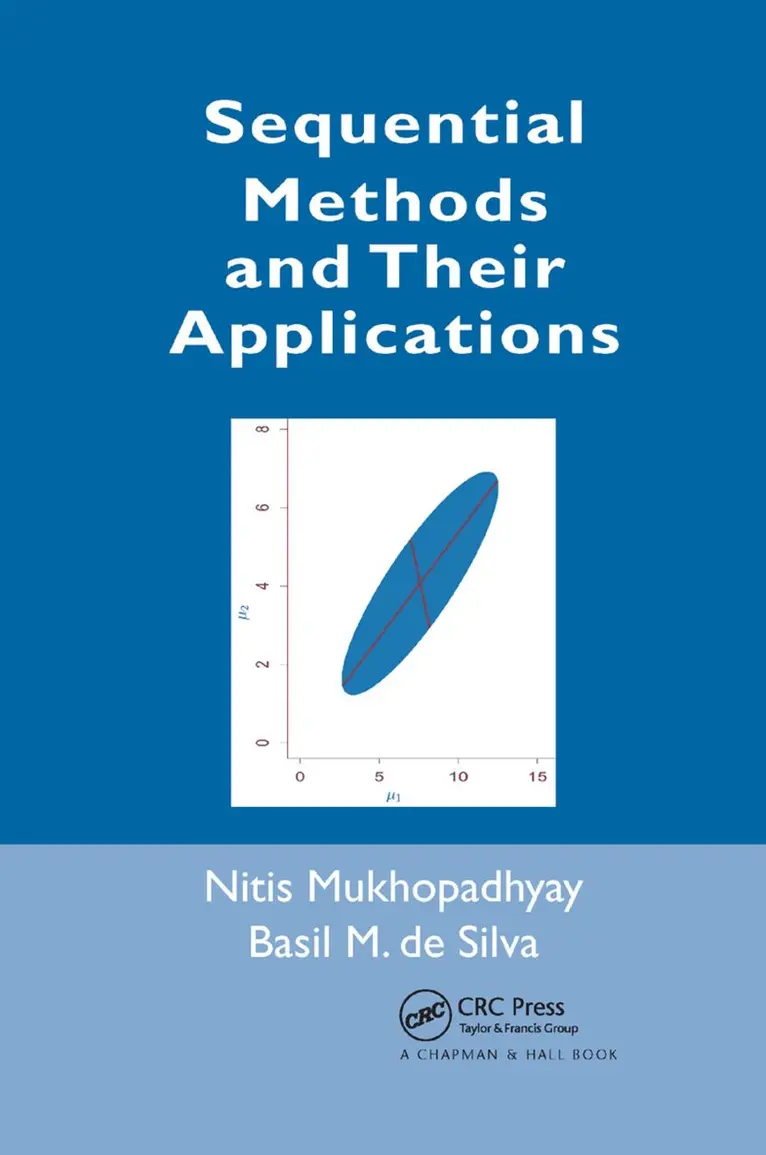
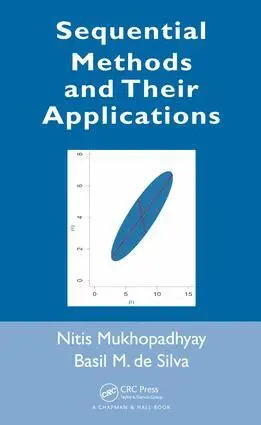
Interactively Run Simulations and Experiment with Real or Simulated Data to Make Sequential Analysis Come AliveTaking an accessible, nonmathematical approach to this field, Sequential Methods and Their Applications illustrates the efficiency of sequential methodologies when dealing with contemporary statistical challenges in many areas.The book first explores fixed sample size, sequential probability ratio, and nonparametric tests. It then presents numerous multistage estimation methods for fixed-width confidence interval as well as minimum and bounded risk problems. The book also describes multistage fixed-size confidence region methodologies, selection methodologies, and Bayesian estimation. Through diverse applications, each chapter provides valuable approaches for performing statistical experiments and facilitating real data analysis.Functional in a variety of statistical problems, the authors’ interactive computer programs show how the methodologies discussed can be implemented in data analysis. Each chapter offers examples of input, output, and their interpretations. Available online, the programs provide the option to save some parts of an output so readers can revisit computer-generated data for further examination with exploratory data analysis.Through this book and its computer programs, readers will better understand the methods of sequential analysis and be able to use them in real-world settings.
928 kr
Skickas inom 10-15 vardagar
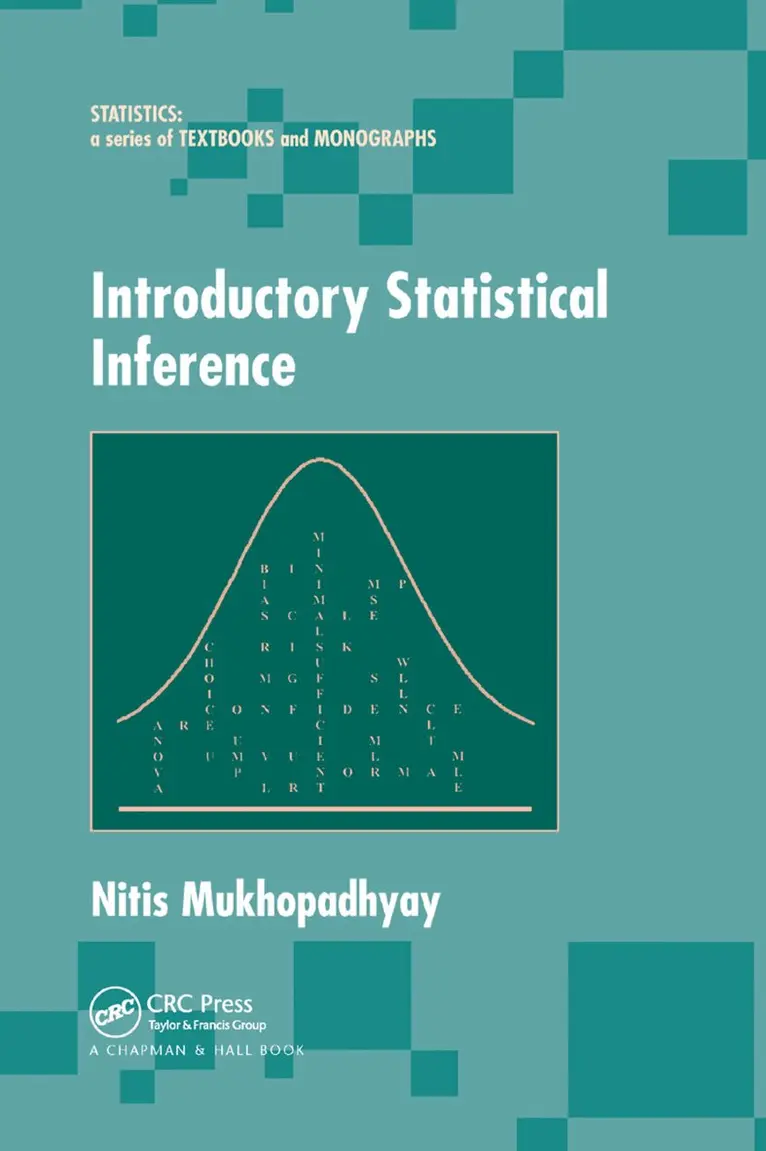
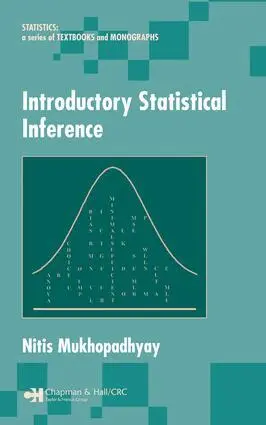
This gracefully organized text reveals the rigorous theory of probability and statistical inference in the style of a tutorial, using worked examples, exercises, figures, tables, and computer simulations to develop and illustrate concepts. Drills and boxed summaries emphasize and reinforce important ideas and special techniques.Beginning with a review of the basic concepts and methods in probability theory, moments, and moment generating functions, the author moves to more intricate topics. Introductory Statistical Inference studies multivariate random variables, exponential families of distributions, and standard probability inequalities. It develops the Helmert transformation for normal distributions, introduces the notions of convergence, and spotlights the central limit theorems. Coverage highlights sampling distributions, Basu's theorem, Rao-Blackwellization and the Cramér-Rao inequality. The text also provides in-depth coverage of Lehmann-Scheffé theorems, focuses on tests of hypotheses, describes Bayesian methods and the Bayes' estimator, and develops large-sample inference. The author provides a historical context for statistics and statistical discoveries and answers to a majority of the end-of-chapter exercises.Designed primarily for a one-semester, first-year graduate course in probability and statistical inference, this text serves readers from varied backgrounds, ranging from engineering, economics, agriculture, and bioscience to finance, financial mathematics, operations and information management, and psychology.
928 kr
Skickas inom 10-15 vardagar
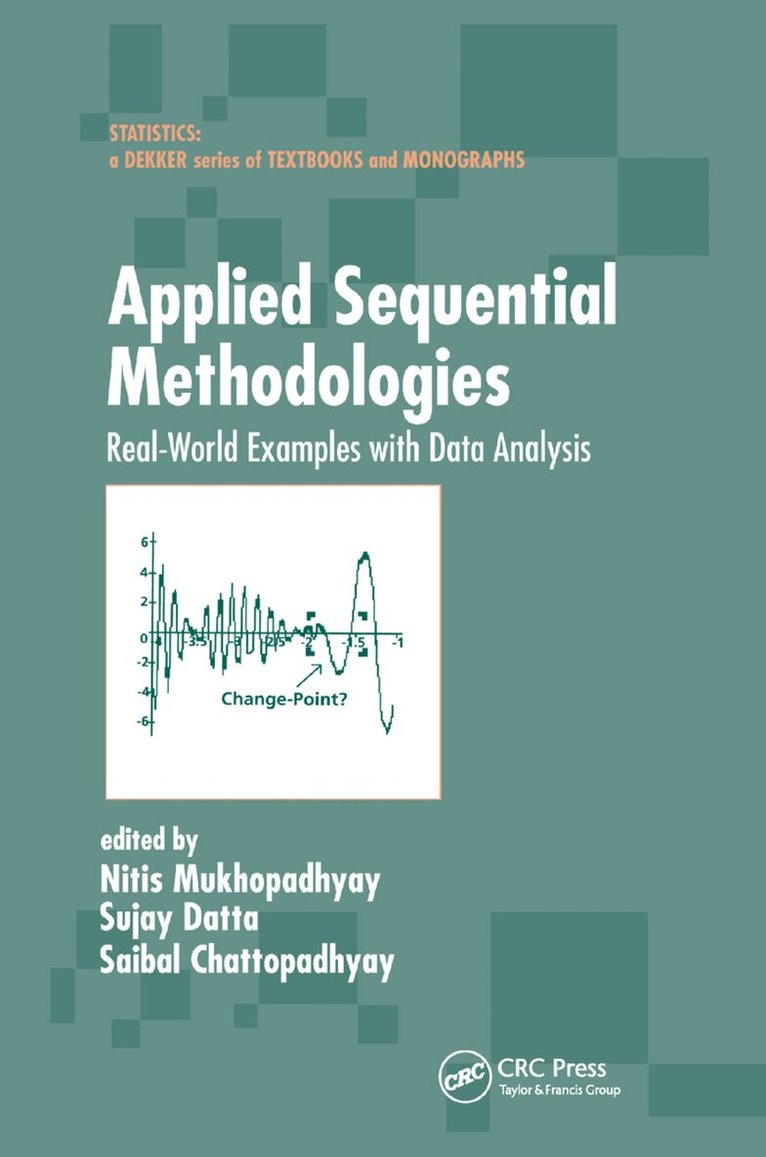
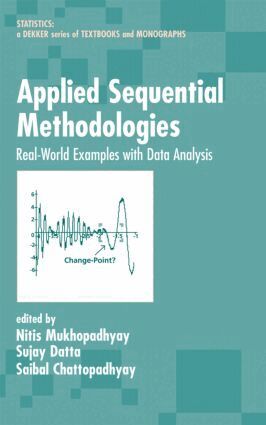
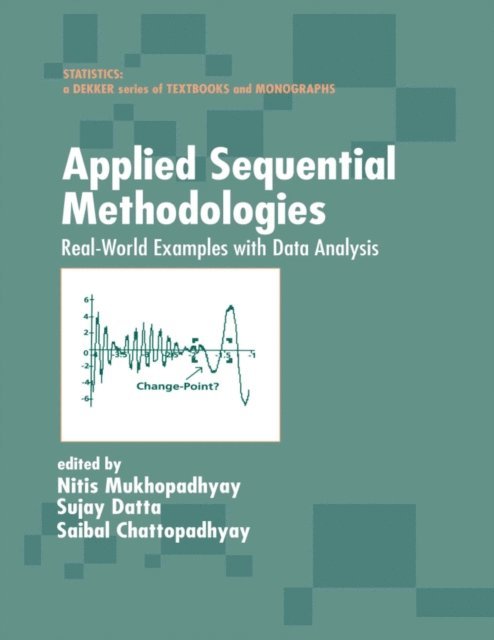
A technically precise yet clear presentation of modern sequential methodologies having immediate applications to practical problems in the real world, Applied Sequential Methodologies communicates invaluable techniques for data mining, agricultural science, genetics, computer simulation, finance, clinical trials, sonar signal detection, randomization, multiple comparisons, psychology, tracking, surveillance, and numerous additional areas of application.Includes more than 500 references, 165 figures and tables, and over 25 pages of subject and author indexes.Applied Sequential Methodologies brings the crucial nature of sequential approaches up to speed with recent theoretical gains, demonstrating their utility for solving real-life problems associated with Change-point detection in multichannel and distributed systems Best component selection for multivariate distributions Multistate processes Approximations for moving sums of discrete random variables Interim and terminal analyses of clinical trials Adaptive designs for longitudinal clinical trials Slope estimation in measurement-error models Tests for randomization and target tracking Appropriate count of simulation runs Stock price models Orders of genes Size and power control in multiple comparisonsAuthored by 33 leading scientists, this volume will greatly benefit sequential analysts, data analysts, applied statisticians, biometricians, clinical trialists, and upper-level undergraduate and graduate students in these disciplines.
712 kr
Skickas inom 10-15 vardagar
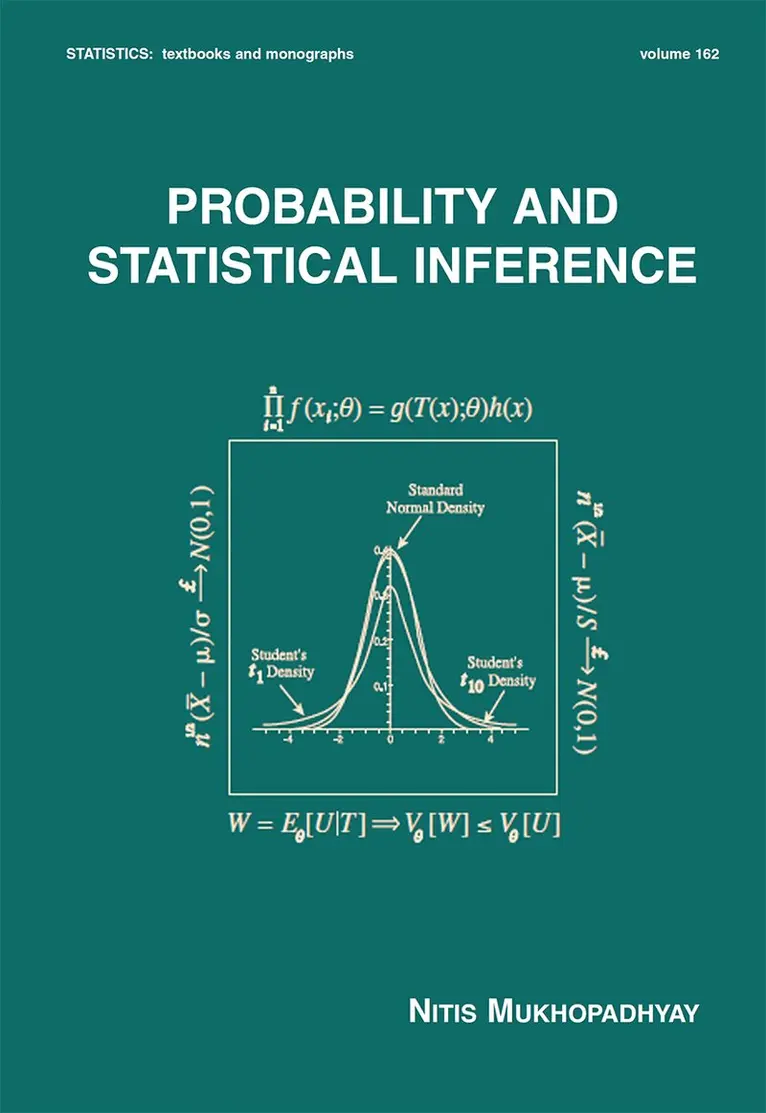
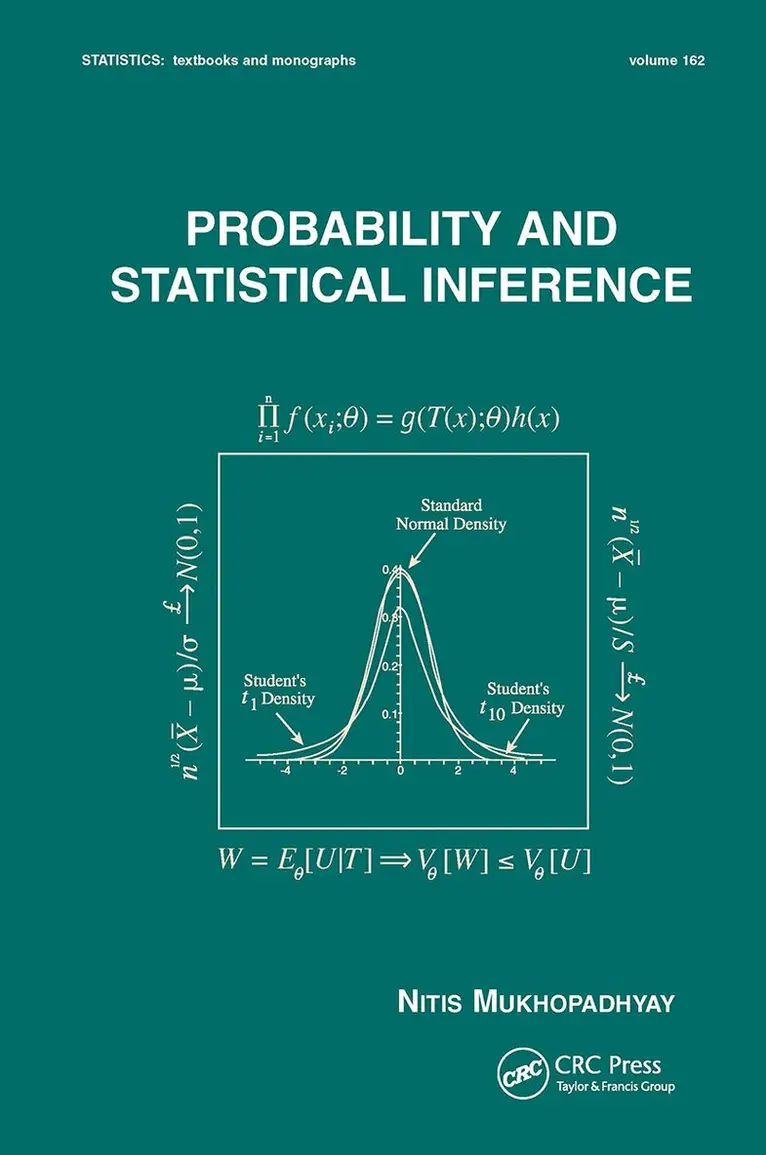
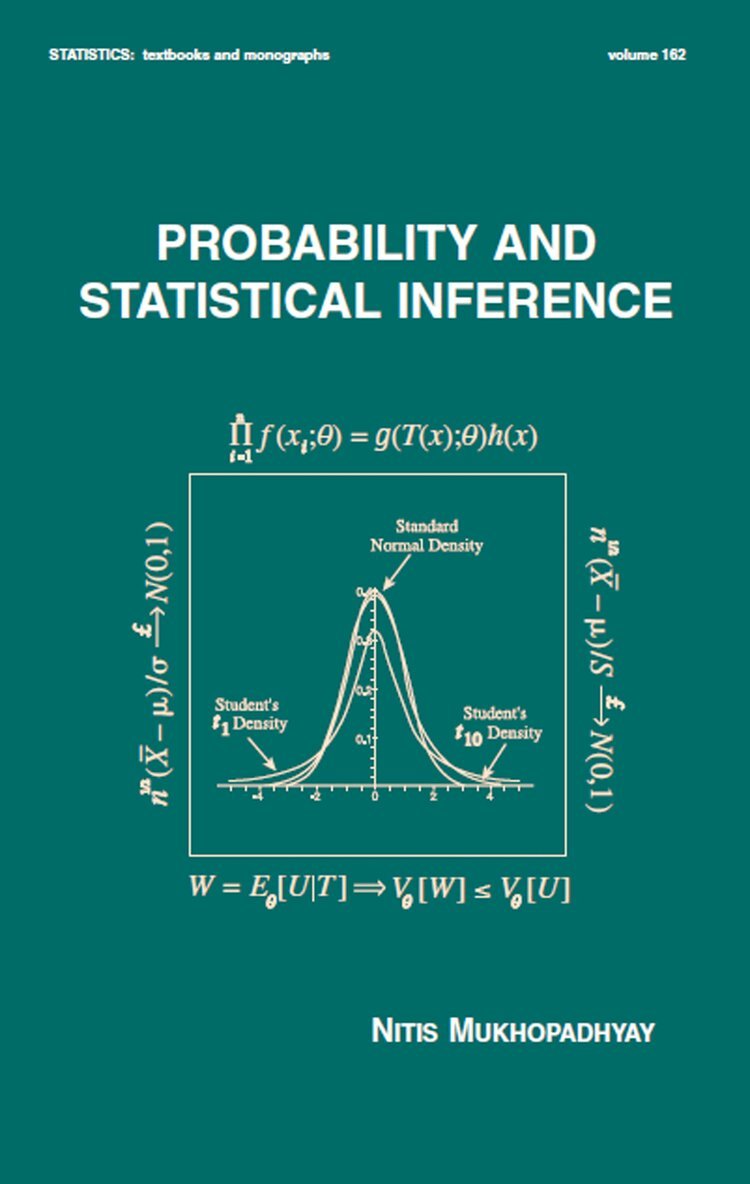
Priced very competitively compared with other textbooks at this level!This gracefully organized textbook reveals the rigorous theory of probability and statistical inference in the style of a tutorial, using worked examples, exercises, numerous figures and tables, and computer simulations to develop and illustrate concepts. Beginning with an introduction to the basic ideas and techniques in probability theory and progressing to more rigorous topics, Probability and Statistical Inferencestudies the Helmert transformation for normal distributions and the waiting time between failures for exponential distributions develops notions of convergence in probability and distribution spotlights the central limit theorem (CLT) for the sample variance introduces sampling distributions and the Cornish-Fisher expansions concentrates on the fundamentals of sufficiency, information, completeness, and ancillarity explains Basu's Theorem as well as location, scale, and location-scale families of distributions covers moment estimators, maximum likelihood estimators (MLE), Rao-Blackwellization, and the Cramér-Rao inequality discusses uniformly minimum variance unbiased estimators (UMVUE) and Lehmann-Scheffé Theorems focuses on the Neyman-Pearson theory of most powerful (MP) and uniformly most powerful (UMP) tests of hypotheses, as well as confidence intervals includes the likelihood ratio (LR) tests for the mean, variance, and correlation coefficient summarizes Bayesian methods describes the monotone likelihood ratio (MLR) property handles variance stabilizing transformations provides a historical context for statistics and statistical discoveries showcases great statisticians through biographical notes Employing over 1400 equations to reinforce its subject matter, Probability and Statistical Inference is a groundbreaking text for first-year graduate and upper-level undergraduate courses in probability and statistical inference who have completed a calculus prerequisite, as well as a supplemental text for classes in Advanced Statistical Inference or Decision Theory.
2 088 kr
Skickas inom 10-15 vardagar
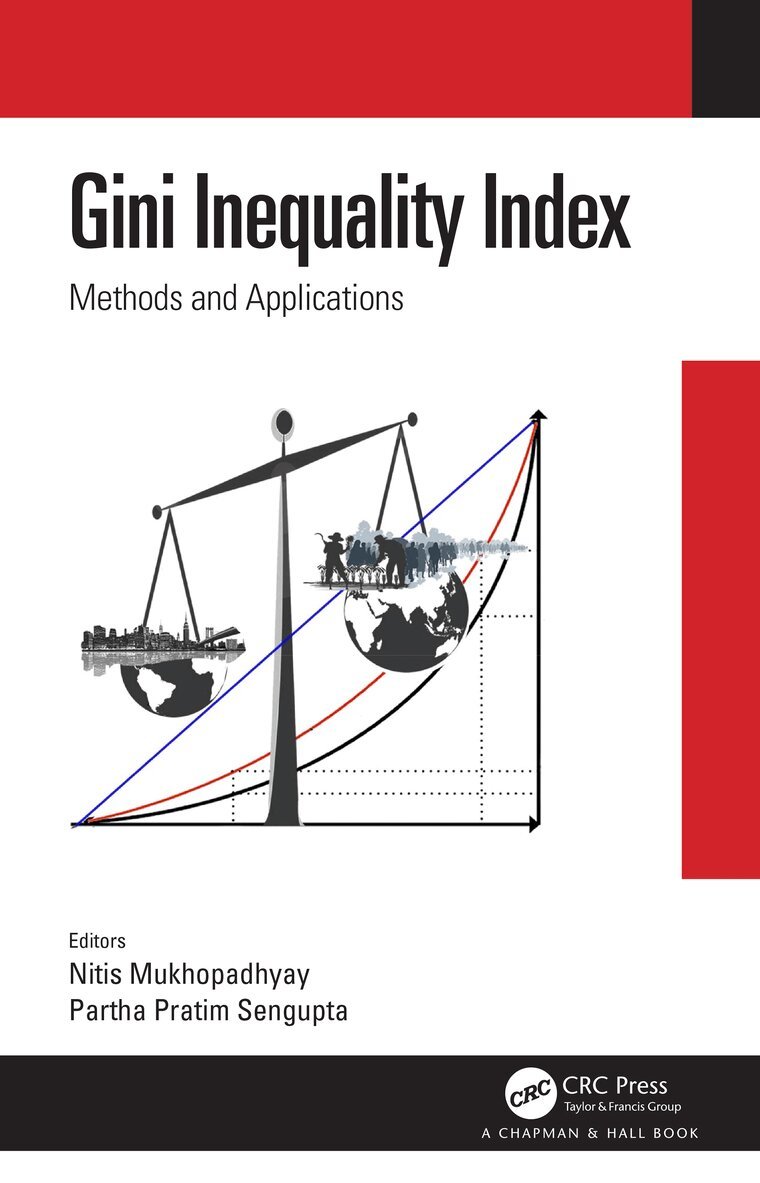
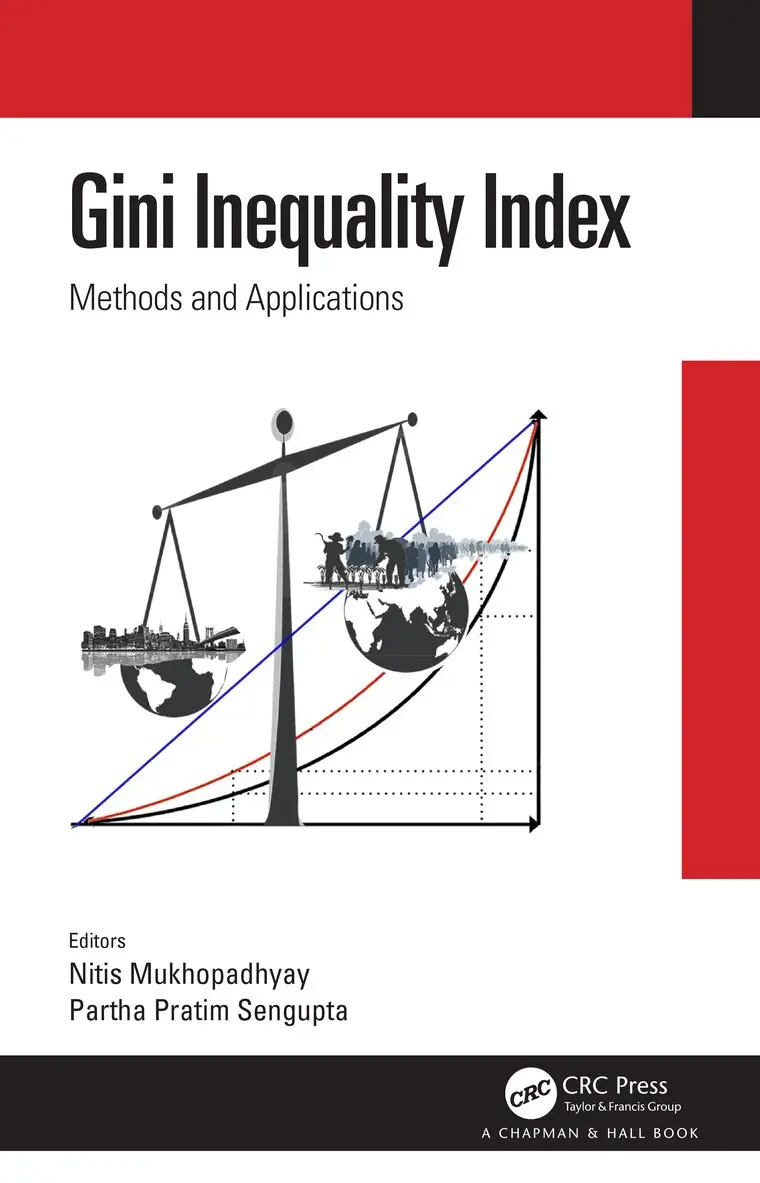
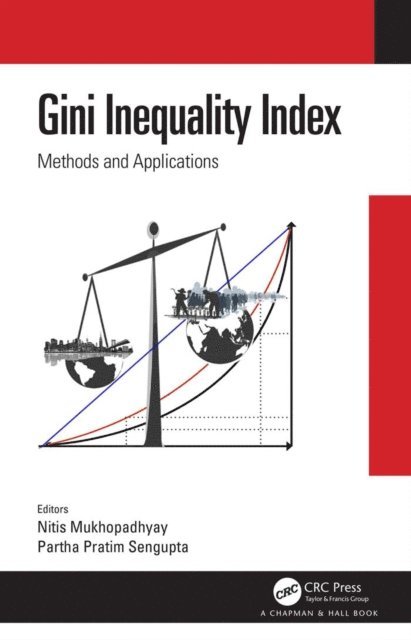
"Prof. Nitis Mukhopadhyay and Prof. Partha Pratim Sengupta, who edited this volume with great attention and rigor, have certainly carried out noteworthy activities." - Giovanni Maria Giorgi, University of Rome (Sapienza)"This book is an important contribution to the development of indices of disparity and dissatisfaction in the age of globalization and social strife." - Shelemyahu Zacks, SUNY-Binghamton"It will not be an overstatement when I say that the famous income inequality index or wealth inequality index, which is most widely accepted across the globe is named after Corrado Gini (1984-1965). ... I take this opportunity to heartily applaud the two co-editors for spending their valuable time and energy in putting together a wonderful collection of papers written by the acclaimed researchers on selected topics of interest today. I am very impressed, and I believe so will be its readers." - K.V. Mardia, University of Leeds Gini coefficient or Gini index was originally defined as a standardized measure of statistical dispersion intended to understand an income distribution. It has evolved into quantifying inequity in all kinds of distributions of wealth, gender parity, access to education and health services, environmental policies, and numerous other attributes of importance. Gini Inequality Index: Methods and Applications features original high-quality peer-reviewed chapters prepared by internationally acclaimed researchers. They provide innovative methodologies whether quantitative or qualitative, covering welfare economics, development economics, optimization/non-optimization, econometrics, air quality, statistical learning, inference, sample size determination, big data science, and some heuristics.Never before has such a wide dimension of leading research inspired by Gini's works and their applicability been collected in one edited volume. The volume also showcases modern approaches to the research of a number of very talented and upcoming younger contributors and collaborators. This feature will give readers a window with a distinct view of what emerging research in this field may entail in the near future.
671 kr
Skickas inom 10-15 vardagar
"Prof. Nitis Mukhopadhyay and Prof. Partha Pratim Sengupta, who edited this volume with great attention and rigor, have certainly carried out noteworthy activities." - Giovanni Maria Giorgi, University of Rome (Sapienza)"This book is an important contribution to the development of indices of disparity and dissatisfaction in the age of globalization and social strife." - Shelemyahu Zacks, SUNY-Binghamton"It will not be an overstatement when I say that the famous income inequality index or wealth inequality index, which is most widely accepted across the globe is named after Corrado Gini (1984-1965). ... I take this opportunity to heartily applaud the two co-editors for spending their valuable time and energy in putting together a wonderful collection of papers written by the acclaimed researchers on selected topics of interest today. I am very impressed, and I believe so will be its readers." - K.V. Mardia, University of Leeds Gini coefficient or Gini index was originally defined as a standardized measure of statistical dispersion intended to understand an income distribution. It has evolved into quantifying inequity in all kinds of distributions of wealth, gender parity, access to education and health services, environmental policies, and numerous other attributes of importance. Gini Inequality Index: Methods and Applications features original high-quality peer-reviewed chapters prepared by internationally acclaimed researchers. They provide innovative methodologies whether quantitative or qualitative, covering welfare economics, development economics, optimization/non-optimization, econometrics, air quality, statistical learning, inference, sample size determination, big data science, and some heuristics.Never before has such a wide dimension of leading research inspired by Gini's works and their applicability been collected in one edited volume. The volume also showcases modern approaches to the research of a number of very talented and upcoming younger contributors and collaborators. This feature will give readers a window with a distinct view of what emerging research in this field may entail in the near future.
2 643 kr
Skickas inom 5-8 vardagar
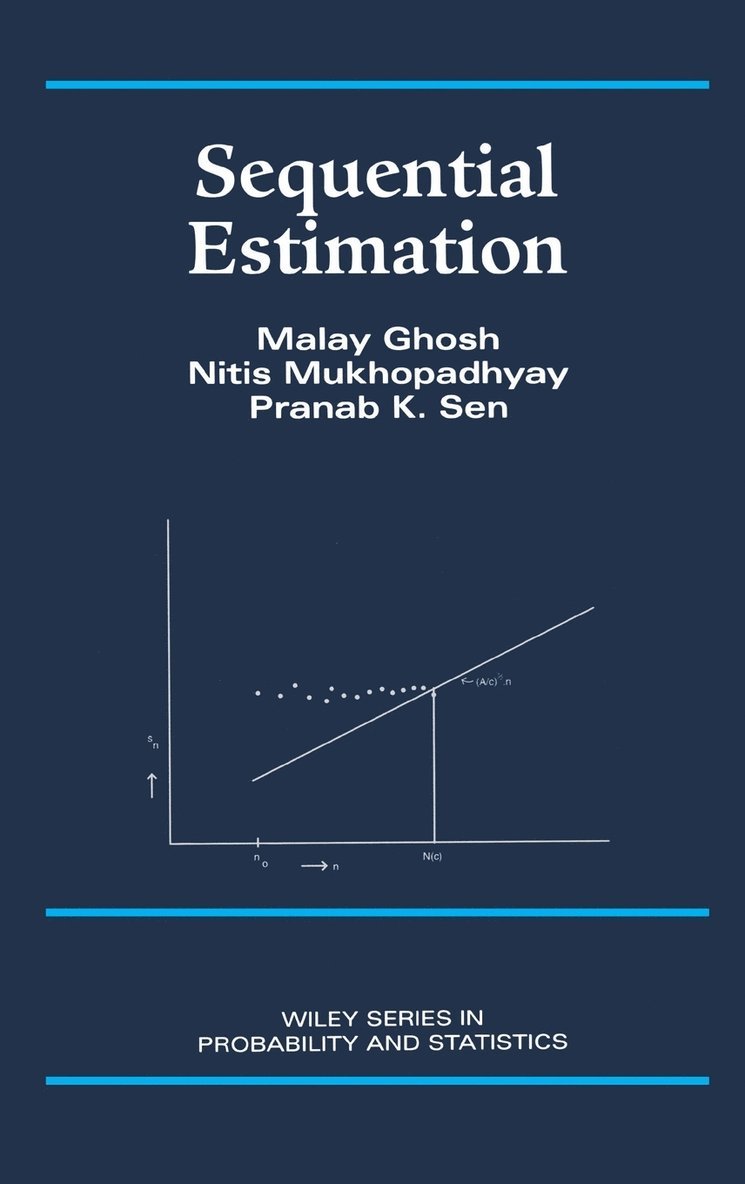
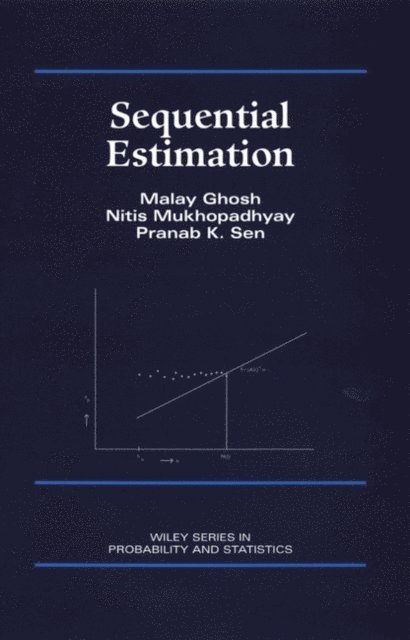
The only comprehensive guide to the theory and practice of one oftoday's most important probabilistic techniques The past 15 years have witnessed many significant advances insequential estimation, especially in the areas of three-stage andnonparametric methodology. Yet, until now, there were no referencesdevoted exclusively to this rapidly growing statisticalfield. Sequential Estimation is the first, single-source guide to thetheory and practice of both classical and modern sequentialestimation techniques--including parametric and nonparametricmethods. Researchers in sequential analysis will appreciate theunified, logically integrated treatment of the subject, as well ascoverage of important contemporary procedures not covered in moregeneral sequential analysis texts, such as:* Shrinkage estimation* Empirical and hierarchical Bayes procedures* Multistage sampling and accelerated sampling procedures* Time-sequential estimation* Sequential estimation in finite population sampling* Reliability estimation and capture-recapture methodologiesleading to sequential tagging schemes An indispensable resource for researchers in sequential analysis,Sequential Estimation is an ideal graduate-level text as well.
2 088 kr
Skickas inom 10-15 vardagar
Priced very competitively compared with other textbooks at this level!This gracefully organized textbook reveals the rigorous theory of probability and statistical inference in the style of a tutorial, using worked examples, exercises, numerous figures and tables, and computer simulations to develop and illustrate concepts. Beginning with an introduction to the basic ideas and techniques in probability theory and progressing to more rigorous topics, Probability and Statistical Inferencestudies the Helmert transformation for normal distributions and the waiting time between failures for exponential distributions develops notions of convergence in probability and distribution spotlights the central limit theorem (CLT) for the sample variance introduces sampling distributions and the Cornish-Fisher expansions concentrates on the fundamentals of sufficiency, information, completeness, and ancillarity explains Basu's Theorem as well as location, scale, and location-scale families of distributions covers moment estimators, maximum likelihood estimators (MLE), Rao-Blackwellization, and the Cramér-Rao inequality discusses uniformly minimum variance unbiased estimators (UMVUE) and Lehmann-Scheffé Theorems focuses on the Neyman-Pearson theory of most powerful (MP) and uniformly most powerful (UMP) tests of hypotheses, as well as confidence intervals includes the likelihood ratio (LR) tests for the mean, variance, and correlation coefficient summarizes Bayesian methods describes the monotone likelihood ratio (MLR) property handles variance stabilizing transformations provides a historical context for statistics and statistical discoveries showcases great statisticians through biographical notes Employing over 1400 equations to reinforce its subject matter, Probability and Statistical Inference is a groundbreaking text for first-year graduate and upper-level undergraduate courses in probability and statistical inference who have completed a calculus prerequisite, as well as a supplemental text for classes in Advanced Statistical Inference or Decision Theory.
2 088 kr
Skickas inom 7-10 vardagar
A technically precise yet clear presentation of modern sequential methodologies having immediate applications to practical problems in the real world, Applied Sequential Methodologies communicates invaluable techniques for data mining, agricultural science, genetics, computer simulation, finance, clinical trials, sonar signal detection, randomization, multiple comparisons, psychology, tracking, surveillance, and numerous additional areas of application.Includes more than 500 references, 165 figures and tables, and over 25 pages of subject and author indexes.Applied Sequential Methodologies brings the crucial nature of sequential approaches up to speed with recent theoretical gains, demonstrating their utility for solving real-life problems associated with Change-point detection in multichannel and distributed systems Best component selection for multivariate distributions Multistate processes Approximations for moving sums of discrete random variables Interim and terminal analyses of clinical trials Adaptive designs for longitudinal clinical trials Slope estimation in measurement-error models Tests for randomization and target tracking Appropriate count of simulation runs Stock price models Orders of genes Size and power control in multiple comparisonsAuthored by 33 leading scientists, this volume will greatly benefit sequential analysts, data analysts, applied statisticians, biometricians, clinical trialists, and upper-level undergraduate and graduate students in these disciplines.
1 886 kr
Skickas inom 10-15 vardagar
This gracefully organized text reveals the rigorous theory of probability and statistical inference in the style of a tutorial, using worked examples, exercises, figures, tables, and computer simulations to develop and illustrate concepts. Drills and boxed summaries emphasize and reinforce important ideas and special techniques.Beginning with a review of the basic concepts and methods in probability theory, moments, and moment generating functions, the author moves to more intricate topics. Introductory Statistical Inference studies multivariate random variables, exponential families of distributions, and standard probability inequalities. It develops the Helmert transformation for normal distributions, introduces the notions of convergence, and spotlights the central limit theorems. Coverage highlights sampling distributions, Basu's theorem, Rao-Blackwellization and the Cramér-Rao inequality. The text also provides in-depth coverage of Lehmann-Scheffé theorems, focuses on tests of hypotheses, describes Bayesian methods and the Bayes' estimator, and develops large-sample inference. The author provides a historical context for statistics and statistical discoveries and answers to a majority of the end-of-chapter exercises.Designed primarily for a one-semester, first-year graduate course in probability and statistical inference, this text serves readers from varied backgrounds, ranging from engineering, economics, agriculture, and bioscience to finance, financial mathematics, operations and information management, and psychology.
2 289 kr
Skickas inom 10-15 vardagar
Interactively Run Simulations and Experiment with Real or Simulated Data to Make Sequential Analysis Come AliveTaking an accessible, nonmathematical approach to this field, Sequential Methods and Their Applications illustrates the efficiency of sequential methodologies when dealing with contemporary statistical challenges in many areas.The book first explores fixed sample size, sequential probability ratio, and nonparametric tests. It then presents numerous multistage estimation methods for fixed-width confidence interval as well as minimum and bounded risk problems. The book also describes multistage fixed-size confidence region methodologies, selection methodologies, and Bayesian estimation. Through diverse applications, each chapter provides valuable approaches for performing statistical experiments and facilitating real data analysis.Functional in a variety of statistical problems, the authors’ interactive computer programs show how the methodologies discussed can be implemented in data analysis. Each chapter offers examples of input, output, and their interpretations. Available online, the programs provide the option to save some parts of an output so readers can revisit computer-generated data for further examination with exploratory data analysis.Through this book and its computer programs, readers will better understand the methods of sequential analysis and be able to use them in real-world settings.