Nitish Monebhurrun – författare
Visar alla böcker från författaren Nitish Monebhurrun. Handla med fri frakt och snabb leverans.
4 produkter
4 produkter
Inbunden, Engelska, 2024
1 603 kr
Skickas inom 10-15 vardagar
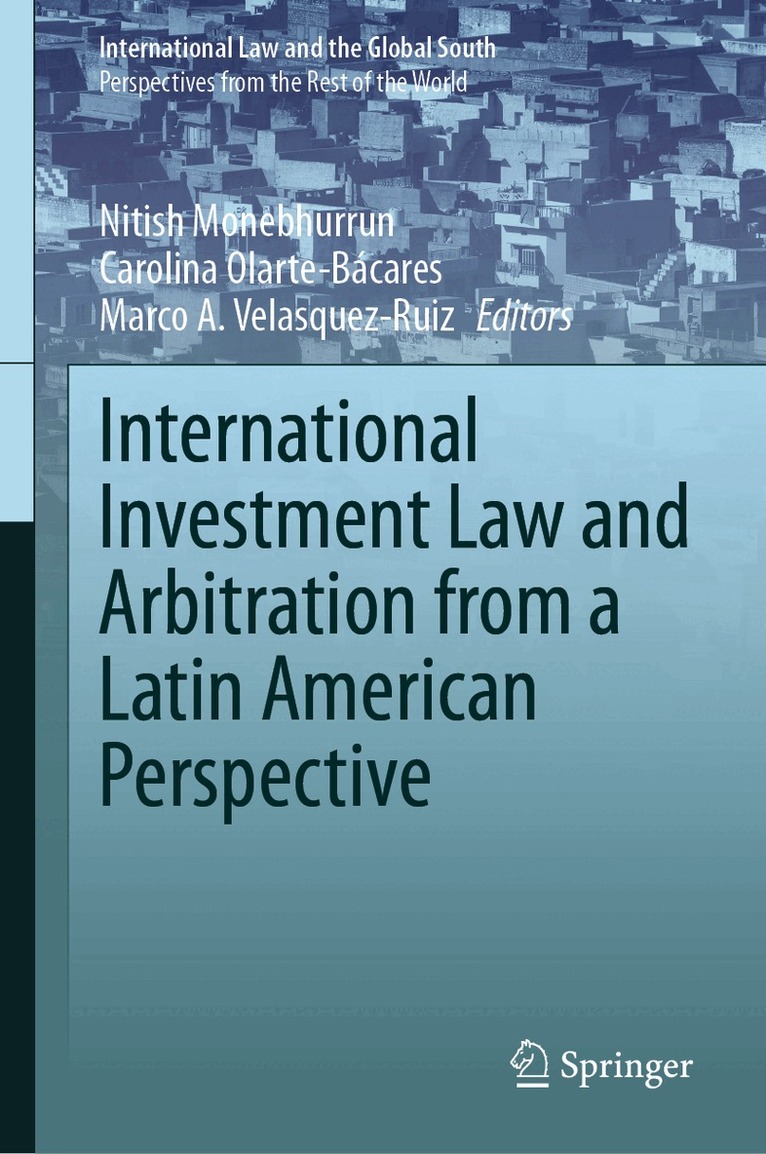
The book brings to light how Latin American states have traditionally stood before the field of International Investment Law and Arbitration. It delves into their posture of resistance to critically examine how their perspective has gradually changed and how they have adapted and molded their investment agreements so as not to leave their position as players in the field of International Investment Law. Many Latin American states have appeared as defendants before international investment tribunals and some of these, like Venezuela, Bolivia or Ecuador, have denounced their international investment agreements. Deeming the law field as imbalanced, they have looked for alternatives to continue providing legal protection to foreign investors while protecting their right to regulate in the name of public interest. Some interesting investment agreements models, sometimes of a different ilk, have consequently flourished and have arrested the attention of those studying or working with international investment law.The main objective of this book is to critically discuss how Latin American states have accepted, resisted, or adapted themselves to international investment law and arbitration. Accordingly, the general connection between these states and international investment law are explained in an introduction which examines the general trends as per which Latin American states have offered a legal protection to foreign investments. The first part enters the merits of where international investment law and arbitration stand in some Latin American states whereby the experience of Brazil, Chile, Argentina, Venezuela, and Uruguay are discussed. The following parts explain the trends in international investment law and arbitration in Latin America. These trends are namely related to dispute settlement and governance, to the connection between investment law and human rights and finally to regionalization. In these parts, the experience of states like Brazil,Colombia, Peru, and Mexico are perused.
1 960 kr
Läs direkt efter köp
The book brings to light how Latin American states have traditionally stood before the field of International Investment Law and Arbitration. It delves into their posture of resistance to critically examine how their perspective has gradually changed and how they have adapted and molded their investment agreements so as not to leave their position as players in the field of International Investment Law. Many Latin American states have appeared as defendants before international investment tribunals and some of these, like Venezuela, Bolivia or Ecuador, have denounced their international investment agreements. Deeming the law field as imbalanced, they have looked for alternatives to continue providing legal protection to foreign investors while protecting their right to regulate in the name of public interest. Some interesting investment agreements models, sometimes of a different ilk, have consequently flourished and have arrested the attention of those studying or working with international investment law.The main objective of this book is to critically discuss how Latin American states have accepted, resisted, or adapted themselves to international investment law and arbitration. Accordingly, the general connection between these states and international investment law are explained in an introduction which examines the general trends as per which Latin American states have offered a legal protection to foreign investments. The first part enters the merits of where international investment law and arbitration stand in some Latin American states whereby the experience of Brazil, Chile, Argentina, Venezuela, and Uruguay are discussed. The following parts explain the trends in international investment law and arbitration in Latin America. These trends are namely related to dispute settlement and governance, to the connection between investment law and human rights and finally to regionalization. In these parts, the experience of states like Brazil,Colombia, Peru, and Mexico are perused.
Häftad, Engelska, 2025
1 603 kr
Skickas inom 10-15 vardagar
The book brings to light how Latin American states have traditionally stood before the field of International Investment Law and Arbitration. It delves into their posture of resistance to critically examine how their perspective has gradually changed and how they have adapted and molded their investment agreements so as not to leave their position as players in the field of International Investment Law. Many Latin American states have appeared as defendants before international investment tribunals and some of these, like Venezuela, Bolivia or Ecuador, have denounced their international investment agreements. Deeming the law field as imbalanced, they have looked for alternatives to continue providing legal protection to foreign investors while protecting their right to regulate in the name of public interest. Some interesting investment agreements models, sometimes of a different ilk, have consequently flourished and have arrested the attention of those studying or working with international investment law.The main objective of this book is to critically discuss how Latin American states have accepted, resisted, or adapted themselves to international investment law and arbitration. Accordingly, the general connection between these states and international investment law are explained in an introduction which examines the general trends as per which Latin American states have offered a legal protection to foreign investments. The first part enters the merits of where international investment law and arbitration stand in some Latin American states whereby the experience of Brazil, Chile, Argentina, Venezuela, and Uruguay are discussed. The following parts explain the trends in international investment law and arbitration in Latin America. These trends are namely related to dispute settlement and governance, to the connection between investment law and human rights and finally to regionalization. In these parts, the experience of states like Brazil,Colombia, Peru, and Mexico are perused.
E-bok
Spanska, 201966 kr
Läs direkt efter köp
Este manual ofrece pistas y técnicas para construir y sustentar una argumentación jurídica convincente y también para incitar a los juristas a no descuidar y descartar el valor del método en sus trabajos. Uno de sus objetivos es demostrar el valor agregado del uso de un método —en especial, del método que el autor plantea— durante un trabajo jurídico.La primera parte del libro se dedica, por tanto, a la presentación de algunas técnicas que pueden ser útiles para la construcción de textos jurídicos como artículos, monografía, disertaciones y tesis, mientras que la segunda parte se enfoca en la explicación de métodos utilizables para comentar la jurisprudencia, que es un ejercicio de una gran relevancia en la elaboración de esos mismos trabajos, pero cuya particularidad le otorga un tratamiento especial y separado en el libro.