Nizam Ahmed – författare
662 kr
Skickas inom 10-15 vardagar
757 kr
Läs direkt efter köp
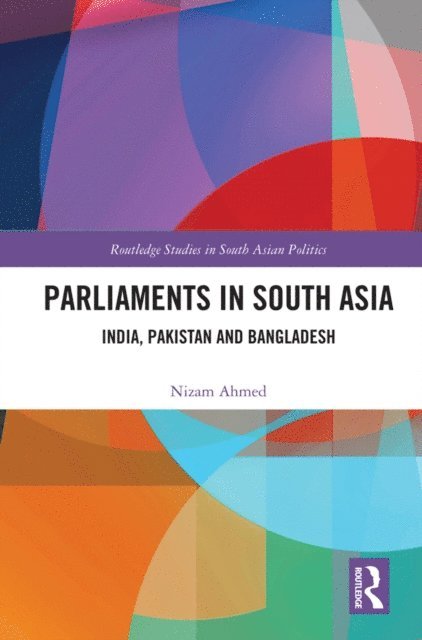
This book explores the development, decline and resurgence of parliaments in India, Pakistan and Bangladesh. Although the three parliaments formally have a common origin and follow almost similar rules and procedures, substantial variations can be observed in their behavior.
By analyzing the nature of memberships, processes of legislation and oversight of the executive, the book assesses the impact of Indian, Pakistani and Bangladeshi parliaments. In addition to identifying the ways in which different institutional actors, particularly the parliament and the judiciary, define their roles and relationships, the book investigates the role of committees and the significance and effect of female legislators. While showing that the parliament in India has had a steady growth since its inception, notwithstanding the allegation that it has declined in recent years, the author also demonstrates the differential performance of the parliaments in Bangladesh and Pakistan. In particular, the parliament in Pakistan is shown to likely be able to upgrade its status from a ‘minimal’ to at least a ‘marginal’ legislature, while the Bangladesh parliament risks becoming a ‘minimal’ legislature.
A valuable resource to use when comparing strategies and outcomes of postcolonial developments in the operation of parliaments, this book will be of interest to academics in the field of political and economic development, governance and South Asian Studies.
757 kr
Läs direkt efter köp
This book explores the development, decline and resurgence of parliaments in India, Pakistan and Bangladesh. Although the three parliaments formally have a common origin and follow almost similar rules and procedures, substantial variations can be observed in their behavior.
By analyzing the nature of memberships, processes of legislation and oversight of the executive, the book assesses the impact of Indian, Pakistani and Bangladeshi parliaments. In addition to identifying the ways in which different institutional actors, particularly the parliament and the judiciary, define their roles and relationships, the book investigates the role of committees and the significance and effect of female legislators. While showing that the parliament in India has had a steady growth since its inception, notwithstanding the allegation that it has declined in recent years, the author also demonstrates the differential performance of the parliaments in Bangladesh and Pakistan. In particular, the parliament in Pakistan is shown to likely be able to upgrade its status from a ‘minimal’ to at least a ‘marginal’ legislature, while the Bangladesh parliament risks becoming a ‘minimal’ legislature.
A valuable resource to use when comparing strategies and outcomes of postcolonial developments in the operation of parliaments, this book will be of interest to academics in the field of political and economic development, governance and South Asian Studies.
756 kr
Skickas inom 10-15 vardagar
619 kr
Läs direkt efter köp
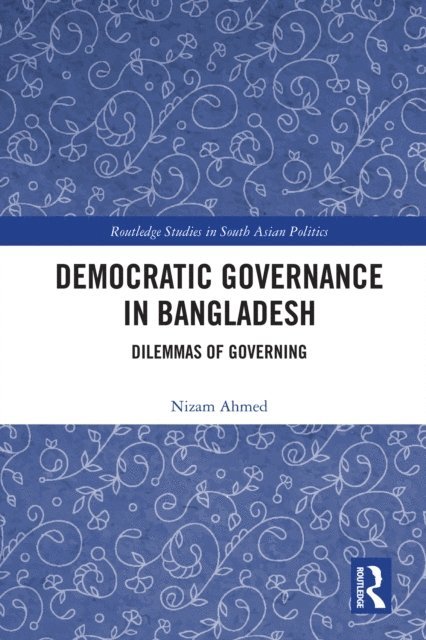
This book explores the role of government in the governing process of Bangladesh. It primarily focuses on the dilemmas and constraints faced by the successive democratic governments elected since the early 1990s.
Bangladesh has had a new democratic beginning since the early 1990s and formally remained a democracy for the last the three decades. Despite impressive performance in the economic and social fields, the country has lagged far behind most of the new democracies in the political realm. This book identifies how representative institutions of governance have gradually declined under democratic governments in Bangladesh, and how disagreements on the ‘basic rules of the game’ have made the task of governing extremely difficult and democratic consolidation problematic.
This book is a significant and comprehensive analysis that identifies and explains the implications of the crises in governance for democratic consolidation in Bangladesh. It will be of interest to academics studying Area Studies, in particular South Asian Studies, and the increasingly researched areas of governance, public policy, and administration.
619 kr
Läs direkt efter köp
This book explores the role of government in the governing process of Bangladesh. It primarily focuses on the dilemmas and constraints faced by the successive democratic governments elected since the early 1990s.
Bangladesh has had a new democratic beginning since the early 1990s and formally remained a democracy for the last the three decades. Despite impressive performance in the economic and social fields, the country has lagged far behind most of the new democracies in the political realm. This book identifies how representative institutions of governance have gradually declined under democratic governments in Bangladesh, and how disagreements on the ‘basic rules of the game’ have made the task of governing extremely difficult and democratic consolidation problematic.
This book is a significant and comprehensive analysis that identifies and explains the implications of the crises in governance for democratic consolidation in Bangladesh. It will be of interest to academics studying Area Studies, in particular South Asian Studies, and the increasingly researched areas of governance, public policy, and administration.
2 381 kr
Skickas inom 10-15 vardagar
691 kr
Skickas inom 10-15 vardagar
643 kr
Skickas inom 10-15 vardagar
891 kr
Läs direkt efter köp
891 kr
Läs direkt efter köp
2 198 kr
Skickas inom 10-15 vardagar
2 482 kr
Skickas inom 10-15 vardagar
572 kr
Skickas inom 10-15 vardagar
2 057 kr
Skickas inom 10-15 vardagar
779 kr
Läs direkt efter köp
779 kr
Läs direkt efter köp
673 kr
Läs direkt efter köp
673 kr
Läs direkt efter köp
1 407 kr
Skickas inom 10-15 vardagar
1 733 kr
Läs direkt efter köp
1 515 kr
Skickas inom 10-15 vardagar
1 416 kr
Läs direkt efter köp
This edited volume explores the state of inclusive governance in South Asia. It particularly examines the nature and scope of inclusiveness noticed in the parliament and civil service in Bangladesh, India, and Nepal, and the judiciary in Bangladesh. Where previous literature has stressed the need for the inclusion of external stakeholders, this volume highlights the importance of the involvement of internal stakeholders. This includes ‘insiders’ such as opposition members and government backbenchers in parliament and specialists in the civil service. The main emphasis is on identifying the extent to which insiders in different institutions have the scope to participate in the governing process. Furthermore, this volume also seeks to assess the implications of inclusiveness/exclusiveness for democratic governance. By exploring the link between inclusiveness and accountability, its contributors are able to draw out the strengths and weaknesses of the existing mechanisms of accountability, particularly social accountability. This innovative collection will appeal to students and scholars of gender and development studies, public policy and administration, international relations, law and political science.
1 295 kr
Skickas inom 10-15 vardagar
1 084 kr
Skickas inom 10-15 vardagar