Noel Rappin – författare
283 kr
Läs direkt efter köp
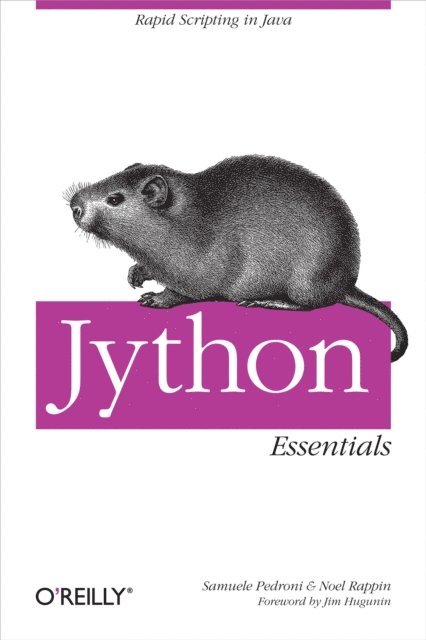
Jython is an implementation of the Python programming language written in 100% pure Java, so it runs under any compliant Java Virtual Machine. The secret to Jython''s popularity lies in the combination of Java''s librariesand tools with Python''s rapid development capabilities. With Jython, you can write Python programs that integrate seamlessly with any Java code. And like Python, Jython can be used interactively, so you can get immediate results as you are programming.Jython Essentials provides a solid introduction to the Python language, offering a brief but thorough tour of the Python concepts you''ll need to understand to use Jython effectively. The book makes frequent comparisonsbetween Python and Java, with special emphasis on the different object-oriented semantics of the two languages, so Java programmers can quickly get up to speed with Jython.Jython Essentials also covers the various ways in which Jython and Java can interact. For example, Jython code can create instances of pre-existing Java classes and call methods in those instances. You can write Jython classes that are direct subclasses of existing Java classesand use introspection to discern the capabilities of JavaBeans components. This book provides examples of using Jython with existing Java libraries, including the Swing GUI toolkit, the JDBC database API, the Servlet API, and various XML tools. And finally, the book shows howJython can be used as a scripting language within a Java program.With Jython Essentials, you have everything you need to start creating applications that mix the best of Python''s interactivity and Java''s robust libraries.
306 kr
Läs direkt efter köp
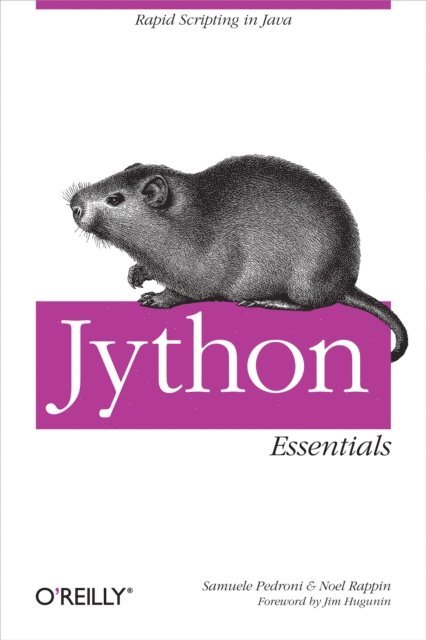
Jython is an implementation of the Python programming language written in 100% pure Java, so it runs under any compliant Java Virtual Machine. The secret to Jython''s popularity lies in the combination of Java''s librariesand tools with Python''s rapid development capabilities. With Jython, you can write Python programs that integrate seamlessly with any Java code. And like Python, Jython can be used interactively, so you can get immediate results as you are programming.Jython Essentials provides a solid introduction to the Python language, offering a brief but thorough tour of the Python concepts you''ll need to understand to use Jython effectively. The book makes frequent comparisonsbetween Python and Java, with special emphasis on the different object-oriented semantics of the two languages, so Java programmers can quickly get up to speed with Jython.Jython Essentials also covers the various ways in which Jython and Java can interact. For example, Jython code can create instances of pre-existing Java classes and call methods in those instances. You can write Jython classes that are direct subclasses of existing Java classesand use introspection to discern the capabilities of JavaBeans components. This book provides examples of using Jython with existing Java libraries, including the Swing GUI toolkit, the JDBC database API, the Servlet API, and various XML tools. And finally, the book shows howJython can be used as a scripting language within a Java program.With Jython Essentials, you have everything you need to start creating applications that mix the best of Python''s interactivity and Java''s robust libraries.
462 kr
Skickas inom 5-8 vardagar
321 kr
Läs direkt efter köp
332 kr
Läs direkt efter köp
403 kr
Läs direkt efter köp
Does your Rails code suffer from bloat, brittleness, or inaccuracy? Cure these problems with the regular application of test-driven development. You''ll use Rails 5.1, Minitest 5, and RSpec 3.6, as well as popular testing libraries such as factory_girl and Cucumber. Updates include Rails 5.1 system tests and Webpack integration. Do what the doctor ordered to make your applications feel all better. Side effects may include better code, fewer bugs, and happier developers.
Your Ruby on Rails application is sick. Deadlines are looming, but every time you make the slightest change to the code, something else breaks. Nobody remembers what that tricky piece of code was supposed to do, and nobody can tell what it actually does. Plus, it has bugs. You need test-driven development: a process for improving the design, maintainability, and long-term viability of software.
With both practical code examples and discussion of why testing works, this book starts with the most basic features delivered as part of core Ruby on Rails. Once you''ve integrated those features into your coding practice, work with popular third-party testing tools such as RSpec, Jasmine, Cucumber, and factory_girl. Test the component parts of a Rails application, including the back-end model logic and the front-end display logic. With Rails examples, use testing to enable your code to respond better to future change. Plus, see how to handle real-world testing situations.
This new edition has been updated to Rails 5.1 and RSpec 3.6 and contains full coverage of new Rails features, including system tests and the Webpack-based JavaScript setup.
What You Need:
Ruby 2.4, Rails 5.1
414 kr
Läs direkt efter köp
Does your Rails code suffer from bloat, brittleness, or inaccuracy? Cure these problems with the regular application of test-driven development. You''ll use Rails 5.1, Minitest 5, and RSpec 3.6, as well as popular testing libraries such as factory_girl and Cucumber. Updates include Rails 5.1 system tests and Webpack integration. Do what the doctor ordered to make your applications feel all better. Side effects may include better code, fewer bugs, and happier developers.
Your Ruby on Rails application is sick. Deadlines are looming, but every time you make the slightest change to the code, something else breaks. Nobody remembers what that tricky piece of code was supposed to do, and nobody can tell what it actually does. Plus, it has bugs. You need test-driven development: a process for improving the design, maintainability, and long-term viability of software.
With both practical code examples and discussion of why testing works, this book starts with the most basic features delivered as part of core Ruby on Rails. Once you''ve integrated those features into your coding practice, work with popular third-party testing tools such as RSpec, Jasmine, Cucumber, and factory_girl. Test the component parts of a Rails application, including the back-end model logic and the front-end display logic. With Rails examples, use testing to enable your code to respond better to future change. Plus, see how to handle real-world testing situations.
This new edition has been updated to Rails 5.1 and RSpec 3.6 and contains full coverage of new Rails features, including system tests and the Webpack-based JavaScript setup.
What You Need:
Ruby 2.4, Rails 5.1
232 kr
Läs direkt efter köp
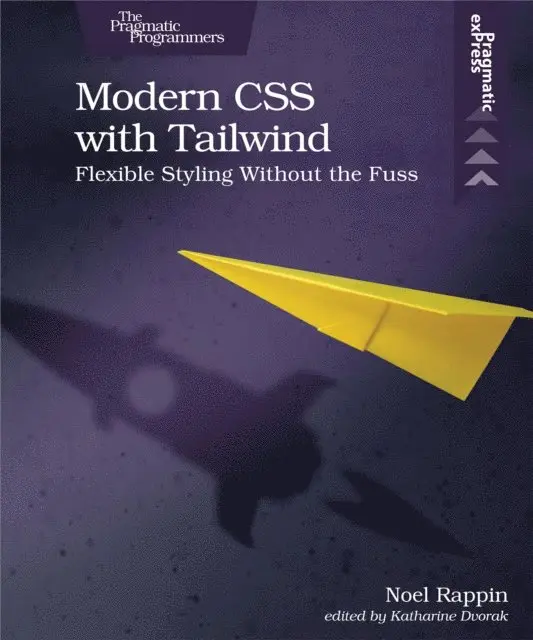
Tailwind CSS is an exciting new CSS framework that allows you to design your site by composing simple utility classes to create complex effects. With Tailwind, you can style your text, move your items on the page, design complex page layouts, and adapt your design for devices from a phone to a wide-screen monitor. With this book, you''ll learn how to use the Tailwind for its flexibility and its consistency, from the smallest detail of your typography to the entire design of your site.
With CSS, you can do amazing things to the basic text and images on your website, and with just a little bit of client-side code to add and remove CSS classes, you can do exponentially more. CSS can also be hard to debug, complicated to write, and hard to maintain - Ã??Ã?Âbut it doesn''t have to be. With Tailwind, you can minimize the amount of CSS you need to write, making it easier to control and debug, and yet still enjoy full flexibility and consistency across your site. Use Tailwind to build complex page layouts, add responsive design that adjusts to different screen widths, and dramatically reduce the amount of CSS you need.
The Tailwind setup is extremely explicit, and makes it possible to understand the display just by looking at the HTML markup. Start by designing the typographic details of the individual elements, then placing and manipulating those elements in "the box" - the rectangle of space each element takes up on screen - using a flexbox or grid design. Move those elements around the page with helpful small animations and transitions. With Tailwind, it''s easy to prototype, iterate, and customize your display. Use prefixes to specify behavior. Change defaults, add new behavior, or integrate with legacy CSS.
Use Tailwind to make extraordinary web designs without extraordinary effort.
What You Need:
This book is about Tailwind 2.0. You need to be able to install Ruby on Rails to run the sample app.
294 kr
Skickas inom 5-8 vardagar
538 kr
Skickas inom 5-8 vardagar
630 kr
Skickas inom 5-8 vardagar
263 kr
Läs direkt efter köp
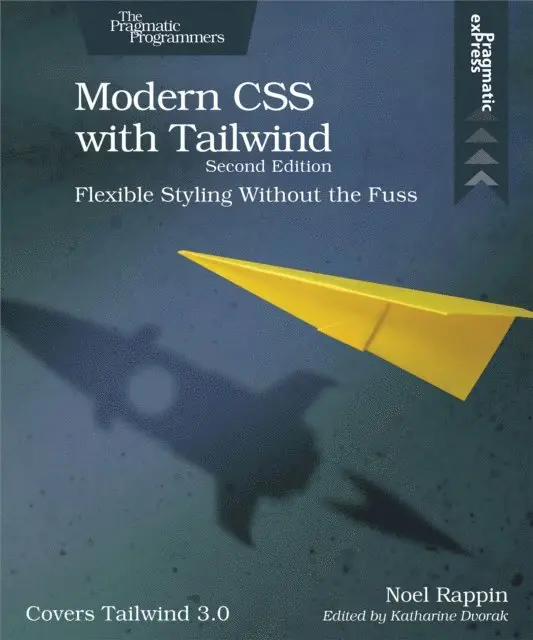
This new edition of the book covers Tailwind 3.0, which changes the way Tailwind generates its CSS. Tailwind 3.0 has a large number of new features powered by the new system, including the ability to use arbitrary values with most Tailwind class patterns, and a new syntax for combining color and opacity in a single class. This book also covers the new standalone command-line tools for Tailwind.
With CSS, you can do amazing things to the basic text and images on your website, and with just a little bit of client-side code to add and remove CSS classes, you can do exponentially more.
In the latest edition of this book, you''ll learn how to use Tailwind 3.0 and the new way it generates CSS. You''ll code your way through Tailwind''s newest features, including the ability to use arbitrary values with most Tailwind class patterns and a new syntax for combining color and opacity in a single class. You''ll even dive into the new standalone command-line tools for Tailwind.
The Tailwind setup is extremely explicit and makes it possible to understand the display just by looking at the HTML markup. Start by designing the typographic details of the individual elements, then placing and manipulating those elements in "the box" using a flexbox or grid design. Finally, move those elements around the page with helpful small animations and transitions.
With Tailwind, it''s easy to prototype, iterate, and IPSize your display, use prefixes to specify behavior, change defaults, add new behavior, and integrate with legacy CSS.
Use Tailwind to make extraordinary web designs without extraordinary effort.
What You Need:
This book is about Tailwind 3.0. You should have a basic knowledge of CSS and HTML.
263 kr
Läs direkt efter köp
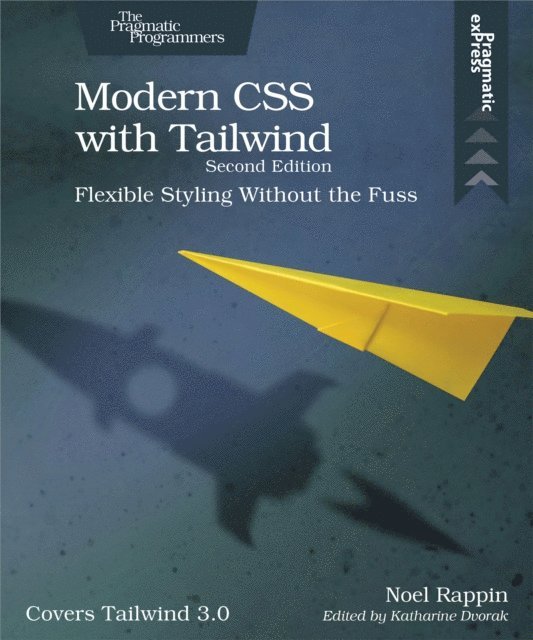
This new edition of the book covers Tailwind 3.0, which changes the way Tailwind generates its CSS. Tailwind 3.0 has a large number of new features powered by the new system, including the ability to use arbitrary values with most Tailwind class patterns, and a new syntax for combining color and opacity in a single class. This book also covers the new standalone command-line tools for Tailwind.
With CSS, you can do amazing things to the basic text and images on your website, and with just a little bit of client-side code to add and remove CSS classes, you can do exponentially more.
In the latest edition of this book, you''ll learn how to use Tailwind 3.0 and the new way it generates CSS. You''ll code your way through Tailwind''s newest features, including the ability to use arbitrary values with most Tailwind class patterns and a new syntax for combining color and opacity in a single class. You''ll even dive into the new standalone command-line tools for Tailwind.
The Tailwind setup is extremely explicit and makes it possible to understand the display just by looking at the HTML markup. Start by designing the typographic details of the individual elements, then placing and manipulating those elements in "the box" using a flexbox or grid design. Finally, move those elements around the page with helpful small animations and transitions.
With Tailwind, it''s easy to prototype, iterate, and IPSize your display, use prefixes to specify behavior, change defaults, add new behavior, and integrate with legacy CSS.
Use Tailwind to make extraordinary web designs without extraordinary effort.
What You Need:
This book is about Tailwind 3.0. You should have a basic knowledge of CSS and HTML.
483 kr
Läs direkt efter köp
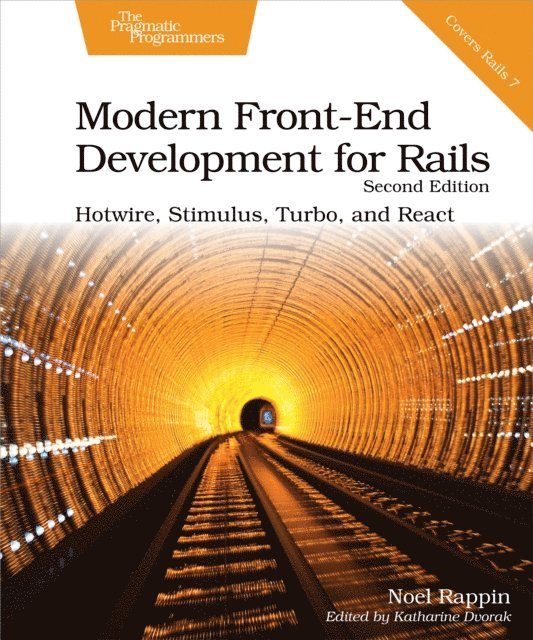
Improve the user experience for your Rails app with rich, engaging client-side interactions. Learn to use the Rails 7 tools and simplify the complex JavaScript ecosystem. It''s easier than ever to build user interactions with Hotwire, Turbo, and Stimulus. You can add great front-end flair without much extra complication. Use React to build a more complex set of client-side features. Structure your code for different levels of client-side needs with these powerful options. Add to your toolkit today!
It''s hard to have a Rails application without integrating some client-side logic. But client-side coding tools, and the Rails tools for integrating with them, all change continuously. Rails 7 simplifies client-side integration with the Hotwire gem. It''s a great way to build client interaction with server-side HTML and a small amount of JavaScript.
In the latest edition of this book, learn how to use Rails 7 and its front-end bundling tools to build rich front-end logic into your Rails applications. The job is even easier with Stimulus, a library that brings Rails conventions to JavaScript tools. And you can also add in React, a larger framework that automatically updates the browser when your data changes.
Learn the basics of Turbo, Stimulus, and TypeScript, and add pizazz to your application. Structure your web application to best manage your state. Learn how to interact with data on the server while still keeping the user experience interactive. Use the type system in TypeScript to expand on JavaScript and help prevent error conditions. Debug and test your front-end application with tools specific to each framework.
There are a lot of ways to do client-side coding, and Rails is here to help.
What You Need:
This book requires Ruby on Rails 7.0 or later, React 17.0.0 or later. Other dependencies will be added by Rails.
483 kr
Läs direkt efter köp
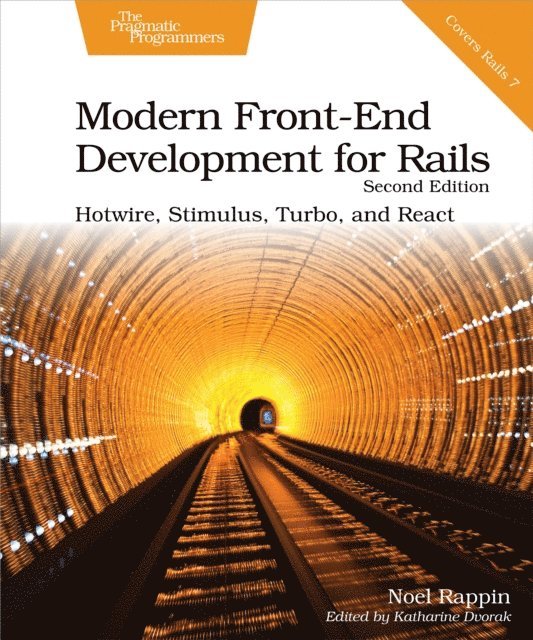
Improve the user experience for your Rails app with rich, engaging client-side interactions. Learn to use the Rails 7 tools and simplify the complex JavaScript ecosystem. It''s easier than ever to build user interactions with Hotwire, Turbo, and Stimulus. You can add great front-end flair without much extra complication. Use React to build a more complex set of client-side features. Structure your code for different levels of client-side needs with these powerful options. Add to your toolkit today!
It''s hard to have a Rails application without integrating some client-side logic. But client-side coding tools, and the Rails tools for integrating with them, all change continuously. Rails 7 simplifies client-side integration with the Hotwire gem. It''s a great way to build client interaction with server-side HTML and a small amount of JavaScript.
In the latest edition of this book, learn how to use Rails 7 and its front-end bundling tools to build rich front-end logic into your Rails applications. The job is even easier with Stimulus, a library that brings Rails conventions to JavaScript tools. And you can also add in React, a larger framework that automatically updates the browser when your data changes.
Learn the basics of Turbo, Stimulus, and TypeScript, and add pizazz to your application. Structure your web application to best manage your state. Learn how to interact with data on the server while still keeping the user experience interactive. Use the type system in TypeScript to expand on JavaScript and help prevent error conditions. Debug and test your front-end application with tools specific to each framework.
There are a lot of ways to do client-side coding, and Rails is here to help.
What You Need:
This book requires Ruby on Rails 7.0 or later, React 17.0.0 or later. Other dependencies will be added by Rails.
570 kr
Läs direkt efter köp
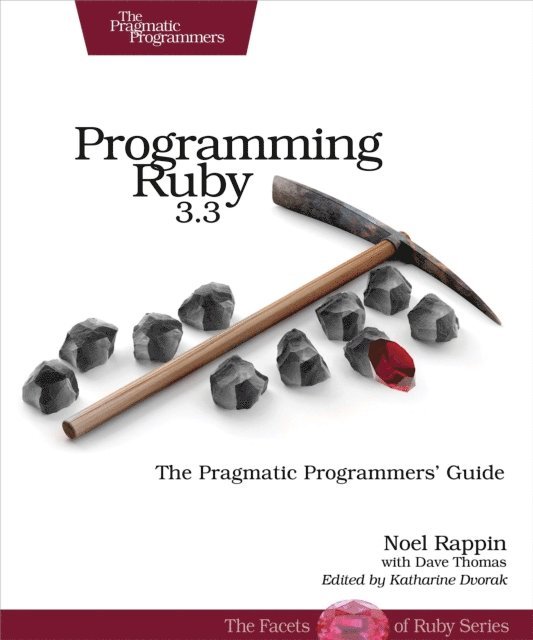
Ruby is one of the most important programming languages in use for web development. It powers the Rails framework, which is the backing of some of the most important sites on the web. The Pickaxe Book, named for the tool on the cover, is the definitive reference on Ruby, a highly-regarded, fully object-oriented programming language. This updated edition is a comprehensive reference on the language itself, with a tutorial on the most important features of Ruby - including pattern matching and Ractors - and describes the language through Ruby 3.3.
Would you like to go from first idea to working code much, much faster? Do you currently spend more time satisfying the compiler instead of your clients or end users? Are you frustrated with demanding languages that seem to get in your way instead of helping you get the work done? Are you using Rails and want to dig deeper into the underlying Ruby language? If so, then we''ve got a language and book for you!
Ruby is a fully object-oriented language. The combination of the power of a pure object-oriented language with the convenience of a scripting language makes Ruby a favorite tool of programmers that want to get things done quickly and cleanly.
This comprehensive reference manual for Ruby includes a description of the most important standard library modules, built-in classes, and modules. It also includes all the new and changed syntax and semantics introduced through Ruby 3.3, including pattern matching and Ractors, and describes the language through Ruby 3.3.
What You Need:
This book assumes you have a basic understanding of object-oriented programming.In general, Ruby programmers tend to favor the the command line for running their code, and they tend to use text editors rather than IDEs.Ruby runs on Windows, Linux, and MacOS.689 kr
Läs direkt efter köp
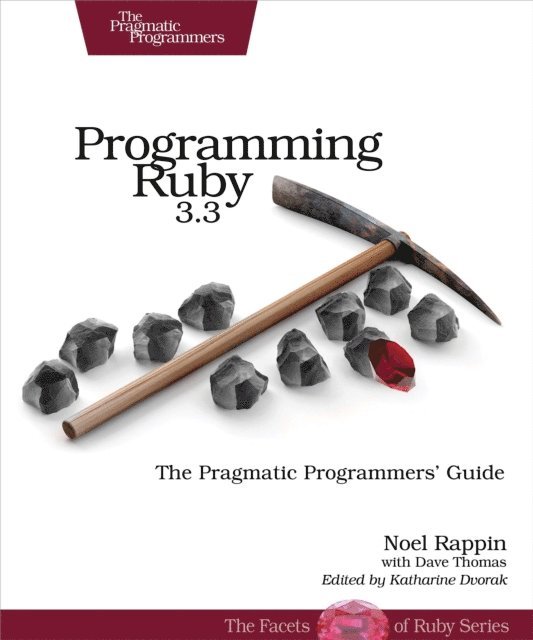
Ruby is one of the most important programming languages in use for web development. It powers the Rails framework, which is the backing of some of the most important sites on the web. The Pickaxe Book, named for the tool on the cover, is the definitive reference on Ruby, a highly-regarded, fully object-oriented programming language. This updated edition is a comprehensive reference on the language itself, with a tutorial on the most important features of Ruby - including pattern matching and Ractors - and describes the language through Ruby 3.3.
Would you like to go from first idea to working code much, much faster? Do you currently spend more time satisfying the compiler instead of your clients or end users? Are you frustrated with demanding languages that seem to get in your way instead of helping you get the work done? Are you using Rails and want to dig deeper into the underlying Ruby language? If so, then we''ve got a language and book for you!
Ruby is a fully object-oriented language. The combination of the power of a pure object-oriented language with the convenience of a scripting language makes Ruby a favorite tool of programmers that want to get things done quickly and cleanly.
This comprehensive reference manual for Ruby includes a description of the most important standard library modules, built-in classes, and modules. It also includes all the new and changed syntax and semantics introduced through Ruby 3.3, including pattern matching and Ractors, and describes the language through Ruby 3.3.
What You Need:
This book assumes you have a basic understanding of object-oriented programming.In general, Ruby programmers tend to favor the the command line for running their code, and they tend to use text editors rather than IDEs.Ruby runs on Windows, Linux, and MacOS.