Nora McKeon – författare
2 176 kr
Skickas inom 10-15 vardagar
637 kr
Skickas inom 10-15 vardagar
847 kr
Skickas inom 10-15 vardagar
737 kr
Läs direkt efter köp
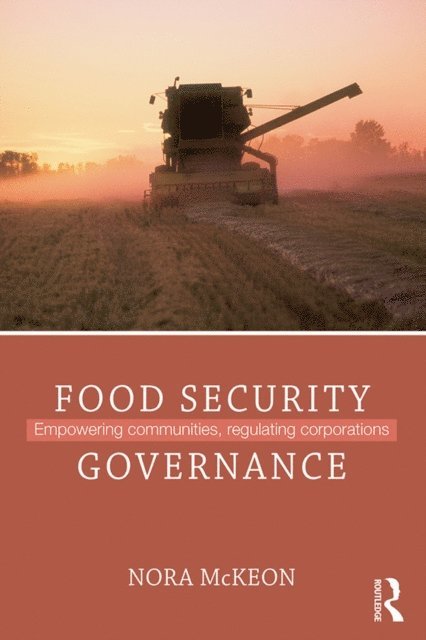
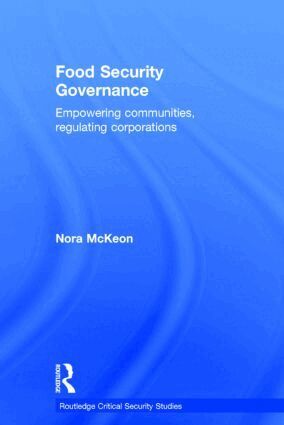
This book fills a gap in the literature by setting food security in the context of evolving global food governance.
Today’s food system generates hunger alongside of food waste, burgeoning health problems, massive greenhouse gas emissions. Applying food system analysis to review how the international community has addressed food issues since World War II, this book proceeds to explain how actors link up in corporate global food chains and in the local food systems that feed most of the world’s population. It unpacks relevant paradigms – from productivism to food sovereignty – and highlights the significance of adopting a rights-based approach to solving food problems. The author describes how communities around the world are protecting their access to resources and building better ways of producing and accessing food, and discusses the reformed Committee on World Food Security, a uniquely inclusive global policy forum, and how it could be supportive of efforts from the base. The book concludes by identifying terrains on which work is needed to adapt the practice of the democratic public sphere and accountable governance to a global dimension and extend its authority to the world of markets and corporations.
This book will be of interest to students of food security, global governance, development studies and critical security studies in general.
730 kr
Läs direkt efter köp
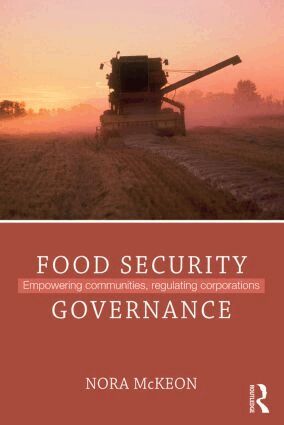
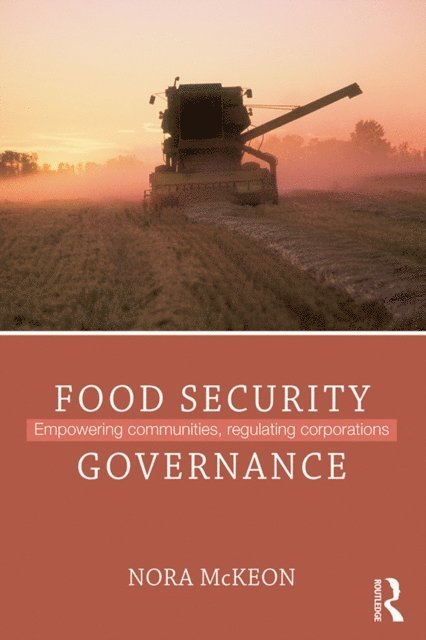
This book fills a gap in the literature by setting food security in the context of evolving global food governance.
Today’s food system generates hunger alongside of food waste, burgeoning health problems, massive greenhouse gas emissions. Applying food system analysis to review how the international community has addressed food issues since World War II, this book proceeds to explain how actors link up in corporate global food chains and in the local food systems that feed most of the world’s population. It unpacks relevant paradigms – from productivism to food sovereignty – and highlights the significance of adopting a rights-based approach to solving food problems. The author describes how communities around the world are protecting their access to resources and building better ways of producing and accessing food, and discusses the reformed Committee on World Food Security, a uniquely inclusive global policy forum, and how it could be supportive of efforts from the base. The book concludes by identifying terrains on which work is needed to adapt the practice of the democratic public sphere and accountable governance to a global dimension and extend its authority to the world of markets and corporations.
This book will be of interest to students of food security, global governance, development studies and critical security studies in general.
974 kr
Läs direkt efter köp
Land grabbing per se is not a new phenomenon, given its historical precedents in the eras of imperialism. However, the character, scale, pace, orientation and key drivers of the recent wave of land grabs is a distinct historical event closely tied to the changing dynamics of the global agri-food, feed and fuel complex.
Land grabbing is facilitated by ever greater flows of capital, goods, and ideas across borders, and these flows occur through axes of power that are far more polycentric than the North-South imperialist tradition. Land grabs occur in the context of changes in the character of the global food regime, formerly anchored by North Atlantic empires; the integrated food-energy complex seems to be headed towards multiple centres of power, especially with the rise of the BRICS and the proliferation of middle income countries participating in many of the land transactions.
Land Grabbing and Global Governance offers insights from leading scholars and experts on contemporary land grabs. This volume examines land grabs in direct relation to a global economy undergoing profound change and the role of new configurations of actors and power in governance institutions and practices.
This book was published as a special issue of Globalizations.
974 kr
Läs direkt efter köp
Land grabbing per se is not a new phenomenon, given its historical precedents in the eras of imperialism. However, the character, scale, pace, orientation and key drivers of the recent wave of land grabs is a distinct historical event closely tied to the changing dynamics of the global agri-food, feed and fuel complex.
Land grabbing is facilitated by ever greater flows of capital, goods, and ideas across borders, and these flows occur through axes of power that are far more polycentric than the North-South imperialist tradition. Land grabs occur in the context of changes in the character of the global food regime, formerly anchored by North Atlantic empires; the integrated food-energy complex seems to be headed towards multiple centres of power, especially with the rise of the BRICS and the proliferation of middle income countries participating in many of the land transactions.
Land Grabbing and Global Governance offers insights from leading scholars and experts on contemporary land grabs. This volume examines land grabs in direct relation to a global economy undergoing profound change and the role of new configurations of actors and power in governance institutions and practices.
This book was published as a special issue of Globalizations.
2 806 kr
Skickas inom 10-15 vardagar
1 246 kr
Skickas inom 10-15 vardagar
503 kr
Skickas inom 10-15 vardagar
531 kr
Läs direkt efter köp
531 kr
Läs direkt efter köp