Noriko Hara - Böcker
Visar alla böcker från författaren Noriko Hara. Handla med fri frakt och snabb leverans.
5 produkter
5 produkter
Global Wikipedia
International and Cross-Cultural Issues in Online Collaboration
Inbunden, Engelska, 2014
1 245 kr
Skickas inom 10-15 vardagar
Dozens of books about Wikipedia are available, but they all focus on the English Wikipedia and assume an Anglo-Saxon perspective, while disregarding cultural and language variability or multi-cultural collaborative efforts. They address the impact of Wikipedia on society, processes of mass knowledge production, and the dynamics of the Wikipedia community. However, none of them focus on Wikipedia’s global features. This lack of attention presents a serious problem because more than 80% of Wikipedia articles are written in languages other than English---in fact, Wikipedia includes articles in 285 languages. Global Wikipedia: International and Cross-Cultural Issues in Online Collaboration is the first book to address this gap by focusing attention on the global, multilingual, and multicultural aspects of Wikipedia. The editors showcase research on Wikipedia, exploring a wide range of international and cross-cultural issues. Online global collaboration, coordination, and conflict management are examined in this rich socio technical environment. Special emphases includeInternational and cross-cultural collaboration; Intercultural synergy on Wikimedia;Conflict and collaboration in editing international entries; Case studies of Chinese, Finnish, French, and Greek Wikipedias; and, Cross-cultural studies that compare more than one Wikipedia, focusing on content, structures, policies, contributions, interactions, processes, motivations, and challenges.
594 kr
Skickas inom 10-15 vardagar
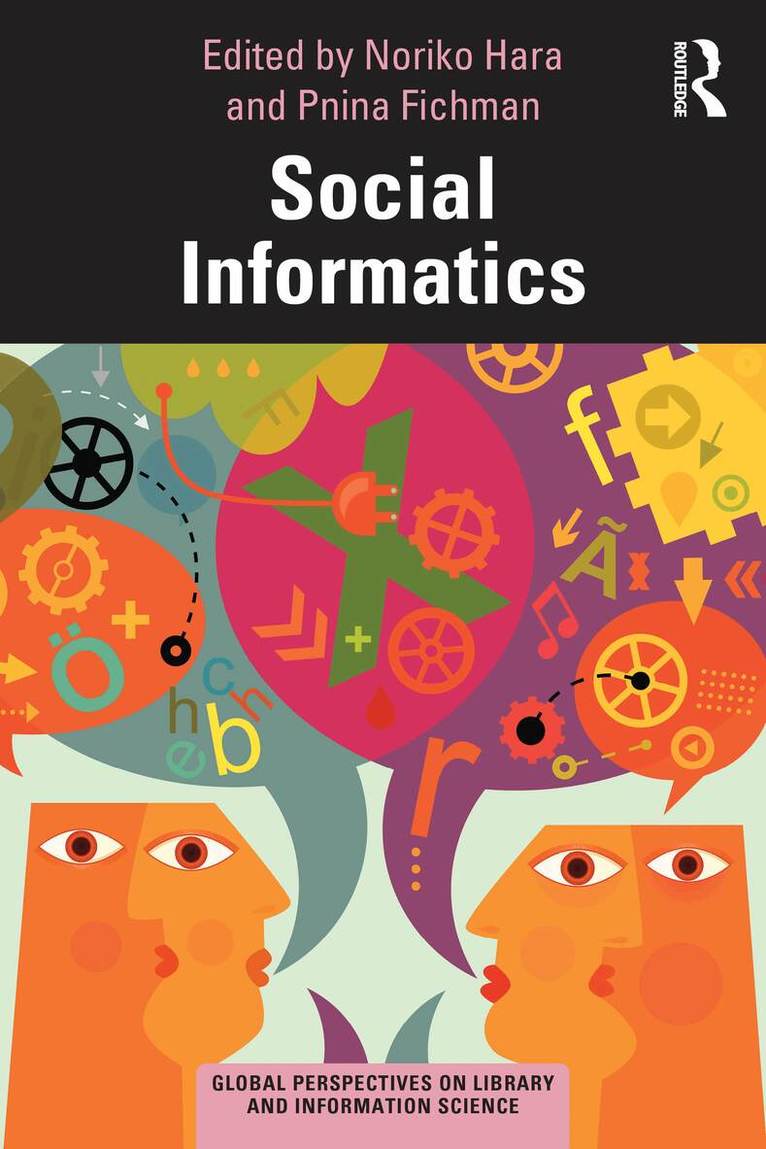
Social informatics examines how society is influenced by digital technologies and how digital technologies are shaped by political, economic, and socio-cultural forces. The chapters in this edited volume use social informatics approaches to analyze recent issues in our increasingly data-intensive society.Taking a social informatics perspective, this edited volume investigates the interaction between society and digital technologies and includes research that examines individuals, groups, organizations, and nations, as well as their complex relationships with pervasive mobile and wearable devices, social media platforms, artificial intelligence, and big data. This volume’s contributors range from seasoned and renowned researchers to upcoming researchers in social informatics. The readers of the book will understand theoretical frameworks of social informatics; gain insights into recent empirical studies of social informatics in specific areas such as big data and its effects on privacy, ethical issues related to digital technologies, and the implications of digital technologies for daily practices; and learn how the social informatics perspective informs research and practice.Social Informatics provides the first book-length overview of Social Informatic research in recent years and will be essential reading for academics and students engaged in the study of information science, internet studies, emerging technologies, digital media, new media studies, computer science, the sociology of communication, and data science.
2 151 kr
Skickas inom 10-15 vardagar
Social informatics examines how society is influenced by digital technologies and how digital technologies are shaped by political, economic, and socio-cultural forces. The chapters in this edited volume use social informatics approaches to analyze recent issues in our increasingly data-intensive society.Taking a social informatics perspective, this edited volume investigates the interaction between society and digital technologies and includes research that examines individuals, groups, organizations, and nations, as well as their complex relationships with pervasive mobile and wearable devices, social media platforms, artificial intelligence, and big data. This volume’s contributors range from seasoned and renowned researchers to upcoming researchers in social informatics. The readers of the book will understand theoretical frameworks of social informatics; gain insights into recent empirical studies of social informatics in specific areas such as big data and its effects on privacy, ethical issues related to digital technologies, and the implications of digital technologies for daily practices; and learn how the social informatics perspective informs research and practice.Social Informatics provides the first book-length overview of Social Informatic research in recent years and will be essential reading for academics and students engaged in the study of information science, internet studies, emerging technologies, digital media, new media studies, computer science, the sociology of communication, and data science.
Communities of Practice
Fostering Peer-to-Peer Learning and Informal Knowledge Sharing in the Work Place
Inbunden, Engelska, 2008
1 064 kr
Skickas inom 10-15 vardagar
1.1 Introduction Each year corporations spend millions of dollars training and educating their - ployees. On average, these corporations spend approximately one thousand dollars 1 per employee each year. As businesses struggle to stay on the cutting-edge and to keep their employees educated and up-to-speed with professional trends as well as ever-changing information needs, it is easy to see why corporations are investing more time and money than ever in their efforts to support their employees’ prof- sional development. During the Industrial Age, companies strove to control natural resources. The more resources they controlled, the greater their competitive edge in the mark- place. Senge (1993) refers to this kind of organization as resource-based. In the Information Age, companies must create, disseminate, and effectively use kno- edge within their organization in order to maintain their market share. Senge - scribes this kind of organization as knowledge-based. Given that knowledge-based organizations willcontinuetobeadrivingforcebehindtheeconomy, itisimperative that corporations support the knowledge and information needs of their workers.
Communities of Practice
Fostering Peer-to-Peer Learning and Informal Knowledge Sharing in the Work Place
Häftad, Engelska, 2010
1 064 kr
Skickas inom 10-15 vardagar
1.1 Introduction Each year corporations spend millions of dollars training and educating their - ployees. On average, these corporations spend approximately one thousand dollars 1 per employee each year. As businesses struggle to stay on the cutting-edge and to keep their employees educated and up-to-speed with professional trends as well as ever-changing information needs, it is easy to see why corporations are investing more time and money than ever in their efforts to support their employees’ prof- sional development. During the Industrial Age, companies strove to control natural resources. The more resources they controlled, the greater their competitive edge in the mark- place. Senge (1993) refers to this kind of organization as resource-based. In the Information Age, companies must create, disseminate, and effectively use kno- edge within their organization in order to maintain their market share. Senge - scribes this kind of organization as knowledge-based. Given that knowledge-based organizations willcontinuetobeadrivingforcebehindtheeconomy, itisimperative that corporations support the knowledge and information needs of their workers.