Norman F. Hughes - Böcker
Visar alla böcker från författaren Norman F. Hughes. Handla med fri frakt och snabb leverans.
4 produkter
4 produkter
523 kr
Skickas inom 7-10 vardagar
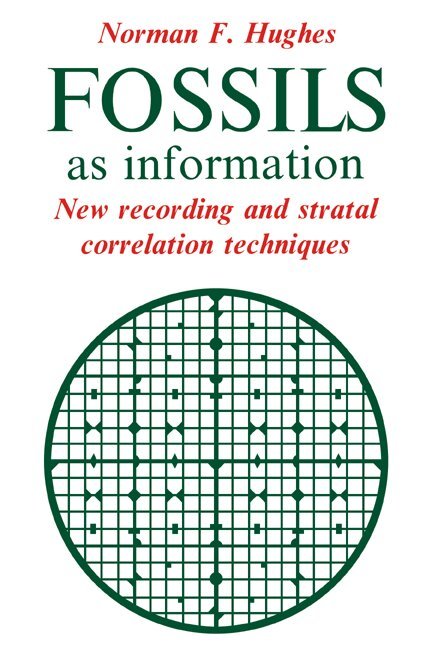
This book discusses procedures for handling information derived from the fossil record, and the application of this information to solving problems in geological succession and earth history. The main purpose of the book is to analyse shortcomings of the existing procedures, and to propose in their place an alternative set of data-handling arrangements of much greater simplicity and efficiency. The author argues that the procedures in current use are cumbersome and inefficient, and that, partly as a consequence of these information-handling methods, palaeontology has failed to make advances commensurate with technological improvements. In this book he proposes a system which could make possible the integrated use of every detail of geological information taken from the rocks. This would achieve better resolution in sequence correlation, in paleoecologic interpretation and in logging the course of evolution. Compatibility of style with existing records has been maintained to avoid any danger of loss of valuable data, and to simplify the process of reevaluating old records. The book will be of interest to all paleontologists, particularly those dealing with microfossils, and is intended to stimulate discussion and criticism of both the analysis and the proposals.
600 kr
Skickas inom 7-10 vardagar
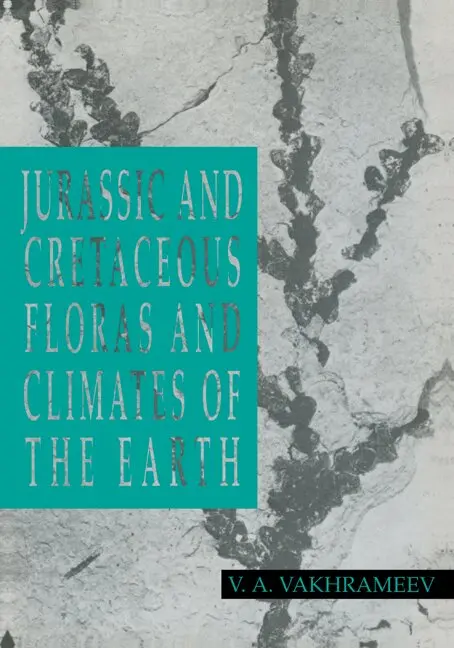
Originally published by Cambridge in 1991, this book is a translation of a unique Russian study of fossil plant distributions in the Jurassic and Cretaceous world. The core of the work is the description and assessment of floras of the USSR, China and Japan. Information on the floras of this extensive and productive area had hitherto been available only in scattered and sometimes obscure Russian journals. Vakhrameev also summarises the more familiar Western work and divides the continents into regions and provinces illustrating the palaeolatitudinal climatic arrangement of floras. The work deals first with megafossil plants and with land plant palynomorphs. The time covered from 200 to 65 million years ago ranges both before and immediately after the main angiosperm radiation from about 130 to 100 million years ago. Vakhrameev's work represents a vast source of data, which will be of interest to any student of Mesozoic seed plants.
507 kr
Skickas inom 7-10 vardagar
The evolutionary origin and early history of the angiosperms (or flowering plants), which are the dominant land plants today, has remained an unsolved problem since the time of Darwin. It has been referred to since those days as an 'abominable mystery', because neither direct ancestor nor an agreed date could be determined. Mr Hughes argues that previous approaches, mostly through botanical theory, have been inadequate and misleading. He suggests that the date is about 110 million years ago (in the Cretaceous period) and there is a good chance of ancestors being found if the correct approach is adopted to the study of other fossil plants of that period. Moreover, the study of plant microfossils in the past twenty years has made feasible a fuller geological study of other fossils. When this book was first published in 1976, several reviewers saw it as a timely book on a controversial subject.
1 205 kr
Skickas inom 7-10 vardagar
This book discusses procedures for handling information derived from the fossil record, and the application of this information to solving problems in geological succession and earth history. The main purpose of the book is to analyse shortcomings of the existing procedures, and to propose in their place an alternative set of data-handling arrangements of much greater simplicity and efficiency. The author argues that the procedures in current use are cumbersome and inefficient, and that, partly as a consequence of these information-handling methods, palaeontology has failed to make advances commensurate with technological improvements. In this book he proposes a system which could make possible the integrated use of every detail of geological information taken from the rocks. This would achieve better resolution in sequence correlation, in paleoecologic interpretation and in logging the course of evolution. Compatibility of style with existing records has been maintained to avoid any danger of loss of valuable data, and to simplify the process of reevaluating old records. The book will be of interest to all paleontologists, particularly those dealing with microfossils, and is intended to stimulate discussion and criticism of both the analysis and the proposals.