Norman Friedman – författare
Visar alla böcker från författaren Norman Friedman. Handla med fri frakt och snabb leverans.
24 produkter
24 produkter
Häftad, Engelska, 2022
262 kr
Skickas
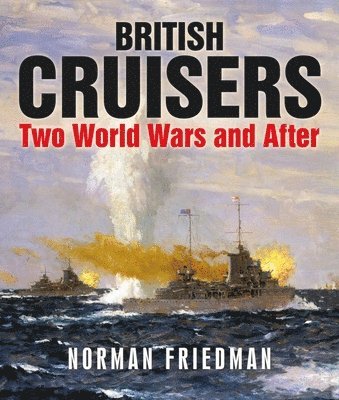
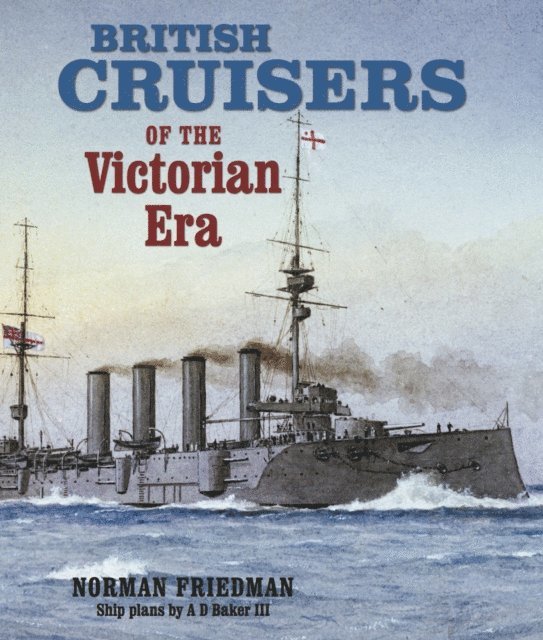
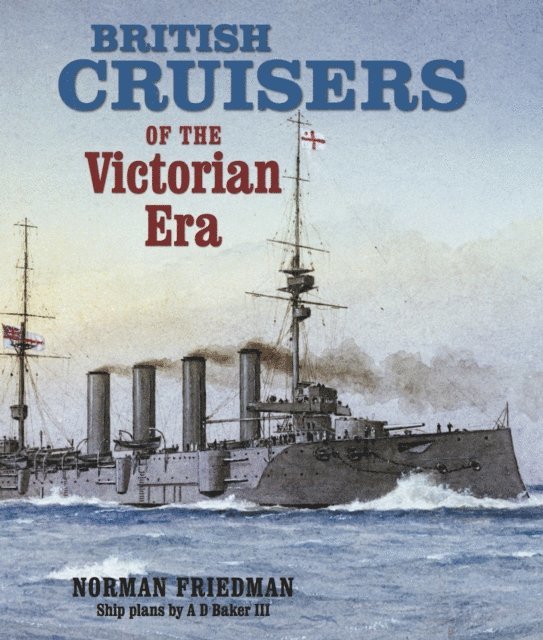
For most of the twentieth century Britain possessed both the worlds largest merchant fleet and its most extensive overseas territories. It is not surprising, therefore, that the Royal Navy always showed a particular interest in the cruiser a multi-purpose warship needed in large numbers to defend trade routes and police the empire. Above all other types, the cruisers competing demands of quality and quantity placed a heavy burden on designers, and for most of the inter-war years Britain sought to square this circle through international treaties restricting both size and numbers. In the process she virtually invented the heavy cruiser and inspired the large 6in-armed cruiser, neither of which, ironically, served her best interests. For the first time this book seeks to comprehend the full policy background, from which a different and entirely original picture emerges of British cruiser development.After the war the cruisers role was reconsidered and the final chapters of the book cover modernisations, the plans for missile-armed ships and the convoluted process that turned the through-deck cruiser into the Invincible class light carriers. With detailed appendices of ship data, and illustrated in depth with photos and A D Bakers specially commissioned plans, British Cruisers truly matches the lofty standards set by Friedmans previous books on British destroyers.**'This is a sumptuous volume, providing a most authoritative and comprehensive review of British cruisers in the twentieth century. The book is beautifully laid out to Seaforth's traditional high standard.'** _Scuttlebutt_
Häftad, Engelska, 2019
92 kr
Skickas inom 5-8 vardagar
A graphic account of this long-running global drama, The Compact Guide: The Cold War is published in a new era of fear and uncertainty. It encompasses moments of high tension, such as the Berlin Crisis of 1961, the Cuban Missile Crisis of 1962 and the nuclear alerts of 1973 and 1983. At several times the world stood on the brink of nuclear Armageddon, but these dangerous moments all ended with both sides drawing back, until the long confrontation ended peacefully. Written by a leading American defence analyst, Dr Norman Friedman, The Compact Guide: The Cold War is supplemented with 60 photographs and documents that allow the reader to witness the events as they unfolded. Maps, diaries, letters and other items which, up till now, have remained filed or exhibited in the Imperial War Museum and other museum collections in Northern Europe and America include a 1963 nuclear attack protective booklet produced for homeowners by the British government and the official pack for US troops passing through Checkpoint Charlie, with practical advice on visiting Communist-controlled East Berlin.
Häftad, Engelska, 2020
890 kr
Skickas inom 10-15 vardagar
Affecting 20 to 30 % of children under the age of five, sleep disorders can seriously affect a child's health. This authoritative guide illustrates the consequences of sleep disordered breathing and offers a state-of-the-art overview of methods to identify, diagnose, and treat sleep disorders in children. Covering the latest research related to the medical and surgical management of disease, high-risk groups, psychosocial effects, and the examination of sleep study results, this source helps practitioners understand normal sleep patterns, recognize common sleep conditions, and implement appropriate care protocols for optimum patient health.
Inbunden, Engelska, 2026
517 kr
Kommande
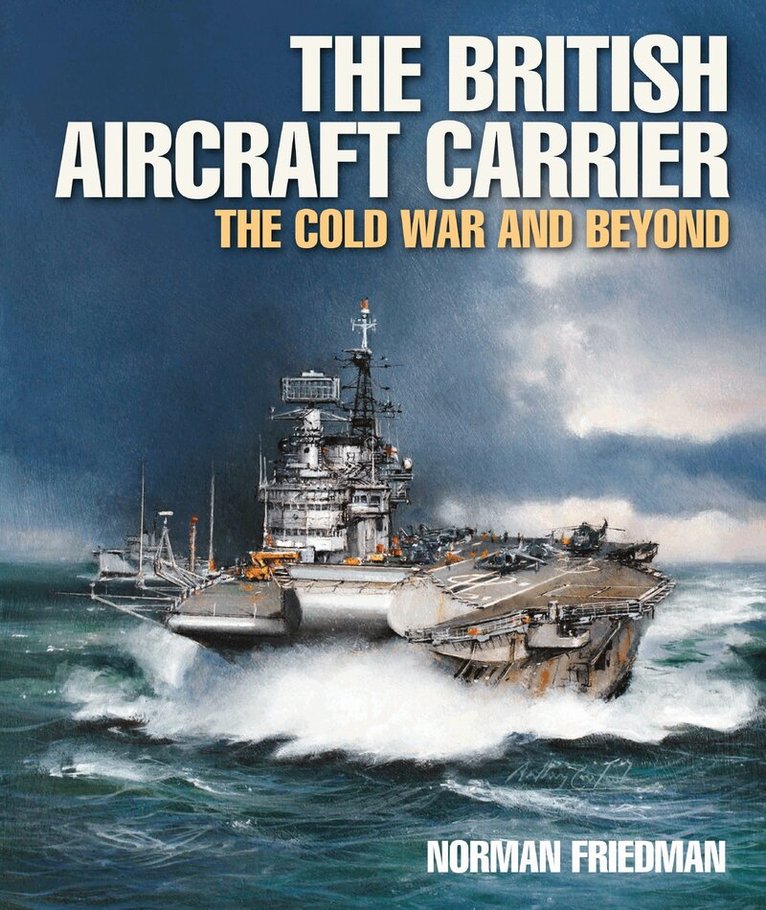
The Royal Navy ended the Second World War with a large force of aircraft carriers and a substantial construction programme intended to produce larger and more capable ships. Most of these were cancelled during postwar retrenchment and the few that survived were completed much later, leaving the RN with an ageing and rapidly shrinking fleet.At the same time, the introduction of jet aircraft threatened the viability of carrier aviation, and it was only a sequence of British innovations (the angled deck, the steam catapult, and the mirror landing sight) that made it possible for carriers to operate jet aircraft. These British developments, particularly the steam catapult, were crucial to the survival of the US carrier force in the postwar era, to an extent often forgotten.Driven by limited resources, the British continued to innovate, producing the first commando carriers, and later the RN played a crucial role in the VSTOL carrier revolution – a response to the cancellation of the large-deck CVA-01 design in 1966. Although the size of the Fleet air Arm declined in numbers, without the Sea Harriers of Hermes and Invincible the recapture of the Falklands in 1982 would have been impossible. Most recently, the tradition of original thinking continues to be seen in the radical two-island layout of Queen Elizabeth and Prince of Wales –since imitated by the Chinese – and the acquisition of F35 stealth fighters once again gives the Royal Navy potent ship-based air power.This book covers all postwar British-built carriers, including those in Commonwealth and foreign service, with the historical context, both operational and technical, explained in detail, as is the connection to larger British national concerns. Based largely on declassified official documents, both British and US, it is heavily illustrated with photographs, but also reproduces official plans from the National Maritime Museum, many of which have never previously been published.
Inbunden, Engelska, 2023
517 kr
Skickas
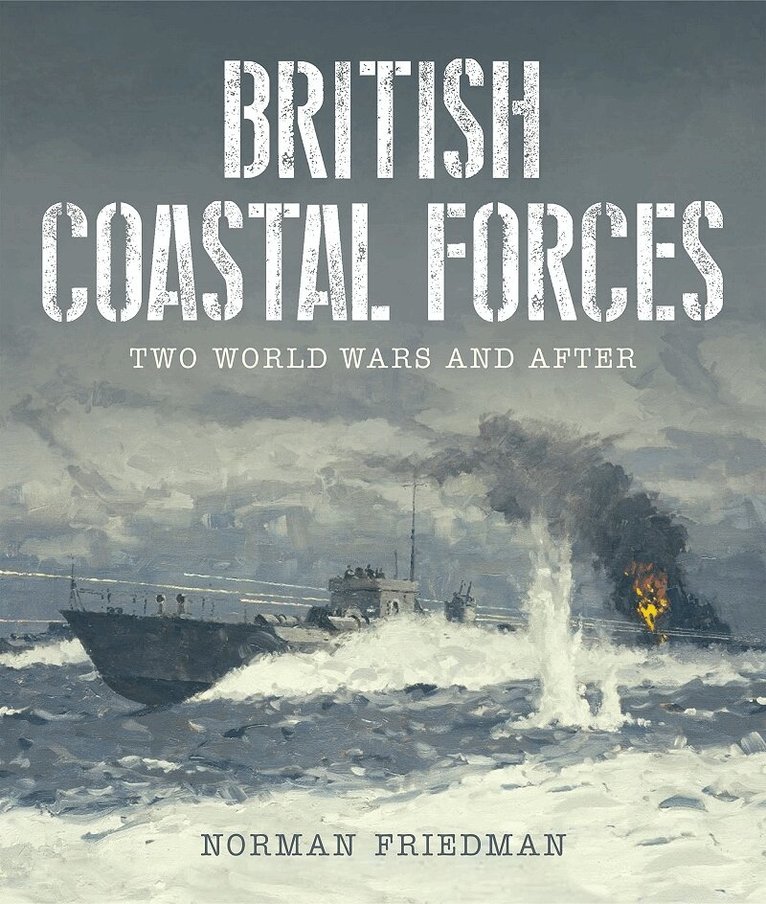
The Royal Navy invented the fast motor torpedo boat during the First World War, and used it and other small coastal craft to great effect during the Second. This book tells the dramatic story of British coastal forces, both offensive and defensive, in both World Wars and beyond.In the Second World War British coastal forces fought a desperate battle to control the narrow seas, particularly the Channel and the North Sea, and took the war to the coasts of German-occupied Europe, fighting where larger warships could not be risked. They also made a significant contribution to victory in the Mediterranean, but it was primarily warfare in home waters that shaped wartime British Coastal Forces and left lessons for postwar development.In this book, Norman Friedman uniquely connects the technical story of the coastal craft and their weapons and other innovations with the way they fought. In both world wars much of the technology was at the edge of what was feasible at the time. Boats incorporated considerable British innovation and also benefited from important US contributions, particularly in supplying high-powered engines during World War II.In contrast with larger warships, British coastal forces craft were essentially shaped by a few builders, and their part in the story is given full credit. They also built a large number of broadly similar craft for air-sea rescue, and for completeness these are described in an appendix.This fascinating, dramatic story is also relevant to modern naval thinkers concerned with gaining or denying access to hostile shores. The technology has changed but the underlying realities have not. This book includes an extensive account of how coastal forces supported the biggest European example of seizing a defended shore, the Normandy invasion. That was by far the largest single British coastal forces operation, demanding a wide range of innovations to make it possible.Like other books in this series, this one is based very heavily on contemporary official material, much of which has not been used previously - like the extensive reports of US naval observers, who were allowed wide access to the Royal Navy as early as 1940. Combined with published memoirs, these sources offer a much more complete picture than has previously appeared of how Coastal Forces fought and of the way in which various pressures, both operational and industrial, shaped them.
Inbunden, Engelska, 2025
517 kr
Skickas
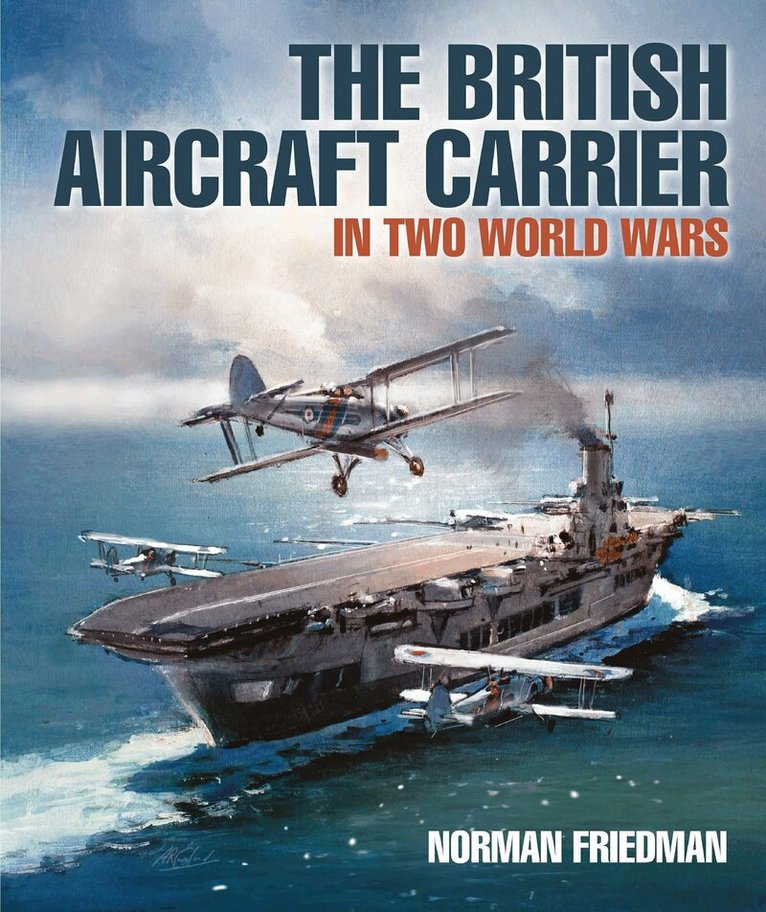
The Royal Navy invented the aircraft carrier and most of the key innovations which have enabled carriers to remain effective, exploiting continuing changes in aircraft technology, from biplanes to supersonic jets. This book tells (and explains) how that happened over more than a century of British carrier development, based largely on declassified official documents, both British and US.Major themes include British domination of the early years of carrier development, and the audacious and highly original plans for their use during World War I, which inspired later naval thinking on the potential of carrier aviation. The introduction of armoured flight decks in the 1930s was only the first of a sequence of British innovations, the most important of which made it possible for carriers to operate jet aircraft (the angled deck, the steam catapult, and the mirror landing sight). These British developments, particularly the steam catapult, were crucial to the survival of the US carrier force in the postwar era, to an extent often forgotten. Later the Royal Navy produced the first commando carriers, and played a crucial role in the VSTOL carrier revolution, and continues to demonstrate originality and innovation as seen in the current pair of large carriers.This book covers all British-built carriers, including those in Commonwealth and foreign service, with the historical context, both operational and technical, explained in detail, as is the connection to larger British national concerns. The book is heavily illustrated with photographs, but also reproduces official plans from the National Maritime Museum, many of which have never previously been published.
Häftad, Engelska, 2020
465 kr
Skickas inom 5-8 vardagar
Originally published in 1960. In E. E. Cummings: The Art of His Poetry, Norman Friedman argues that critics who have focused on what Cummings's poetry lacks have failed to judge Cummings on his strengths. Friedman identifies a main strength of Cummings as his being a "sensual mystic." The book unpacks Cummings's subject matter, devices, and symbolism, ultimately helping readers develop a deeper understanding and appreciation of Cummings's work.
Inbunden, Engelska, 2018
517 kr
Skickas
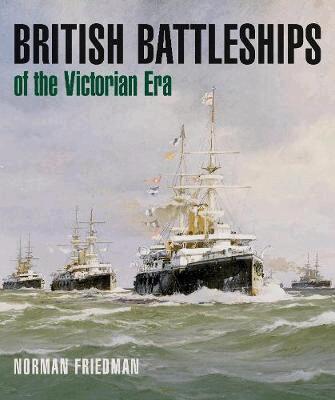
This is a companion volume to Friedman s highly successful _British Battleship 1906 1946_ and completes his study of the Royal Navy s capital ships. Beginning with the earliest installation of steam machinery in ships of the line, the book traces the technological revolution that saw the introduction of iron hulls, armour plate, shell-firing guns and the eventual abandonment of sail as auxiliary propulsion. This hectic development finally settled down to a widely approved form of pre-dreadnought battleship, built in large numbers and culminating in the _King Edward VII_ class. As with all of his work, Friedman is concerned to explain why as well as how and when these advances were made, and locates British ship design firmly within the larger context of international rivalries, domestic politics and economic constraints. The result is a sophisticated and enlightening overview of the Royal Navy s battle fleet in the latter half of the nineteenth century.It is also well illustrated a comprehensive gallery of photographs with in-depth captions is accompanied by specially commissioned plans of the important classes by A D Baker III, and a colour section featuring the original Admiralty draughts, including a spectacular double gatefold. Norman Friedman is one of the most highly regarded of all naval writers, with an avid following, so for anyone with an interest in warships, the publication of this work will be a major event.
Inbunden, Engelska, 2019
517 kr
Skickas
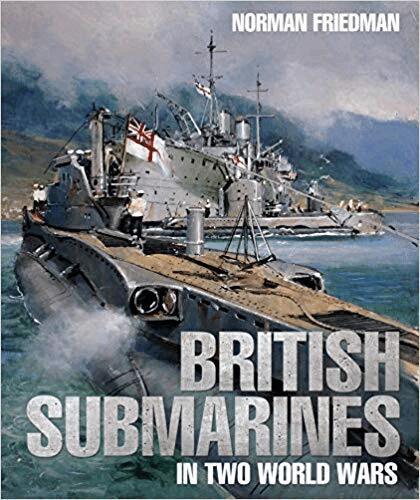
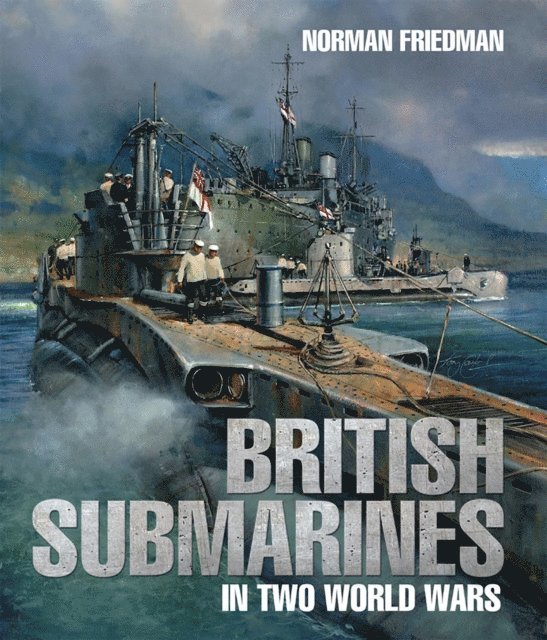
Although the Royal Navy did not invent the submarine, Norman Friedman's new book demonstrates how innovative the service was, to an extent which few will recognise. Its submarines performed well in combat in both world wars, and often in unheralded ways. Few will be aware that in 1914 Britain had the largest submarine fleet in the world, and that at the end of World War I it had some of the largest and most unusual of all submarines - whose origins and design are all detailed.During the First World War they virtually closed the Baltic to German iron ore traffic, and they helped block supplies to the Turkish army fighting at Gallipoli. British submarines were a major element in the North Sea battles, and they helped fight the U-boat menace. These roles led on to British submarine operations in World War II. Readers will be aware of the role of US submarines in strangling Japan, but perhaps not how British submarines in the Mediterranean fought a parallel costly but successful battle to strangle the German army in North Africa. Like their US counterparts, interwar British submariners were designed largely with the demands of a possible Pacific War, although that was not the war they fought. And the author shows how the demands of such a war, which would be fought over vast distances, collided with interwar British Government attempts to limit costs by holding down the size (and numbers) of submarines. It says much about the ingenuity of British submarine designers that they managed to meet their requirements despite enormous pressure on submarine size.As in other books in this series, the author demonstrates how a combination of evolving strategic and tactical requirements and evolving technology produced successive types of design. The Royal Navy was always painfully aware of the threat enemy submarines posed, and British submariners contributed heavily to the development of British anti-submarine tactics and technology, beginning with largely unknown efforts before the outbreak of World War I. Between the Wars British submariners exploited the new technology of sonar (Asdic), both to find and attack enemies and to avoid being attacked themselves. As a result, they pioneered submarine silencing, with important advantages to the US Navy as it observed the British. And it was a British submarine that pioneered the vital postwar use of submarines as anti-submarine weapons, sinking a U-boat while both were submerged. This feat was unique.Heavily illustrated with photos and original plans, this new volume from Norman Friedman, incorporating so much original analysis, will be eagerly awaited by naval historians and enthusiasts everywhere.
Inbunden, Engelska, 2019
415 kr
Skickas
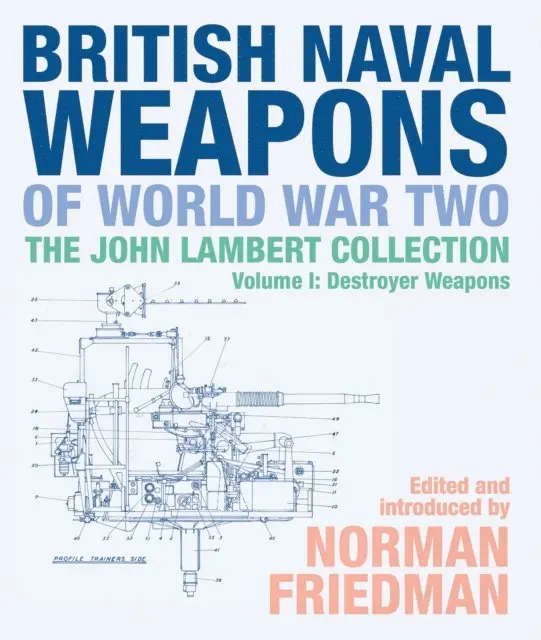
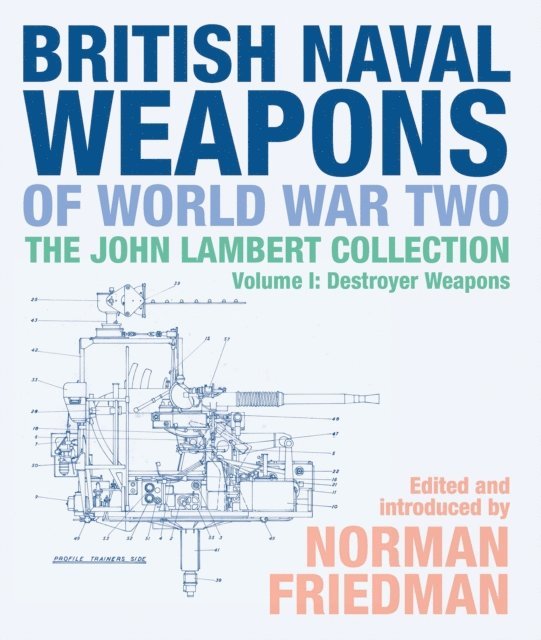
John Lambert was a renowned naval draughtsman, whose plans were highly valued for their accuracy and detail by modelmakers and enthusiasts. By the time of his death in 2016 he had produced over 850 sheets of drawings, many of which have never been published. These have now been acquired by Seaforth and this is the first of a planned series of albums on selected themes, reproducing complete sheets at a large page size, with an expert commentary and captioning.The initial volumes will concentrate on British naval weaponry used in the Second World War, thus completing the project John Lambert was working on when he died. His interest was always focused on smaller warships and his weapons drawings tend to be of open mountings - the kind that present a real challenge to modelmakers - rather than enclosed turret guns, but he also produced drawings of torpedo tubes, underwater weapons, fire-control directors and even some specific armament-related deck fittings. This volume covers all such weapons carried by British destroyers of this era, with additional appendices devoted to earlier guns still in service, and destroyer-calibre weapons only mounted in larger ships.The drawings are backed by introductory essays by Norman Friedman, an acknowledged authority on naval ordnance, while a selection of photographs add to the value of the book as visual reference. Over time, the series will be expanded to make this unique technical archive available in published form, a move certain to be welcomed by warship modellers, enthusiasts and the many fans of John Lambert's work.
Inbunden, Engelska, 2019
415 kr
Skickas
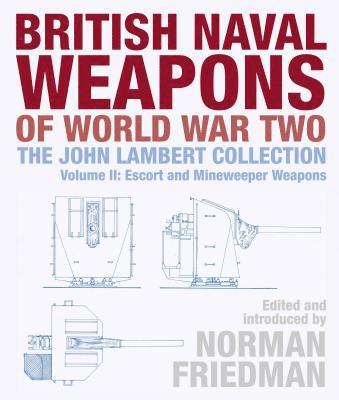
John Lambert was a renowned naval draughtsman, whose plans were highly valued for their accuracy and detail by modelmakers and enthusiasts. By the time of his death in 2016 he had produced over 850 sheets of drawings, many of which have never been published. These have now been acquired by Seaforth and this is the second of a planned series of albums on selected themes, reproducing complete sheets at a large page size, with an expert commentary and captioning.The initial volumes concentrate on British naval weaponry used in the Second World War, thus completing the project John Lambert was working on when he died. His interest was always focused on smaller warships and his weapons drawings tend to be of open mountings - the kind that present a real challenge to modelmakers - rather than enclosed turret guns, but he also produced drawings of torpedo tubes, underwater weapons, fire-control directors and even some specific armament-related deck fittings. Following the first volume on destroyer armament, this one covers all such weapons carried by the various types of British escorts and minesweepers of this era, including the passive' elements like sweeping gear, decoys and electronics.The drawings are backed by introductory essays by Norman Friedman, an acknowledged authority on naval ordnance, while a selection of photographs add to the value of the book as visual reference. Over time, the series will be expanded to make this unique technical archive available in published form, a move certain to be welcomed by warship modellers, enthusiasts and the many fans of John Lambert's work.
Inbunden, Engelska, 2020
415 kr
Skickas
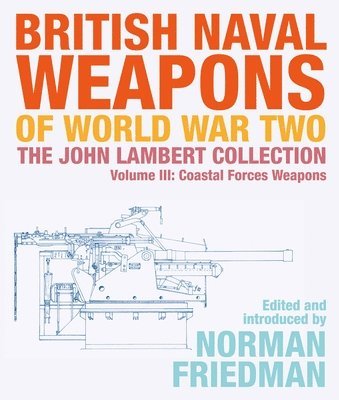
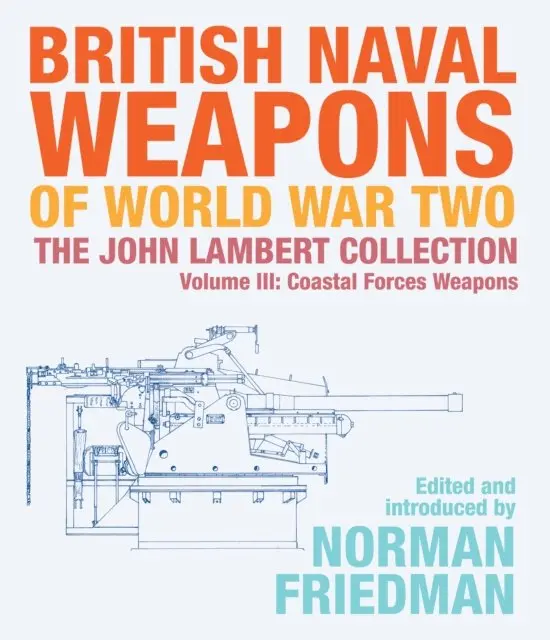
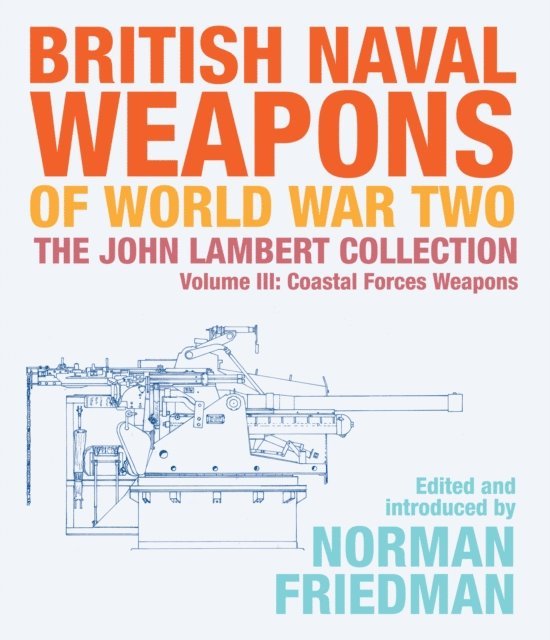
John Lambert was a renowned naval draughtsman, whose plans were highly valued for their accuracy and detail by modelmakers and enthusiasts. By the time of his death in 2016 he had produced over 850 sheets of drawings, many of which have never been published. These have now been acquired by Seaforth and this is the third of a planned series of albums on selected themes, reproducing complete sheets at a large page size, with an expert commentary and captioning.The initial volumes concentrate on British naval weaponry used in the Second World War, thus completing the project John Lambert was working on when he died. His interest was always focused on smaller warships and his weapons drawings tend to be of open mountings - the kind that present a real challenge to modelmakers - rather than enclosed turret guns, but he also produced drawings of torpedo tubes, underwater weapons, fire-control directors and even some specific armament-related deck fittings. Following the earlier volumes on destroyer and escort armament, this one covers the multitude of weapons carried by Coastal Forces, many of which were improvised, ad hoc or obsolescent, but eventually leading to powerful purpose-designed weaponry. An appendix covers the main deck guns carried by British submarines of this era.The drawings are backed by introductory essays by Norman Friedman, an acknowledged authority on naval ordnance, while a selection of photographs adds to the value of the book as visual reference. Over time, the series will be expanded to make this unique technical archive available in published form, a move certain to be welcomed by warship modellers, enthusiasts and the many fans of John Lambert's work.
Häftad, Engelska, 2007
284 kr
Skickas inom 5-8 vardagar
Winner of the Royal United Services Institute Westminster Medal for Military Literature`To read a comprehensive history of the technical, military and political aspects of the Cold War, based on documents from the two super powers, written by a scholar who is free of bias, is something I never thought I would be able to do. But in The Fifty-Year War I can. . . For the men and women who are going to lead the world in the first generation of the twenty-first century, this account of how the Cold War was fought and won is indispensable. For those of us who lived through it . . . Friedman's account is enthralling. Having spent much of my life reading about, studying, worrying about, participating in the Cold War, I thought there was nothing new for me to learn about it. Boy was I wrong. Read The Fifty-Year War and see why.- Stephen AmbroseFor fifty years the Cold War shaped our lives and divided our world. Other authors have portrayed the period as an uneasy peace, enforced by the possibility of mutual destruction through atomic and nuclear weapons. However, Norman Friedman has synthesized a vast array of information from a diverse spectrum of sources on both sides of the iron curtain to produce some extraordinary new conclusions.The renowned defence analyst has challenged conventional thinking on the subject. The Fifty-Year War is an essential book for those who wish to make sense of one of the most complex and fascinating epochs of world history.About the AuthorNorman Friedman is a defence analyst specializing in strategic and technical issues and a frequent television commentator. A resident of New York City, he is the author of many Naval Institute books and a columnist for Proceedings magazine.
Häftad, Engelska, 2011
268 kr
Skickas inom 5-8 vardagar
Häftad, Engelska, 2019
334 kr
Skickas inom 5-8 vardagar
Inbunden, 2010
466 kr
Skickas
Häftad, Engelska, 2011
193 kr
Skickas inom 5-8 vardagar
Häftad, Engelska, 2011
193 kr
Skickas inom 5-8 vardagar
Inbunden, Engelska, 2006
2 646 kr
Tillfälligt slut
Affecting 20 to 30 % of children under the age of five, sleep disorders can seriously affect a child's health. This authoritative guide illustrates the consequences of sleep disordered breathing and offers a state-of-the-art overview of methods to identify, diagnose, and treat sleep disorders in children. Covering the latest research related to the medical and surgical management of disease, high-risk groups, psychosocial effects, and the examination of sleep study results, this source helps practitioners understand normal sleep patterns, recognize common sleep conditions, and implement appropriate care protocols for optimum patient health.
Häftad, Engelska, 2019
262 kr
Tillfälligt slut
The overriding image of the First World War is the bloody stalemate of the Western Front, but although much of the action did occur on land, the overall shape of the war even the inevitability of British participation arose out of its maritime character. It was essentially a struggle about access to worldwide resources, most clearly seen in the desperate German attempts to deal with the American industrial threat, which ultimately levered the United States into the war, and thus a consequence of British sea control. This radical new book concentrates on the way in which each side tried to use or deny the sea to the other, and in so doing it describes rapid wartime changes not only in ship and weapon technology but also in the way naval warfare was envisaged and fought. Combat produced many surprises: some, like the impact of the mine and torpedo, are familiar, but this book also brings to light many previously unexplored subjects, like creative new tactical practices and improved command and control. The contrast between expectation and reality had enormous consequences not only for the course of the war but also for the way navies developed afterwards. This book melds strategic, technical, and tactical aspects to reveal the First World War from a fresh perspective, but also demonstrates how its perceived lessons dominated the way navies prepared for the Second.
Inbunden, Engelska, 2006
2 103 kr
Tillfälligt slut
Long recognised as the most comprehensive work available on the subject, this guide remains the only complete reference to the weapons currently employed on US ships, submarines and naval aircraft around the world. It is the only book of its kind to explain the transformation of the US Navy into a network-centric force: a transformation that has had immense consequences for choices of tactics, weapons, services and the systems co-ordinating them. This guide also offers unparalleled coverage of the weapons, sensors and command systems of the world's navies, both those the US Navy works with and those it may have to fight.Written by one of the world's leading naval analysts, this edition has been completely revised and is newly illustrated. It provides a clear and precise account of how weapons technology has changed to meet the new tactical and strategic challenges facing international naval forces today. Cutting-edge information is found throughout, enhanced by many new and rarely seen photographs and drawings. The book benefits from the flood of material from Russia, whose weapons and systems are now owned and operated by numerous countries and are likely to be sold to many more. It also provides uniquely detailed coverage of weapons developed and deployed in the Far East, an area that promises to be the liveliest scene of naval action in the future. For the most complete and up-to-date information about weapons in every navy in the world, this is the essential resource.Norman Friedman is the author of numerous books, including Terrorism, Afghanistan, and America's New Way of War and Seapower as Strategy: Navies and National Interest. A resident of New York, he lectures around the world on naval and related military topics and contributes a monthly column analysing world naval developments for Proceedings magazine.
Inbunden, 2015
502 kr
Tillfälligt slut
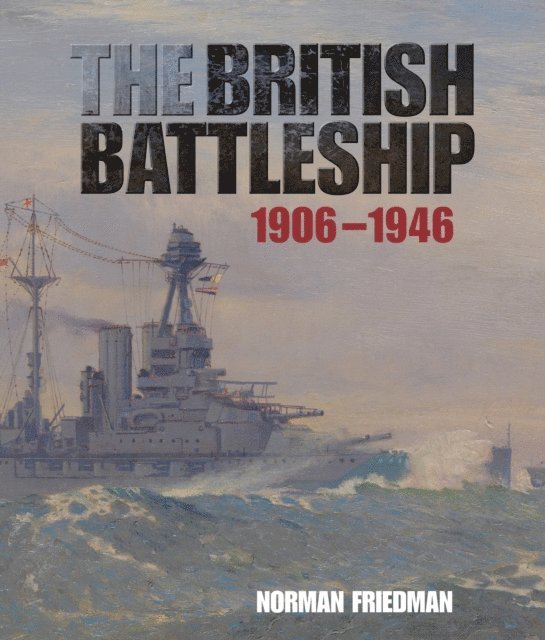
The British battleship is one of the most intensely studied of all naval topics, but it is also among the most popular. Norman Friedman is one of the most highly regarded of all naval writers, with an avid following for his work. Therefore, a new book on British battleships by Friedman is a major event, and has been eagerly awaited ever since knowledge of the project began to circulate among enthusiasts. Friedman has the ability to bring new ideas to even the most over-worked subjects, based on extensive original research and a talent for explaining technology in the wider context of politics, economics and strategy. His latest book covers the development of Royal Navy capital ships, including battlecruisers, from the pre-history of the revolutionary Dreadnought of 1906 to the last of the line, HMS Vanguard in 1946. Repleat with original insights, the story that emerges will enlighten and surprise even the most knowledgeable.The attraction of the book is enhanced by sets of specially commissioned plans of the important classes by John Roberts and A D Baker III, both renowned experts in their own right, plus a colour section featuring the original Admiralty draughts, including a spectacular double gatefold. For many with an interest in warships, this will be the book of the year.
466 kr
Tillfälligt slut
This is an account of the evolution of naval fighters for fleet air defence and the parallel evolution of the ships operating and controlling them, concentrating on the three main exponents of carrier warfare, the Royal Navy, the US Navy, and the Imperial Japanese Navy. It describes the earliest efforts from the 1920s but it was not until radar allowed the direction of fighters that organised air defence became possible. Thus major naval-air battles of the Second World War - like Midway, the 'Pedestal' convoy, the Philippine Sea and Okinawa - are portrayed as tests of the new technology. This was ultimately found wanting by the Kamikaze campaigns, which led to postwar moves towards computer control and new kinds of fighters. After 1945 the novel threats of nuclear weapons and stand-off missiles compounded the difficulties of naval air defence and the second half of the book covers RN and USN attempts to solve these problems, looking at US experience in Vietnam and British operations in the Falklands War.It concludes with the ultimate US development of techniques and technology to fight the Outer Air Battle in the 1980s, which in turn point to the current state of carrier fighters and the supporting technology.Based largely on documentary sources, some previously unused, this book will appeal to both the naval and aviation communities.
Häftad, Engelska
448 kr
Tillfälligt slut