Norman Friedman PhD. - Böcker
Visar alla böcker från författaren Norman Friedman PhD.. Handla med fri frakt och snabb leverans.
8 produkter
8 produkter
1 085 kr
Tillfälligt slut
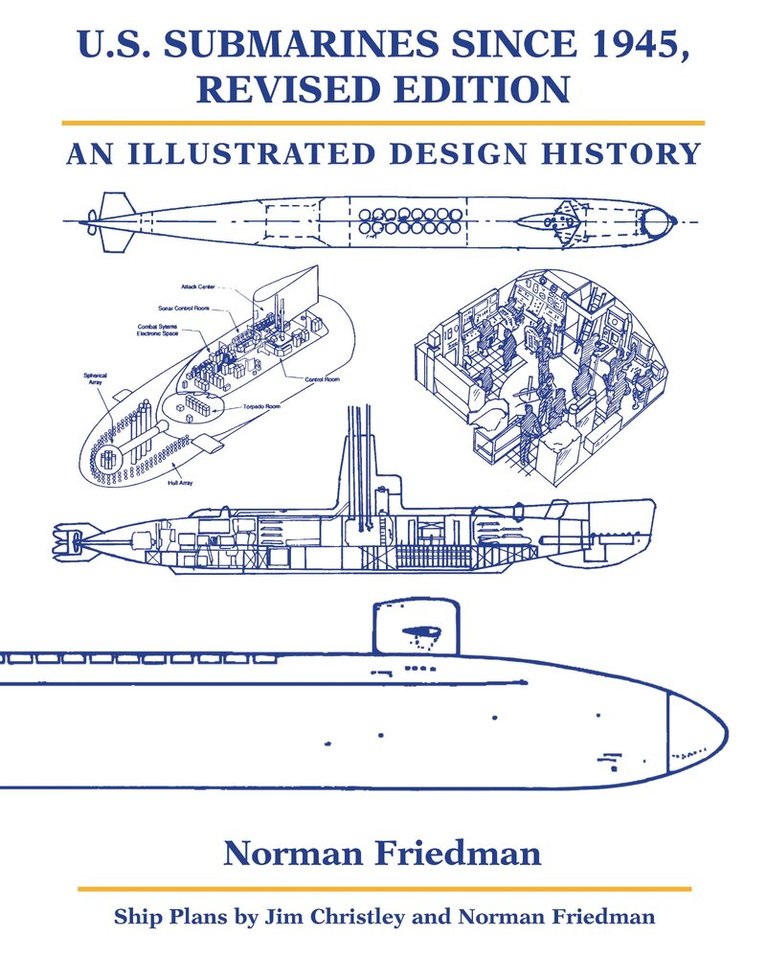
In the tradition of his acclaimed warship design histories, Norman Friedman describes the forces--technical, political, and operational--that shaped a vital element of U.S. sea power. For example, he examines the evolution in missions, such as forward-based antisubmarine warfare and strategic deterrence, that transformed the submarine from its former subsidiary role to the center of national power. U.S. Submarines Since 1945 is also the story of a technological revolution: first the emergence of fast diesel-electric craft, then the shock of nuclear power, followed by the appearance of submarine-launched ballistic missiles. Nowhere else can a reader find so complete or sophisticated an account of the development of the U.S. submarine force, including not only the hulls, but also the weapons and sensors they carry. The book details what submarines were ordered, what weapons and propulsion systems they had, how they performed, and what sonars and combat systems were developed.This illustrated design history contains more than 100 photographs and more than 100 line drawings, including specially commissioned artwork from technical illustrator James L. Christley. These exclusive illustrations, along with the incisive text, capture the excitement of a revolutionary period in submarine development. Enthusiasts and professionals alike will welcome the abundance of information offered. In this revised edition, Norman Friedman explores what has happened since the Cold War, which means both new classes and new technology (some of it applied to existing submarines). New material includes weapons and sensors as they have developed since 1995. This new technology is explained in the context of very different post-Cold-War priorities. In addition, Friedman includes new information that has become available on submarines described in the earlier edition.
991 kr
Tillfälligt slut
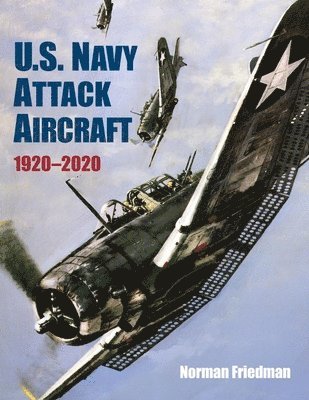
U.S. Navy Attack Aircraft, 1920-2020 is uniquely told from the point of view of the Navy, as understood through its previously-classified documents. Spanning a century from the earliest airplanes conceived to operate from U.S. carriers in 1920, to the current F-35 Joint Strike Fighter (JSF) Both the requirements and the available technology kept changing. In many cases the Navy drove the technology. Norman Friedman is the first to take the requirements and the available technology into account to explain the choices the Navy made. The airplanes the Navy bought were always designers' attempts to meet specific demands set by the kind of warfare the Navy expected. The reader sees Navy successes and failures in guessing at the future. This is a unique way to understand the panoply of airplanes the Navy has relied on through the years, and why some succeeded but others failed.
1 182 kr
Skickas inom 3-6 vardagar
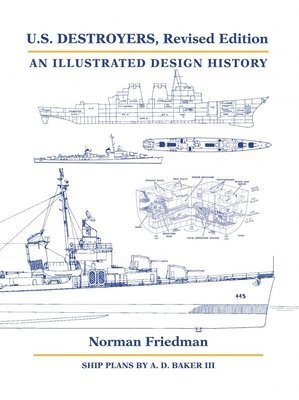
The Norman Friedman Illustrated Design History series of U.S. warships books has been an industry standard for three decades and has sold thousands of copies worldwide. To mark and celebrate this achievement, the Naval Institute Press is proud to make these books available once more. Digitally remastered for enhanced photo resolution and quality, corrected, and updated, this series will continue to serve--for scholars and enthusiasts alike--as the foundation for U.S. naval warship research and reference for years to come. U.S. Destroyers is one the most comprehensive references available on the entire development of U.S. Destroyers, from their early torpedo boat forebears to the mass-produced Fletcher-class of World War II, through the Spruance and Perry classes of the Cold War, and to the workhorse Arleigh Burke-class of the contemporary Navy. Like the other books in Friedman's design-history series, U.S. Destroyers is based largely on formerly classified internal U.S. Navy records. Friedman, a leading authority on U.S. warships, explains the political and technical rationales of warship construction and recounts the evolution of each design. Alan Raven and A.D. Baker III have created detailed scale outboard and plan views of each ship class and of major modifications to many classes. Numerous photographs complement the text.
838 kr
Skickas inom 5-8 vardagar
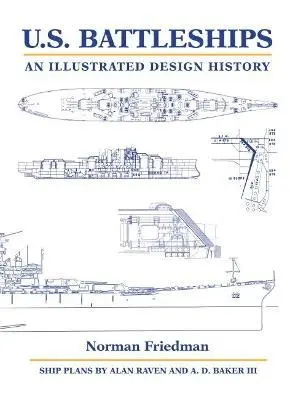
The Norman Friedman Illustrated Design History series of U.S. warships books has been an industry standard for three decades and has sold thousands of copies worldwide. To mark and celebrate this achievement, the Naval Institute Press is proud to make these books available once more. Digitally remastered for enhanced photo resolution and quality, corrected, and updated, this series will continue to serve--for scholars and enthusiasts alike--as the foundation for U.S. naval warship research and reference for years to come.U.S. Battleships is one the most comprehensive references available on the entire development of U.S. battleships, starting in 1886, with Maine and Texas, continuing to South Carolina, the U. S. Navy's first dreadnought, through to the behemoth Montana-class of World War II, Friedman authoritatively analyzes the design and performance histories of this popular type. The long careers of the Iowa-class, including their recommissioning in the late Cold War, are covered. Like the other books in Friedman's design-history series, U.S. Battleships is based largely on formerly classified internal U.S. Navy records. Friedman, a leading authority on U.S. warships, explains the political and technical rationales for building battleships and recounts the evolution of each design. Alan Raven and A.D. Baker III have created detailed scale outboard and plan views of each ship class and of major modifications to many classes. Numerous photographs complement the text.
1 182 kr
Skickas inom 3-6 vardagar
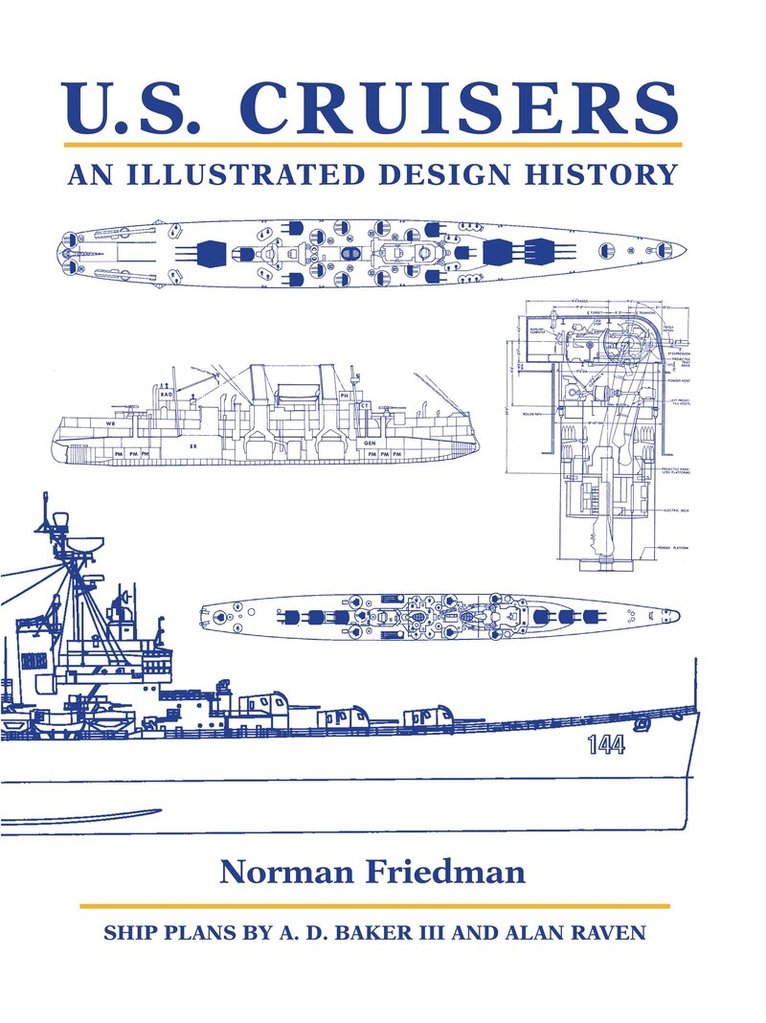
The Norman Friedman Illustrated Design History series of U.S. warships books has been an industry standard for three decades and has sold thousands of copies worldwide. To mark and celebrate this achievement, the Naval Institute Press is proud to make these books available once more. Digitally remastered for enhanced photo resolution and quality, corrected, and updated, this series will continue to serve--for scholars and enthusiasts alike--as the foundation for U.S. naval warship research and reference for years to come. U.S. Cruisers is one the most comprehensive references available on the entire development of U.S. cruisers, from the first steel cruisers, the flawed designs of the Washington Naval Treaty era, the light, heavy, and large cruisers of World War II, the postwar rapid-fire artillery designs of the Des Moines and the Worcester classes, guided-missile conversions, and to the Aegis ships of the Ticonderoga-class. Like the other books in Norman Friedman's design-history series, U.S. Cruisers is based largely on formerly classified internal U.S. Navy records. Friedman, a leading authority on U.S. warships, explains the political and technical rationales of warship construction and recounts the evolution of each design. Alan Raven and A.D. Baker III have created detailed scale outboard and plan views of each ship class and of major modifications to many classes. Numerous photographs complement the text.
607 kr
Skickas inom 5-8 vardagar
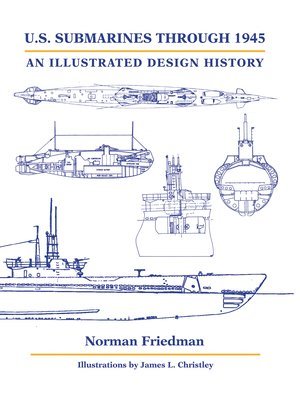
The Norman Friedman Illustrated Design History series of U.S. warships books has been an industry standard for three decades and has sold thousands of copies worldwide. To mark and celebrate this achievement, the Naval Institute Press is proud to make these books available once more. Digitally remastered for enhanced photo resolution and quality, corrected, and updated, this series will continue to serve--for scholars and enthusiasts alike--as the foundation for U.S. naval warship research and reference for years to come. U.S. Submarines Through 1945 is one the most comprehensive references available on the entire development of U.S. Submarines from the first commissioned undersea fighting vessel, Alligator, in 1862, to the S boats of World War I, and the feared fleet submarines of the Gato and Balao classes of World War II. Like the other books in Norman Friedman's design-history series, U.S. Submarines Through 1945 is based largely on formerly classified internal U.S. Navy records. Friedman, a leading authority on U.S. warships, explains the political and technical rationales of warship construction and recounts the evolution of each design. This volume is fully illustrated with deck plans, outboard profiles, sketches from major design studies, and numerous detailed photographs complement the text.
1 035 kr
Tillfälligt slut
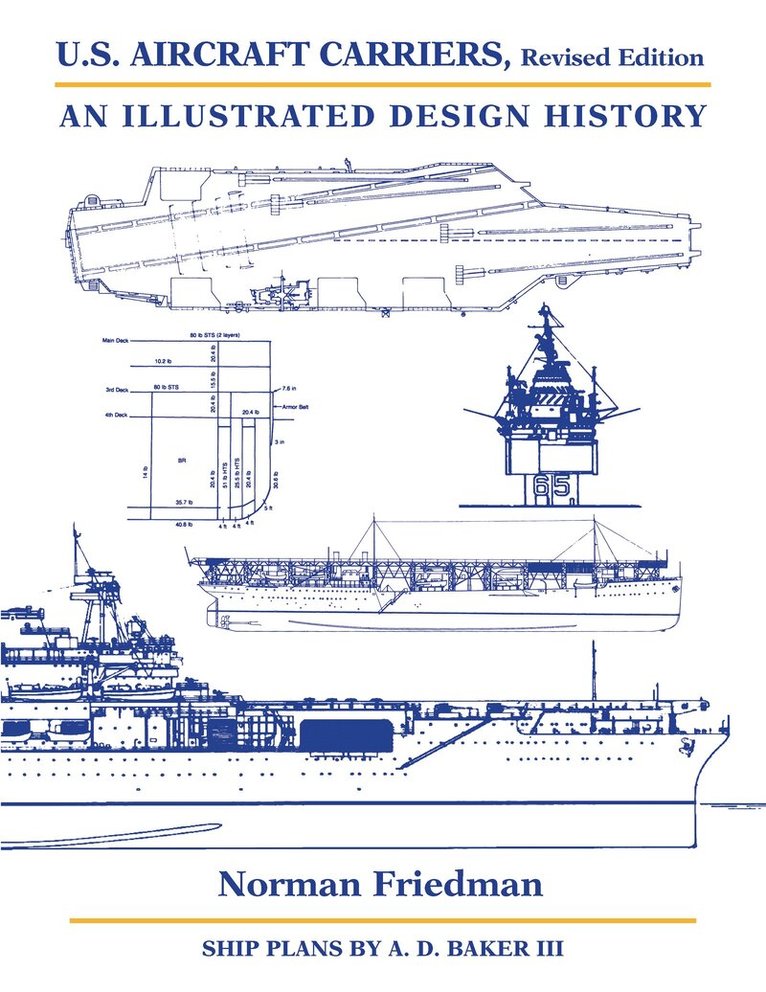
The Norman Friedman Illustrated Design History series of U.S. warships books has been an industry standard for three decades and has sold thousands of copies worldwide. To mark and celebrate this achievement, the Naval Institute Press is proud to make these books available once more. Digitally remastered for enhanced photo resolution and quality, corrected, and updated, this series will continue to serve--for scholars and enthusiasts alike--as the foundation for U.S. naval warship research and reference for years to come.U.S. Aircraft Carriers, Revised Edition is one the most comprehensive references available on the entire development of U.S. Aircraft Carriers, starting in 1920, with USS Langley CV-1, continuing to Enterprise, the mass-produced Essex-class, and the large Midway-class of post-World War II. Friedman authoritatively analyzes the design and performance histories of this popular type. The long careers of the Nimitz-class and the new Ford-class are also included. Like the other books in Friedman's design-history series, U.S. Aircraft Carriers is based largely on formerly classified internal U.S. Navy records.Friedman, a leading authority on U.S. warships, explains the political and technical rationales for building battleships and recounts the evolution of each design. A.D. Baker III has created detailed scale outboard and plan views of each ship class and of major modifications to many classes. Numerous photographs complement the text.
1 094 kr
Skickas inom 5-8 vardagar
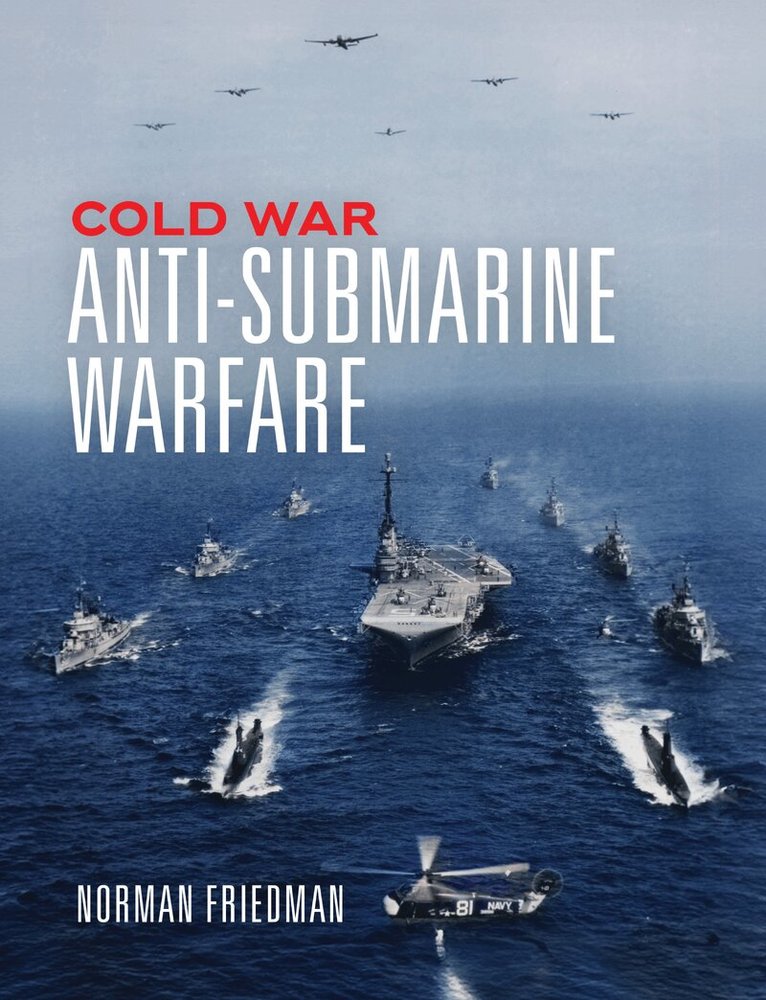
As enmity between China and Russia and the West deepens, and as the Chinese navy grows, the United States finds itself more and more in the situation it faced during the Cold War. Again, the United States depends on access to the world, and again a possible enemy is building a massive navy intended to cut off the U.S., which may well have to fight for the seas. In doing so, it is helpful to look back to the closest analogy—the struggle against the Soviet navy. For the first time, this book brings together enough of the declassified record—and enough of what the Russians published during their brief period of openness—to tell the story of the great Cold War anti-submarine warfare (ASW) struggle. This book explains what happened and how the West won that fight. Although technology has changed, history is the best guide for future operations and to understand how different strategies and tactics can affect outcomes. The experience of post‒Cold War ASW is much less relevant because it was conducted on a much smaller scale and generally in waters very different from the oceans of the Cold War. Unfortunately, much of what happened during the Cold War has been forgotten. The senior officers who understood the ASW fight have long since retired. Author Norman Friedman is extraordinarily well placed to examine what happened and why. He has published books not only on Cold War ships and aircraft, but also on Cold War strategy, including the award-winning Fifty-Year War, and on the naval weapons and sensors of the Cold War. He has written design histories of U.S. and British submarines and surface ASW ships of the Cold War based on declassified documents. In this book he emphasizes that there was no single Cold War ASW strategy because the character of the war changed greatly over time. This variety of themes makes it possible to consider alternative parallels to the present and the future.