Norman LaPorte – författare
Visar alla böcker från författaren Norman LaPorte. Handla med fri frakt och snabb leverans.
11 produkter
Weimar Communism as Mass Movement 1918-1933
Av Norman LaPorte, Ralf Hofrogge
Häftad, 2017
5,0 utav 5 stjärnor. Totalt antal röster: (1)
373 kr
Lägg i varukorg
A quarter of a century after the opening of the archives in Berlin and Moscow, the role of the German Communist Party (KPD) is the subject of a new wave of studies. This book makes this new field of scholarship available in English for the first time. The book begins with the editors' comprehensive …
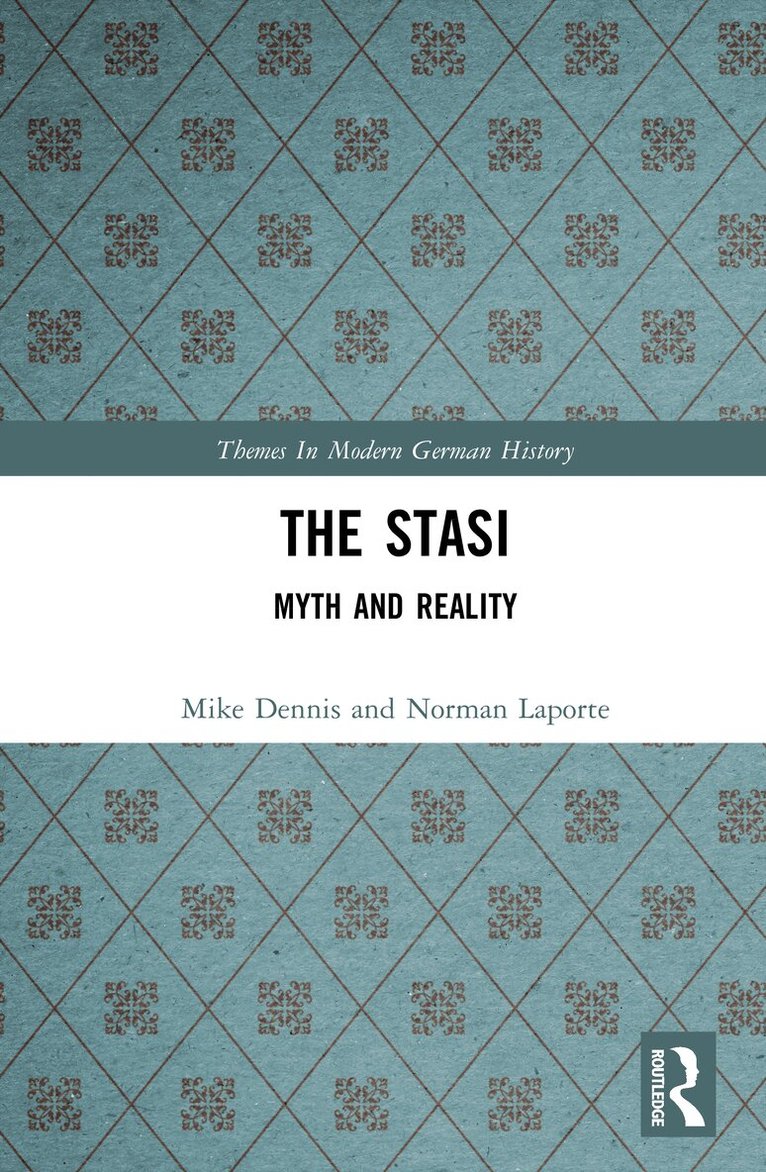
The Stasi
Myth and Reality
Av Mike Dennis, Norman Laporte
Häftad, 2003
964 kr
Lägg i varukorg
The East German Ministry of State Security, popularly known as the Stasi, was one of the largest and most intrusive secret police systems in world history. So extensive was the system of surveillance and control that in any given year throughout the 1970s and 1980s, about one in fifty of the 13 …
State and Minorities in Communist East Germany
Av Mike Dennis, Norman LaPorte
Inbunden, 2011
1979 kr
Lägg i varukorg
Based on interviews and the voluminous materials in the archives of the SED, the Stasi and central and regional authorities, this volume focuses on several contrasting minorities (Jehovah’s Witnesses, Jews, ‘guest’ workers from Vietnam and Mozambique, football fans, punks, and skinheads) and their …
State and Minorities in Communist East Germany
Av Norman LaPorte, Mike Dennis
E-bok, 2011
335 kr
Lägg i varukorg
Based on interviews and the voluminous materials in the archives of the SED, the Stasi and central and regional authorities, this volume focuses on several contrasting minorities (Jehovah’s Witnesses, Jews, ‘guest’ workers from Vietnam and Mozambique, football fans, punks, and skinheads) and their …
Stasi
Myth and Reality
Av Mike Dennis, Norman Laporte
Inbunden, 2016
2578 kr
Lägg i varukorg
The East German Ministry of State Security, popularly known as the Stasi, was one of the largest and most intrusive secret police systems in world history. So extensive was the system of surveillance and control that in any given year throughout the 1970s and 1980s, about one in fifty of the 13 …
Stasi
Myth and Reality
Av Norman Laporte, Mike Dennis
E-bok, 2014
1141 kr
Lägg i varukorg
The East German Ministry of State Security, popularly known as the Stasi, was one of the largest and most intrusive secret police systems in world history. So extensive was the system of surveillance and control that in any given year throughout the 1970s and 1980s, about one in fifty of the 13 …
Stasi
Myth and Reality
Av Norman Laporte, Mike Dennis
E-bok, 2014
1141 kr
Lägg i varukorg
The East German Ministry of State Security, popularly known as the Stasi, was one of the largest and most intrusive secret police systems in world history. So extensive was the system of surveillance and control that in any given year throughout the 1970s and 1980s, about one in fifty of the 13 …
State and Minorities in Communist East Germany
Av Mike Dennis, Norman LaPorte
Häftad, 2013
543 kr
Lägg i varukorg
Based on interviews and the voluminous materials in the archives of the SED, the Stasi and central and regional authorities, this volume focuses on several contrasting minorities (Jehovah's Witnesses, Jews, 'guest' workers from Vietnam and Mozambique, football fans, punks, and skinheads) and their …
Friendly Enemies
Britain and the GDR, 1949-1990
Av Stefan Berger, Norman LaPorte
Häftad, 2014
599 kr
Lägg i varukorg
During the Cold War, Britain had an astonishing number of contacts and connections with one of the Soviet Bloc's most hard-line regimes: the German Democratic Republic. The left wing of the British Labour Party and the Trade Unions often had closer ties with communist East Germany than the …
Friendly Enemies
Britain and the GDR, 1949-1990
Av Stefan Berger, Norman LaPorte
Inbunden, 2010
2186 kr
Lägg i varukorg
During the Cold War, Britain had an astonishing number of contacts and connections with one of the Soviet Bloc’s most hard-line regimes: the German Democratic Republic. The left wing of the British Labour Party and the Trade Unions often had closer ties with communist East Germany than the …
Friendly Enemies
Britain and the GDR, 1949-1990
Av Norman LaPorte, Stefan Berger
E-bok, 2010
386 kr
Lägg i varukorg
During the Cold War, Britain had an astonishing number of contacts and connections with one of the Soviet Bloc’s most hard-line regimes: the German Democratic Republic. The left wing of the British Labour Party and the Trade Unions often had closer ties with communist East Germany than the …