N.U. Prabhu – författare
Visar alla böcker från författaren N.U. Prabhu. Handla med fri frakt och snabb leverans.
10 produkter
10 produkter
Häftad, Engelska, 2019
994 kr
Skickas inom 10-15 vardagar
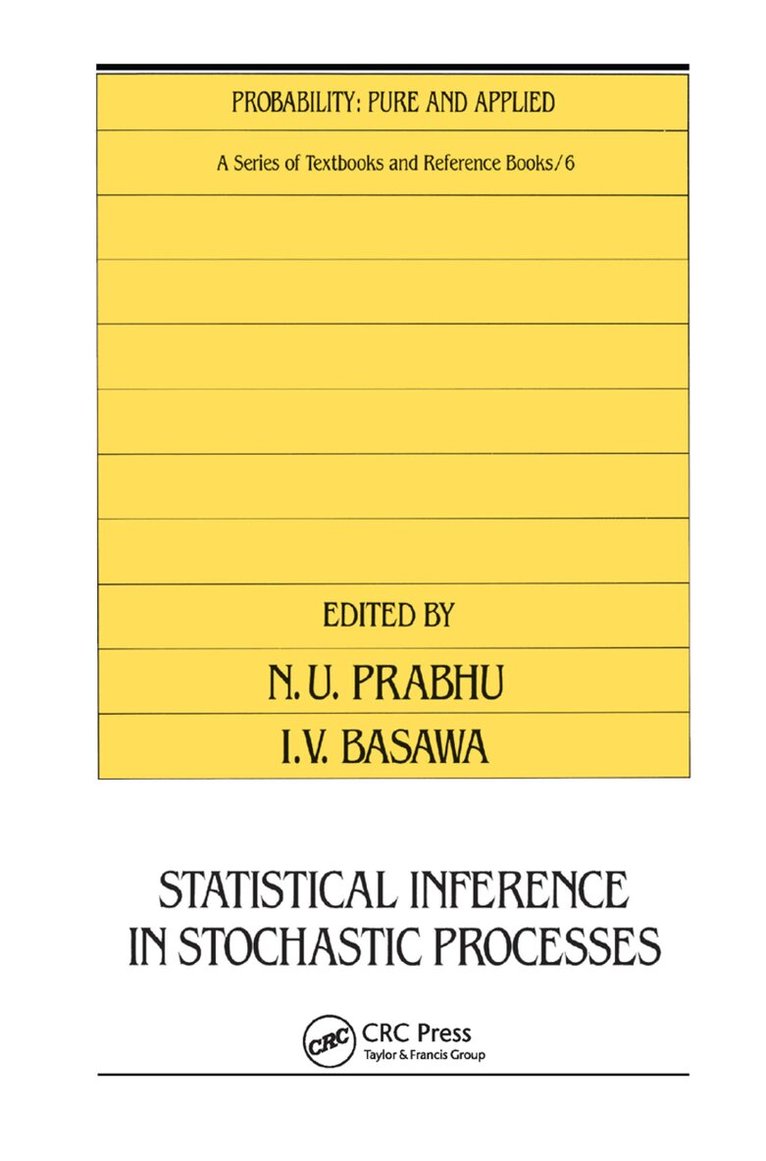
Covering both theory and applications, this collection of eleven contributed papers surveys the role of probabilistic models and statistical techniques in image analysis and processing, develops likelihood methods for inference about parameters that determine the drift and the jump mechanism of a di
Del 15 - Stochastic Modelling and Applied Probability
Stochastic Storage Processes
Queues, Insurance Risk, Dams, and Data Communication
Inbunden, Engelska, 1997
1 084 kr
Skickas inom 10-15 vardagar
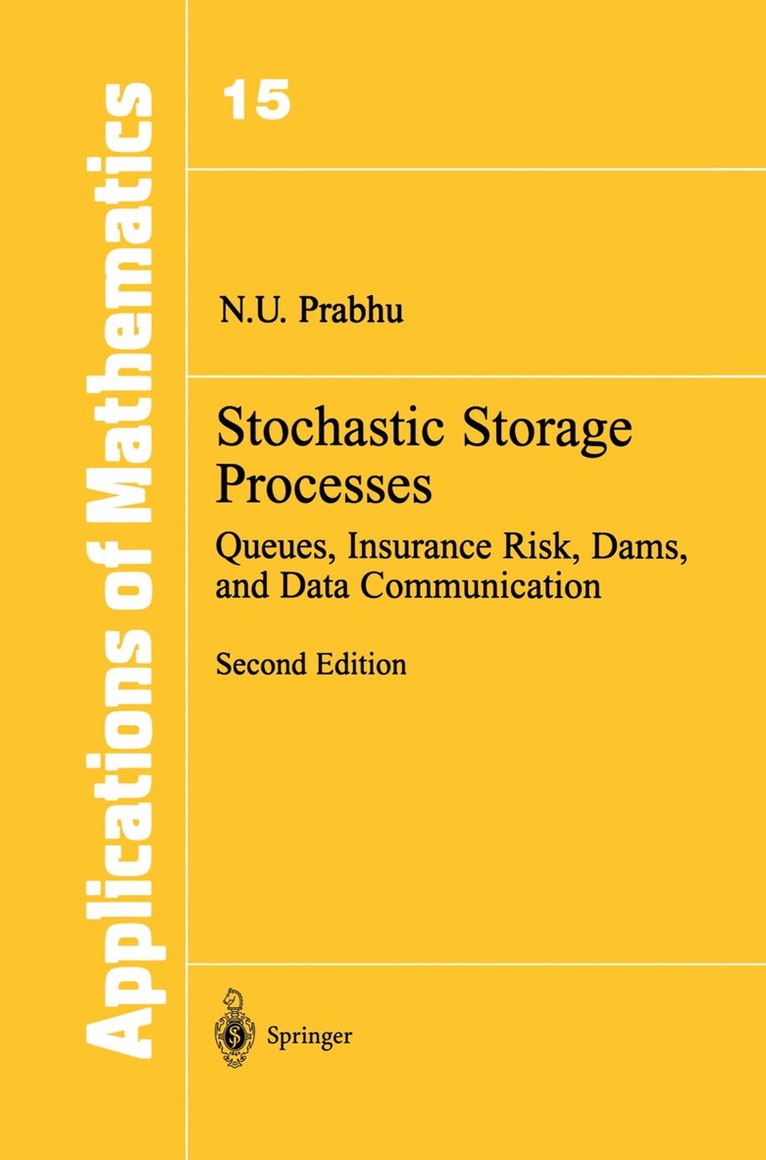
This is a revised and expanded version of the earlier edition. The new material is on Markov-modulated storage processes arising from queueing and data commu nication models. The analysis of these models is based on the fluctuation theory of Markov-additive processes and their discrete time analogues, Markov random walks. The workload and queue length processes, omitted from the earlier edition, are also presented. In addition, many sections have been rewritten, with new re sults and proofs, as well as further examples. The mathematical level and style of presentation, however, remain the same. Chapter I contains a comprefensive treatment of the waiting time and related quantities in a single server queue, combining Chapters 1 and 2 of the earlier edition. In Chapter 2 we treat the (continuous time) workload and queue length processes using their semiregenerative properties. Also included are bulk queues omitted from the earlier edition, but included in its Russian translation. The queue MIMIl is presented in Chapter 3. This is the so-called simple queue, but its treat ment in most of the literature is far from simple. Our analysis of the queue length process is elementary and yields explicit results for various distributions of interest. are treated in Chapter 4, combining Chapters 3 Continuous time storage models and 4 of the earlier edition. We present extensive new material, omitting much of the old Chapter 4. This has resulted in a streamlined account of this important class of models.
Del 7 - International Series in Operations Research & Management Science
Foundations of Queueing Theory
Inbunden, Engelska, 1997
1 084 kr
Skickas inom 10-15 vardagar
3. 2 The Busy Period 43 3. 3 The M 1M IS System with Last Come, First Served 50 3. 4 Comparison of FCFS and LCFS 51 3. 5 Time-Reversibility of Markov Processes 52 The Output Process 54 3. 6 3. 7 The Multi-Server System in a Series 55 Problems for Solution 3. 8 56 4 ERLANGIAN QUEUEING SYSTEMS 59 4. 1 Introduction 59 4. 2 The System M I E/c/1 60 4. 3 The System E/cl Mil 67 4. 4 The System MIDI1 72 4. 5 Problems for Solution 74 PRIORITY SYSTEMS 79 5 5. 1 Description of a System with Priorities 79 Two Priority Classes with Pre-emptive Resume Discipline 5. 2 82 5. 3 Two Priority Classes with Head-of-Line Discipline 87 5. 4 Summary of Results 91 5. 5 Optimal Assignment of Priorities 91 5. 6 Problems for Solution 93 6 QUEUEING NETWORKS 97 6. 1 Introduction 97 6. 2 A Markovian Network of Queues 98 6. 3 Closed Networks 103 Open Networks: The Product Formula 104 6. 4 6. 5 Jackson Networks 111 6. 6 Examples of Closed Networks; Cyclic Queues 112 6. 7 Examples of Open Networks 114 6. 8 Problems for Solution 118 7 THE SYSTEM M/G/I; PRIORITY SYSTEMS 123 7. 1 Introduction 123 Contents ix 7. 2 The Waiting Time in MIGI1 124 7. 3 The Sojourn Time and the Queue Length 129 7. 4 The Service Interval 132 7.
Inbunden, Engelska, 1990
1 701 kr
Skickas inom 10-15 vardagar
Covering both theory and applications, this collection of eleven contributed papers surveys the role of probabilistic models and statistical techniques in image analysis and processing, develops likelihood methods for inference about parameters that determine the drift and the jump mechanism of a di
E-bok
PDF, Engelska, 20201 136 kr
Läs direkt efter köp
Covering both theory and applications, this collection of eleven contributed papers surveys the role of probabilistic models and statistical techniques in image analysis and processing, develops likelihood methods for inference about parameters that determine the drift and the jump mechanism of a di
E-bok
Engelska, 20201 136 kr
Läs direkt efter köp
Covering both theory and applications, this collection of eleven contributed papers surveys the role of probabilistic models and statistical techniques in image analysis and processing, develops likelihood methods for inference about parameters that determine the drift and the jump mechanism of a di
E-bok
PDF, Engelska, 20121 416 kr
Läs direkt efter köp
This is a revised and expanded version of the earlier edition. The new material is on Markov-modulated storage processes arising from queueing and data commu nication models. The analysis of these models is based on the fluctuation theory of Markov-additive processes and their discrete time analogues, Markov random walks. The workload and queue length processes, omitted from the earlier edition, are also presented. In addition, many sections have been rewritten, with new re sults and proofs, as well as further examples. The mathematical level and style of presentation, however, remain the same. Chapter I contains a comprefensive treatment of the waiting time and related quantities in a single server queue, combining Chapters 1 and 2 of the earlier edition. In Chapter 2 we treat the (continuous time) workload and queue length processes using their semiregenerative properties. Also included are bulk queues omitted from the earlier edition, but included in its Russian translation. The queue MIMIl is presented in Chapter 3. This is the so-called simple queue, but its treat ment in most of the literature is far from simple. Our analysis of the queue length process is elementary and yields explicit results for various distributions of interest. are treated in Chapter 4, combining Chapters 3 Continuous time storage models and 4 of the earlier edition. We present extensive new material, omitting much of the old Chapter 4. This has resulted in a streamlined account of this important class of models.
Del 15 - Stochastic Modelling and Applied Probability
Stochastic Storage Processes
Queues, Insurance Risk, Dams, and Data Communication
Häftad, Engelska, 2012
1 084 kr
Skickas inom 10-15 vardagar
This is a revised and expanded version of the earlier edition. The new material is on Markov-modulated storage processes arising from queueing and data commu nication models. The analysis of these models is based on the fluctuation theory of Markov-additive processes and their discrete time analogues, Markov random walks. The workload and queue length processes, omitted from the earlier edition, are also presented. In addition, many sections have been rewritten, with new re sults and proofs, as well as further examples. The mathematical level and style of presentation, however, remain the same. Chapter I contains a comprefensive treatment of the waiting time and related quantities in a single server queue, combining Chapters 1 and 2 of the earlier edition. In Chapter 2 we treat the (continuous time) workload and queue length processes using their semiregenerative properties. Also included are bulk queues omitted from the earlier edition, but included in its Russian translation. The queue MIMIl is presented in Chapter 3. This is the so-called simple queue, but its treat ment in most of the literature is far from simple. Our analysis of the queue length process is elementary and yields explicit results for various distributions of interest. are treated in Chapter 4, combining Chapters 3 Continuous time storage models and 4 of the earlier edition. We present extensive new material, omitting much of the old Chapter 4. This has resulted in a streamlined account of this important class of models.
Del 7 - International Series in Operations Research & Management Science
Foundations of Queueing Theory
Häftad, Engelska, 2012
1 084 kr
Skickas inom 10-15 vardagar
3. 2 The Busy Period 43 3. 3 The M 1M IS System with Last Come, First Served 50 3. 4 Comparison of FCFS and LCFS 51 3. 5 Time-Reversibility of Markov Processes 52 The Output Process 54 3. 6 3. 7 The Multi-Server System in a Series 55 Problems for Solution 3. 8 56 4 ERLANGIAN QUEUEING SYSTEMS 59 4. 1 Introduction 59 4. 2 The System M I E/c/1 60 4. 3 The System E/cl Mil 67 4. 4 The System MIDI1 72 4. 5 Problems for Solution 74 PRIORITY SYSTEMS 79 5 5. 1 Description of a System with Priorities 79 Two Priority Classes with Pre-emptive Resume Discipline 5. 2 82 5. 3 Two Priority Classes with Head-of-Line Discipline 87 5. 4 Summary of Results 91 5. 5 Optimal Assignment of Priorities 91 5. 6 Problems for Solution 93 6 QUEUEING NETWORKS 97 6. 1 Introduction 97 6. 2 A Markovian Network of Queues 98 6. 3 Closed Networks 103 Open Networks: The Product Formula 104 6. 4 6. 5 Jackson Networks 111 6. 6 Examples of Closed Networks; Cyclic Queues 112 6. 7 Examples of Open Networks 114 6. 8 Problems for Solution 118 7 THE SYSTEM M/G/I; PRIORITY SYSTEMS 123 7. 1 Introduction 123 Contents ix 7. 2 The Waiting Time in MIGI1 124 7. 3 The Sojourn Time and the Queue Length 129 7. 4 The Service Interval 132 7.
E-bok
PDF, Engelska, 20121 367 kr
Läs direkt efter köp
3. 2 The Busy Period 43 3. 3 The M 1M IS System with Last Come, First Served 50 3. 4 Comparison of FCFS and LCFS 51 3. 5 Time-Reversibility of Markov Processes 52 The Output Process 54 3. 6 3. 7 The Multi-Server System in a Series 55 Problems for Solution 3. 8 56 4 ERLANGIAN QUEUEING SYSTEMS 59 4. 1 Introduction 59 4. 2 The System M I E/c/1 60 4. 3 The System E/cl Mil 67 4. 4 The System MIDI1 72 4. 5 Problems for Solution 74 PRIORITY SYSTEMS 79 5 5. 1 Description of a System with Priorities 79 Two Priority Classes with Pre-emptive Resume Discipline 5. 2 82 5. 3 Two Priority Classes with Head-of-Line Discipline 87 5. 4 Summary of Results 91 5. 5 Optimal Assignment of Priorities 91 5. 6 Problems for Solution 93 6 QUEUEING NETWORKS 97 6. 1 Introduction 97 6. 2 A Markovian Network of Queues 98 6. 3 Closed Networks 103 Open Networks: The Product Formula 104 6. 4 6. 5 Jackson Networks 111 6. 6 Examples of Closed Networks; Cyclic Queues 112 6. 7 Examples of Open Networks 114 6. 8 Problems for Solution 118 7 THE SYSTEM M/G/I; PRIORITY SYSTEMS 123 7. 1 Introduction 123 Contents ix 7. 2 The Waiting Time in MIGI1 124 7. 3 The Sojourn Time and the Queue Length 129 7. 4 The Service Interval 132 7.