Nuno Severiano Teixeira - Böcker
Visar alla böcker från författaren Nuno Severiano Teixeira. Handla med fri frakt och snabb leverans.
5 produkter
5 produkter
1 359 kr
Skickas inom 10-15 vardagar
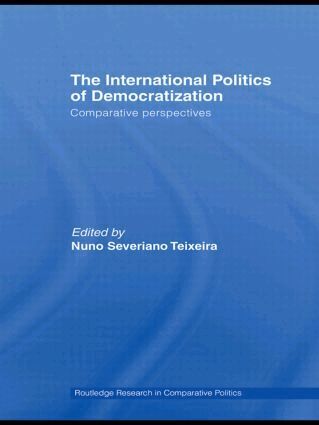
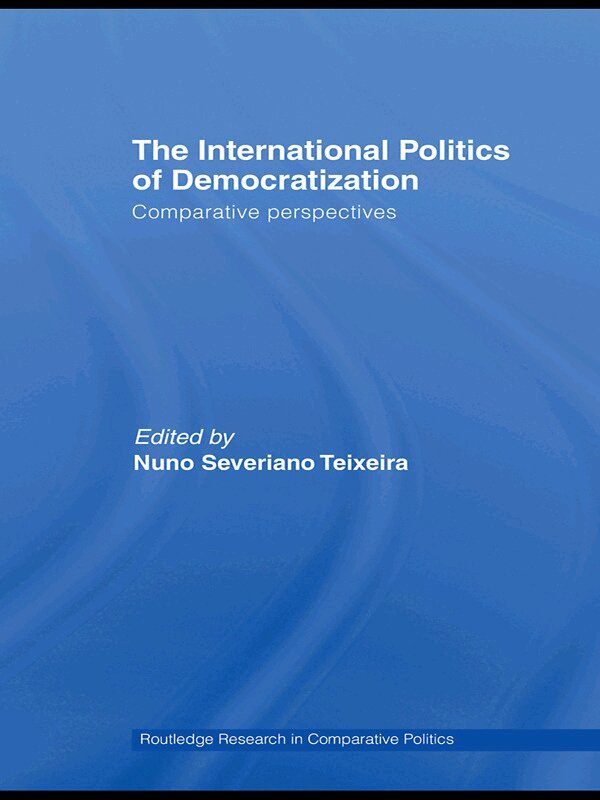
This book examines the international dimensions of democratization processes, showing the degree to which international actors, ranging from states to non-governmental players, have an influence on what were once thought of as exclusively domestic processes of political change.The contributors to the volume look at changes in foreign policy resulting from transitions to democracy in a number of countries and regions. Some of the areas covered include:Portugal and Spain in Europe in the 1970sBrazil and Argentina in Latin America from the early 1980sEastern and Central Europe in the 1990sVarious countries in the Arab WorldThe chapters adopt a theoretical and empirical perspective: while the two introductory chapters of the book place a special emphasis on interpretation and quantitative analysis of regime change and the role of international actors in such processes, the remaining chapters examines specific case studies.The International Politics of Democratization will be of interest to students and researchers of International Relations, Politics and Democracy.
440 kr
Skickas inom 10-15 vardagar
This book examines the international dimensions of democratization processes, showing the degree to which international actors, ranging from states to non-governmental players, have an influence on what were once thought of as exclusively domestic processes of political change.The contributors to the volume look at changes in foreign policy resulting from transitions to democracy in a number of countries and regions. Some of the areas covered include:Portugal and Spain in Europe in the 1970sBrazil and Argentina in Latin America from the early 1980sEastern and Central Europe in the 1990sVarious countries in the Arab WorldThe chapters adopt a theoretical and empirical perspective: while the two introductory chapters of the book place a special emphasis on interpretation and quantitative analysis of regime change and the role of international actors in such processes, the remaining chapters examines specific case studies.The International Politics of Democratization will be of interest to students and researchers of International Relations, Politics and Democracy.
439 kr
Skickas inom 7-10 vardagar
Driven primarily by political concerns to secure democracy, Portugal's accession to the EU in 1986 also served as a catalyst for dynamic economic development following a complex process of democratization and the decolonization of Europe's last empire. This book analyses how the European Union has helped shape the political process in Portugal on key institutions, elites, and its citizen's attitudes.
589 kr
Skickas inom 7-10 vardagar
From war campaigns to peacekeeping operations, The Portuguese at War presents an overview of the conflicts, wars and revolutions in which Portugal was involved from the nineteenth century to the present day. From the French invasions to the civil wars, from the African Empire to the wars of decolonisation, from belligerence in the First World War to neutrality in the Second, from participation in the Atlantic Alliance to peacekeeping operations in Kosovo, East Timor, Lebanon and Afghanistan. The book addresses the military interventions in politics and the role of the countrys political regimes in military reform: from the Liberal Revolutions to the Republic, from the military dictatorship and authoritarian regime to the 25th of April Revolution and the transition to democracy. The historical record of Portugals war involvement is not only closely aligned to international and European circumstance but to internal factors: the economy, society, public opinion and political/military power. A historical perspective must of necessity link Portuguese war excursions with the military institutions in place at the time: their recruitment system, social composition and organisation of the army, navy and air force; the military ethos; the evolution of equipment, weapons and military technologies; strategic military doctrine and how this impacted on tactics and military operations; and of course the war outcomes. Special attention is given to the effects of international isolation after the Estado Novo, and post-Cold War europeanisation. The book does not eschew the plurality of interpretative theories. Rather, it seeks to combine historical accuracy of the Portuguese at war within a highly readable literary narrative aimed not only at undergraduate and research levels, but at a broader public audience interested in the complex reach and role of Portugal in world history.
1 753 kr
Skickas inom 7-10 vardagar
From war campaigns to peacekeeping operations, The Portuguese at War presents an overview of the conflicts, wars and revolutions in which Portugal was involved from the nineteenth century to the present day. From the French invasions to the civil wars, from the African Empire to the wars of decolonisation, from belligerence in the First World War to neutrality in the Second, from participation in the Atlantic Alliance to peacekeeping operations in Kosovo, East Timor, Lebanon and Afghanistan. The book addresses the military interventions in politics and the role of the countrys political regimes in military reform: from the Liberal Revolutions to the Republic, from the military dictatorship and authoritarian regime to the 25th of April Revolution and the transition to democracy. The historical record of Portugals war involvement is not only closely aligned to international and European circumstance but to internal factors: the economy, society, public opinion and political/military power. A historical perspective must of necessity link Portuguese war excursions with the military institutions in place at the time: their recruitment system, social composition and organisation of the army, navy and air force; the military ethos; the evolution of equipment, weapons and military technologies; strategic military doctrine and how this impacted on tactics and military operations; and of course the war outcomes. Special attention is given to the effects of international isolation after the Estado Novo, and post-Cold War europeanisation. The book does not eschew the plurality of interpretative theories. Rather, it seeks to combine historical accuracy of the Portuguese at war within a highly readable literary narrative aimed not only at undergraduate and research levels, but at a broader public audience interested in the complex reach and role of Portugal in world history.