Nurit Guttman – författare
2 389 kr
Skickas inom 10-15 vardagar
3 042 kr
Skickas inom 3-6 vardagar
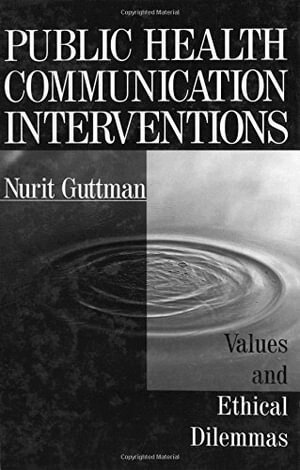
The ethical dimensions of health communicators' interventions and campaigns are brought into question in this thought-provoking book. Examining the efforts to effect behavior change, the author questions how far health communication can and should go in changing people's values. The author broadens the current analysis of interventions and presents conceptual frameworks that help identify values and justifications that are embedded in health communication goals, strategies, and evaluation criteria. This critical approach helps explain how and why choices are made in design and implementation, and provides constructs and frameworks to examine them. It also widens the criteria for program evaluation and policymaking, and provides practitioners, planners, policy-makers, researchers, and students with practice-oriented questions.
2 210 kr
Skickas inom 3-6 vardagar
The ethical dimensions of health communicators' interventions and campaigns are brought into question in this thought-provoking book. Examining the efforts to effect behavior change, the author questions how far health communication can and should go in changing people's values. The author broadens the current analysis of interventions and presents conceptual frameworks that help identify values and justifications that are embedded in health communication goals, strategies, and evaluation criteria. This critical approach helps explain how and why choices are made in design and implementation, and provides constructs and frameworks to examine them. It also widens the criteria for program evaluation and policymaking, and provides practitioners, planners, policy-makers, researchers, and students with practice-oriented questions.
836 kr
Läs direkt efter köp
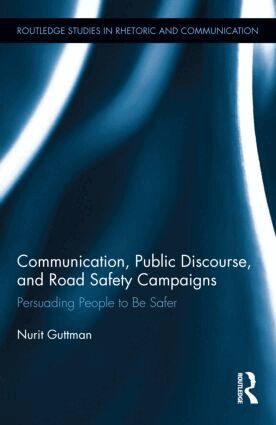
This book discusses the use of communication campaigns to promote road safety, arguing that they need to elicit public discourse on issues pertaining to culture, equity, gender, workplace norms, environmental issues, and social solidarity. Increasingly, new media channels and formats are employed in the dissemination process, making road safety-related messages ubiquitous, and often controversial. Policy makers, educators, researchers, and the public continue to debate the utility and morality of some of the influence tactics employed in these messages, such as the use of graphic images of injury or death, stigmatization (or "blame and shame"), and the use of "black humor." Guttman argues that influencing road safety requires making changes in normative and cultural conceptions of broader issues in society, yet the typical discourse on road safety tends to focus on individual attitudes and practices. The book highlights the importance of social and behavioral theory in communication campaigns on road safety, and critiques the tendency to focus on individual cognition, affect, and risk conceptions rather than on normative, structural, and cultural factors. The volume positions the discourse on road safety as a social issue, and treats road safety behavior as a social activity that directly relates to other public issues, social values, and social policy, while discussing potential uses of social media and participatory approaches. The discussion turns to the role of road safety communication campaigns as part of a democratic process of eliciting public discourse, including how contemporary society could address broader issues of risk and safety.
836 kr
Läs direkt efter köp
This book discusses the use of communication campaigns to promote road safety, arguing that they need to elicit public discourse on issues pertaining to culture, equity, gender, workplace norms, environmental issues, and social solidarity. Increasingly, new media channels and formats are employed in the dissemination process, making road safety-related messages ubiquitous, and often controversial. Policy makers, educators, researchers, and the public continue to debate the utility and morality of some of the influence tactics employed in these messages, such as the use of graphic images of injury or death, stigmatization (or "blame and shame"), and the use of "black humor." Guttman argues that influencing road safety requires making changes in normative and cultural conceptions of broader issues in society, yet the typical discourse on road safety tends to focus on individual attitudes and practices. The book highlights the importance of social and behavioral theory in communication campaigns on road safety, and critiques the tendency to focus on individual cognition, affect, and risk conceptions rather than on normative, structural, and cultural factors. The volume positions the discourse on road safety as a social issue, and treats road safety behavior as a social activity that directly relates to other public issues, social values, and social policy, while discussing potential uses of social media and participatory approaches. The discussion turns to the role of road safety communication campaigns as part of a democratic process of eliciting public discourse, including how contemporary society could address broader issues of risk and safety.
707 kr
Skickas inom 10-15 vardagar