O. L. Davis – författare
Visar alla böcker från författaren O. L. Davis. Handla med fri frakt och snabb leverans.
8 produkter
8 produkter
Häftad, Engelska, 2007
535 kr
Skickas inom 5-8 vardagar
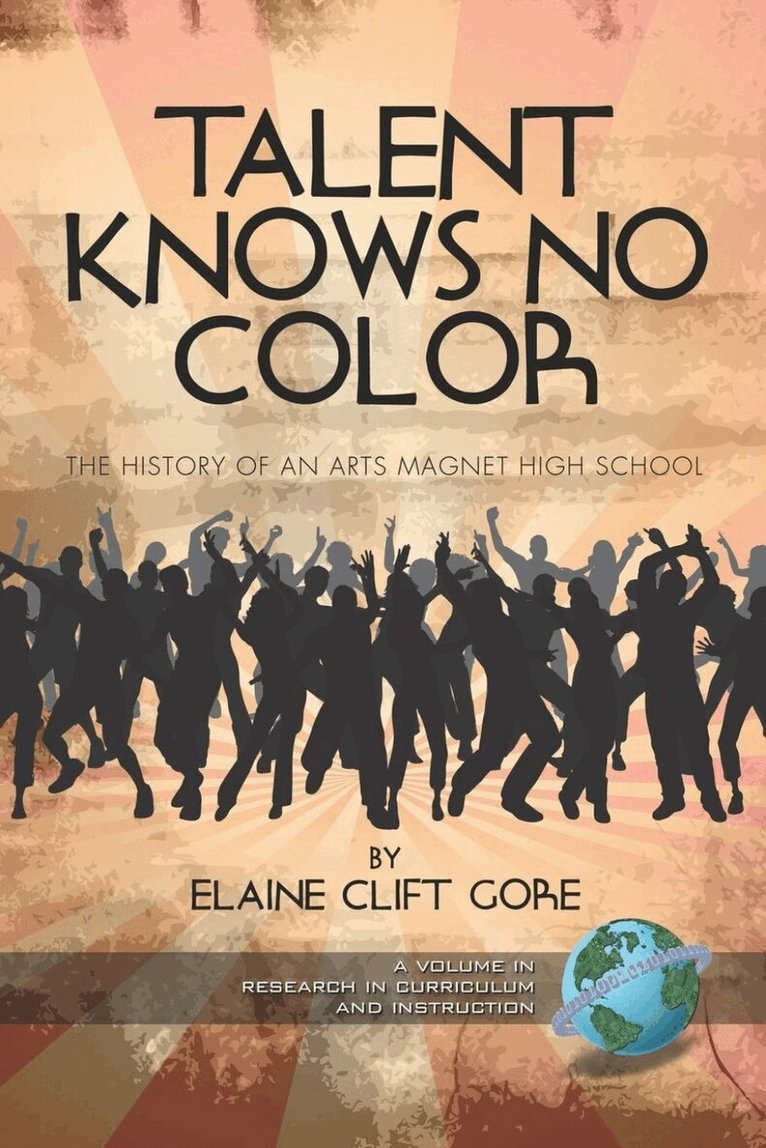
In the summer of 1970, the members of the New Orleans Fifth Circuit Court of Appeals understood clearly the realities of race in the South. Houston, Texas, like other Southern cities, had made haste toward racial school desegregation as slowly as the White Southern Federal courts would allow. When the High School of Performing and Visual Arts opened its doors in Houston a year later, a new superintendent and liberal-dominated Board of Education wished to demonstrate the positive potential of a voluntarily desegregated student body. HSPVA was the first United States public school for the arts specifically used for racial desegregation purposes, the prototype for the first public urban magnet program of desegregation used to replace a standing court order, and a continuing prototype for other public magnet schools for the arts across the United States.Talent Knows No Color is a 35-year history of HSPVA, exemplary in both arts and academics, which chronicles multi-perspective participant experiences within the context of ever-changing district education policies and demographics. Ten years of school system and HSPVA archival research, examination of local newspapers, and oral history interviews allow a rich narrative unusual among the already limited number of scholarly histories of individual public schools. It is the description and analysis of everyday occurrences that assist the reader in understanding what Series Editor O. L. Davis, Jr. refers to as “the continuing, likely never ending, practical development of one particular high school and its curriculum.”
Inbunden, Engelska, 2007
998 kr
Skickas inom 5-8 vardagar
In the summer of 1970, the members of the New Orleans Fifth Circuit Court of Appeals understood clearly the realities of race in the South. Houston, Texas, like other Southern cities, had made haste toward racial school desegregation as slowly as the White Southern Federal courts would allow. When the High School of Performing and Visual Arts opened its doors in Houston a year later, a new superintendent and liberal-dominated Board of Education wished to demonstrate the positive potential of a voluntarily desegregated student body. HSPVA was the first United States public school for the arts specifically used for racial desegregation purposes, the prototype for the first public urban magnet program of desegregation used to replace a standing court order, and a continuing prototype for other public magnet schools for the arts across the United States.Talent Knows No Color is a 35-year history of HSPVA, exemplary in both arts and academics, which chronicles multi-perspective participant experiences within the context of ever-changing district education policies and demographics. Ten years of school system and HSPVA archival research, examination of local newspapers, and oral history interviews allow a rich narrative unusual among the already limited number of scholarly histories of individual public schools. It is the description and analysis of everyday occurrences that assist the reader in understanding what Series Editor O. L. Davis, Jr. refers to as “the continuing, likely never ending, practical development of one particular high school and its curriculum.”
E-bok
Engelska, 2005371 kr
Läs direkt efter köp
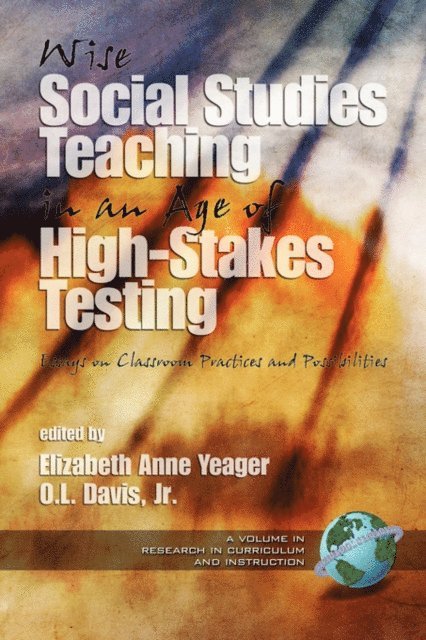
The chapters in this volume illustrate how teachers are bringing creativity, higher-order thinking, and meaningful learning activities into particular school settings despite pressures of standards and testing. We chose the word wise for the title of this book, and we use it frequently to describe the pedagogical practices we have identified. The words powerful and ambitious are used as well. The larger point, as Keith C. Barton makes in his chapter, is that there is no necessary connection between content standards and high-stakes tests on the one hand, and lowlevel, rote instruction on the other. He reminds us, as Thornton (1991) and Wiggins (1987) previously have argued, that "e;teachers play a crucial role in mediating educational policy, and their intentions and interpretations have at least as much influence on classroom practice as does the content of standards and highstakes tests."e; Barton also asserts that "e;this makes it all the more crucial to identify the wisdom of practice that enables teachers . . . to engage students in powerful educational experiences."e;
E-bok
Engelska, 2011511 kr
Läs direkt efter köp
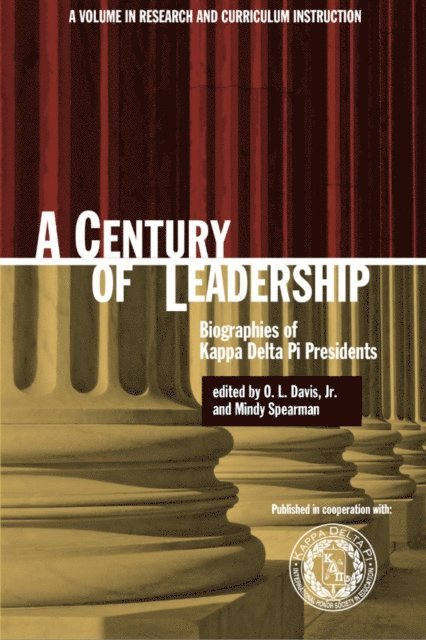
Kappa Delta Pi is an international honor society in Education founded in 1911. This book chronicles the leadership of Kappa Delta Pi across the past century through a collection of short life stories about the 32 individuals who were elected by members to lead the Society. Through their work with their fellow officers, they helped keep alive the flame that called attention to the importance of highly qualified teachers in American schools, in the main, teachers whose academic credentials were very strong.These life stories attend to KDP presidents' contributions to education, particularly with emphasis a) on high academic scholarship for educational professionals, e.g., teacher candidates, teachers at all levels, school administrators, college and university faculty members in education and in fields related to educational practice and knowledge; b) toward teacher candidates' mindful learning in and the integration of liberal arts, education, and other fields of study; c) and in the support and fostering of scholarly endeavors, especially substantive research and creative developments in the educational processes of schooling - all or many related to the individual's involvement in Kappa Delta Pi.A number of elements of Kappa Delta Pi's purposes and practices during its first century are illuminated in this book. Many others remain obscured, neglected, or unknown. Readers reasonably may discover keys to increased understanding and wonderment as they read and think about the lives of these former presidents, particularly about their contributions to the continuance and strengthening of the Society. One impressive key surely is evident. Their presidencies not only helped Kappa Delta Pi to continue to exist. They also fostered the fruitful creation of this honor society in education. And so also will those members and leaders who, succeeding these former presidents, enter confidently into Kappa Delta Pi's second century.
E-bok
Engelska, 2013371 kr
Läs direkt efter köp
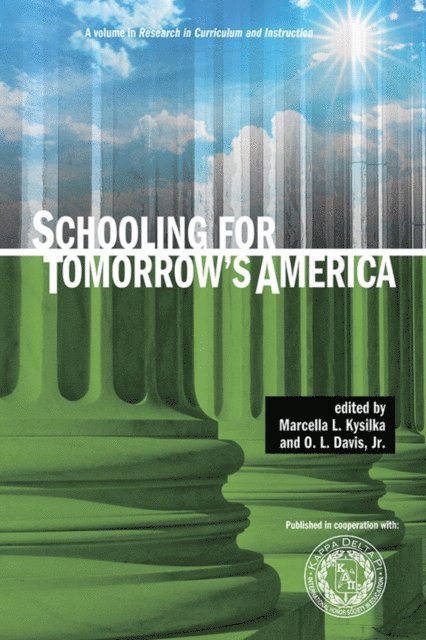
This book can be read by educators at all stages in their careers. What a great selection for a book study group of practicing teachers or for a seminar with graduate students. The authors share their thoughts about education for the future, but also inform us about the past. Whether you encounter this book as a textbook or for a professional learning community, the contents will inform and inspire you, encouraging you to think deeply and work towards the improvement of education.
E-bok
Engelska, 2013557 kr
Läs direkt efter köp
This book can be read by educators at all stages in their careers. What a great selection for a book study group of practicing teachers or for a seminar with graduate students. The authors share their thoughts about education for the future, but also inform us about the past. Whether you encounter this book as a textbook or for a professional learning community, the contents will inform and inspire you, encouraging you to think deeply and work towards the improvement of education.
E-bok
Engelska, 2011760 kr
Läs direkt efter köp
Kappa Delta Pi is an international honor society in Education founded in 1911. This book chronicles the leadership of Kappa Delta Pi across the past century through a collection of short life stories about the 32 individuals who were elected by members to lead the Society. Through their work with their fellow officers, they helped keep alive the flame that called attention to the importance of highly qualified teachers in American schools, in the main, teachers whose academic credentials were very strong.These life stories attend to KDP presidents' contributions to education, particularly with emphasis a) on high academic scholarship for educational professionals, e.g., teacher candidates, teachers at all levels, school administrators, college and university faculty members in education and in fields related to educational practice and knowledge; b) toward teacher candidates' mindful learning in and the integration of liberal arts, education, and other fields of study; c) and in the support and fostering of scholarly endeavors, especially substantive research and creative developments in the educational processes of schooling - all or many related to the individual's involvement in Kappa Delta Pi.A number of elements of Kappa Delta Pi's purposes and practices during its first century are illuminated in this book. Many others remain obscured, neglected, or unknown. Readers reasonably may discover keys to increased understanding and wonderment as they read and think about the lives of these former presidents, particularly about their contributions to the continuance and strengthening of the Society. One impressive key surely is evident. Their presidencies not only helped Kappa Delta Pi to continue to exist. They also fostered the fruitful creation of this honor society in education. And so also will those members and leaders who, succeeding these former presidents, enter confidently into Kappa Delta Pi's second century.
E-bok
Engelska, 2005562 kr
Läs direkt efter köp
The chapters in this volume illustrate how teachers are bringing creativity, higher-order thinking, and meaningful learning activities into particular school settings despite pressures of standards and testing. We chose the word wise for the title of this book, and we use it frequently to describe the pedagogical practices we have identified. The words powerful and ambitious are used as well. The larger point, as Keith C. Barton makes in his chapter, is that there is no necessary connection between content standards and high-stakes tests on the one hand, and lowlevel, rote instruction on the other. He reminds us, as Thornton (1991) and Wiggins (1987) previously have argued, that "e;teachers play a crucial role in mediating educational policy, and their intentions and interpretations have at least as much influence on classroom practice as does the content of standards and highstakes tests."e; Barton also asserts that "e;this makes it all the more crucial to identify the wisdom of practice that enables teachers . . . to engage students in powerful educational experiences."e;