Obioma M. Iheduru – författare
Visar alla böcker från författaren Obioma M. Iheduru. Handla med fri frakt och snabb leverans.
3 produkter
3 produkter
E-bok
PDF, Engelska, 20011 080 kr
Läs direkt efter köp
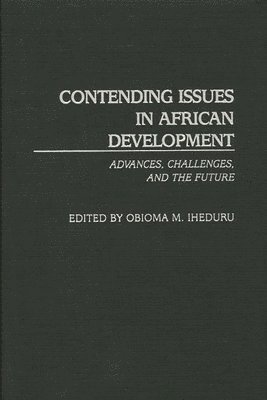
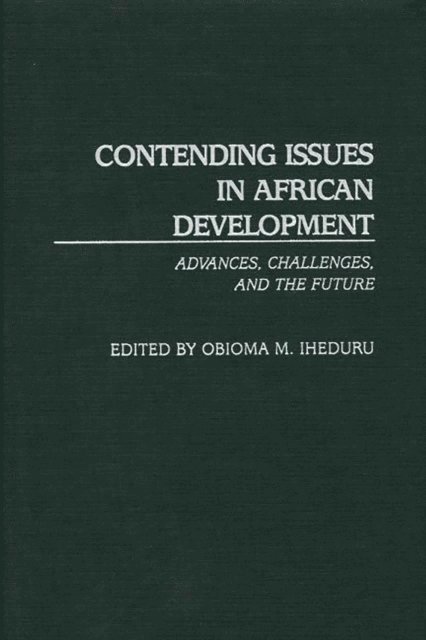
Taking a forward-looking approach, this book critically examines the issues and dynamics central to Africa's problematic development and situates these issues within the contents unique cultural, political, economic, and social milieu. Moving away from a simple litany of problems bedeviling Africa's economy, the book is the culmination of several scholars' efforts to identify specific causative factors. Each chapter delineates a specific issue, demonstrates the role it plays in overall development, and speculates on probable ways to meet the challenges it poses. The major conceptual and epistemological constructs considered include the tamed African State, social capacity, management of change, reconceptualized gender roles, and economic integration.Although the contributors' various approaches diverge and disagree, the epistemological variations contribute cumulatively to an understanding of the issues at the root of Africa's slow pace of development. While traversing the spectrum of issues that affect development, the book uniquely points out that the management of change is pivotal to fostering development. The authors' efforts provide a useful base for future research and help to chart a course of action leading to success in the 21st century.
Inbunden, Engelska, 1999
824 kr
Skickas inom 10-15 vardagar
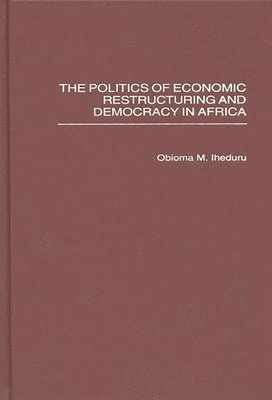
In a bold attempt to develop an innovative theory of political change arising from dual economic and political transformations, Iheduru maintains that economic structural adjustment policies have unintended political consequences, leading to democratic liberalization in post-colonial African states. Using classical, dependency, and neoliberal approaches as a backdrop, he demonstrates that structural adjustment policies shaped by conditionality measures foster the operation of free-enterprise market forces. As a social consequence of the reform effort, winners and losers organize to protect their interests, first in the economy and later in the political arena. Thus the structural reorientation of African economies leads not only to the ascendancy of the market and economic growth but also to the political opening of the African state, thereby facilitating the participation of excluded groups.In conclusion, Iheduru predicts that structural adjustment is the best policy alternative for initiating and sustaining meaningful economic changes in Africa. Moreover, he claims, it may be a deciding factor in the possible democratizing of the African continent, which would provide an auspicious atmosphere for a properly functioning market economy.
Inbunden, Engelska, 2001
1 059 kr
Skickas inom 10-15 vardagar
Taking a forward-looking approach, this book critically examines the issues and dynamics central to Africa's problematic development and situates these issues within the contents unique cultural, political, economic, and social milieu. Moving away from a simple litany of problems bedeviling Africa's economy, the book is the culmination of several scholars' efforts to identify specific causative factors. Each chapter delineates a specific issue, demonstrates the role it plays in overall development, and speculates on probable ways to meet the challenges it poses. The major conceptual and epistemological constructs considered include the tamed African State, social capacity, management of change, reconceptualized gender roles, and economic integration.Although the contributors' various approaches diverge and disagree, the epistemological variations contribute cumulatively to an understanding of the issues at the root of Africa's slow pace of development. While traversing the spectrum of issues that affect development, the book uniquely points out that the management of change is pivotal to fostering development. The authors' efforts provide a useful base for future research and help to chart a course of action leading to success in the 21st century.