

The concept of God, as examined in the book, represents a multifaceted set of beliefs that evolved over several centuries. Communities from different parts of the world believed and still believe in different ideas of the God ideology. In black Africa, the dominant concept of God is that brought by white Christian missionaries, slave traders and European colonialists based on European ancient culture, myths and beliefs. The European cultural idea of God was not universal, or known to blacks in pre-colonial Africa, until the colonisation and Christianisation of most of Africa. Africa has its spirituality and beliefs that slavery and colonialism attempted but failed to fully eradicate. The book examines the imposition of the White Man’s God on blacks and Africans; and the burden blacks carry as direct consequences of slavery, European colonisation, indoctrination through Eurocentric education and white domination.
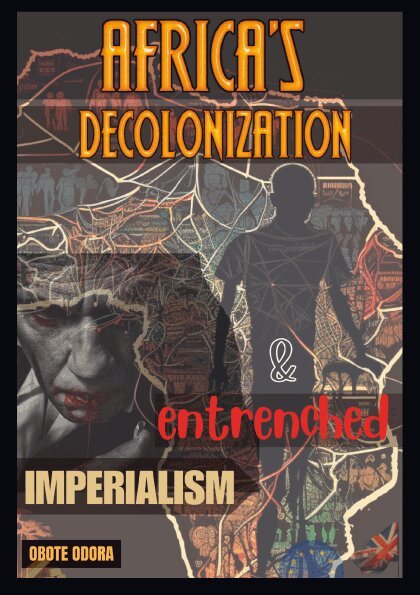
The decolonisation of Africa effectively modernized colonialism rather than granting true independence to African states. This process, often regarded as neo-colonialism, allowed former colonial powers to maintain control over African nations through political, economic, and military means. Institutions such as the United Nations, IMF, World Bank, and NATO, established during colonial times, continue to exert influence. The book argues that true independence and sovereignty for African states will remain elusive until these nations detach from colonial-era institutions and develop their own knowledge systems, beneficial to their indigenous populations. This ongoing direct and indirect interference by former colonialists in African affairs is a hallmark of modernised colonialism.
In 1904, Winston Churchill, a British arch imperialist, unwittingly disclosed the real reason for the British colonisation of Uganda. He observed: "Uganda…in my view, in spite of itsinsects and diseases, in the course of time, ought to become the most prosperous of our entire East and Central African possessions, and perhaps the financial driving wheel of allthis part of the world." Winston Churchill continued: "My counsel plainly is: 'Concentrate upon Uganda.' Nowhere else will the results be more brilliant, more substantial, or more rapidly realised." The British colonialist did concentrate on Uganda, her possession, and produced a black intellectual class that would, like a sub-contractor, rule Uganda on their behalf.
The concept of God, as examined in the book, represents a multifaceted set of beliefs that evolved over several centuries. Communities from different parts of the world believed and still believe in different ideas of the God ideology. In black Africa, the dominant concept of God is that brought by white Christian missionaries, slave traders and European colonialists based on European ancient culture, myths and beliefs. The European cultural idea of God was not universal, or known to blacks in pre-colonial Africa, until the colonisation and Christianisation of most of Africa. Africa has its spirituality and beliefs that slavery and colonialism attempted but failed to fully eradicate. The book examines the imposition of the White Man’s God on blacks and Africans; and the burden blacks carry as direct consequences of slavery, European colonisation, indoctrination through Eurocentric education and white domination.
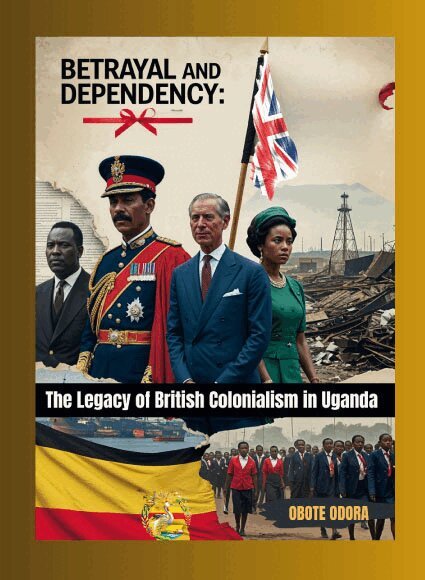
The decolonisation of Africa effectively modernized colonialism rather than granting true independence to African states. This process, often regarded as neo-colonialism, allowed former colonial powers to maintain control over African nations through political, economic, and military means. Institutions such as the United Nations, IMF, World Bank, and NATO, established during colonial times, continue to exert influence. The book argues that true independence and sovereignty for African states will remain elusive until these nations detach from colonial-era institutions and develop their own knowledge systems, beneficial to their indigenous populations. This ongoing direct and indirect interference by former colonialists in African affairs is a hallmark of modernised colonialism.
In 1904, Winston Churchill, a British arch imperialist, unwittingly disclosed the real reason for the British colonisation of Uganda. He observed: "Uganda…in my view, in spite of itsinsects and diseases, in the course of time, ought to become the most prosperous of our entire East and Central African possessions, and perhaps the financial driving wheel of allthis part of the world." Winston Churchill continued: "My counsel plainly is: 'Concentrate upon Uganda.' Nowhere else will the results be more brilliant, more substantial, or more rapidly realised." The British colonialist did concentrate on Uganda, her possession, and produced a black intellectual class that would, like a sub-contractor, rule Uganda on their behalf.