Ofelia B. Miramontes - Böcker
Visar alla böcker från författaren Ofelia B. Miramontes. Handla med fri frakt och snabb leverans.
4 produkter
4 produkter
507 kr
Skickas inom 10-15 vardagar
Linguistic Diversity and Teaching raises questions and provides a context for reflection regarding the complex issues surrounding new English learners in the schools. These issues exist within a highly charged political climate and involve not only language, but also culture, class, ethnicity, and the persistent inequities that characterize our educational system. The text addresses these issues through conversations among experts, practitioners, and readers that are informed by representative case studies and by a range of theoretical approaches. It is designed to engage readers in beginning to evolve their own practical theories, to help them explore and perhaps modify some basic beliefs and assumptions, and to become acquainted with other points of view. Throughout, readers are encouraged to interact with the text and to develop their own perspective on the issue of linguistic diversity and teaching. This is the fourth volume in Reflective Teaching and the Social Conditions of Schooling: A Series for Prospective and Practicing Teachers, edited by Daniel P. Liston and Kenneth M. Zeichner. It follows the same format as previous volumes in the series.*Part I includes four cases dealing with different aspects of the impacts of the changing demographics of public schools. Each case is followed by space for readers to write their own reactions and reflections, and a set of reactions to the cases written by prospective and practicing teachers, administrators, and professors. *Part II presents three public arguments representing very different views about linguistic diversity: in public schools, English should be the only language of instruction; all children should receive instruction in both their first language and English; planning for instruction should be based not on absolutes, but on what is realistically possible in particular settings.*Part III offers the authors' own interpretations of the issues raised throughout the text, outlines a number of ways in which teachers can continue to explore these topics, and includes exercises for further reflection. A glossary and annotated bibliography are provided.This text is pertinent for all prospective and practicing teachers at any stage of their training. It can be used in any undergraduate or graduate course that addresses issues of language diversity and teaching.
Restructuring Schools for Linguistic Diversity
Linking Decision Making to Effective Programs
Häftad, Engelska, 2011
346 kr
Skickas inom 11-20 vardagar
This bestselling book addresses a major instructional and policy concern in public education—how personnel and resources can best be utilised to develop strong instructional programs for a culturally and linguistically diverse (CLD) student population. This meticulously updated second edition incorporates the experience that the authors have gained since the publication of the first edition in 1997. The changes not only reflect the current state of affairs in education, but also what has been learned from the many schools that have used the framework successfully.Useful to prospective and current teachers and essential for educational administrators and policymakers, this new edition includes:Interactive activities in every chapter based on the authors’ professional development work in schools.New templates, tools, and exercises.A new chapter on standards-based differentiated instruction and assessment, and new case studies.Attention to populations that have increased in U.S. schools, such as immigrant refugees from around the globe.New features to support teacher study groups, such as guided discussion questions.
326 kr
Skickas inom 7-10 vardagar
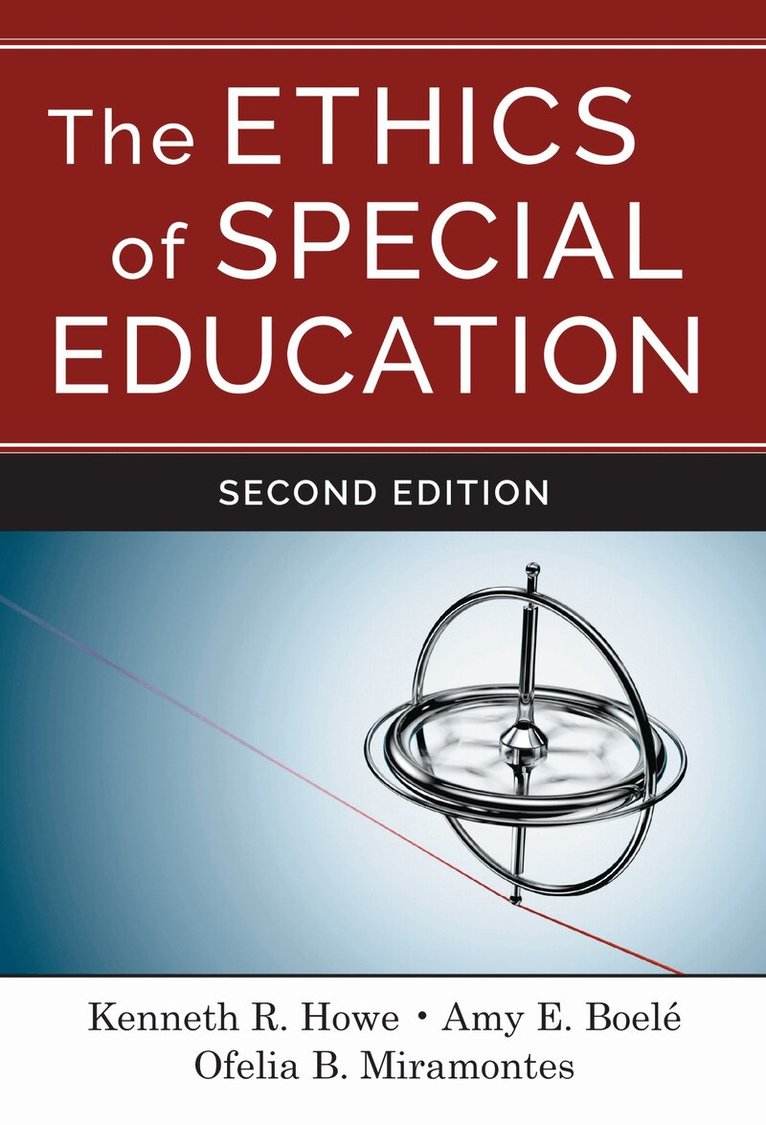
Updated to include changes in the field, this new edition addresses ethical issues that are most pressing to special education teachers and administrators. Using a case-based approach, students are encouraged to reason and collaborate about due process, the distribution of educational resources, institutional unresponsiveness, professional relationships, conflicts among parents and teachers, and confidentiality.
2 773 kr
Skickas inom 10-15 vardagar
Linguistic Diversity and Teaching raises questions and provides a context for reflection regarding the complex issues surrounding new English learners in the schools. These issues exist within a highly charged political climate and involve not only language, but also culture, class, ethnicity, and the persistent inequities that characterize our educational system. The text addresses these issues through conversations among experts, practitioners, and readers that are informed by representative case studies and by a range of theoretical approaches. It is designed to engage readers in beginning to evolve their own practical theories, to help them explore and perhaps modify some basic beliefs and assumptions, and to become acquainted with other points of view. Throughout, readers are encouraged to interact with the text and to develop their own perspective on the issue of linguistic diversity and teaching. This is the fourth volume in Reflective Teaching and the Social Conditions of Schooling: A Series for Prospective and Practicing Teachers, edited by Daniel P. Liston and Kenneth M. Zeichner. It follows the same format as previous volumes in the series.Part I includes four cases dealing with different aspects of the impacts of the changing demographics of public schools. Each case is followed by space for readers to write their own reactions and reflections, and a set of reactions to the cases written by prospective and practicing teachers, administrators, and professors. Part II presents three public arguments representing very different views about linguistic diversity: in public schools, English should be the only language of instruction; all children should receive instruction in both their first language and English; planning for instruction should be based not on absolutes, but on what is realistically possible in particular settings.Part III offers the authors' own interpretations of the issues raised throughout the text, outlin