O.G. Mekenyan – författare
Visar alla böcker från författaren O.G. Mekenyan. Handla med fri frakt och snabb leverans.
3 produkter
3 produkter
Inbunden, Engelska, 1994
1 623 kr
Skickas inom 10-15 vardagar
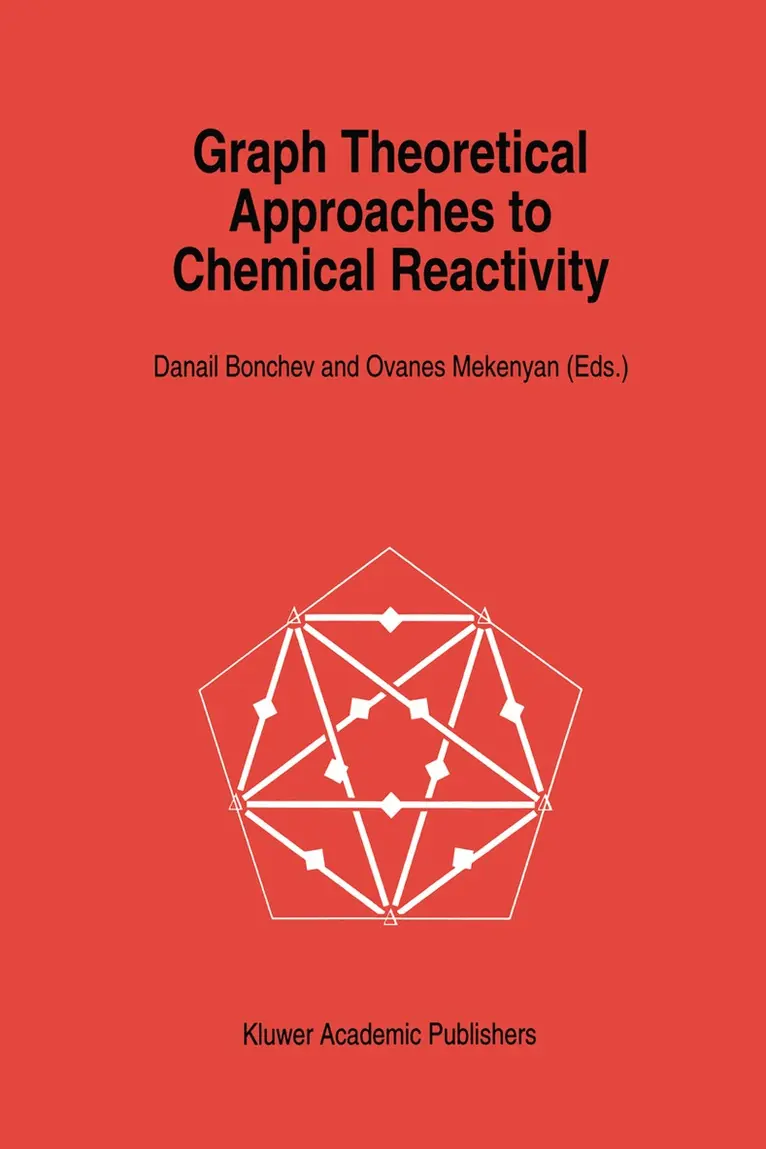
The progress in computer technology during the last 10-15 years has enabled the performance of ever more precise quantum mechanical calculations related to structure and interactions of chemical compounds. However, the qualitative models relating electronic structure to molecular geometry have not progressed at the same pace. There is a continuing need in chemistry for simple concepts and qualitatively clear pictures that are also quantitatively comparable to ab initio quantum chemical calculations. Topological methods and, more specifically, graph theory as a fixed-point topology, provide in principle a chance to fill this gap. With its more than 100 years of applications to chemistry, graph theory has proven to be of vital importance as the most natural language of chemistry. The explosive development of chemical graph theory during the last 20 years has increasingly overlapped with quantum chemistry. Besides contributing to the solution of various problems in theoretical chemistry, this development indicates that topology is an underlying principle that explains the success of quantum mechanics and goes beyond it, thus promising to bear more fruit in the future.
Häftad, Engelska, 2012
1 623 kr
Skickas inom 10-15 vardagar
The progress in computer technology during the last 10-15 years has enabled the performance of ever more precise quantum mechanical calculations related to structure and interactions of chemical compounds. However, the qualitative models relating electronic structure to molecular geometry have not progressed at the same pace. There is a continuing need in chemistry for simple concepts and qualitatively clear pictures that are also quantitatively comparable to ab initio quantum chemical calculations. Topological methods and, more specifically, graph theory as a fixed-point topology, provide in principle a chance to fill this gap. With its more than 100 years of applications to chemistry, graph theory has proven to be of vital importance as the most natural language of chemistry. The explosive development of chemical graph theory during the last 20 years has increasingly overlapped with quantum chemistry. Besides contributing to the solution of various problems in theoretical chemistry, this development indicates that topology is an underlying principle that explains the success of quantum mechanics and goes beyond it, thus promising to bear more fruit in the future.
E-bok
PDF, Engelska, 20122 049 kr
Läs direkt efter köp
The progress in computer technology during the last 10-15 years has enabled the performance of ever more precise quantum mechanical calculations related to structure and interactions of chemical compounds. However, the qualitative models relating electronic structure to molecular geometry have not progressed at the same pace. There is a continuing need in chemistry for simple concepts and qualitatively clear pictures that are also quantitatively comparable to ab initio quantum chemical calculations. Topological methods and, more specifically, graph theory as a fixed-point topology, provide in principle a chance to fill this gap. With its more than 100 years of applications to chemistry, graph theory has proven to be of vital importance as the most natural language of chemistry. The explosive development of chemical graph theory during the last 20 years has increasingly overlapped with quantum chemistry. Besides contributing to the solution of various problems in theoretical chemistry, this development indicates that topology is an underlying principle that explains the success of quantum mechanics and goes beyond it, thus promising to bear more fruit in the future.