Ogden Goelet - Böcker
Visar alla böcker från författaren Ogden Goelet. Handla med fri frakt och snabb leverans.
7 produkter
7 produkter
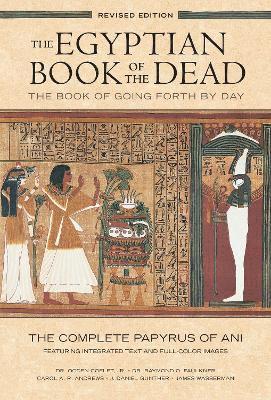
Egyptian Book of the Dead: The Book of Going Forth by Day : The Complete Papyrus of Ani Featuring Integrated Text and Full-Color Images (History ... Mythology Books, History of Ancient Egypt)
Häftad, Engelska, 2015
259 kr
Skickas
For the first time in 3,300 years, The Egyptian Book of the Dead: The Book of Going Forth by Day: The Papyrus of Ani is showcased in its entirety in seventy four magnificent, large-format, color pages.Maybe the most stunning presentation of this book in 3300 years: Upon death, it was the practice for some Egyptians to produce a papyrus manuscript called the Book of Going Forth by Day or the Book of the Dead. A Book of the Dead included declarations and spells to help the deceased in the afterlife. The Papyrus of Ani is the manuscript compiled for Ani, the royal scribe of Thebes. Written and illustrated almost 3,300 years ago, The Papyrus of Ani is a papyrus manuscript with cursive hieroglyphs and color illustrations. It is the most beautiful, best-preserved, and complete example of ancient Egyptian philosophical and religious thought known to exist.The Egyptian Book of the Dead is an integral part of the world's spiritual heritage. It is an artistic rendering of the mysteries of life and death. For the first time since its creation, this ancient papyrus is now available in full color with an integrated English translation directly below each image. This twentieth-anniversary edition of The Egyptian Book of the Dead has been revised and expanded to include:• Significant improvements to the display of the images of the Papyrus.• A survey of the continuing importance of ancient Egypt in modern culture.• A detailed history of Egyptian translation and philology since the discovery of the Rosetta Stone in 1799.• And, a state-of-the-art Annotated Bibliography and Study Guide for Ancient Egyptian studies.As the third revised edition, the entire corpus of this critical work is given its most accessible and lavish presentation ever.• Includes a detailed history of Egyptian scholarship, an annotated bibliography and study guide, and several improvements to the color plates. • Makes an excellent gift for people interested in world history and ancient religions.
Del 18 - Bulletin of the Egyptological Seminar
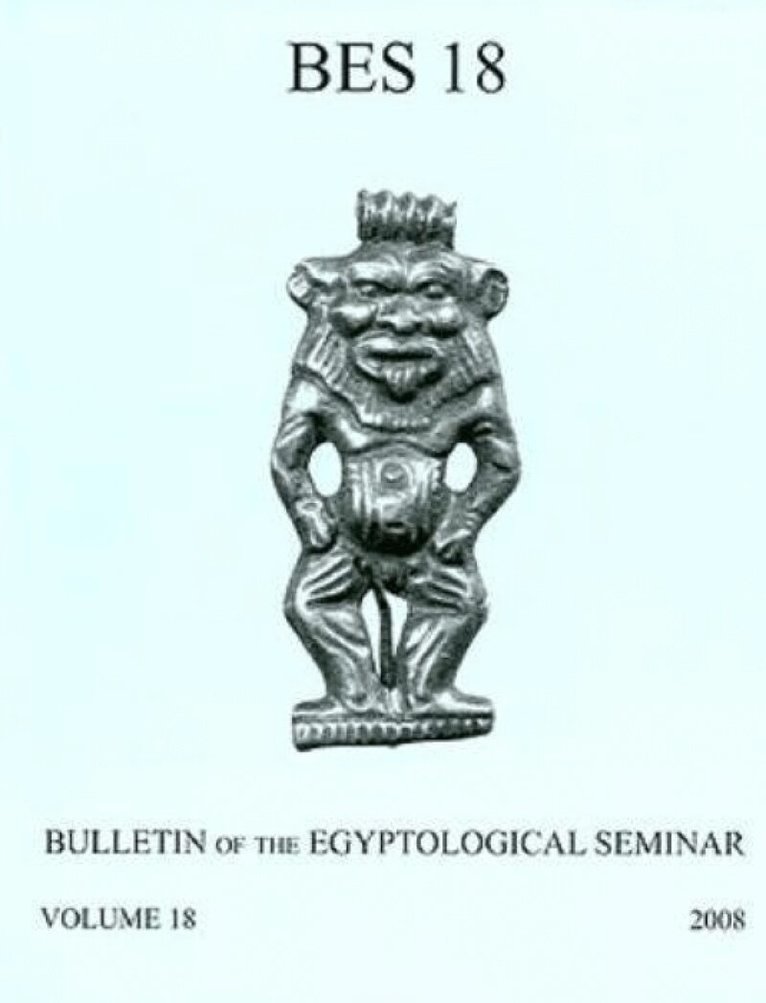
Bulletin of the Egyptological Seminar
Volume 18 (2009)
Häftad, Engelska, 2009
618 kr
Skickas inom 5-8 vardagar
Most of this issue of BES is devoted to "Abbreviations in Egyptology," a comprehensive research tool that provides scholars with more than 5200 abbreviations used in Egyptological and Biblical literature. It is of particular use to those without ready access to the Lexikon der Ägyptologie. Also included are articles by Dieter Arnold discussing an exciting new discovery about the construction of Senwosret III's pyramid at Dahshur and John Gee about the use of the adverbial component in Egyptian sentences.
Del 19 - Bulletin of the Egyptological Seminar of New York
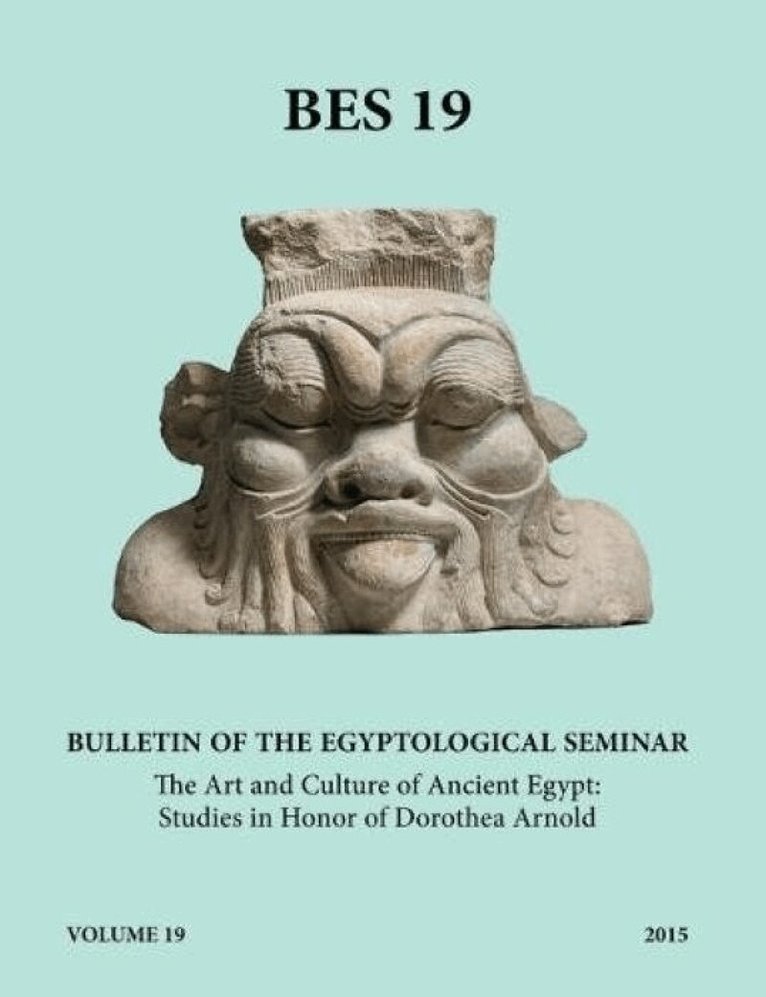
Bulletin of the Egyptological Seminar, Volume 19 (2015)
The Art and Culture of Ancient Egypt: Studies in Honor of Dorothea Arnold
Häftad, Engelska, 2016
1 524 kr
Skickas inom 5-8 vardagar
Dorothea Arnold’s career in Egyptology is distinguished by the scope of her scholarship and by her understanding its detailed messages. She has brought her keen sense of observation and meticulous archaeological reflection to publications and exhibitions that have enriched our understanding of sculpture and relief, pottery and models, the Old Kingdom through the Roman Period. This volume published in her honor reflects her wide-ranging interests. It contains seventy articles by sixty-four Egyptologists, conservators, and scientists, who examine aspects of art history, archaeology, burial customs, language, chronology, conservation, and museum studies covering all periods of ancient Egypt.
Temple of Ramesses II in Abydos, Volume 1 Wall Scenes (Parts 1 and 2)
Part 1, Exterior Walls and Courts; Part 2, Chapels and First Pylon
Inbunden, Engelska, 2015
7 202 kr
Tillfälligt slut
Of all the enormous monuments throughout Egypt and Nubia that Ramesses II (the Great; ca. 1279-1212 BCE) left behind, his temple at Abydos, built early in his reign, stands as one of his most elegant monuments, with its simple architectural layout and dramatic and graceful painted relief scenes. Though best known for its dramatic reliefs depicting the battle of Kadesh, the temple also offers a wealth of information about religious and social life in ancient Egypt. It reflects, for example, the strenuous efforts of the early Ramessides to reestablish the Osiris cult in Egypt-and particularly at Abydos-in the aftermath of the Amarna period.Over a seven-year period, the authors of The Temple of Ramesses II in Abydos conducted a field project with the aim of producing an up-to-date and comprehensive architectural, photographic, and epigraphic record of the temple.This lavish volume, the first of two documenting their results, is presented in two parts ('Part 1: Exterior Walls and Courts' and 'Part 2: Chapels and First Pylon') is the first of two volumes documenting their results. It presents more than two hundred detailed line drawings-accurately rendered according to modern epigraphical standards-of the temple's carved relief scenes, placed alongside their corresponding full-color photographs. The result is a masterpiece of modern epigraphic research and publication.Volume 1 consists of of two books, with a total of over 400 illustrations and Preface. Volume 2, "Pillars, Miscellany, and Inscriptions", contains additional elements of the temple, as well as translations of the inscriptions found in the temple.
2 513 kr
Skickas inom 5-8 vardagar
Of all the enormous monuments throughout Egypt and Nubia that Ramesses II (the Great; ca. 1279-1212 BCE) left behind, his temple at Abydos, built early in his reign, stands as one of his most elegant monuments, with its simple architectural layout and dramatic and graceful painted relief scenes. Though best known for its dramatic reliefs depicting the battle of Kadesh, the temple also offers a wealth of information about religious and social life in ancient Egypt. It reflects, for example, the strenuous efforts of the early Ramessides to reestablish the Osiris cult in Egypt-and particularly at Abydos-in the aftermath of the Amarna period. Over a seven-year period, the authors of The Temple of Ramesses II in Abydos conducted a field project with the aim of producing an up-to-date and comprehensive architectural, photographic, and epigraphic record of the temple. The result is a masterpiece of modern epigraphic research and publication.This volume - Volume 2, Pillars, Niches and Miscellaea - is the second of two volumes documenting their results. It presents more than two hundred illustrations including detailed line drawings - accurately rendered according to modern epigraphical standards - of elements of the temple as well as translations of the inscriptions found in the temple. .
Temple of Ramesses II in Abydos (Volumes 1 and 2 set)
Volume 1, Wall Scenes and Volume 2, Pillars, Niches and Miscellanea
Inbunden, Engelska, 2022
8 178 kr
Tillfälligt slut
Of all the enormous monuments throughout Egypt and Nubia that Ramesses II (the Great; ca. 1279-1212 BCE) left behind, his temple at Abydos stands as one of his most elegant monuments, with its simple architectural layout and dramatic and graceful painted relief scenes. Though best known for its dramatic reliefs depicting the battle of Kadesh, the temple also offers a wealth of information about religious and social life in ancient Egypt. The authors conducted a seven-year field project with the aim of producing an up-to-date and comprehensive architectural, photographic and epigraphic record of the temple. Volume 1, in two parts ('Part 1: Exterior Walls and Courts' and 'Part 2: Chapels and First Pylon') presents more than two hundred detailed line drawings of the temple's carved relief scenes, placed alongside their corresponding full-colour photographs; it is a masterpiece of modern epigraphic research and publication. Volume 2, "Pillars, Miscellany, and Inscriptions", contains additional elements of the temple, as well as translations of the inscriptions found there. This set of the three books making up Volumes 1 and 2 is currently available at the special price of £410.00, a saving of over £70.00. Also available separately: Volume 1, two books (2015, ISBN 9781937040369, 504 large format pages, £370.00); Volume 2 (2022, ISBN 9781937040376, 630 pages,£113.00). Volume 3, Architectural and Inscriptional Features (ISBN 9781948488785) is forthcoming.
Temple of Ramesses II in Abydos Volume 3
Architectural and Inscriptional Features
Inbunden, Engelska, 2022
2 772 kr
Skickas inom 5-8 vardagar
Building on the comprehensive photographic and epigraphic documentation of the temple presented in The Temple of Ramesses II at Abydos volumes 1 (Wall Scenes) and 2 (Pillars, Niches and Miscellanea), volume 3 (Architectural and Inscriptional Features) offers a detailed analysis of the overall architectural layout and decorative programme of the temple and its symbolism. Of all the enormous monuments throughout Egypt and Nubia that Ramesses II (the Great; ca. 1279-1212 BCE) left behind, his temple at Abydos, built early in his reign, stands as one of his most elegant, with its simple architectural layout and dramatic and graceful painted relief scenes. Though best known for its dramatic reliefs depicting the battle of Kadesh, the temple also offers a wealth of information about religious and social life in ancient Egypt. It reflects, for example, the strenuous efforts of the early Ramessides to reestablish the Osiris cult in Egypt -- and particularly at Abydos -- in the aftermath of the Amarna period. This discussion approaches the religious history of the site through its archaeology, its inscriptions-both planned and secondary (graffiti)-and its situation in the complex religious landscape of Abydos. Of particular interest are the temple's role as a staging point for the great Osiris Festival and its procession, among the most important of all ritual events in the Egyptian religious calendar during the Ramesside period; the promotion of an active, unbound form of Osiris; and the evidence for important cult activities that took place on the rooftop of the temple, the presence of which is documented today by the staircase that accessed it from Court B.