Oliver Falk – författare
Visar alla böcker från författaren Oliver Falk. Handla med fri frakt och snabb leverans.
4 produkter
4 produkter
Del 24 - Social Histories of Medicine
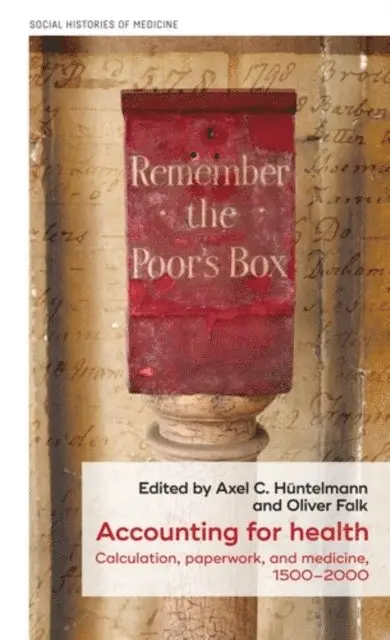
Accounting for Health
Calculation, Paperwork, and Medicine, 1500–2000
Inbunden, Engelska, 2021
1 185 kr
Skickas inom 5-8 vardagar
Whether in the Swiss countryside or in a doctor's office in Boston, in German, English or French hospitals or within multinational organizations, with early vaccinations or with new pharmaceuticals from Big Pharma today, or in early modern Saxon mining towns or in Prussian military healthcare – for at least 500 years, accounting has been an essential part of medical practice with significant moral, social and epistemological implications. Covering the period between 1500–2000, the book examines in short case studies the importance of calculative practices for medicine in very different contexts. Thus, Accounting for Health offers a synopsis of the extent to which accounting not only influenced medical practices over centuries, but shaped modern medicine as a whole.This book is relevant to United Nations Sustainable Development Goal 3, Good health and well-being.
Del 24 - Social Histories of Medicine
Accounting for Health
Calculation, Paperwork, and Medicine, 1500–2000
E-bok
PDF, Engelska, 20211 212 kr
Läs direkt efter köp
Whether in the Swiss countryside or in a doctor's office in Boston, in German, English or French hospitals or within multinational organizations, with early vaccinations or with new pharmaceuticals from Big Pharma today, or in early modern Saxon mining towns or in Prussian military healthcare – for at least 500 years, accounting has been an essential part of medical practice with significant moral, social and epistemological implications. Covering the period between 1500–2000, the book examines in short case studies the importance of calculative practices for medicine in very different contexts. Thus, Accounting for Health offers a synopsis of the extent to which accounting not only influenced medical practices over centuries, but shaped modern medicine as a whole.This book is relevant to United Nations Sustainable Development Goal 3, Good health and well-being.
Del 24 - Social Histories of Medicine
Accounting for Health
Calculation, Paperwork, and Medicine, 1500–2000
E-bok
Engelska, 20211 212 kr
Läs direkt efter köp
Whether in the Swiss countryside or in a doctor's office in Boston, in German, English or French hospitals or within multinational organizations, with early vaccinations or with new pharmaceuticals from Big Pharma today, or in early modern Saxon mining towns or in Prussian military healthcare – for at least 500 years, accounting has been an essential part of medical practice with significant moral, social and epistemological implications. Covering the period between 1500–2000, the book examines in short case studies the importance of calculative practices for medicine in very different contexts. Thus, Accounting for Health offers a synopsis of the extent to which accounting not only influenced medical practices over centuries, but shaped modern medicine as a whole.This book is relevant to United Nations Sustainable Development Goal 3, Good health and well-being.
E-bok
Tyska, 2021107 kr
Läs direkt efter köp
Eigentlich haben alle Kinder einen inneren Bewegungsdrang, manche Kinder mehr, manche etwas weniger. Aber Bewegung ist für ein gesundes Wachstum, sowie für die Motorik unbedingt notwendig.Kinder lernen dadurch das Körperbewusstsein, das Koordinationsvermögen, den Gleichgewichtssinn und vor allem auch die Raumerfahrung kennen. Die Motorik wird gefördert und weiterentwickelt. Durch viel Bewegung lernen Kinder selbstbewusst zu werden und eine positive Selbstwahrnehmung zu empfinden. Außerdem fördert Bewegung einen gesunden Stoffwechsel. Die Knochen werden gefestigt, Muskeln entwickeln sich besser und die Organe bleiben gesund. Kinder fühlen sich wesentlich wohler, wenn sie sich ausreichend bewegen. Kleine Kinder lernen Bewegungen einzuschätzen und vorauszuahnen, wie beispielsweise das Herabrollen eines Balles von einer Schräge. Sie lernen das Gewicht von Gegenständen einzuschätzen beim Herumtragen von Sachen und auch, dass die Gegenstände in der Ferne kleiner aussehen als sie sind.Beim Klettern lernen die Kinder nicht nur ihre Motorik zu verbessern, sondern es schult auch die Raumwahrnehmung und das Körperbewusstsein. Sie müssen sich mit der Schwerkraft und dem Gleichgewichtssinn auseinandersetzen. Deshalb ist es immens wichtig, dass sich Ihre Kinder viel bewegen.