Oliver May - Böcker
Visar alla böcker från författaren Oliver May. Handla med fri frakt och snabb leverans.
6 produkter
6 produkter
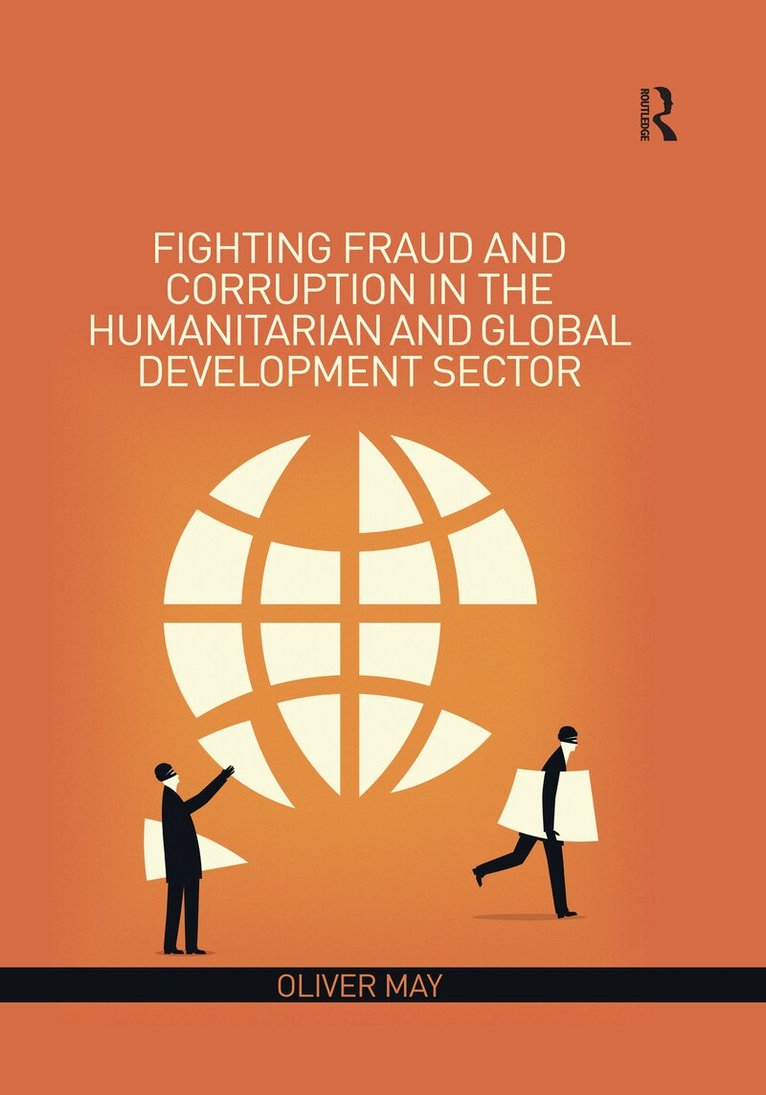
Fighting Fraud and Corruption in the Humanitarian and Global Development Sector
Häftad, Engelska, 2019
564 kr
Skickas inom 10-15 vardagar
There are an estimated 40,000 international Non-Government Organisations (NGOs), working in an enormous global aid industry; official development assistance alone reached £90bn in 2014. This is supplemented by huge voluntary giving – the UK public, for example, give around £1bn a year to overseas causes.These organisations face a unique challenge from fraud and corruption. Operating in the world’s most under-developed and fragile environments, with minimal infrastructure and trust-based cultures, the risk is high. And, being wholly reliant on donors and supporters for income, so are the stakes.Researchers make different estimates of the scale of the problem facing the sector. Some research implies that losses to the global aid budget caused by occupational fraud and abuse may be in the billions of pounds, while those to the British public's voluntary overseas donations could be in the tens of millions.For many sector professionals working in the developing world, these estimates are readily believable. Fighting Fraud and Corruption in the Humanitarian and Global Development Sector by Oliver May is a timely, accessible and relevant how-to guide, which explores the scale and nature of the threat, debunks pervasive myths, and shows readers how to help their NGOs to better deter, prevent, detect and respond to fraud and corruption.
535 kr
Skickas inom 10-15 vardagar
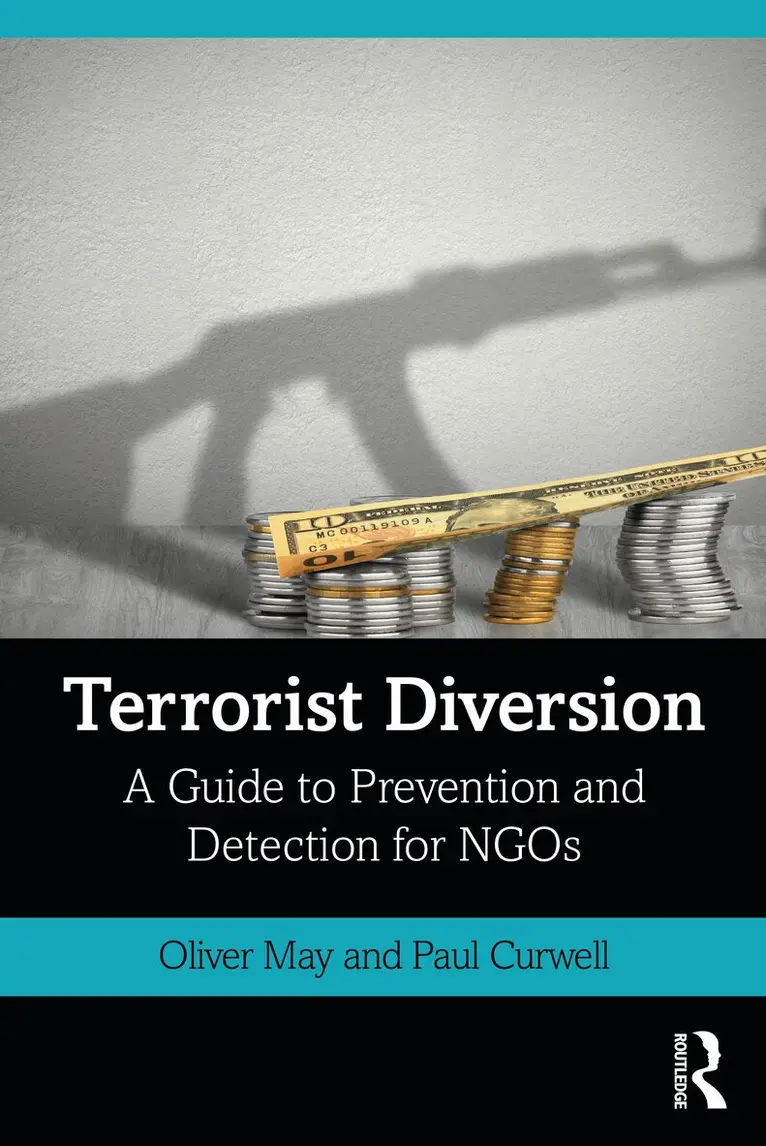
Many of the world’s 40,000 International NGOs (INGOs) work in places where terrorist financing, sanctions breaches, and diversion are key risks. Almost all of the top ten recipient countries of humanitarian aid alone in 2015 were high-risk jurisdictions, for example, receiving more than £7bn between them. When they feel safe to speak, sector workers share sobering stories about what might have happened to some of this money.As INGOs struggle to keep up with worsening humanitarian needs, diversion risks and their complexity remain daunting. The demands of internal stakeholders, donors, banks, and regulators are diverse and even contradictory. Public scrutiny has magnified, but is not always well-informed. Institutional donors transfer ever more risk to implementing partners, while some banks seek to avoid this business altogether, pushing some NGOs outside the global banking system. Looming over all of these converging pressures is a latticework of austere international sanctions and counter-terror regimes.It is no surprise that INGOs find themselves struggling to reconcile this complex set of expectations with their charitable missions. Yet the consequences of failing to do so can be severe; future funding is contingent on reputation, and serious offences litter the regulatory landscape. The implications of breaches can be existential for organisations and criminal for individuals.Terrorist Diversion: A Guide to Prevention and Detection for NGOs is an accessible, pragmatic guide for international NGOs of all shapes and sizes. Clearly explaining the nature of the challenge, and setting out a programme to meet it, it explores how it is possible for INGOs to manage these risks more effectively through their missions – not in spite of them.
771 kr
Skickas inom 10-15 vardagar
Many of the world’s 40,000 International NGOs (INGOs) work in places where terrorist financing, sanctions breaches, and diversion are key risks. Almost all of the top ten recipient countries of humanitarian aid alone in 2015 were high-risk jurisdictions, for example, receiving more than £7bn between them. When they feel safe to speak, sector workers share sobering stories about what might have happened to some of this money.As INGOs struggle to keep up with worsening humanitarian needs, diversion risks and their complexity remain daunting. The demands of internal stakeholders, donors, banks, and regulators are diverse and even contradictory. Public scrutiny has magnified, but is not always well-informed. Institutional donors transfer ever more risk to implementing partners, while some banks seek to avoid this business altogether, pushing some NGOs outside the global banking system. Looming over all of these converging pressures is a latticework of austere international sanctions and counter-terror regimes.It is no surprise that INGOs find themselves struggling to reconcile this complex set of expectations with their charitable missions. Yet the consequences of failing to do so can be severe; future funding is contingent on reputation, and serious offences litter the regulatory landscape. The implications of breaches can be existential for organisations and criminal for individuals.Terrorist Diversion: A Guide to Prevention and Detection for NGOs is an accessible, pragmatic guide for international NGOs of all shapes and sizes. Clearly explaining the nature of the challenge, and setting out a programme to meet it, it explores how it is possible for INGOs to manage these risks more effectively through their missions – not in spite of them.
Fighting Fraud and Corruption in the Humanitarian and Global Development Sector
Inbunden, Engelska, 2016
1 928 kr
Skickas inom 10-15 vardagar
There are an estimated 40,000 international Non-Government Organisations (NGOs), working in an enormous global aid industry; official development assistance alone reached £90bn in 2014. This is supplemented by huge voluntary giving – the UK public, for example, give around £1bn a year to overseas causes.These organisations face a unique challenge from fraud and corruption. Operating in the world’s most under-developed and fragile environments, with minimal infrastructure and trust-based cultures, the risk is high. And, being wholly reliant on donors and supporters for income, so are the stakes.Researchers make different estimates of the scale of the problem facing the sector. Some research implies that losses to the global aid budget caused by occupational fraud and abuse may be in the billions of pounds, while those to the British public's voluntary overseas donations could be in the tens of millions.For many sector professionals working in the developing world, these estimates are readily believable. Fighting Fraud and Corruption in the Humanitarian and Global Development Sector by Oliver May is a timely, accessible and relevant how-to guide, which explores the scale and nature of the threat, debunks pervasive myths, and shows readers how to help their NGOs to better deter, prevent, detect and respond to fraud and corruption.
6 176 kr
Skickas inom 11-20 vardagar
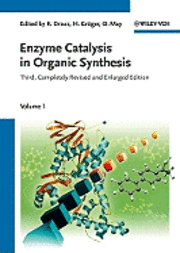
This comprehensive three-volume set is the standard reference in the field of organic synthesis, catalysis and biocatalysis. Edited by a highly experienced and highly knowledgeable team with a tremendous amount of experience in this field and its applications, this edition retains the successful concept of past editions, while the contents are very much focused on new developments in the field. All the techniques described are directly transferable from the lab to the industrial scale, making for a very application-oriented approach. A must for all chemists and biotechnologists.
1 844 kr
Skickas inom 5-8 vardagar
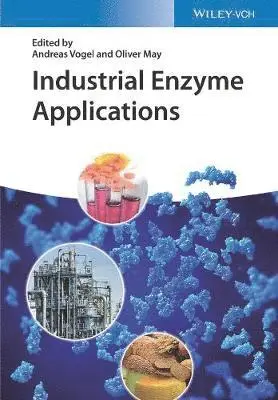
This reference is a "must-read": It explains how an effective and economically viable enzymatic process in industry is developed and presents numerous successful examples which underline the efficiency of biocatalysis.