Oliver Simons - Böcker
Visar alla böcker från författaren Oliver Simons. Handla med fri frakt och snabb leverans.
7 produkter
7 produkter
642 kr
Skickas inom 5-8 vardagar
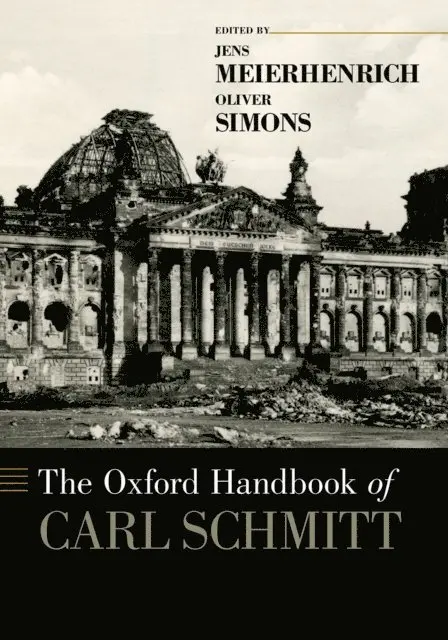
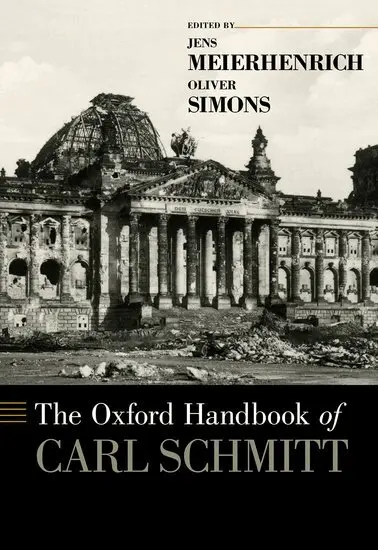
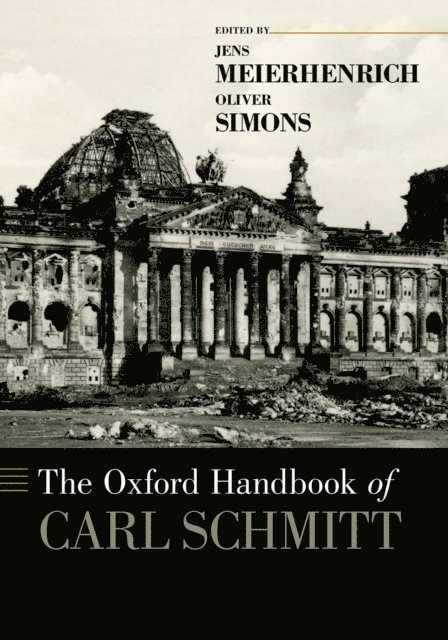
The Oxford Handbook of Carl Schmitt collects thirty original chapters on the diverse oeuvre of one of the most controversial thinkers of the twentieth century. Carl Schmitt (1888-1985) was a German theorist whose anti-liberalism continues to inspire scholars and practitioners on both the Left and the Right. Despite Schmitt's rabid anti-semitism and partisan legal practice in Nazi Germany, the appeal of his trenchant critiques of, among other things, aestheticism, representative democracy, and international law as well as of his theoretical justifications of dictatorship and rule by exception is undiminished. Uniquely located at the intersection of law, the social sciences, and the humanities, this volume brings together sophisticated yet accessible interpretations of Schmitt's sprawling thought and complicated biography. The contributors hail from diverse disciplines, including art, law, literature, philosophy, political science, and history. In addition to opening up exciting new avenues of research, The Oxford Handbook of Carl Schmitt provides the intellectual foundations for an improved understanding of the political, legal, and cultural thought of this most infamous of German theorists. A substantial introduction places the trinity of Schmitt's thought in a broad context.
2 524 kr
Skickas inom 7-10 vardagar
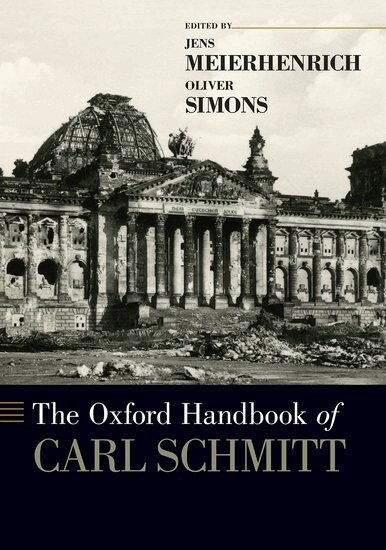
The Oxford Handbook of Carl Schmitt collects thirty original chapters on the diverse oeuvre of one of the most controversial thinkers of the twentieth century. Carl Schmitt (1888-1985) was a German theorist whose anti-liberalism continues to inspire scholars and practitioners on both the Left and the Right. Despite Schmitt's rabid antisemitism and partisan legal practice in Nazi Germany, the appeal of his trenchant critiques of, among other things, aestheticism, representative democracy, and international law as well as of his theoretical justifications of dictatorship and rule by exception is undiminished. Uniquely located at the intersection of law, the social sciences, and the humanities, this volume brings together sophisticated yet accessible interpretations of Schmitt's sprawling thought and complicated biography. The contributors hail from diverse disciplines, including art, law, literature, philosophy, political science, and history. In addition to opening up exciting new avenues of research, The Oxford Handbook of Carl Schmitt provides the intellectual foundations for an improved understanding of the political, legal, and cultural thought of this most infamous of German theorists. A substantial introduction places the trinity of Schmitt's thought in a broad context.
428 kr
Skickas inom 11-20 vardagar
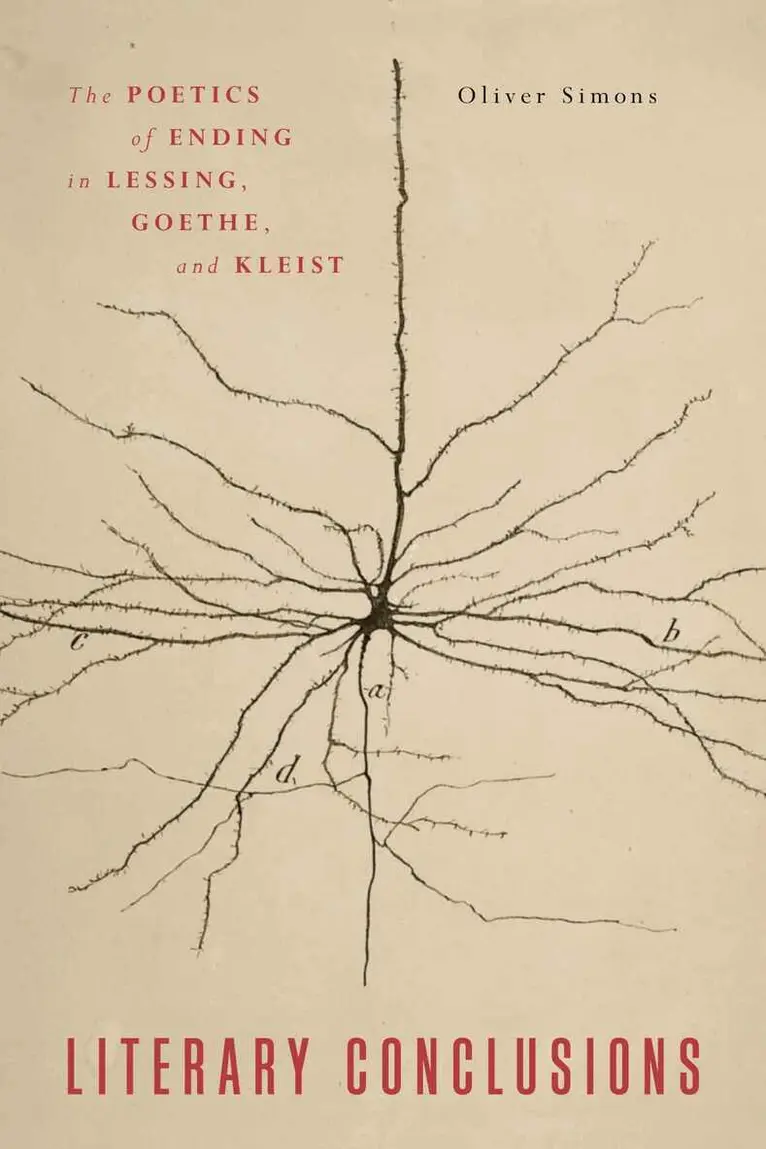
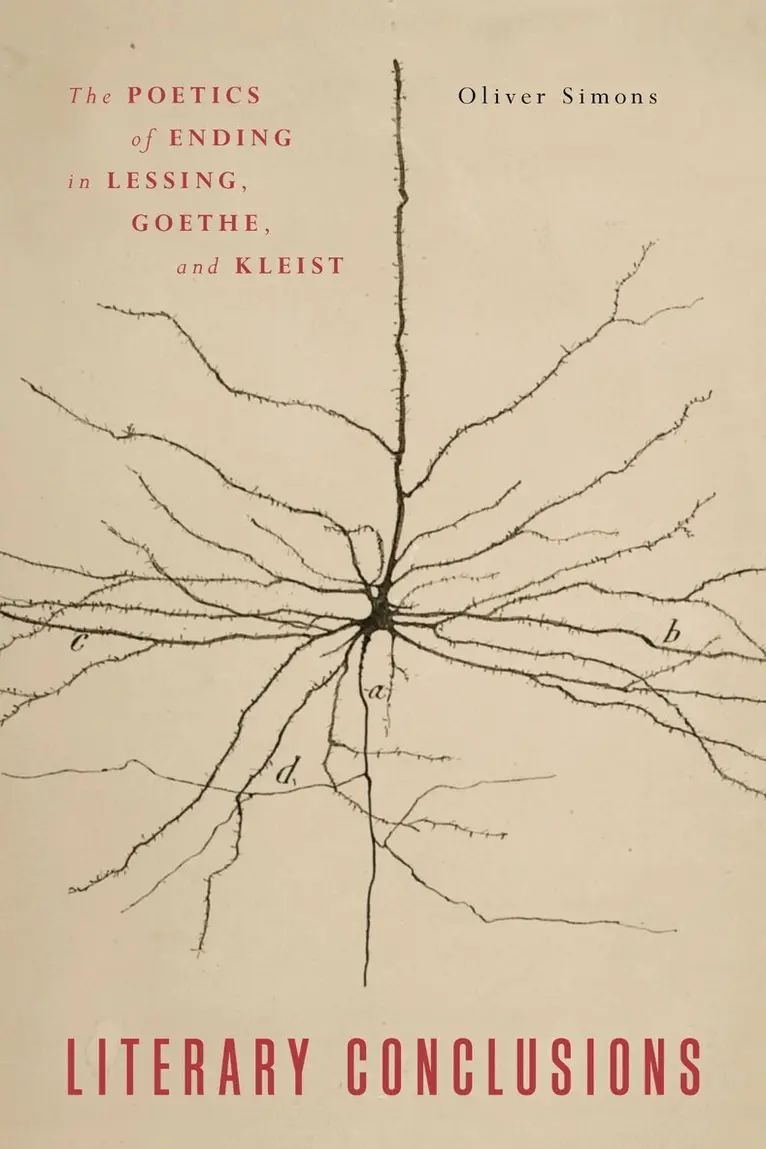
Endings are not just singular moments in time, but the outcomes of a process. And whatever a book's conclusion, its form has a history. Literary Conclusions presents a new theory of textual endings in eighteenth-century literature and thought. Analyzing essential works by Gotthold Ephraim Lessing, Johann Wolfgang von Goethe, and Heinrich von Kleist, Oliver Simons shows how the emergence of new kinds of literary endings around 1800 is inextricably linked to the history of philosophical and scientific concepts.Simons examines the interrelations of Lessing's literary endings with modes of logical conclusion; he highlights how Goethe's narrative closures are forestalled by an uncontrollable vital force that was discussed in the sciences of the time; and he reveals that Kleist conceived of literary genres themselves as forms of reasoning. Kleist's endings, Simons demonstrates, mark the beginning of modernism. Through close readings of these authors and supplemental analyses of works by Walter Benjamin, Friedrich Hölderlin, and Georg Wilhelm Friedrich Hegel, his study crafts an elegant theory of conclusions that revises established histories of literary genres and forms.
1 487 kr
Skickas inom 10-15 vardagar
Endings are not just singular moments in time, but the outcomes of a process. And whatever a book's conclusion, its form has a history. Literary Conclusions presents a new theory of textual endings in eighteenth-century literature and thought. Analyzing essential works by Gotthold Ephraim Lessing, Johann Wolfgang von Goethe, and Heinrich von Kleist, Oliver Simons shows how the emergence of new kinds of literary endings around 1800 is inextricably linked to the history of philosophical and scientific concepts.Simons examines the interrelations of Lessing's literary endings with modes of logical conclusion; he highlights how Goethe's narrative closures are forestalled by an uncontrollable vital force that was discussed in the sciences of the time; and he reveals that Kleist conceived of literary genres themselves as forms of reasoning. Kleist's endings, Simons demonstrates, mark the beginning of modernism. Through close readings of these authors and supplemental analyses of works by Walter Benjamin, Friedrich Hölderlin, and Georg Wilhelm Friedrich Hegel, his study crafts an elegant theory of conclusions that revises established histories of literary genres and forms.
2 531 kr
Skickas inom 3-6 vardagar
Reading as Method provides a concise and systematic account of how readers engage with texts, exploring the most paradigmatic techniques taught in the past and today and guiding readers on developing their own critical approach to literature. Oliver Simons argues that behind the dizzying variety of reading methods – deep interpretation, surface reading, symptomatic or scattered reading, close textual analysis – are three distinctions: depth versus surface, text versus context, and close versus distant. By tracing these recurring distinctions, Simons offers students and instructors alike a lucid map for getting through the landscape of literary analysis.Throughout the book, Simons returns to Franz Kafka's unsettling 1920 story, "A Country Doctor," in which a wound glimpsed from afar becomes a tangle of imagination and fact upon closer scrutiny. The analysis of this wound is a lesson in reading itself: The more precisely we look, the more our own assumptions shape what we find. Reading as Method equips its readers to see how critics think, question the blind spots in every technique, and reclaim reading as an active, even subversive, pleasure.
596 kr
Skickas inom 3-6 vardagar
Reading as Method provides a concise and systematic account of how readers engage with texts, exploring the most paradigmatic techniques taught in the past and today and guiding readers on developing their own critical approach to literature. Oliver Simons argues that behind the dizzying variety of reading methods – deep interpretation, surface reading, symptomatic or scattered reading, close textual analysis – are three distinctions: depth versus surface, text versus context, and close versus distant. By tracing these recurring distinctions, Simons offers students and instructors alike a lucid map for getting through the landscape of literary analysis.Throughout the book, Simons returns to Franz Kafka's unsettling 1920 story, "A Country Doctor," in which a wound glimpsed from afar becomes a tangle of imagination and fact upon closer scrutiny. The analysis of this wound is a lesson in reading itself: The more precisely we look, the more our own assumptions shape what we find. Reading as Method equips its readers to see how critics think, question the blind spots in every technique, and reclaim reading as an active, even subversive, pleasure.
195 kr
Skickas inom 3-6 vardagar