Oliver Villar - Böcker
Visar alla böcker från författaren Oliver Villar. Handla med fri frakt och snabb leverans.
4 produkter
4 produkter
948 kr
Tillfälligt slut
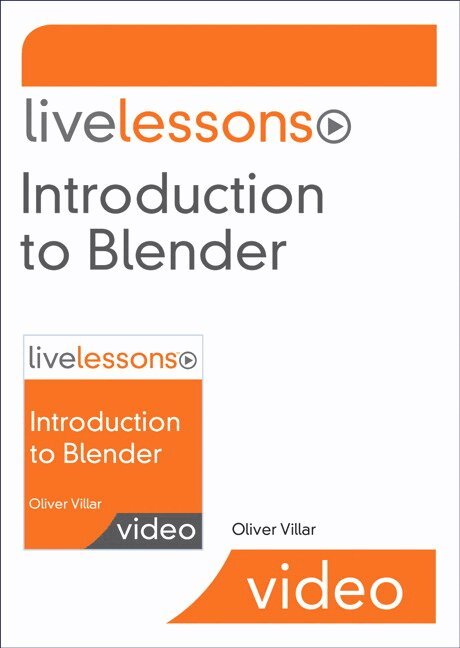
11+ Hours of Video Instruction Introduction to Blender LiveLessons provides a comprehensive overview of Blender, the professional, free, open source software used to make 3D graphics and animation for animated films, visual effects, art interactive applications, and video games. Description Blender Foundation Certified Trainer Oliver Villar starts from scratch, downloading and installing Blender. Then he jumps into the interface and basic controls. Learning how to create and manipulate objects is the next step before creating a simple scene to understand the workflow. After that, he goes a little deeper, explaining how to model your own creations and unwrapping and shading in both Blender Render and Cycles. An introduction to rigging and animation gives designers the ability to deform and animate their models. Finally, the rendering and compositing process is explained to show how to achieve the resulting image or video. The course aims to take beginners in a journey through the main basic Blender features to help them understand how 3D works. Skill Level Beginner What You Will Learn How to install and run Blender How to use the interface and navigate in the 3D scene How to create your first 3D scene How to use Blender’s modeling tools How to unwrap, add materials, and apply textures with Blender Render and Cycles How to use rigging and basic animation tools How to light and render How to use the node editor for compositing and taking your render to the next level Who Should Take This Course Designers and artists interested in creating 3D still images or animations for marketing, design, or visual effects Course Requirements Understanding of using an OS, navigating through folders, and basic usage of a computer. Having a keyboard and a mouse (preferably a keyboard with a numeric pad and a mouse with a middle mouse button). Design and previous 3D knowledge helps, but the course starts from the beginning, so this is not mandatory. Table of Contents Lesson 1: Blender Basics This lesson covers how to download and install Blender, use the main interface elements such as areas and editors, and configure Blender with your custom settings. Lesson 2: 3D Navigation and Selections Lesson 2 shows you how to navigate in your 3D scene, use navigation keyboard shortcuts, and configure the 3D View and object selections. Lesson 3: Creating Your First Scene with Blender In this lesson you learn the basic workflow to create your first 3D scene with Blender: creating and transforming objects; adding modifiers, materials, and lights; and rendering the final result. Lesson 4: Advanced Object Manipulation This lesson explains how to transform (move, rotate, and scale) objects using snapping options. It gives you an understanding of datablocks, duplicating and instancing objects, and using pivot points. Lesson 5: Using Modifiers Lesson 5 covers the process of adding modifiers to your objects, and you learn about the most-used modifiers and in which cases you can apply them. Lesson 6: Modeling in Edit Mode In this lesson, you see how to access the different interaction modes, and then you dive into the main modeling tools to create your own 3D meshes and adjust their shapes. Finally, there is a practical exercise to put those modeling tools to good use. Lesson 7: Unwrapping and UVs Before you can apply textures to a surface, you need to unwrap it and create its UV coordinates. In this lesson, you learn how to use the tools available to do this. You also see how to test those UVs and make sure they work right. Lesson 8: Materials and Textures This lesson covers the process of adding materials and textures to 3D objects in both Blender Render and Cycles. Lesson 9: Introduction to Rigging In this lesson, you learn about armatures and bones, parenting, and constraints. An armature made of bones is what allows you to create a rig that moves your complex objects in an efficient and comfortable way. Also, you see how to deform a mesh based on the bones’ movement, useful for posing organic models or characters. Lesson 10: Introduction to Animation After seeing what the different animation editors do, you learn how to set keyframes, add timing to an animation, use animation curves and interpolation, and mix or manage different animations using the NLA Editor. Lesson 11: Rendering in Blender Render This lesson shows you how to reach the final resulting image from your 3D scene through the rendering process in Blender Render. For that, you learn how to add lights and configure the render settings. Lesson 12: Rendering in Cycles Rendering in Cycles is similar to Blender Render, but there are some substantial changes, and that’s why in this lesson you learn about the rendering process and settings for Cycles. Lesson 13: Introduction to Compositing In this lesson, you learn how to use the Node Editor for compositing. Using nodes, you add the final touches to your render. Things such as color correction, mixing different render layers, and adding effects like a vignette are all possible during nodes compositing, before exporting the final output. About LiveLessons Video Training The LiveLessons Video Training series publishes hundreds of hands-on, expert-led video tutorials covering a wide selection of technology topics designed to teach you the skills you need to succeed. This professional and personal technology video series features world-leading author instructors published by your trusted technology brands: Addison-Wesley, Cisco Press, IBM Press, Pearson IT Certification, Prentice Hall, Sams, and Que. Topics include: IT Certification, Programming, Web Development, Mobile Development, Home and Office Technologies, Business and Management, and more. View all LiveLessons on InformIT at: http://www.informit.com/livelessons
312 kr
Skickas inom 7-10 vardagar
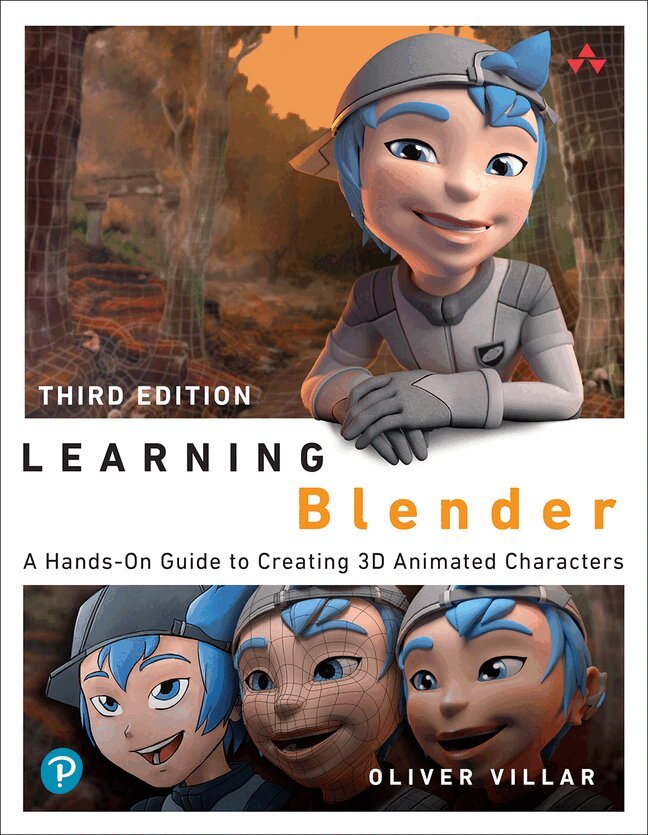
Master the Newest Blender Techniques for Creating Amazing 3D Characters: From Design and Modeling to Video Compositing Now fully updated for Blender 2.83 LTS (Long-Term Support) and beyond, Learning Blender, Third Edition, walks you through every step of creating an outstanding 3D animated character with Blender, and then compositing it in a real video using a professional workflow. This edition covers the extensive interface changes of the software, as well as many improvements and some almost fully rewritten chapters to showcase more modern workflows. Still the only Blender tutorial to take you from preproduction to final result, this guide is perfect for both novices and those moving from other software to Blender (open source and free software). Author Oliver Villar provides full-color, hands-on chapters that cover every aspect of character creation: design, modeling, unwrapping, texturing, shading, rigging, animation, and rendering. He also walks you through integrating your animated character into a real-world video, using professional camera tracking, lighting, and compositing techniques. The rich companion website ( blendtuts.com/learning-blender-files) will help you quickly master even the most complex techniques with bonus contents like video tutorials. By the time you're done, you'll be ready to create outstanding characters for all media -- and you'll have up-to-date skills for any 3D project, whether it involves characters or not. Learn Blender's updated user interface and navigation Create your first scene with Blender and the Blender Render and Cycles render engines Organize an efficient, step-by-step pipeline to streamline workflow in any project Master modeling, unwrapping, and texturing Bring your character to life with materials and shading in both Cycles and EEVEE (the new real-time render engine included in Blender) Create your character's skeleton and make it walk Use Camera Tracking to mix 3D objects into a real-world video Transform a raw rendered scene into the final result using Blender's compositing nodes Register your book for convenient access to downloads, updates, and/or corrections as they become available. See inside book for details.
Cocaine, Death Squads, and the War on Terror
U.S. Imperialism and Class Struggle in Colombia
Häftad, Engelska, 2011
241 kr
Skickas inom 5-8 vardagar
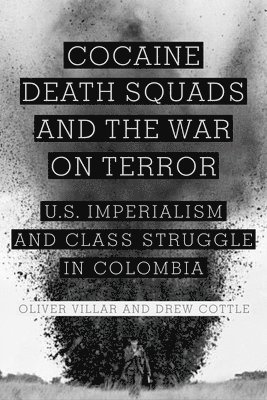
Since the late 1990s, the United States has funneled billions of dollars in aid to Colombia, ostensibly to combat the illicit drug trade and State Department-designated terrorist groups. The result has been a spiral of violence that continues to take lives and destabilize Colombian society. This book asks an obvious question: are the official reasons given for the wars on drugs and terror in Colombia plausible, or are there other, deeper factors at work? Scholars Villar and Cottle suggest that the answers lie in a close examination of the cocaine trade, particularly its class dimensions. Their analysis reveals that this trade has fueled extensive economic growth and led to the development of a "narco-state" under the control of a "narco-bourgeoisie" which is not interested in eradicating cocaine but in gaining a monopoly over its production. The principal target of this effort is the Revolutionary Armed Forces of Colombia (FARC), who challenge that monopoly as well as the very existence of the Colombian state. Meanwhile, U.S. business interests likewise gain from the cocaine trade and seek to maintain a dominant, imperialist relationship with their most important client state in Latin America.Suffering the brutal consequences, as always, are the peasants and workers of Colombia. This revelatory book punctures the official propaganda and shows the class war underpinning the politics of the Colombian cocaine trade.
Cocaine, Death Squads, and the War on Terror
U.S. Imperialism and Class Struggle in Colombia
Inbunden, Engelska, 2011
789 kr
Skickas inom 5-8 vardagar
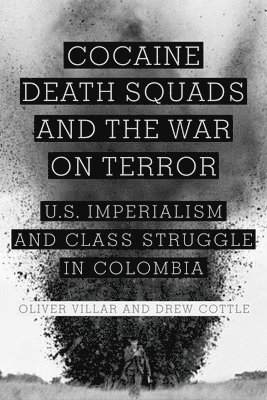
Since the late 1990s, the United States has funneled billions of dollars in aid to Colombia, ostensibly to combat the illicit drug trade and State Department-designated terrorist groups. The result has been a spiral of violence that continues to take lives and destabilize Colombian society. This book asks an obvious question: are the official reasons given for the wars on drugs and terror in Colombia plausible, or are there other, deeper factors at work? Scholars Villar and Cottle suggest that the answers lie in a close examination of the cocaine trade, particularly its class dimensions. Their analysis reveals that this trade has fueled extensive economic growth and led to the development of a "narco-state" under the control of a "narco-bourgeoisie" which is not interested in eradicating cocaine but in gaining a monopoly over its production. The principal target of this effort is the Revolutionary Armed Forces of Colombia (FARC), who challenge that monopoly as well as the very existence of the Colombian state. Meanwhile, U.S. business interests likewise gain from the cocaine trade and seek to maintain a dominant, imperialist relationship with their most important client state in Latin America.Suffering the brutal consequences, as always, are the peasants and workers of Colombia. This revelatory book punctures the official propaganda and shows the class war underpinning the politics of the Colombian cocaine trade.