Olivia Cheung - Böcker
Visar alla böcker från författaren Olivia Cheung. Handla med fri frakt och snabb leverans.
4 produkter
4 produkter
330 kr
Skickas inom 5-8 vardagar
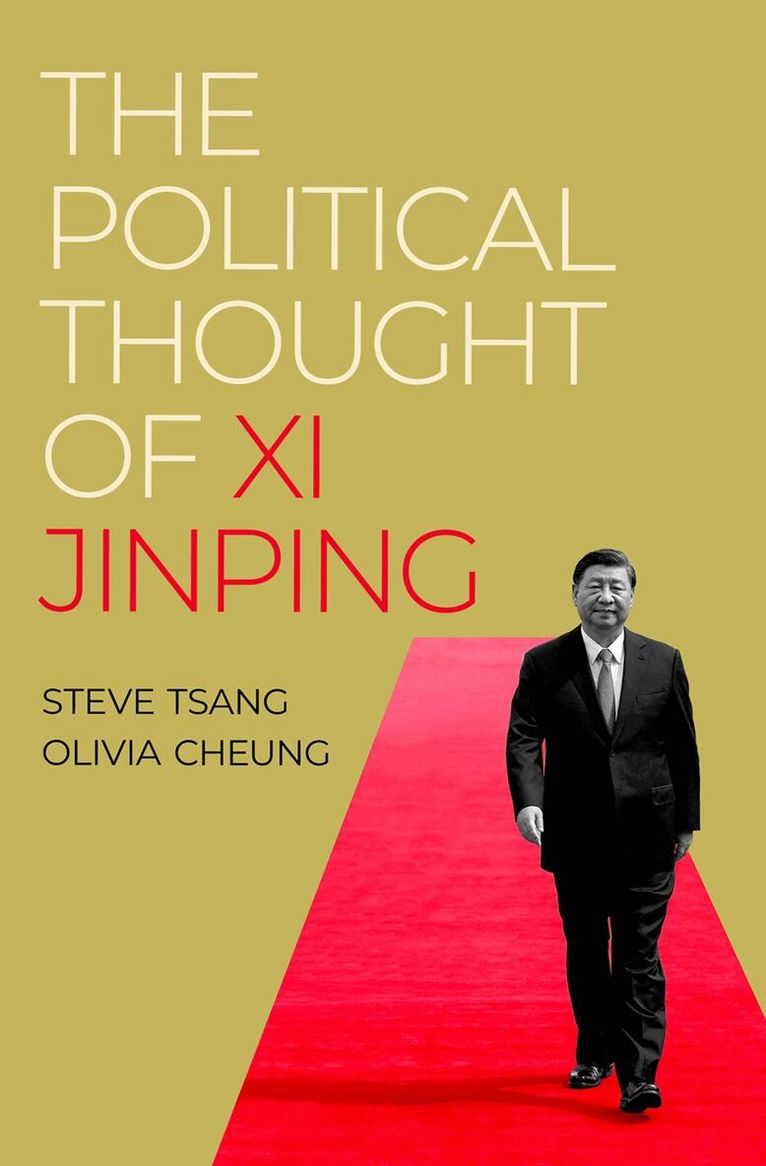
An authoritative examination of "Xi Jinping Thought"--now the official dogma of the Chinese Communist Party--that marshals Xi's personal words and writings to reveal his plan to make "the China Dream of national rejuvenation" a reality in the coming decades.Over the course of the last half dozen years, China's supreme leader Xi Jinping has made extraordinary changes which have profound implications not only for the Chinese people but nations throughout the world. Given how swiftly and fundamentally China's relations with the rest of the world are changing under Xi's rule, it is imperative that we know what Xi Jinping Thought is, how it evolved, and why it is so important.In The Political Thought of Xi Jinping, Steve Tsang and Olivia Cheung provide an authoritative overview of what "Xi Jinping Thought" is and is not and what it means for both China and the world. Xi, now effectively leader for life, has worked to ensure that "Xi Jinping Thought" becomes cemented as the new state ideology. Clearly inspired by the doctrine of "Mao Zedong Thought," which shaped the parameters of acceptable thinking for a quarter century, Xi wants his doctrine to define what he calls the "China Dream of national rejuvenation" and serve the pathway to its fulfilment by 2050. As Xi conceives it, the China Dream is about making China great again, or restoring China to the height of its power, influence, and international standing in the mythical era of grandeur in its long imperial history. Drawing from original research of Xi's speeches, writings, and policies, Tsang and Cheung conceptualize Xi's vision independently from interpretations provided by the Chinese Communist Party or other sources. They further examine and explain how Xi seeks to transform this vision into reality.An authoritative analysis of the leader-driven ideological revolution that is currently transforming China, this book will be essential reading for anyone interested in where China might be headed in coming years.
308 kr
Kommande
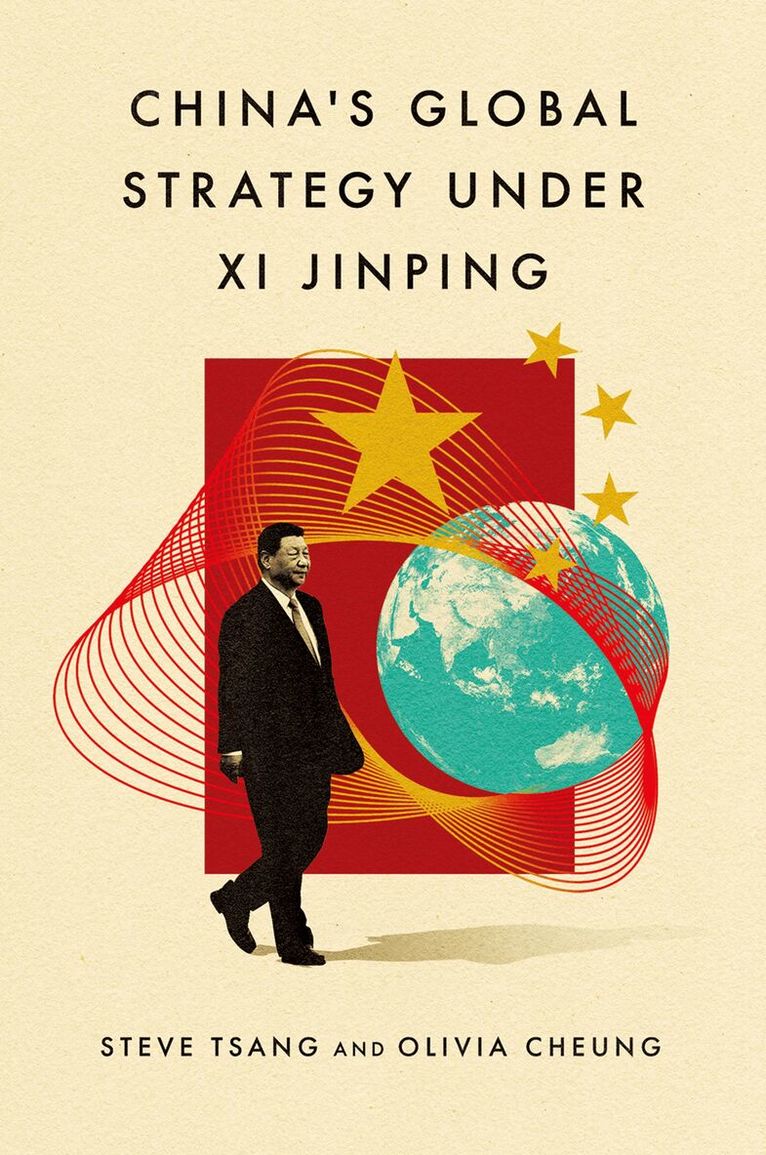
A powerful analysis of China's bid for global pre-eminence and what it means for the future of international politics.Xi Jinping's pledge to achieve "the China Dream of national rejuvenation" by 2050 captures the ambition driving China's current global strategy. While the phrase may be characteristically vague, its implications are far-reaching--shaping how Chinese leaders engage with the world and envision China's place within it.In China's Global Strategy under Xi Jinping, Steve Tsang and Olivia Cheung offer a clear and compelling account of how China is seeking to reshape the international order on its own terms. Drawing on decades of political evolution, they introduce a powerful new framework--Sino-centric party-state realism--to explain the ideological, political, and strategic logic behind China's foreign policy under Xi.The authors apply this framework across three key domains: global diplomacy, technology and the economy, and geopolitics. At the heart of Xi's vision is a revival of the ancient tianxia model of global leadership, in which China becomes the world's pre-eminent power--not by replacing the United States as global hegemon, but by being widely embraced as a force for good. This model suggests a relatively passive form of leadership, yet one that still aims to fundamentally reshape global norms and institutions.Tsang and Cheung also examine the internal drivers of this strategy, showing how domestic political imperatives and party ideology shape China's external behavior. The result is a nuanced and timely analysis of a rising power with global ambitions--and the potential for great power conflict.Essential reading for anyone seeking to understand China's evolving role in world affairs, this book offers a vital lens on one of the most consequential geopolitical shifts of our time.
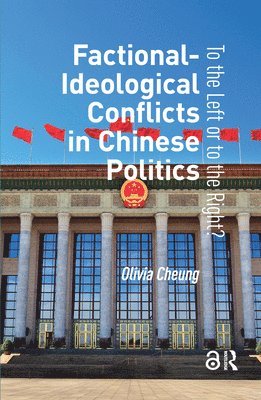
Factional-Ideological Conflicts in Chinese Politics
To the Left or to the Right?
Häftad, Engelska, 2025
630 kr
Skickas inom 10-15 vardagar
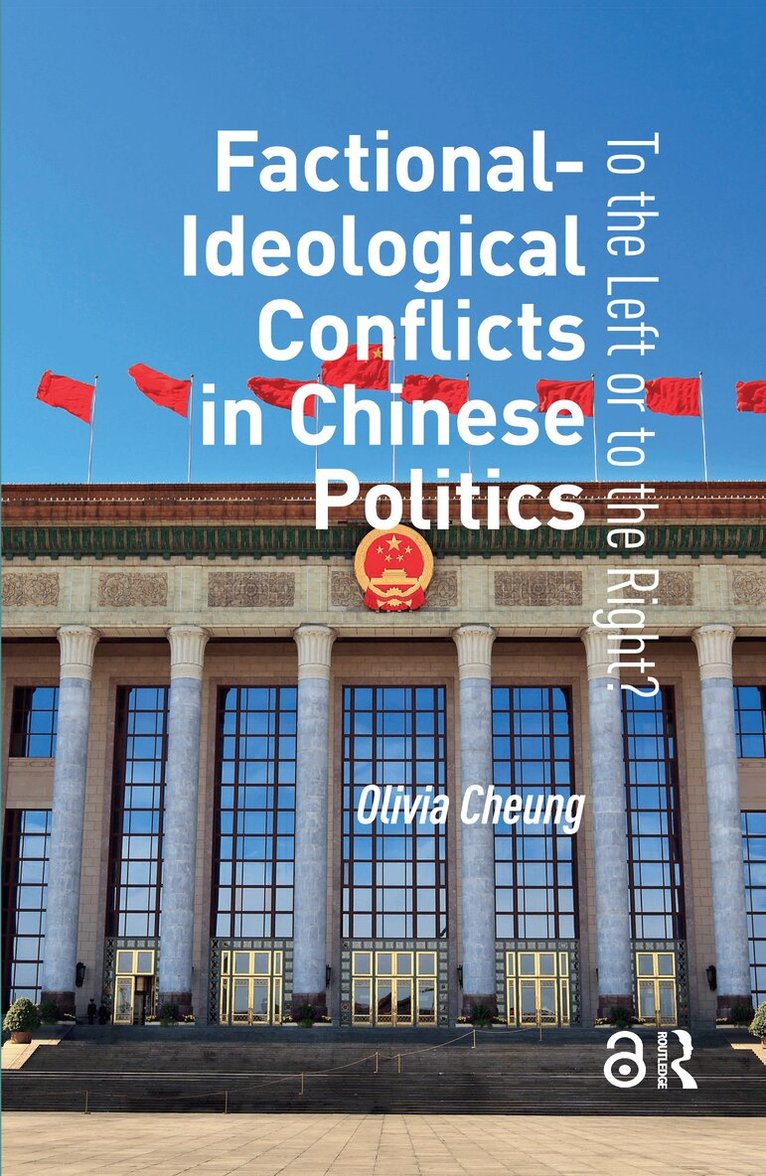
This book reconstructs the factional-ideological conflicts surrounding socialist transformation and political reform in China that were played out through ‘factional model-making’, a norm-bound mechanism for elites of the Chinese Communist Party to contest the party line publicly. Dazhai, Anhui, Nanjie, Shekou, Shenzhen, Guangdong and Chongqing were cultivated into factional models by party elites before Xi Jinping came to power in 2012. Although factional model-making undermined party discipline, it often did not threaten regime security and even contributed to regime resilience through strengthening collective leadership and other means. This follows that the suppression of factional model-making under Xi might undermine longer-term regime resilience. However, Xi believes that regime security rests on his strongman rule, not any benefits that factional model-making may contribute. It is in this spirit that he grooms Zhejiang into a party model for his policy programme of common prosperity, which is designed to legitimize his vision of socialism.
Del 6 - Politics, Security and Society in Asia Pacific
Factional-Ideological Conflicts in Chinese Politics
To the Left or to the Right?
Inbunden, Engelska, 2023
1 685 kr
Skickas inom 10-15 vardagar
This book reconstructs the factional-ideological conflicts surrounding socialist transformation and political reform in China that were played out through ‘factional model-making’, a norm-bound mechanism for elites of the Chinese Communist Party to contest the party line publicly. Dazhai, Anhui, Nanjie, Shekou, Shenzhen, Guangdong and Chongqing were cultivated into factional models by party elites before Xi Jinping came to power in 2012. Although factional model-making undermined party discipline, it often did not threaten regime security and even contributed to regime resilience through strengthening collective leadership and other means. This follows that the suppression of factional model-making under Xi might undermine longer-term regime resilience. However, Xi believes that regime security rests on his strongman rule, not any benefits that factional model-making may contribute. It is in this spirit that he grooms Zhejiang into a party model for his policy programme of common prosperity, which is designed to legitimize his vision of socialism.