Olivier Gimenez – författare
Visar alla böcker från författaren Olivier Gimenez. Handla med fri frakt och snabb leverans.
11 produkter
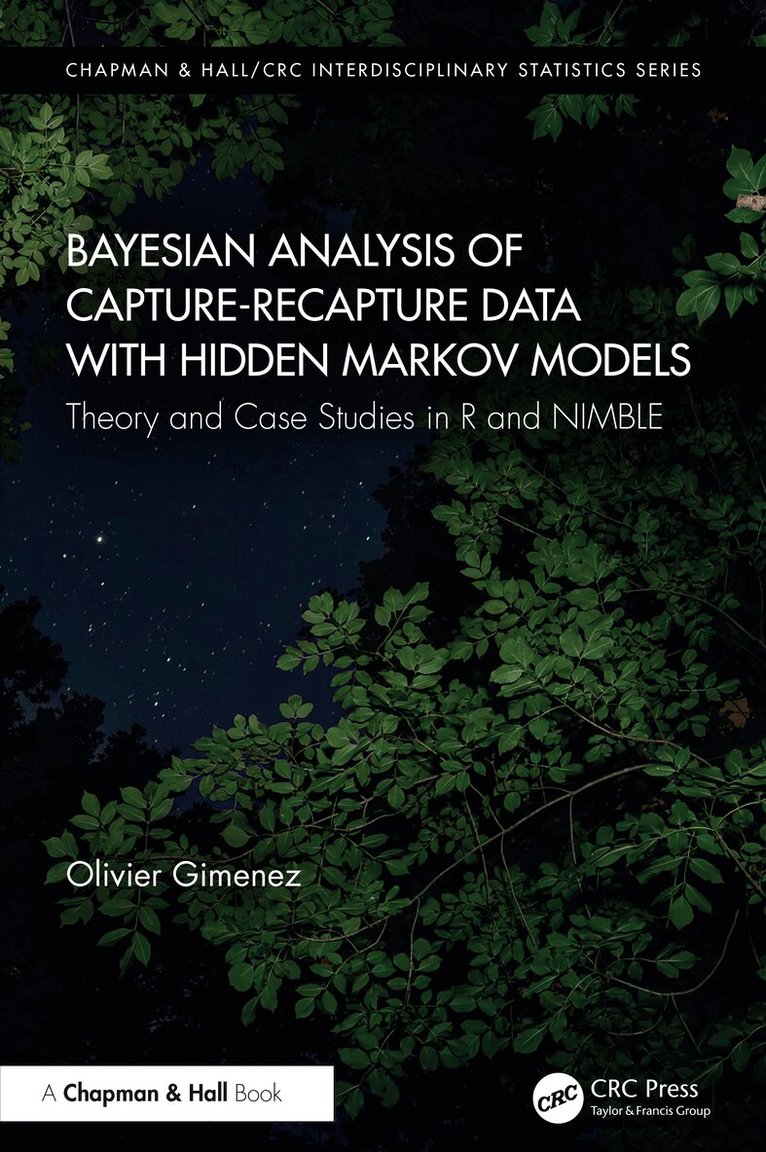
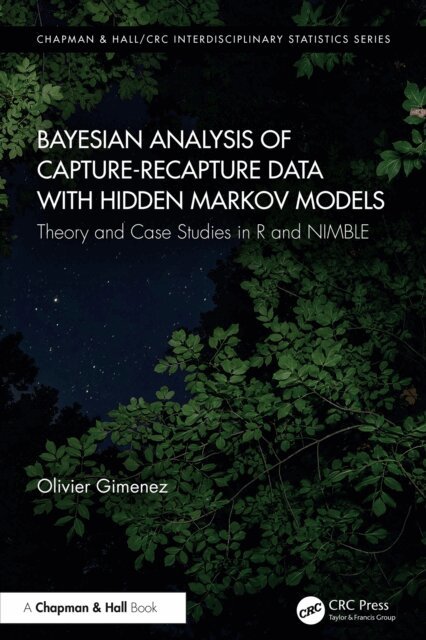
Bayesian Analysis of Capture-Recapture Data with Hidden Markov Models
Theory and Case Studies in R and NIMBLE
Inbunden, 2026
1521 kr
Lägg i varukorg
Bayesian Analysis of Capture-Recapture Data with Hidden Markov Models: Theory and Case Studies in R and NIMBLE introduces ecologists and statisticians to a powerful and unifying framework for analyzing capture-recapture data. Hidden Markov models (HMMs) have become a cornerstone in modern …
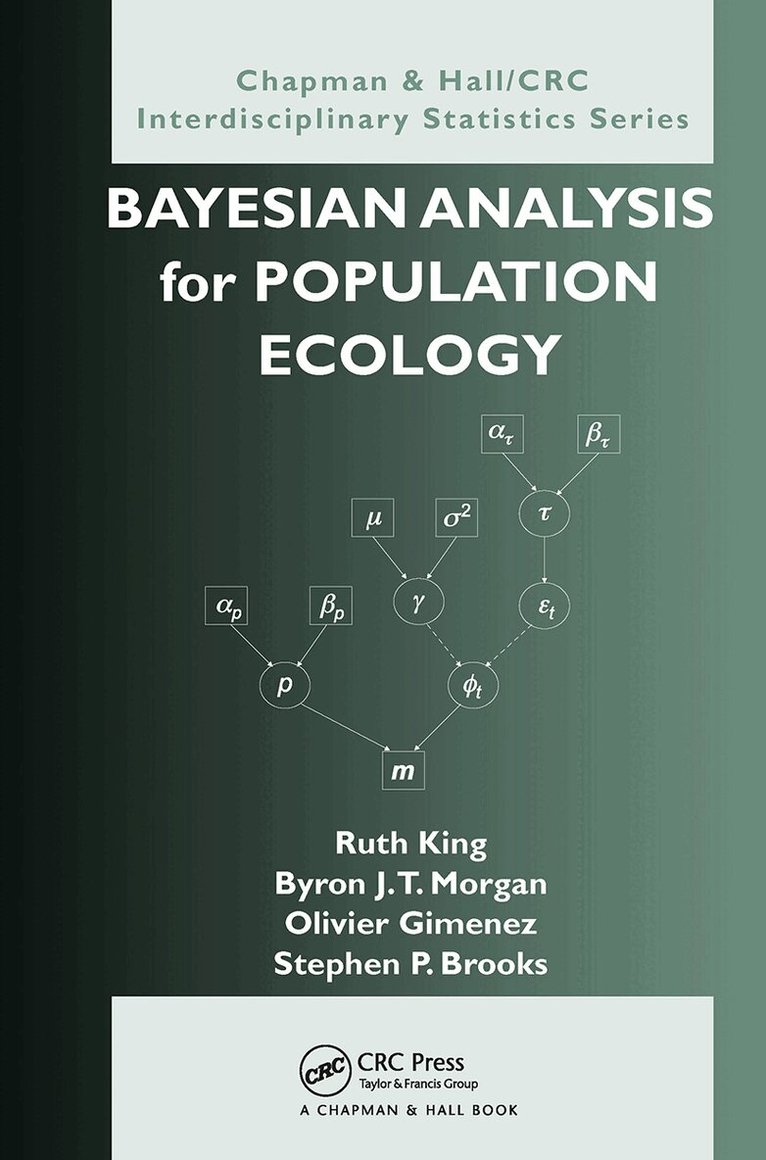
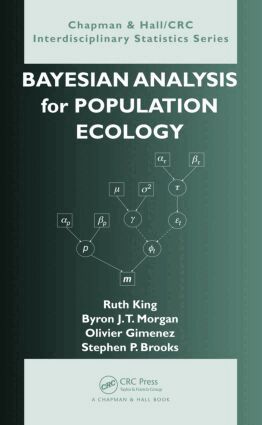
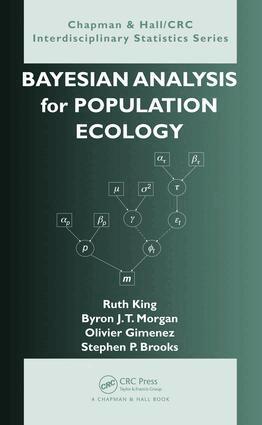
Bayesian Analysis for Population Ecology
Av Ruth King, Byron Morgan m. fl.
Häftad, 2023
749 kr
Lägg i varukorg
Novel Statistical Tools for Conserving and Managing PopulationsBy gathering information on key demographic parameters, scientists can often predict how populations will develop in the future and relate these parameters to external influences, such as global warming. Because of their ability to …
Bayesian Analysis for Population Ecology
Av Ruth King, Byron Morgan m. fl.
E-bok, 2009
883 kr
Lägg i varukorg
Emphasizing model choice and model averaging, this book presents up-to-date Bayesian methods for analyzing complex ecological data. It provides a basic introduction to Bayesian methods that assumes no prior knowledge. The book includes detailed descriptions of methods that deal with covariate data …
Bayesian Analysis of Capture-Recapture Data with Hidden Markov Models
Theory and Case Studies in R and NIMBLE
E-bok, 2026
1626 kr
Lägg i varukorg
Bayesian Analysis of Capture-Recapture Data with Hidden Markov Models: Theory and Case Studies in R and NIMBLE introduces ecologists and statisticians to a powerful and unifying framework for analyzing capture-recapture data. Hidden Markov models (HMMs) have become a cornerstone in modern …
Bayesian Analysis of Capture-Recapture Data with Hidden Markov Models
Theory and Case Studies in R and NIMBLE
E-bok, 2026
1662 kr
Lägg i varukorg
Bayesian Analysis of Capture-Recapture Data with Hidden Markov Models: Theory and Case Studies in R and NIMBLE introduces ecologists and statisticians to a powerful and unifying framework for analyzing capture-recapture data. Hidden Markov models (HMMs) have become a cornerstone in modern …
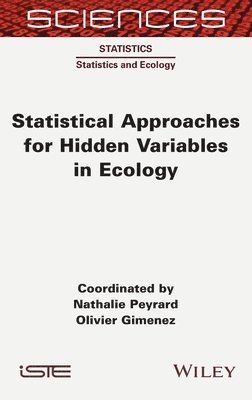
Statistical Approaches for Hidden Variables in Ecology
Av Olivier Gimenez, Nathalie Peyrard
E-bok, 2022
2200 kr
Lägg i varukorg
The study of ecological systems is often impeded by components that escape perfect observation, such as the trajectories of moving animals or the status of plant seed banks. These hidden components can be efficiently handled with statistical modeling by using hidden variables, which are often …
Statistical Approaches for Hidden Variables in Ecology
Av Olivier Gimenez, Nathalie Peyrard
E-bok, 2022
2200 kr
Lägg i varukorg
The study of ecological systems is often impeded by components that escape perfect observation, such as the trajectories of moving animals or the status of plant seed banks. These hidden components can be efficiently handled with statistical modeling by using hidden variables, which are often …
Bayesian Analysis for Population Ecology
Av Ruth King, Byron Morgan m. fl.
Inbunden, 2009
2510 kr
Lägg i varukorg
Novel Statistical Tools for Conserving and Managing PopulationsBy gathering information on key demographic parameters, scientists can often predict how populations will develop in the future and relate these parameters to external influences, such as global warming. Because of their ability to …
Bayesian Analysis for Population Ecology
Av Ruth King, Byron Morgan m. fl.
E-bok, 2009
883 kr
Lägg i varukorg
Emphasizing model choice and model averaging, this book presents up-to-date Bayesian methods for analyzing complex ecological data. It provides a basic introduction to Bayesian methods that assumes no prior knowledge. The book includes detailed descriptions of methods that deal with covariate data …
Statistical Approaches for Hidden Variables in Ecology
Av Nathalie Peyrard, Nathalie Peyrard m. fl.
Inbunden, 2022
1892 kr
Lägg i varukorg
The study of ecological systems is often impeded by components that escape perfect observation, such as the trajectories of moving animals or the status of plant seed banks. These hidden components can be efficiently handled with statistical modeling by using hidden variables, which are often …
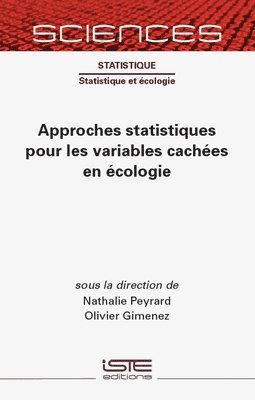
Approches statistiques pour les variables cachées en écologie
Av Nathalie Peyrard, Olivier Gimenez
Inbunden, 2022
2574 kr
Lägg i varukorg