Olivier Labussière – författare
Visar alla böcker från författaren Olivier Labussière. Handla med fri frakt och snabb leverans.
5 produkter
5 produkter
Häftad, Engelska, 2019
1 280 kr
Skickas inom 5-8 vardagar
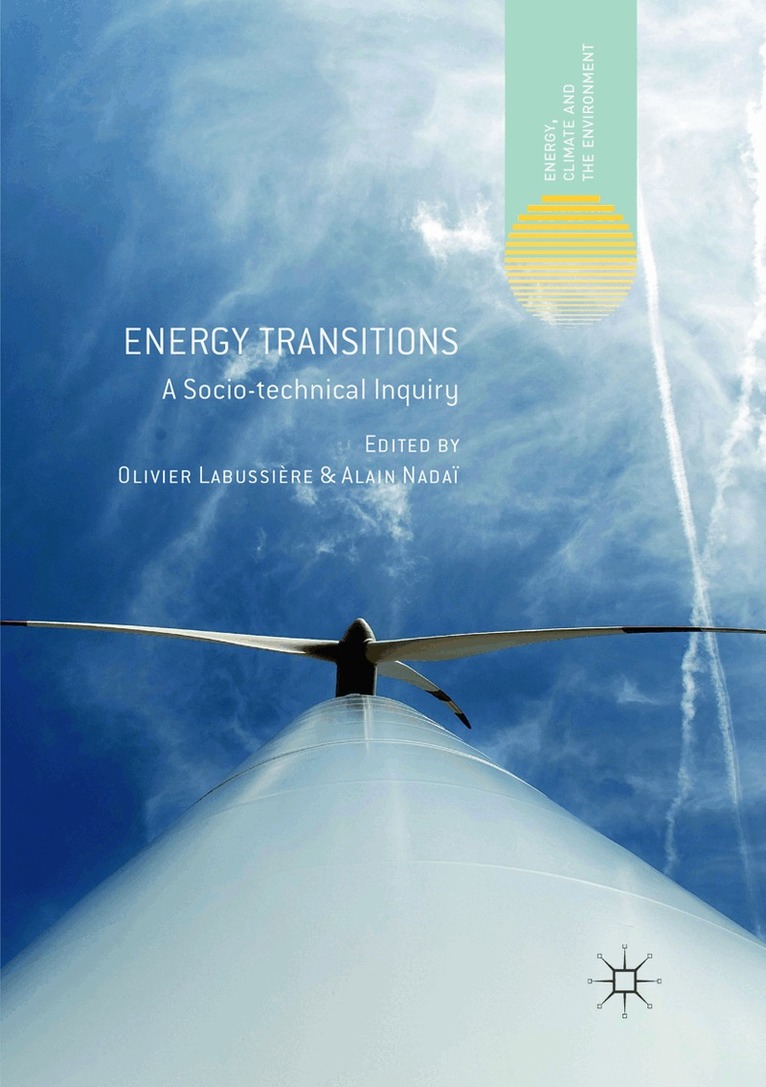
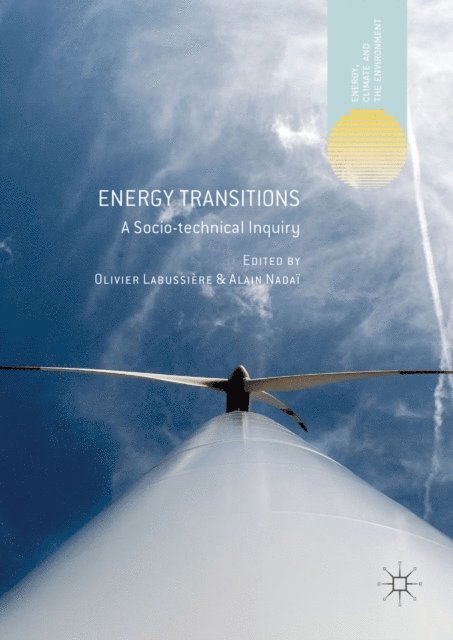
This book elucidates what it means to transition to alternative sources of energy and discusses the potential for this energy transition to be a more democratic process. The book dynamically describes a recent sociotechnical study of a number of energy transitions occurring in several countries - France, Germany and Tunisia, and involving different energy technologies - including solar, on/off-shore wind, smart grids, biomass, low-energy buildings, and carbon capture and storage. Drawing on a pragmatist tradition of social inquiry, the authors examine the consequences of energy transition processes for the actors and entities that are affected by them, as well as the spaces for political participation they offer. This critical inquiry is organised according to foundational categories that have defined the energy transition - ‘renewable’ energy resources, markets, economic instruments, technological demonstration, spatiality (‘scale’) and temporality (‘horizon(s)’). Using a set of select case studies, this book systematically investigates the role these categories play in the current developments in energy transitions.
Inbunden, Engelska, 2025
1 622 kr
Skickas inom 10-15 vardagar
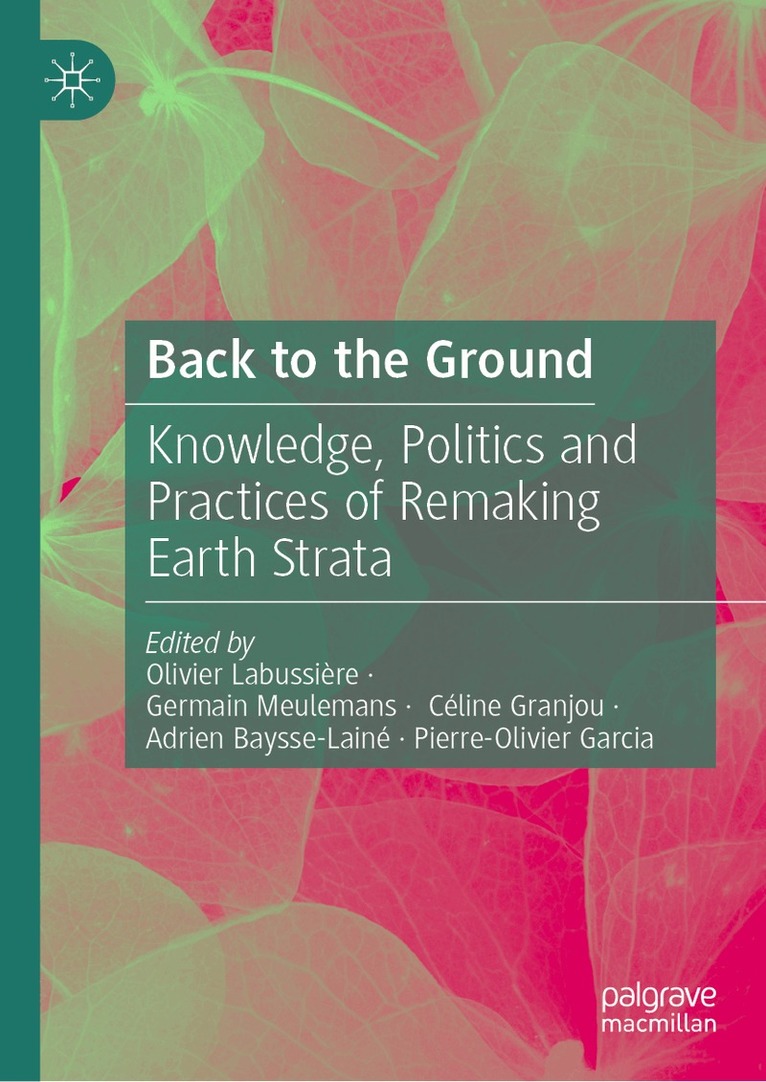
This book brings together perspectives from the social sciences and humanities on how soils and subsoils are increasingly mobilized to tackle climate change and ecological issues. Carbon capture and storage, the extraction of energy and non-energy minerals, geothermal energy, biofuel production, organic waste recycling and soil remediation are central to the hoped-for green transition. Through an interdisciplinary lens, the book examines the social and ecological implications of these ground-based technological promises, addressing how they both dwell upon and reorient the joint becoming of social and geological strata in the Anthropocene. It is structured into three sections: Inhabiting a de-stratified Earth, Earthly re-stratifications, and Emerging practices and sensitivities to the Earth. Each section explores key aspects of contemporary efforts to reshape the Earth’s strata and examines how these processes intersect with shifts in knowledge, power, practices, and our relationship with the planet. The book features case studies from Europe, North America, and South America that provide grounded insights into soil- and subsoil-based developments and initiatives and unpack their social, political, and ecological consequences.
E-bok
Engelska, 20252 049 kr
Läs direkt efter köp
This book brings together perspectives from the social sciences and humanities on how soils and subsoils are increasingly mobilized to tackle climate change and ecological issues. Carbon capture and storage, the extraction of energy and non-energy minerals, geothermal energy, biofuel production, organic waste recycling and soil remediation are central to the hoped-for green transition. Through an interdisciplinary lens, the book examines the social and ecological implications of these ground-based technological promises, addressing how they both dwell upon and reorient the joint becoming of social and geological strata in the Anthropocene. It is structured into three sections: Inhabiting a de-stratified Earth, Earthly re-stratifications, and Emerging practices and sensitivities to the Earth. Each section explores key aspects of contemporary efforts to reshape the Earth’s strata and examines how these processes intersect with shifts in knowledge, power, practices, and our relationship with the planet. The book features case studies from Europe, North America, and South America that provide grounded insights into soil- and subsoil-based developments and initiatives and unpack their social, political, and ecological consequences.
Inbunden, Engelska, 2018
1 514 kr
Skickas inom 10-15 vardagar
This book elucidates what it means to transition to alternative sources of energy and discusses the potential for this energy transition to be a more democratic process. The book dynamically describes a recent sociotechnical study of a number of energy transitions occurring in several countries - France, Germany and Tunisia, and involving different energy technologies - including solar, on/off-shore wind, smart grids, biomass, low-energy buildings, and carbon capture and storage. Drawing on a pragmatist tradition of social inquiry, the authors examine the consequences of energy transition processes for the actors and entities that are affected by them, as well as the spaces for political participation they offer. This critical inquiry is organised according to foundational categories that have defined the energy transition - ‘renewable’ energy resources, markets, economic instruments, technological demonstration, spatiality (‘scale’) and temporality (‘horizon(s)’). Using a set of select case studies, this book systematically investigates the role these categories play in the current developments in energy transitions.
E-bok
Engelska, 20181 891 kr
Läs direkt efter köp
This book elucidates what it means to transition to alternative sources of energy and discusses the potential for this energy transition to be a more democratic process. The book dynamically describes a recent sociotechnical study of a number of energy transitions occurring in several countries - France, Germany and Tunisia, and involving different energy technologies - including solar, on/off-shore wind, smart grids, biomass, low-energy buildings, and carbon capture and storage. Drawing on a pragmatist tradition of social inquiry, the authors examine the consequences of energy transition processes for the actors and entities that are affected by them, as well as the spaces for political participation they offer. This critical inquiry is organised according to foundational categories that have defined the energy transition - ‘renewable’ energy resources, markets, economic instruments, technological demonstration, spatiality (‘scale’) and temporality (‘horizon(s)’). Using a set of select case studies, this book systematically investigates the role these categories play in the current developments in energy transitions.