Olivier Urbain – författare
Visar alla böcker från författaren Olivier Urbain. Handla med fri frakt och snabb leverans.
15 produkter
15 produkter
E-bok
PDF, Engelska, 2007496 kr
Läs direkt efter köp
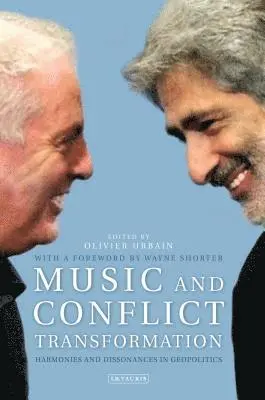
In 1999 the Israeli conductor Daniel Barenboim and the Palestinian writer Edward Said organised a concert in Weimar in which half the performers were Palestinians and the other half Israelis.The performance itself and the rehearsals which preceded it had a lasting effect on all the participants. How far can the relationship between music and politics be used to promote a more peaceful world? That is the central question which motivates this challenging new work by some of the leading musicians and music scholars of our time. Combining theory from experienced academics such as Johan Galtung, Cindy Cohen and Karen Abi-Ezzi with compelling stories from musicians like Yair Dalal, the book also includes an exclusive interview with folk legend Pete Seeger. In each instance, practical and theoretical perspectives have been combined in order to explore music's role in conflict transformation. The book is divided into five sections. The first, 'Frameworks', reflects in-depth on the connections between music and peace, while the second, 'Music and Politics', discusses the impact of music on society. The third section, 'Healing and Education', offers examples of the transformative power of music in prisons and settings of conflict-resolution, while the fourth, 'Stories from the Field', tells true stories about music's impact in the Middle East and elsewhere. Finally, 'Reflections' encourages the reader to consider a personal evaluation of the work with a view to further explorations of the power of music to promote peace.
E-bok
PDF, Engelska, 2010409 kr
Läs direkt efter köp
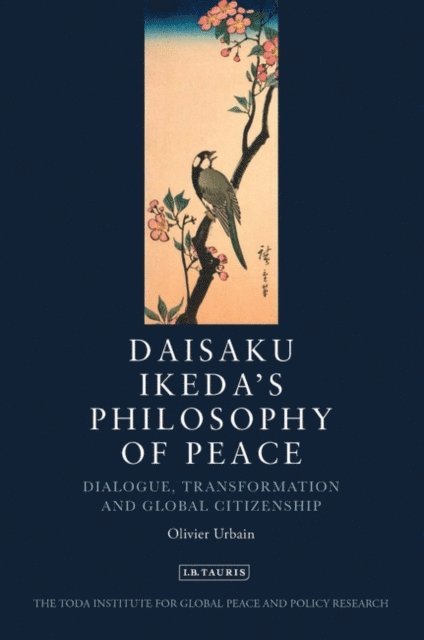
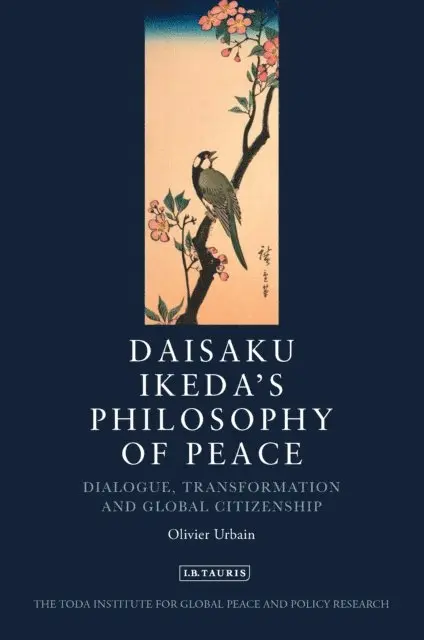
Who is Daisaku Ikeda? At one level, he is the leader of a religious movement - Soka Gakkai - which began in Japan, where it still has its headquarters, but which now claims 12 million adherents around the world. At another level, he is a globetrotting figure whose formal conversations with diverse writers, thinkers and diplomats - including Arnold Toynbee, Joseph Rotblat and Mikhail Gorbachev - have garnered him an international profile, as well as academic recognition. Perhaps above all else, Daisaku Ikeda is viewed as a campaigner for peace. And it is Ikeda's specific contribution to peacebuilding, notably through the central emphasis he has placed on the significance of dialogue, that this book explores: the first to do so in a concerted way. Olivier Urbain shows that while Soka Gakkai (the 'value society') may stem from the medieval principles of Nichiren Buddhism, under Ikeda's leadership it has taken these classic wisdoms and transformed them.Now essentially classless and secularised, as well as adaptable and sensitive to modern challenges like resource shortages and climate change, this - argues the author - is a pragmatic approach to peace which has proved both popular and eminently transportable.
E-bok
PDF, Engelska, 2013394 kr
Läs direkt efter köp
The prominent Buddhist religious leader and advocate for peace, Daisaku Ikeda, has placed dialogue at the centre of his efforts towards securing global justice and conflict resolution. However, far from constituting abstract plans for the future of the world, Ikeda's dialogues represent very concrete and focused activity. He concentrates on one significant individual (such as Joseph Rotblat, Linus Pauling and Mikhail Gorbachev) at a time, or sometimes small groups, in order to attempt the transformation of thinking and society through intense discussion. This book offers detailed exploration of this crucial aspect of Ikeda's philosophy of peace. Contributors examine topics such as: the background to Ikeda's dialogic thinking as found in the Lotus Sutra; Buddhism as a practical philosophy of dialogue; Ikeda's use of dialogue, specifically in the field of education; and dialogue in relation to the abolition of nuclear weapons. Ikeda's concept of dialogue emerges as a paradoxical movement towards common ground based on respectful difference. This study will appeal to students of peace, politics and modern Buddhism.
E-bok
Engelska, 2010409 kr
Läs direkt efter köp
Who is Daisaku Ikeda? At one level, he is the leader of a religious movement - Soka Gakkai - which began in Japan, where it still has its headquarters, but which now claims 12 million adherents around the world. At another level, he is a globetrotting figure whose formal conversations with diverse writers, thinkers and diplomats - including Arnold Toynbee, Joseph Rotblat and Mikhail Gorbachev - have garnered him an international profile, as well as academic recognition. Perhaps above all else, Daisaku Ikeda is viewed as a campaigner for peace. And it is Ikeda's specific contribution to peacebuilding, notably through the central emphasis he has placed on the significance of dialogue, that this book explores: the first to do so in a concerted way. Olivier Urbain shows that while Soka Gakkai (the 'value society') may stem from the medieval principles of Nichiren Buddhism, under Ikeda's leadership it has taken these classic wisdoms and transformed them.Now essentially classless and secularised, as well as adaptable and sensitive to modern challenges like resource shortages and climate change, this - argues the author - is a pragmatic approach to peace which has proved both popular and eminently transportable.
E-bok
Engelska, 2013394 kr
Läs direkt efter köp
The prominent Buddhist religious leader and advocate for peace, Daisaku Ikeda, has placed dialogue at the centre of his efforts towards securing global justice and conflict resolution. However, far from constituting abstract plans for the future of the world, Ikeda's dialogues represent very concrete and focused activity. He concentrates on one significant individual (such as Joseph Rotblat, Linus Pauling and Mikhail Gorbachev) at a time, or sometimes small groups, in order to attempt the transformation of thinking and society through intense discussion. This book offers detailed exploration of this crucial aspect of Ikeda's philosophy of peace. Contributors examine topics such as: the background to Ikeda's dialogic thinking as found in the Lotus Sutra; Buddhism as a practical philosophy of dialogue; Ikeda's use of dialogue, specifically in the field of education; and dialogue in relation to the abolition of nuclear weapons. Ikeda's concept of dialogue emerges as a paradoxical movement towards common ground based on respectful difference. This study will appeal to students of peace, politics and modern Buddhism.
Inbunden, Engelska, 2017
2 151 kr
Skickas inom 10-15 vardagar
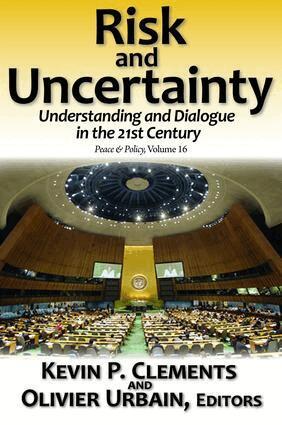
Conflict transformation requires, at minimum, a capacity to listen and respond constructively to those who are being hurt intentionally or unintentionally by others. This compendium attempts to understand the ways in which borders and boundaries are manifestations of less visible dynamics in individual or collective human consciousness.Nur Yalman asks how certain theories, such as the Huntington thesis, become deadly in their consequences. Omar Moufakkir and Ian Kelly analyze Dutch Moroccan relations. Sverre Lodgaard outlines the interrelationship between geo-politics, emerging concepts of world order, and nuclear weapon policies. Anthony Marsella critically analyses the Fukushima nuclear disaster.The lessons drawn in this volume underline the importance of communication, honesty, and a concerned government responsive to the needs of citizens in crisis. Each of these contributions is grappling with different ways in which words, theories, ideologies, and perspectives can hurt or heal, divide or unite, reconcile or destroy.
E-bok
Engelska, 2017795 kr
Läs direkt efter köp
Conflict transformation requires, at minimum, a capacity to listen and respond constructively to those who are being hurt intentionally or unintentionally by others. This compendium attempts to understand the ways in which borders and boundaries are manifestations of less visible dynamics in individual or collective human consciousness.Nur Yalman asks how certain theories, such as the Huntington thesis, become deadly in their consequences. Omar Moufakkir and Ian Kelly analyze Dutch Moroccan relations. Sverre Lodgaard outlines the interrelationship between geo-politics, emerging concepts of world order, and nuclear weapon policies. Anthony Marsella critically analyses the Fukushima nuclear disaster.The lessons drawn in this volume underline the importance of communication, honesty, and a concerned government responsive to the needs of citizens in crisis. Each of these contributions is grappling with different ways in which words, theories, ideologies, and perspectives can hurt or heal, divide or unite, reconcile or destroy.
E-bok
PDF, Engelska, 2017795 kr
Läs direkt efter köp
Conflict transformation requires, at minimum, a capacity to listen and respond constructively to those who are being hurt intentionally or unintentionally by others. This compendium attempts to understand the ways in which borders and boundaries are manifestations of less visible dynamics in individual or collective human consciousness.Nur Yalman asks how certain theories, such as the Huntington thesis, become deadly in their consequences. Omar Moufakkir and Ian Kelly analyze Dutch Moroccan relations. Sverre Lodgaard outlines the interrelationship between geo-politics, emerging concepts of world order, and nuclear weapon policies. Anthony Marsella critically analyses the Fukushima nuclear disaster.The lessons drawn in this volume underline the importance of communication, honesty, and a concerned government responsive to the needs of citizens in crisis. Each of these contributions is grappling with different ways in which words, theories, ideologies, and perspectives can hurt or heal, divide or unite, reconcile or destroy.
Häftad, Engelska, 2012
685 kr
Skickas inom 10-15 vardagar
Conflict transformation requires, at minimum, a capacity to listen and respond constructively to those who are being hurt intentionally or unintentionally by others. This compendium attempts to understand the ways in which borders and boundaries are manifestations of less visible dynamics in individual or collective human consciousness.Nur Yalman asks how certain theories, such as the Huntington thesis, become deadly in their consequences. Omar Moufakkir and Ian Kelly analyze Dutch–Moroccan relations. Sverre Lodgaard outlines the interrelationship between geo-politics, emerging concepts of world order, and nuclear weapon policies. Anthony Marsella critically analyses the Fukushima nuclear disaster.The lessons drawn in this volume underline the importance of communication, honesty, and a concerned government responsive to the needs of citizens in crisis. Each of these contributions is grappling with different ways in which words, theories, ideologies, and perspectives can hurt or heal, divide or unite, reconcile or destroy.
Häftad, Engelska, 2014
470 kr
Skickas inom 10-15 vardagar
In 1999 the Israeli conductor Daniel Barenboim and the Palestinian writer Edward Said organised a concert in Weimar in which half the performers were Palestinians and the other half Israelis.The performance itself and the rehearsals which preceded it had a lasting effect on all the participants. How far can the relationship between music and politics be used to promote a more peaceful world? That is the central question which motivates this challenging new work by some of the leading musicians and music scholars of our time. Combining theory from experienced academics such as Johan Galtung, Cindy Cohen and Karen Abi-Ezzi with compelling stories from musicians like Yair Dalal, the book also includes an exclusive interview with folk legend Pete Seeger. In each instance, practical and theoretical perspectives have been combined in order to explore music's role in conflict transformation. The book is divided into five sections. The first, 'Frameworks', reflects in-depth on the connections between music and peace, while the second, 'Music and Politics', discusses the impact of music on society.The third section, 'Healing and Education', offers examples of the transformative power of music in prisons and settings of conflict-resolution, while the fourth, 'Stories from the Field', tells true stories about music's impact in the Middle East and elsewhere. Finally, 'Reflections' encourages the reader to consider a personal evaluation of the work with a view to further explorations of the power of music to promote peace.
Häftad, Engelska, 2013
369 kr
Skickas inom 5-8 vardagar
The prominent Buddhist religious leader and advocate for peace, Daisaku Ikeda, has placed dialogue at the centre of his efforts towards securing global justice and conflict resolution. However, far from constituting abstract plans for the future of the world, Ikeda's dialogues represent very concrete and focused activity. He concentrates on one significant individual (such as Joseph Rotblat, Linus Pauling and Mikhail Gorbachev) at a time, or sometimes small groups, in order to attempt the transformation of thinking and society through intense discussion. This book offers detailed exploration of this crucial aspect of Ikeda's philosophy of peace. Contributors examine topics such as: the background to Ikeda's dialogic thinking as found in the Lotus Sutra; Buddhism as a practical philosophy of dialogue; Ikeda's use of dialogue, specifically in the field of education; and dialogue in relation to the abolition of nuclear weapons. Ikeda's concept of dialogue emerges as a paradoxical movement towards common ground based on respectful difference. This study will appeal to students of peace, politics and modern Buddhism.
E-bok
Engelska, 20141 898 kr
Läs direkt efter köp
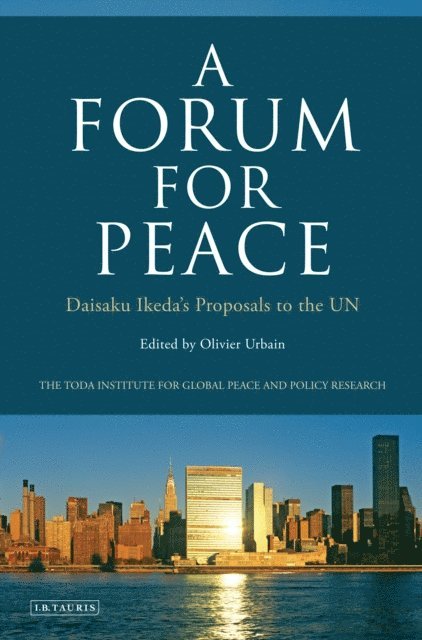
For every year since 1983 the Buddhist leader and thinker, Daisaku Ikeda, has issued a peace proposal that presents solutions to a variety of global problems. While the proposals themselves are both wide-ranging and specific (covering topics as diverse as counter-terrorism relations; the prohibition of child soldiers; denuclearization of the Arctic; and strategies to prevent global warming), the common denominator at their centre is the role and effectiveness of the United Nations in addressing structural challenges and inequality. This substantial volume brings together, for the first time in one place, excerpts from the most topical and important of Ikeda's peace proposals. Themes like human security, the empowerment of women, nuclear disarmament and the centrality of dialogue are throughout informed by an unshakeable belief in the legitimacy and validity of the UN's world mission, as well as by Ikeda's own experience of the severity of war and his articulation of Buddhism as a practical route to peace. The book makes a timely and vital contribution to ethics, peace studies and international relations.
E-bok
PDF, Engelska, 20141 898 kr
Läs direkt efter köp
Every year since 1983 the Buddhist leader and thinker, Daisaku Ikeda, has issued a peace proposal that presents solutions to a variety of global problems. While the proposals themselves are both wide-ranging and specific (covering topics as diverse as counter-terrorism relations; the prohibition of child soldiers; denuclearization of the Arctic; and strategies to prevent global warming), the common denominator at their center is the role and effectiveness of the United Nations in addressing structural challenges and inequality. This substantial volume brings together, for the first time in one place, excerpts from the most topical and important of Ikeda's peace proposals. Themes like human security, the empowerment of women, nuclear disarmament and the centrality of dialogue are throughout informed by an unshakeable belief in the potential and promise of the UN's world mission, as well as by Ikeda's own experience of the cruelty of war and his articulation of Buddhism as a practical route to peace. The book makes a timely and vital contribution to ethics, peace studies and international relations.
Inbunden, Engelska, 2007
2 059 kr
Skickas inom 5-8 vardagar
Häftad, Engelska, 2010
388 kr
Skickas inom 10-15 vardagar
Who is Daisaku Ikeda? At one level, he is the leader of a religious movement - Soka Gakkai - which began in Japan, where it still has its headquarters, but which now claims 12 million adherents around the world. At another level, he is a globetrotting figure whose formal conversations with diverse writers, thinkers and diplomats - including Arnold Toynbee, Joseph Rotblat and Mikhail Gorbachev - have garnered him an international profile, as well as academic recognition. Perhaps above all else, Daisaku Ikeda is viewed as a campaigner for peace. And it is Ikeda's specific contribution to peacebuilding, notably through the central emphasis he has placed on the significance of dialogue, that this book explores: the first to do so in a concerted way. Olivier Urbain shows that while Soka Gakkai (the 'value society') may stem from the medieval principles of Nichiren Buddhism, under Ikeda's leadership it has taken these classic wisdoms and transformed them.Now essentially classless and secularised, as well as adaptable and sensitive to modern challenges like resource shortages and climate change, this - argues the author - is a pragmatic approach to peace which has proved both popular and eminently transportable.