Olivier Vidal – författare
1 139 kr
Läs direkt efter köp
844 kr
Skickas inom 5-8 vardagar
767 kr
Skickas inom 10-15 vardagar
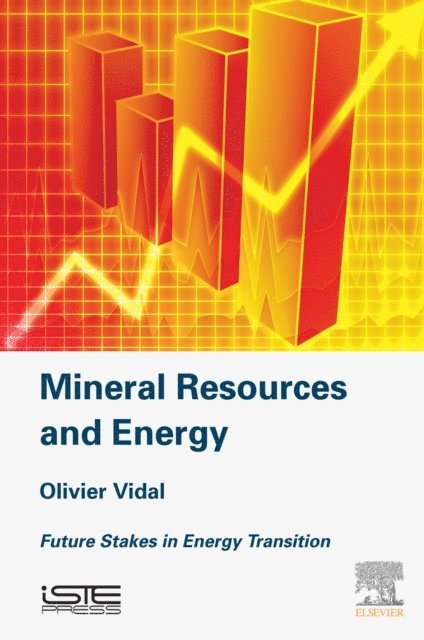
Our consumption of raw materials and energy has reached unprecedented levels which are continuing to increase at a steady rate due to the economic emergence of many countries and the development of new technologies. Metal and cement usage has doubled since the beginning of the 21st Century and this production, between now and 2050, will be equivalent to that produced since the beginning of humanity.
It is in this context that the transition to low-carbon and renewable energies is taking place, which involves profound changes to the existing global energy system.
This book addresses these different aspects and attempts to estimate first-order requirements for cement, steel, copper, aluminum and energy for different power generation technologies, and for three types of energy scenarios. Some dynamic modeling approaches are proposed to assess the needs and likely evolution of primary production and recycling. The link between production and primary reserves, recycling and stocks of end-of-life products, production costs, incomes and prices using a prey-predator dynamic is discussed.
Approaches the issues of commodities and energy in terms of needs, technological innovation and economic and social issues Emphasizes the couplings between these different aspects Helps readers understand and integrate these couplings through global modeling603 kr
Läs direkt efter köp
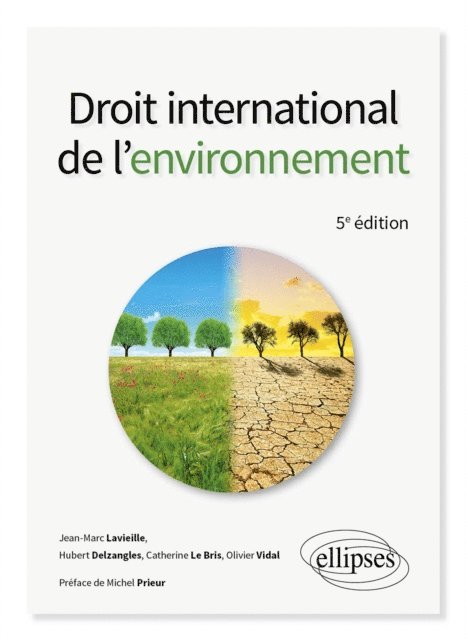
La dégradation mondiale de l’environnement est rapide, profonde, multiforme.
Le droit international de l’environnement ne peut pas, à lui seul, protéger l’environnement mais, aujourd’hui, sans lui on ne peut pas protéger l’environnement.
Comme étudiant, enseignant, chercheur, membre d’association ou comme citoyen n’est-il pas important de comprendre les forces et les faiblesses de ce droit ?
Dans une première partie sont analysés les caractères du droit international de l’environnement à travers sept chapitres : nature et objet, histoire et acteurs, enjeux et contexte, sources formelles et techniques juridiques, institutions et juridictions, application et sanctions, forces et faiblesses de ce droit.
Dans une seconde partie est analysé le contenu du droit international de l’environnement à travers neuf chapitres : concepts et principes, responsabilité internationale et réparation des dommages environnementaux, air, climat et espace extra atmosphérique, eaux douces et milieu marin, sols et forêts, conservation mondiale et régionale de la nature, produits chimiques, déchets dangereux, pollutions plastiques et activités nucléaires, santé travail et habitat, commerce international et conflits armés.
Les défis du droit international de l’environnement sont clairs : renforcer son application, rendre opérationnels ses principes, combler ses lacunes, dégager des moyens institutionnels, juridiques et surtout financiers.
Les auteurs, adoptant une approche globale et critique, en appellent à un droit international de l’environnement plus complet et effectif afin de participer, par des moyens démocratiques, justes, écologiques et pacifiques, à la construction d’une société écologiquement viable au nom de l’intérêt commun de l’humanité.