Olli Varis – författare
Visar alla böcker från författaren Olli Varis. Handla med fri frakt och snabb leverans.
11 produkter
Water Management in Megacities
Av Cecilia Tortajada, Olli Varis m. fl.
Inbunden, 2006
764 kr
Lägg i varukorg
Efficient and equitable water, wastewater and stormwater management for the megacities is becoming an increasingly complex task. The special issue will focus on water management in its totality for megacities, including their technical, social, economic, legal, institutional and environmental …
Water Management in Megacities
Av Cecilia Tortajada, Olli Varis m. fl.
Häftad, 2009
370 kr
Lägg i varukorg
Efficient and equitable water, wastewater and stormwater management for the megacities is becoming an increasingly complex task. The special issue will focus on water management in its totality for megacities, including their technical, social, economic, legal, institutional and environmental …
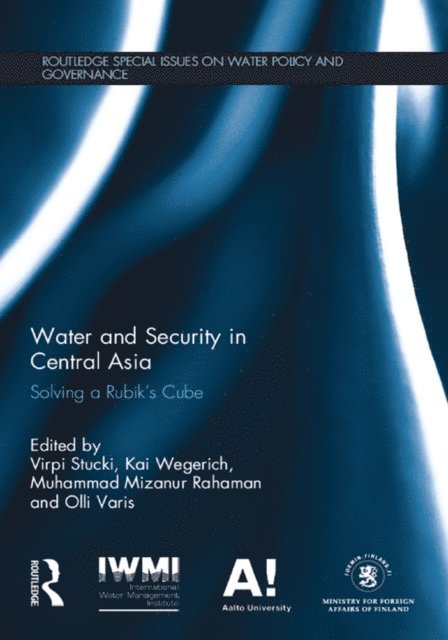
Water and Security in Central Asia
Solving a Rubik's Cube
Av Virpi Stucki, Kai Wegerich m. fl.
Inbunden, 2013
2504 kr
Lägg i varukorg
Examining the water, development and security linkages in Central Asia can feel a bit like solving a Rubik’s cube. The Rubik’s cube starts to usually find structure and the different pieces find their places when its solver adopts a systematic approach. Still, solving the whole cube takes time and …
Water and Security in Central Asia
Solving a Rubik's Cube
Av Olli Varis, Muhammad Mizanur Rahaman m. fl.
E-bok, 2016
860 kr
Lägg i varukorg
Examining the water, development and security linkages in Central Asia can feel a bit like solving a Rubik’s cube. The Rubik’s cube starts to usually find structure and the different pieces find their places when its solver adopts a systematic approach. Still, solving the whole cube takes time …
Water and Security in Central Asia
Solving a Rubik's Cube
Av Olli Varis, Muhammad Mizanur Rahaman m. fl.
E-bok, 2016
860 kr
Lägg i varukorg
Examining the water, development and security linkages in Central Asia can feel a bit like solving a Rubik’s cube. The Rubik’s cube starts to usually find structure and the different pieces find their places when its solver adopts a systematic approach. Still, solving the whole cube takes time …
Water and Security in Central Asia
Solving a Rubik's Cube
Av Virpi Stucki, Kai Wegerich m. fl.
Häftad, 2016
791 kr
Lägg i varukorg
Examining the water, development and security linkages in Central Asia can feel a bit like solving a Rubik’s cube. The Rubik’s cube starts to usually find structure and the different pieces find their places when its solver adopts a systematic approach. Still, solving the whole cube takes time and …
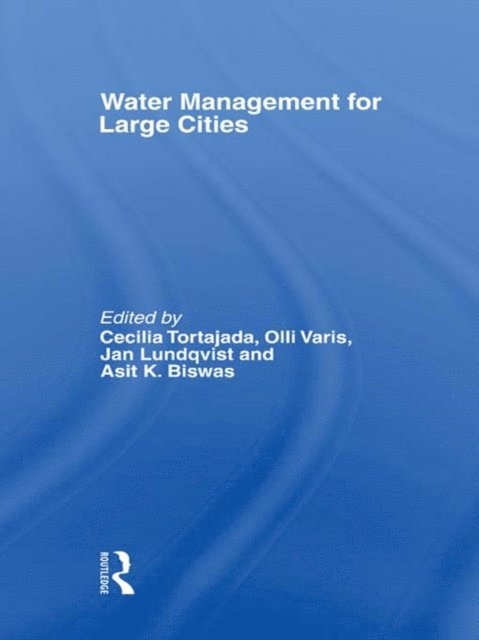
Water Management in Megacities
Av Jan Lundqvist, Asit Biswas m. fl.
E-bok, 2013
433 kr
Lägg i varukorg
Efficient and equitable water, wastewater and stormwater management for the megacities is becoming an increasingly complex task. The special issue will focus on water management in its totality for megacities, including their technical, social, economic, legal, institutional and environmental …
Water Management in Megacities
Av Jan Lundqvist, Asit Biswas m. fl.
E-bok, 2013
424 kr
Lägg i varukorg
Efficient and equitable water, wastewater and stormwater management for the megacities is becoming an increasingly complex task. The special issue will focus on water management in its totality for megacities, including their technical, social, economic, legal, institutional and environmental …
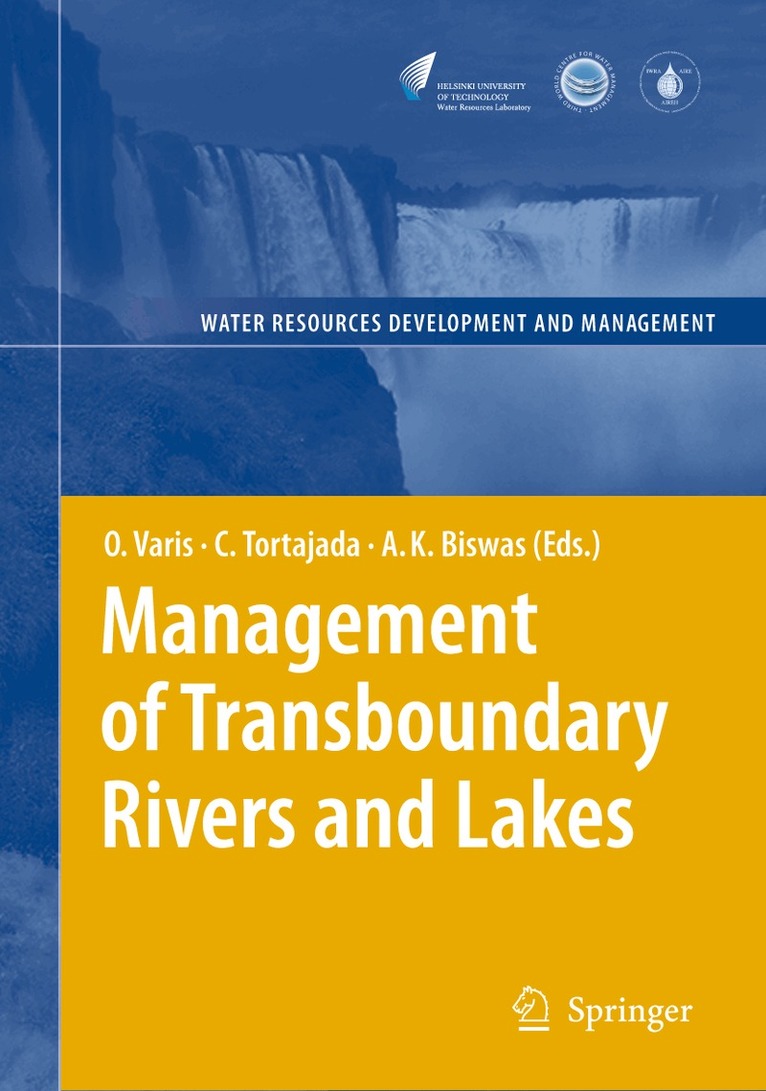
Management of Transboundary Rivers and Lakes
Av Olli Varis, Cecilia Tortajada m. fl.
Inbunden, 2008
1639 kr
Lägg i varukorg
Water’s role in the nature is very fundamental. As it circulates in the atmosphere, in the rivers, lakes, soil, rock, and in the oceans, it is the major conveyer of va- ous chemical substances and of energy, and it can also be called as the blood of the ecosystems of this planet. But at the same …
Management of Transboundary Rivers and Lakes
Av Asit K. Biswas, Cecilia Tortajada m. fl.
E-bok, 2008
1942 kr
Lägg i varukorg
Water’s role in the nature is very fundamental. As it circulates in the atmosphere, in the rivers, lakes, soil, rock, and in the oceans, it is the major conveyer of va- ous chemical substances and of energy, and it can also be called as the blood of the ecosystems of this planet. But at the same …
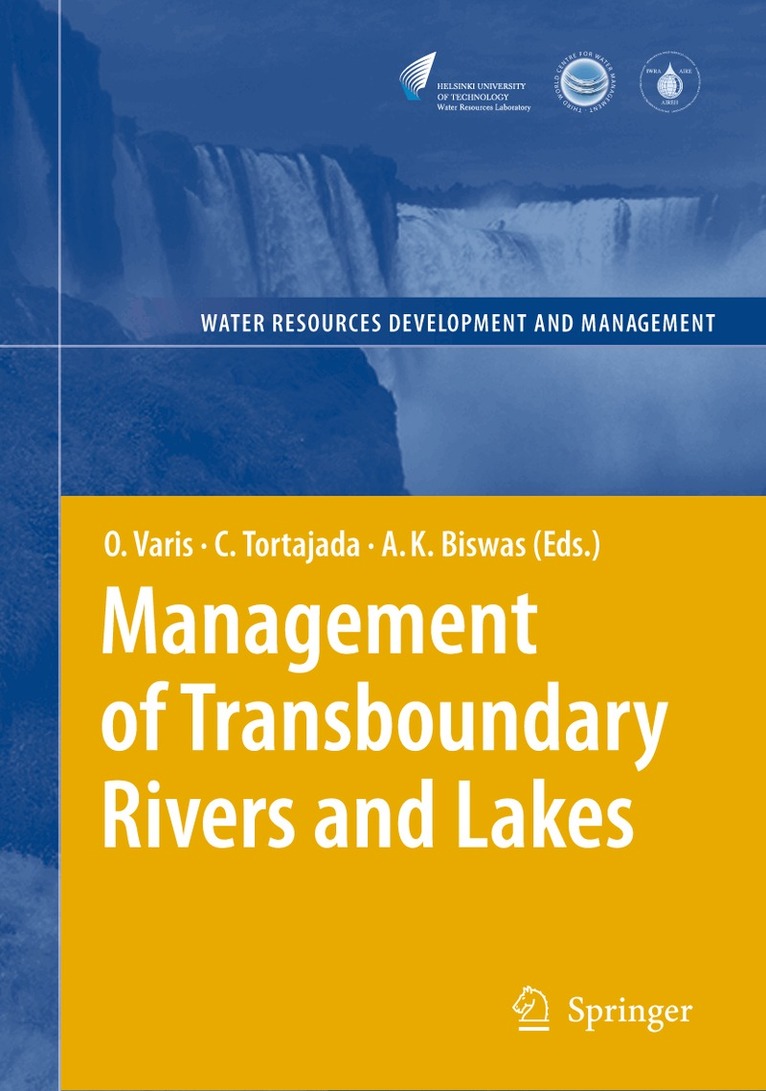
Management of Transboundary Rivers and Lakes
Av Olli Varis, Cecilia Tortajada m. fl.
Häftad, 2010
1508 kr
Lägg i varukorg
Water’s role in the nature is very fundamental. As it circulates in the atmosphere, in the rivers, lakes, soil, rock, and in the oceans, it is the major conveyer of va- ous chemical substances and of energy, and it can also be called as the blood of the ecosystems of this planet. But at the same …