OLSON - Böcker
Visar alla böcker från författaren OLSON. Handla med fri frakt och snabb leverans.
5 produkter
5 produkter
904 kr
Skickas inom 5-8 vardagar
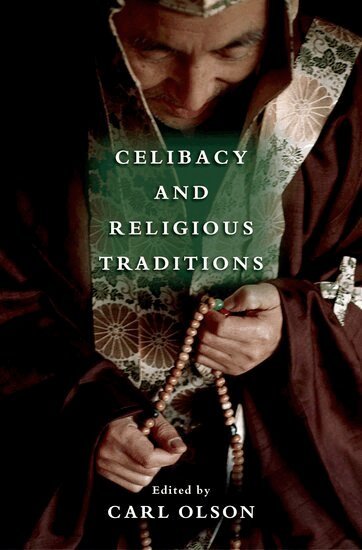
If sexuality is inherently social, the same thing can be said about celibacy. An understanding of celibacy, argues Carl Olson, can be a useful way to view the significance of the human body within a social context. The purpose of this book is to examine how the practice of celibacy differs cross-culturally as well as historically within a particular religious tradition. The essays (all previously unpublished) will demonstrate that celibacy is a complex religious phenomenon. The control of sexual desire can be used to divorce oneself from a basic human biological drive, to separate oneself from what is perceived as impure, or to distance oneself from a transient world. Within different religious traditions there can be found the practice of temporary celibacy, commitment to long-term permanent celibacy, and outright condemnations of it. By maintaining a state of virginity, members of some religious traditions imitate divine models; other traditions do not admit the possibility of emulating such paradigms. Whether or not a religious tradition encourages or discourages it, the practice of celibacy gives us insight into its worldview, social values, gender relations, ethics, religious roles, and understanding of the physical body. Celibacy can contribute to the creation of a certain status and play a role in the construction of identity, while serving as a source of charisma. In some religious traditions, it is possible to renounce sex and gain sacred status and economic support from society. Each essay in the collection will be written by an expert in a particular religious tradition. Each will address such questions as: Why do some members of a religious community decide to maintain a celibate style of religious life? Is celibacy a prerequisite for religious office or status? Are there different contexts within a given religious tradition for the practice of celibacy? What does the choice of celibacy tell us about the human body in a particular religious culture? What is the symbolic significance of celibacy? What is its connection to the acquisition of power? What are its physical or spiritual benefits? The first collection of its kind, this book will be a valuable resource for courses in world religions, as well as a contribution to our understanding of this very widespread but puzzling human phenomenon.
538 kr
Skickas inom 3-6 vardagar
303 kr
Skickas inom 7-10 vardagar
Material culture is not static: objects are created, used and re-used, sometimes for centuries, and their lives interact with those of the people who made and used them. The essays in this book discuss the ‘social lives’ of objects in late-medieval and renaissance Italy, ranging from maiolica, through sculpture and prostitutes’ jewellery, to miraculous painted images. Demonstrates the continued life of these objects well past the deaths of their creators and patrons. Contains a series of original contributions by young scholars, representing a broad range of approaches.
252 kr
Skickas inom 7-10 vardagar
The rapid growth in computer technology provides supply chain managers with valuable tools to better coordinate and control their operations. This book seeks to describe systems available to give supply chains information system support, demonstrating key tasks with demonstrated analytic techniques. This second edition provides you with newer cases to demonstrate concepts that will allow to better manage your supply chain management position in one of the fastest growing fields in our economy.
252 kr
Skickas inom 7-10 vardagar
One of the many outcomes resulting from the explosion of international trade is access to lower cost production opportunities through outsourcing. This phenomenon has increased the importance of supply chains, the information technology needed to coordinate them and the need for this relatively complex enterprise to be exceptionally well-managed. There are obviously many cost benefits to be had from maintaining a strong and far-reaching supply chain. However, this opportunity to lower costs entails significant risks, such as tsunamis, earthquakes, political unrest, and economic turbulence. This book will introduce concepts and examples of risk in supply chain management, followed by an identification and discussion of an array of quantitative tools (selection methods, risk simulation modeling, and business scorecard analysis) to help manage these risks. Many books are appearing that address various aspects of supply chain risks. No other book known to the author addresses this set of modeling tools as a means of managing this risk. The target market for this book is practitioners in the supply chain management field. As such, the book will emphasize practical means of assessing supply chain risk and incorporate real-world examples that offer practical solutions to risk management problems in the supply chain.