Omer Aydan – författare
2 393 kr
Skickas inom 10-15 vardagar
891 kr
Skickas inom 10-15 vardagar
1 298 kr
Läs direkt efter köp
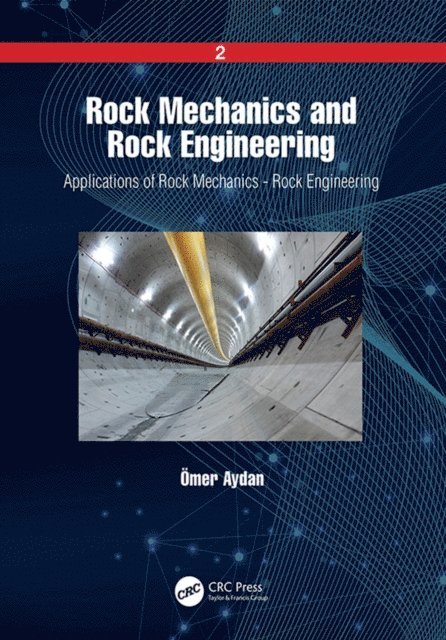
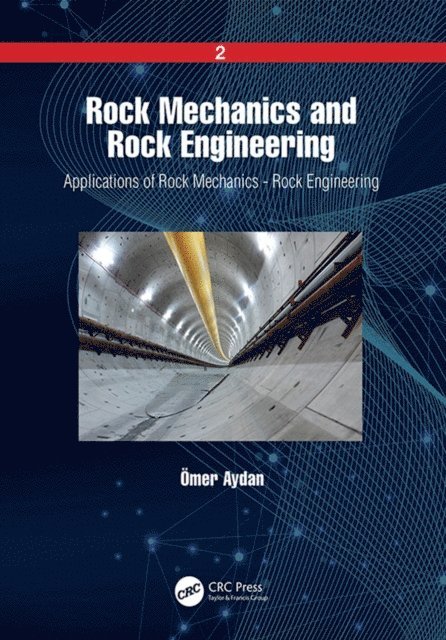
Rock Mechanics and Rock Engineering is concerned with the application of the principles of mechanics to physical, chemical and electro-magnetic processes in the upper-most layers of the earth and the design and construction of the rock structures associated with civil engineering and exploitation or extraction of natural resources in mining and petroleum engineering.
Rock mechanics requires profound knowledge of rock-constituting elements, discontinuities and their behavior under various physical and chemical actions in nature. The governing equations together with constitutive laws and experimental techniques and the solution techniques are explained and some examples of applications are given. The applications of rock mechanics to engineering structures in/on rock, rock excavation techniques and in-situ monitoring techniques are explained and some specific examples are given. The dynamic aspects associated with the science of earthquakes and their effect on rock structures, and the characteristics of vibrations induced by machinery, blasting and impacts as well as measuring techniques are described. Furthermore, the degradation and maintenance processes in rock engineering are explained. Some chapters are devoted to possible new directions in rock mechanics.
This two-volume set is intended to be a fundamental resource for younger generations and newcomers and a reference work for experts specialized in Rock Mechanics and Rock Engineering and associated with the fields of mining, civil and petroleum engineering, engineering geology, and/or specialized in Geophysics and concerned with earthquake science and engineering.
1 022 kr
Läs direkt efter köp
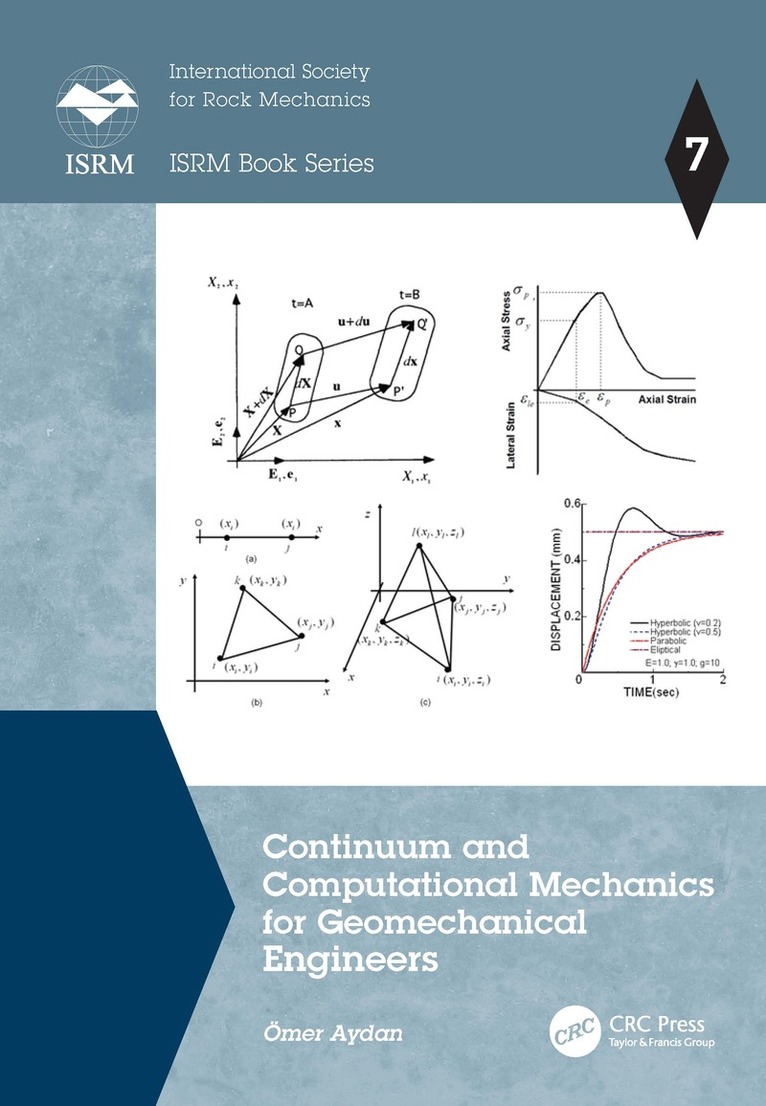
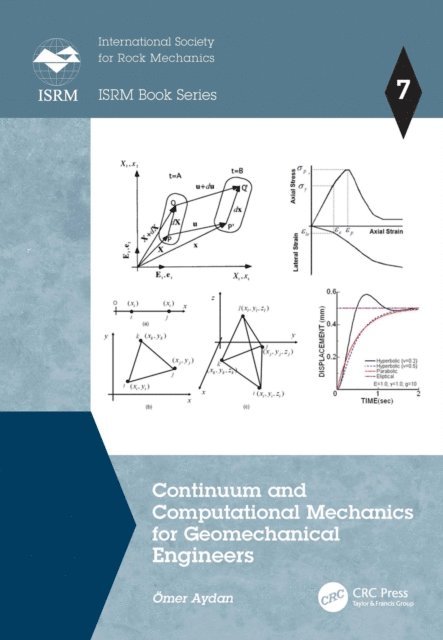
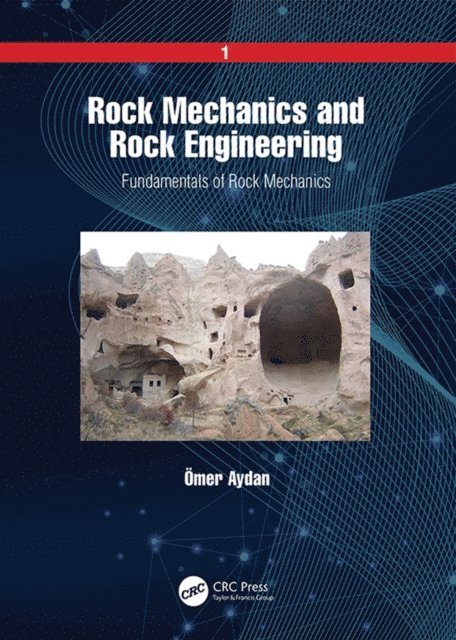
The field of rock mechanics and rock engineering utilizes the basic laws of continuum mechanics and the techniques developed in computational mechanics. This book describes the basic concepts behind these fundamental laws and their utilization in practice irrespective of whether rock/rock mass contains discontinuities.
This book consists of nine chapters and six appendices. The first four chapters are concerned with continuum mechanics aspects, which include the basic operations, definition of stress and strain tensors, and derivation of four fundamental conservation laws in the simplest yet precise manner. The next two chapters are the preparation for computational mechanics, which require constitutive laws of geomaterials relevant to each conservation law and the procedures for how to determine required parameters of the constitutive laws.
Computational mechanics solves the resulting ordinary and partial differential equations. In Chapter 7, the methods of exact (closed-form) solutions are explained and they are applied to ordinary/partial differential equations with solvable boundary and initial conditions. In Chapter 8, the fundamentals of approximate solution methods are explained for one dimension first and then how to extend them to multi-dimensional problems. The readers are expected to learn and clearly understand how they are derived and applied to various problems in geomechanics.
The final chapter involves the applications of the approximate methods to the actual problems in practice for geomechanical engineers, which cover the continuum to discontinuum, including the stress state of the earth as well as the ground motions induced by earthquakes. Six appendices are provided to have a clear understanding of continuum mechanics operations and procedures for how to deal with discontinuities/interfaces often encountered in rock mechanics and rock engineering.
1 022 kr
Läs direkt efter köp
The field of rock mechanics and rock engineering utilizes the basic laws of continuum mechanics and the techniques developed in computational mechanics. This book describes the basic concepts behind these fundamental laws and their utilization in practice irrespective of whether rock/rock mass contains discontinuities.
This book consists of nine chapters and six appendices. The first four chapters are concerned with continuum mechanics aspects, which include the basic operations, definition of stress and strain tensors, and derivation of four fundamental conservation laws in the simplest yet precise manner. The next two chapters are the preparation for computational mechanics, which require constitutive laws of geomaterials relevant to each conservation law and the procedures for how to determine required parameters of the constitutive laws.
Computational mechanics solves the resulting ordinary and partial differential equations. In Chapter 7, the methods of exact (closed-form) solutions are explained and they are applied to ordinary/partial differential equations with solvable boundary and initial conditions. In Chapter 8, the fundamentals of approximate solution methods are explained for one dimension first and then how to extend them to multi-dimensional problems. The readers are expected to learn and clearly understand how they are derived and applied to various problems in geomechanics.
The final chapter involves the applications of the approximate methods to the actual problems in practice for geomechanical engineers, which cover the continuum to discontinuum, including the stress state of the earth as well as the ground motions induced by earthquakes. Six appendices are provided to have a clear understanding of continuum mechanics operations and procedures for how to deal with discontinuities/interfaces often encountered in rock mechanics and rock engineering.
1 006 kr
Läs direkt efter köp
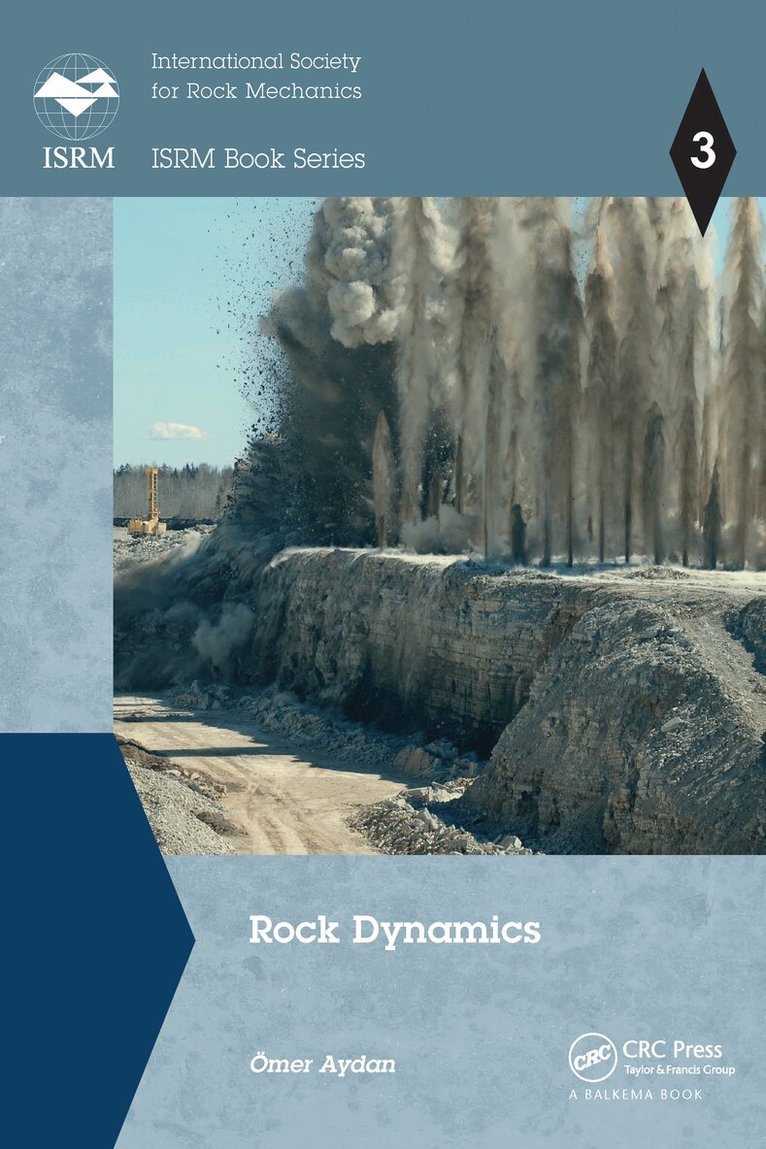
Rock dynamics has become one of the most important topics in the field of rock mechanics and rock engineering, and involves a wide variety of topics, from earthquake engineering, blasting, impacts, failure of rock engineering structures as well as the occurrence and prediction of earthquakes, induced seismicity, rock bursts to non-destructive testing and explorations. Rock dynamics has wide applications in civil and infrastructural, resources and energy, geological and environmental engineering, geothermal energy, and earthquake hazard management, and has become one of the most topical areas.
2019 Rock Dynamics Summit contains 8 keynote addresses and 128 regular full papers that were presented at the 2019 Rock Dynamics Summit (2019 RDS, Okinawa, Japan, 7-11 May 2019), a specialized conference jointly organized by the Rock Dynamics Committee of the Japanese Society of Civil Engineers (JSCE-RDC), the Japanese Society for Rock Mechanics (JSRM), and which was supported by the International Society for Rock Mechanics and Rock Engineering (ISRM) and the Turkish National Society for Rock Mechanics (TNSRM). The contributions cover a wide range of topics on the dynamic behavior of rock and rock masses and scientific and engineering applications, and include:
- Laboratory tests on Dynamic Responses of Rocks and Rock Masses / Fracturing of Rocks and Associated Strong Motions- Estimation Procedures and Numerical Techniques of Strong Motions Associated with the Rupture of Earth’s Crust and Some Strong Motion- Dynamic Response and Stability of Rock Foundations, Underground Excavations in Rock, Rock Slopes Dynamic Responses and Stability of Stone Masonry Historical Structures and Monuments- Induced Seismicity- Dynamic Simulation of Loading and Excavation- Blasting and machinery induced vibrations- Rockburst, Outburst, Impacts- Nondestructive Testing Using Shock Waves- Case Histories of Failure Phenomenon in Rock Engineering
2019 Rock Dynamics Summit contains the state-of-the-art in rock dynamics, and will be invaluable to professionals and academics interested in the latest advances in new techniques for experiments, analytical and numerical modelling as well as monitoring in dynamics of rocks and rock engineering structures.
1 006 kr
Läs direkt efter köp
Rock dynamics has become one of the most important topics in the field of rock mechanics and rock engineering, and involves a wide variety of topics, from earthquake engineering, blasting, impacts, failure of rock engineering structures as well as the occurrence and prediction of earthquakes, induced seismicity, rock bursts to non-destructive testing and explorations. Rock dynamics has wide applications in civil and infrastructural, resources and energy, geological and environmental engineering, geothermal energy, and earthquake hazard management, and has become one of the most topical areas.
2019 Rock Dynamics Summit contains 8 keynote addresses and 128 regular full papers that were presented at the 2019 Rock Dynamics Summit (2019 RDS, Okinawa, Japan, 7-11 May 2019), a specialized conference jointly organized by the Rock Dynamics Committee of the Japanese Society of Civil Engineers (JSCE-RDC), the Japanese Society for Rock Mechanics (JSRM), and which was supported by the International Society for Rock Mechanics and Rock Engineering (ISRM) and the Turkish National Society for Rock Mechanics (TNSRM). The contributions cover a wide range of topics on the dynamic behavior of rock and rock masses and scientific and engineering applications, and include:
- Laboratory tests on Dynamic Responses of Rocks and Rock Masses / Fracturing of Rocks and Associated Strong Motions- Estimation Procedures and Numerical Techniques of Strong Motions Associated with the Rupture of Earth’s Crust and Some Strong Motion- Dynamic Response and Stability of Rock Foundations, Underground Excavations in Rock, Rock Slopes Dynamic Responses and Stability of Stone Masonry Historical Structures and Monuments- Induced Seismicity- Dynamic Simulation of Loading and Excavation- Blasting and machinery induced vibrations- Rockburst, Outburst, Impacts- Nondestructive Testing Using Shock Waves- Case Histories of Failure Phenomenon in Rock Engineering
2019 Rock Dynamics Summit contains the state-of-the-art in rock dynamics, and will be invaluable to professionals and academics interested in the latest advances in new techniques for experiments, analytical and numerical modelling as well as monitoring in dynamics of rocks and rock engineering structures.
811 kr
Läs direkt efter köp
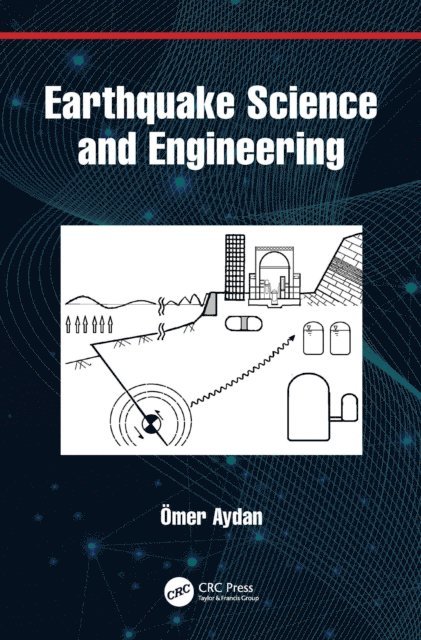
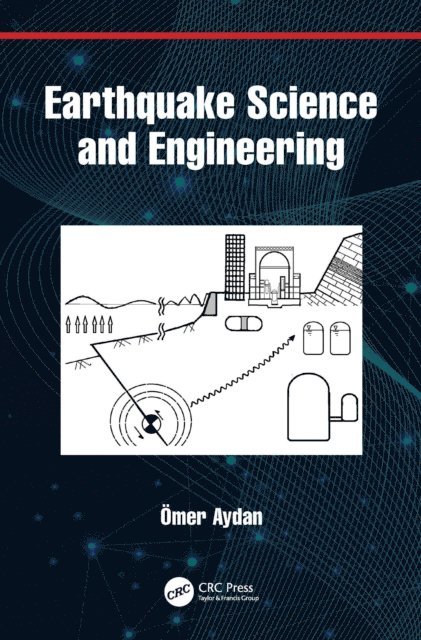
Earthquakes form one of the categories of natural disasters that sometimes result in huge loss of human life as well as destruction of (infra)structures, as experienced during recent great earthquakes. This book addresses scientific and engineering aspects of earthquakes, which are generally taught and published separately. This book intends to fill the gap between these two fields associated with earthquakes and help seismologists and earthquake engineers better communicate with and understand each other. This will foster the development of new techniques for dealing with various aspects of earthquakes and earthquake-associated issues, to safeguard the security and welfare of societies worldwide.
Because this work covers both scientific and engineering aspects in a unified way, it offers a complete overview of earthquakes, their mechanics, their effects on (infra)structures and secondary associated events. As such, this book is aimed at engineering professionals with an earth sciences background (geology, seismology, geophysics) or those with an engineering background (civil, architecture, mining, geological engineering) or with both, and it can also serve as a reference work for academics and (under)graduate students.
811 kr
Läs direkt efter köp
Earthquakes form one of the categories of natural disasters that sometimes result in huge loss of human life as well as destruction of (infra)structures, as experienced during recent great earthquakes. This book addresses scientific and engineering aspects of earthquakes, which are generally taught and published separately. This book intends to fill the gap between these two fields associated with earthquakes and help seismologists and earthquake engineers better communicate with and understand each other. This will foster the development of new techniques for dealing with various aspects of earthquakes and earthquake-associated issues, to safeguard the security and welfare of societies worldwide.
Because this work covers both scientific and engineering aspects in a unified way, it offers a complete overview of earthquakes, their mechanics, their effects on (infra)structures and secondary associated events. As such, this book is aimed at engineering professionals with an earth sciences background (geology, seismology, geophysics) or those with an engineering background (civil, architecture, mining, geological engineering) or with both, and it can also serve as a reference work for academics and (under)graduate students.
860 kr
Läs direkt efter köp
860 kr
Läs direkt efter köp
868 kr
Läs direkt efter köp
860 kr
Läs direkt efter köp
947 kr
Skickas inom 10-15 vardagar
1 947 kr
Läs direkt efter köp
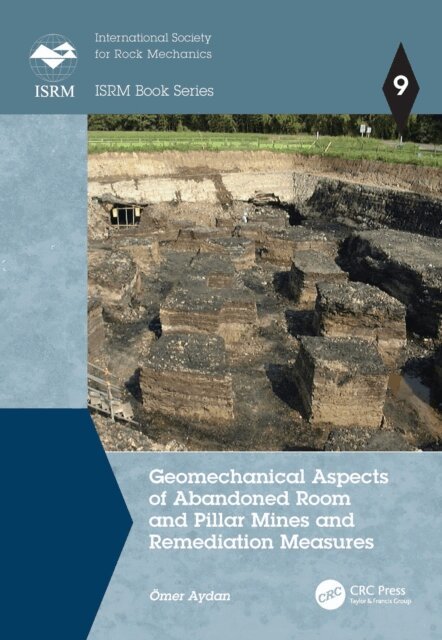
Geomechanical Aspects of Abandoned Room and Pillar Mines and Remediation Measures addresses the occurrence, prediction, and control of subsidence issues encountered in room and pillar mining, including creep, degradation, and seismic aspects. The book distinguishes itself by:
Presenting a unified treatise on room and pillar mines Using clear definitions and explanations of fundamental concepts Considering long-term aspects (creep and degradation), seismic effects, remedial measures, contact types, and remote sensing monitoring techniques Including physical and numerical modeling Demonstrating an in-depth view of procedures and solution techniquesThis book provides a clear understanding of active and/or abandoned room and pillar mines. It is aimed at academics and engineers with a mining and/or civil engineering background, but it also serves as a reference for undergraduate and graduate students.
1 947 kr
Läs direkt efter köp
Geomechanical Aspects of Abandoned Room and Pillar Mines and Remediation Measures addresses the occurrence, prediction, and control of subsidence issues encountered in room and pillar mining, including creep, degradation, and seismic aspects. The book distinguishes itself by:
Presenting a unified treatise on room and pillar mines Using clear definitions and explanations of fundamental concepts Considering long-term aspects (creep and degradation), seismic effects, remedial measures, contact types, and remote sensing monitoring techniques Including physical and numerical modeling Demonstrating an in-depth view of procedures and solution techniquesThis book provides a clear understanding of active and/or abandoned room and pillar mines. It is aimed at academics and engineers with a mining and/or civil engineering background, but it also serves as a reference for undergraduate and graduate students.
2 451 kr
Skickas inom 5-8 vardagar
1 249 kr
Läs direkt efter köp
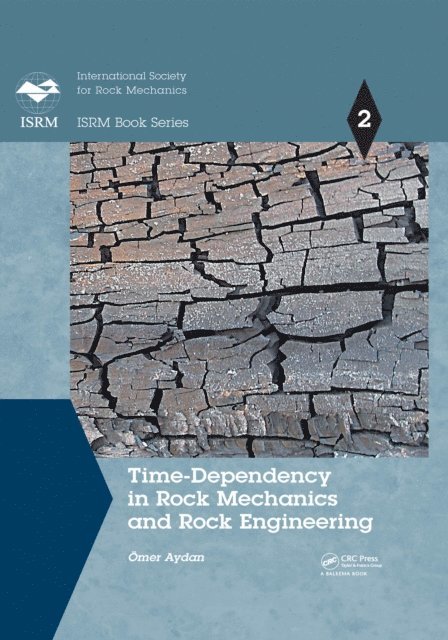
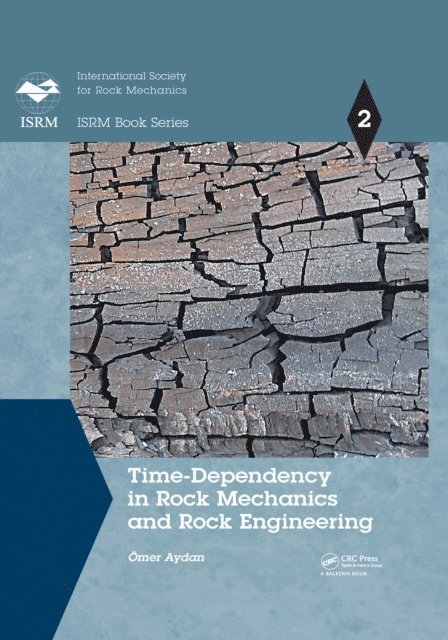
This book is concerned with time-dependency in rock mechanics and rock engineering, whose spectrum is very wide. While the term “time-dependency” involves time-dependent behavior/rate-dependent behavior of rocks in a conventional sense, this books attempts to cover the spectrum as much as possible including coupled processes of thermal, hydrological and diffusions in rocks. It presents theoretical formulations, experiments, numerical formulation and examples of applications. Of paramount concern is the long-term response and stability of rock engineering structures, including for instance man-made and natural slopes and underground facilities such as tunnels and powerhouses.
1 087 kr
Läs direkt efter köp
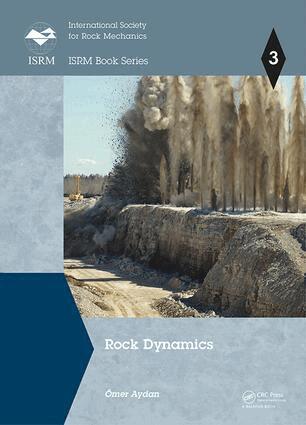
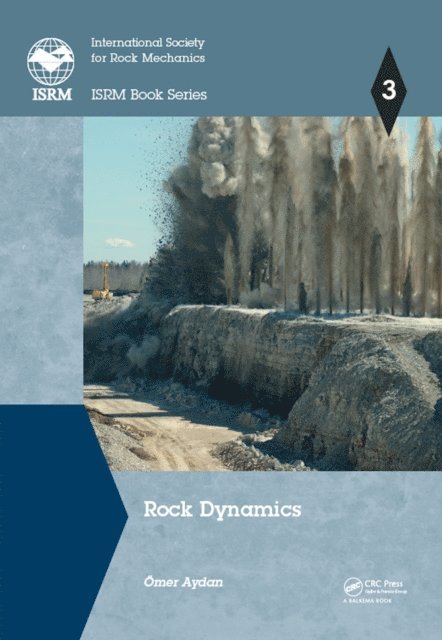
Rock dynamics has become one of the most important topics in the field of rock mechanics and rock engineering. The spectrum of rock dynamics is very wide and it includes the failure of rocks, rock masses and rock engineering structures such as rockbursting, spalling, popping, collapse, toppling, sliding, blasting, non-destructive testing, geophysical explorations, science and engineering of rocks and impacts. The book specifically covers fundamentals of rock dynamics, constitutive models, numerical analysis techniques, dynamic testing procedures, the multi-parameter responses and motions of rocks during fracturing or slippage in laboratory experiments, earthquakes and their strong motion characteristics and their effect on various rock structures such as foundations, underground structures, slopes, dynamic simulation of loading and excavation, blasting and its positive utilization in rock engineering, the phenomenon of rockburst in rock excavations, non-destructive testing of rockbolts and rock anchors and impacts by meteors or projectiles. The main goal of this book is to present a unified and complete treatise on Rock Dynamics and to represent a milestone in advancing the knowledge in this field and in leading to new techniques for experiments, analytical and numerical modelling as well as monitoring of dynamics of rocks and rock engineering structures.
1 087 kr
Läs direkt efter köp
Rock dynamics has become one of the most important topics in the field of rock mechanics and rock engineering. The spectrum of rock dynamics is very wide and it includes the failure of rocks, rock masses and rock engineering structures such as rockbursting, spalling, popping, collapse, toppling, sliding, blasting, non-destructive testing, geophysical explorations, science and engineering of rocks and impacts. The book specifically covers fundamentals of rock dynamics, constitutive models, numerical analysis techniques, dynamic testing procedures, the multi-parameter responses and motions of rocks during fracturing or slippage in laboratory experiments, earthquakes and their strong motion characteristics and their effect on various rock structures such as foundations, underground structures, slopes, dynamic simulation of loading and excavation, blasting and its positive utilization in rock engineering, the phenomenon of rockburst in rock excavations, non-destructive testing of rockbolts and rock anchors and impacts by meteors or projectiles. The main goal of this book is to present a unified and complete treatise on Rock Dynamics and to represent a milestone in advancing the knowledge in this field and in leading to new techniques for experiments, analytical and numerical modelling as well as monitoring of dynamics of rocks and rock engineering structures.
941 kr
Läs direkt efter köp
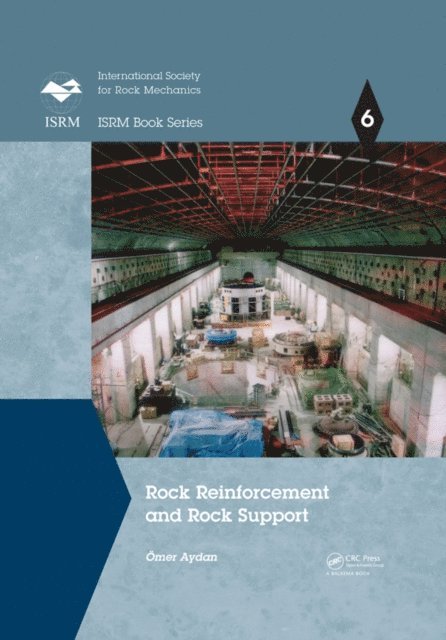
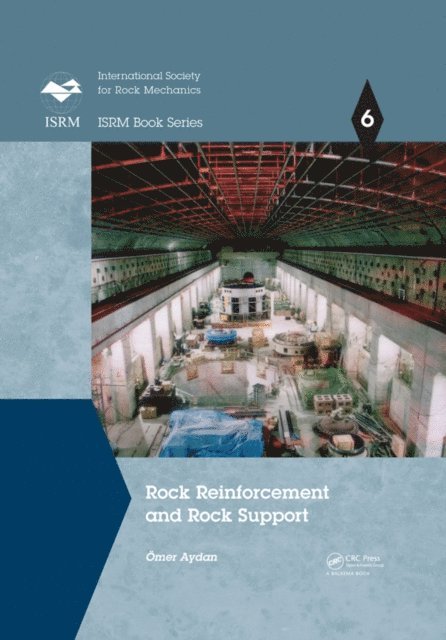
The stability of underground and surface geotechnical structures during and after excavation is of great concern as any kind of instability may result in damage to the environment as well as time-consuming high cost repair work. The forms of instability, their mechanisms and the conditions associated with them must be understood so that correct stabilisation of the structure through rock reinforcement and/or rock support can be undertaken.
Rock Reinforcement and Rock Support elucidates the reinforcement functions of rock bolts/rock anchors and support systems consisting of shotcrete, steel ribs and concrete liners and evaluates their reinforcement and supporting effects both qualitatively and quantitatively. It draws on the research activities and practices carried out by the author for more than three decades and has culminated in a most extensive up-to-date and a complete treatise on rock reinforcement and rock support.
941 kr
Läs direkt efter köp
The stability of underground and surface geotechnical structures during and after excavation is of great concern as any kind of instability may result in damage to the environment as well as time-consuming high cost repair work. The forms of instability, their mechanisms and the conditions associated with them must be understood so that correct stabilisation of the structure through rock reinforcement and/or rock support can be undertaken.
Rock Reinforcement and Rock Support elucidates the reinforcement functions of rock bolts/rock anchors and support systems consisting of shotcrete, steel ribs and concrete liners and evaluates their reinforcement and supporting effects both qualitatively and quantitatively. It draws on the research activities and practices carried out by the author for more than three decades and has culminated in a most extensive up-to-date and a complete treatise on rock reinforcement and rock support.
1 249 kr
Läs direkt efter köp
This book is concerned with time-dependency in rock mechanics and rock engineering, whose spectrum is very wide. While the term “time-dependency” involves time-dependent behavior/rate-dependent behavior of rocks in a conventional sense, this books attempts to cover the spectrum as much as possible including coupled processes of thermal, hydrological and diffusions in rocks. It presents theoretical formulations, experiments, numerical formulation and examples of applications. Of paramount concern is the long-term response and stability of rock engineering structures, including for instance man-made and natural slopes and underground facilities such as tunnels and powerhouses.