Onisimo Mutanga – författare
Visar alla böcker från författaren Onisimo Mutanga. Handla med fri frakt och snabb leverans.
5 produkter
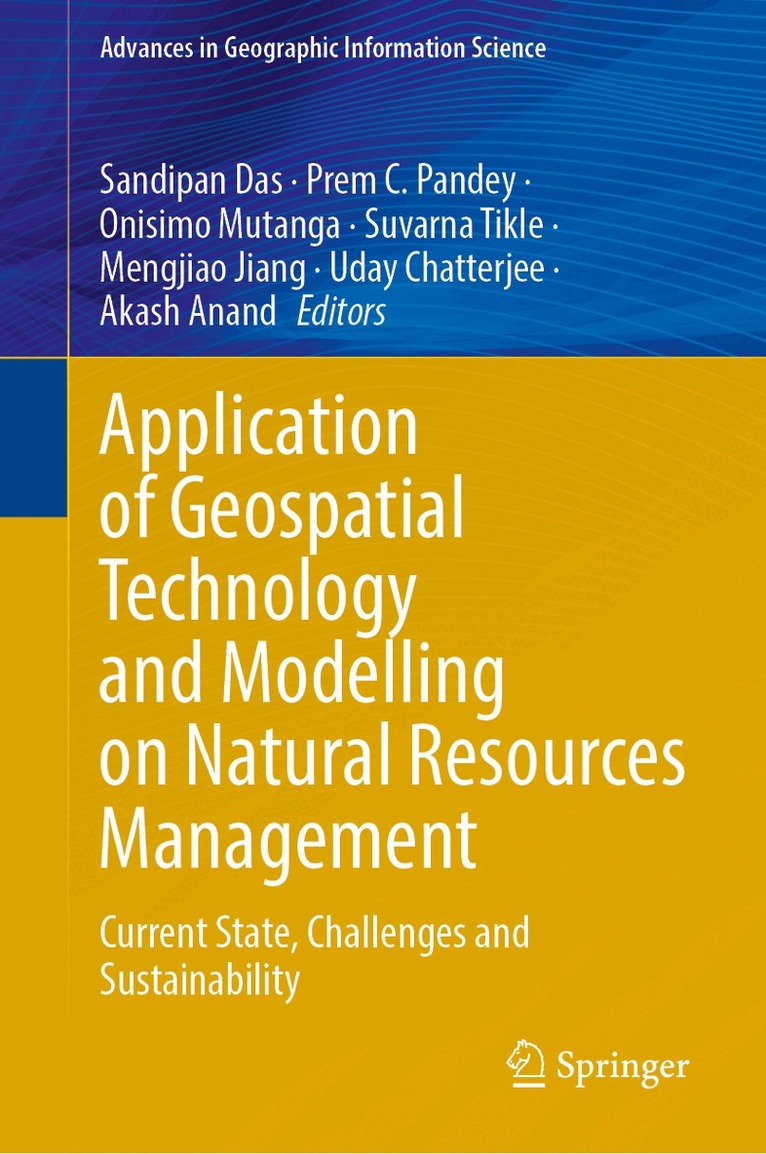
Application of Geospatial Technology and Modelling on Natural Resources Management
Current State, Challenges and Sustainability
Av Sandipan Das, Prem C. Pandey m. fl.
Inbunden, 2025
2392 kr
Lägg i varukorg
This contributed volume provides coverage of geospatial technology and modelling techniques that are useful for natural resource assessment at various scales, from regional to global. This makes it a valuable resource for researchers, practitioners, scientists, faculties and students interested in …
Application of Geospatial Technology and Modelling on Natural Resources Management
Current State, Challenges and Sustainability
Av Akash Anand, Uday Chatterjee m. fl.
E-bok, 2025
3251 kr
Lägg i varukorg
This contributed volume provides coverage of geospatial technology and modelling techniques that are useful for natural resource assessment at various scales, from regional to global. This makes it a valuable resource for researchers, practitioners, scientists, faculties and students interested in …
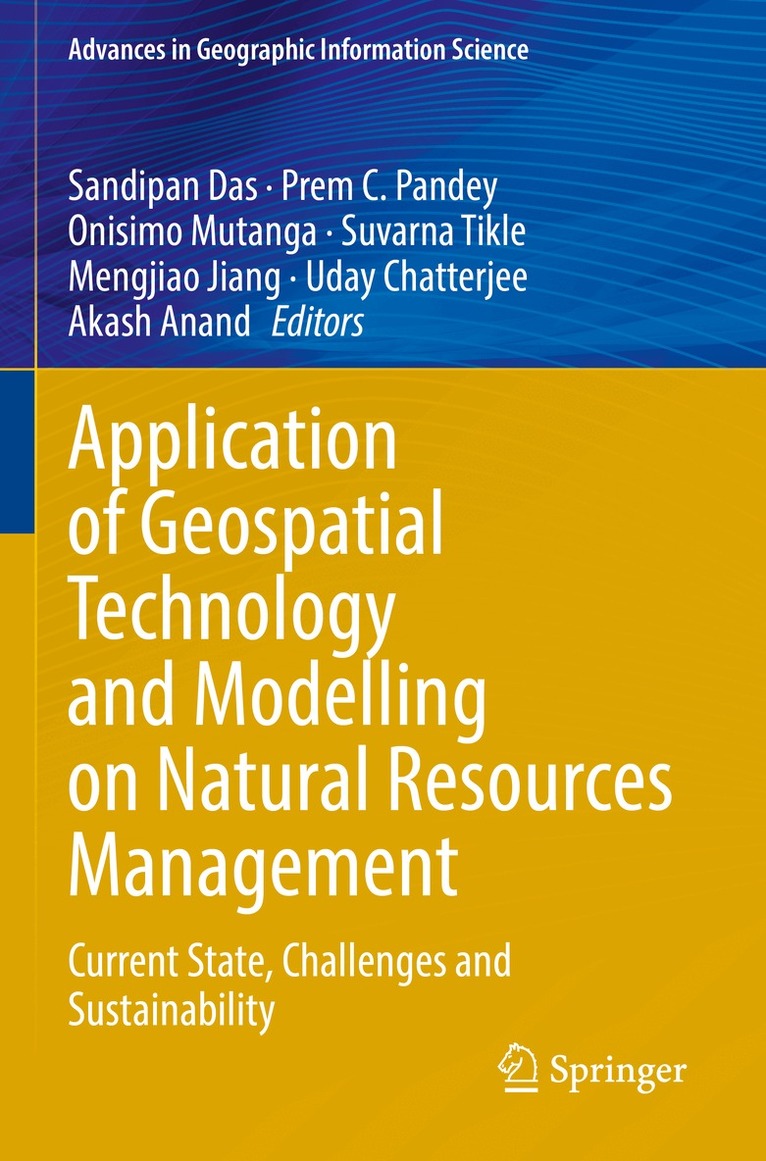
Application of Geospatial Technology and Modelling on Natural Resources Management
Current State, Challenges and Sustainability
Av Sandipan Das, Prem C. Pandey m. fl.
Häftad, 2026
2403 kr
Lägg i varukorg
This contributed volume provides coverage of geospatial technology and modelling techniques that are useful for natural resource assessment at various scales, from regional to global. This makes it a valuable resource for researchers, practitioners, scientists, faculties and students interested in …
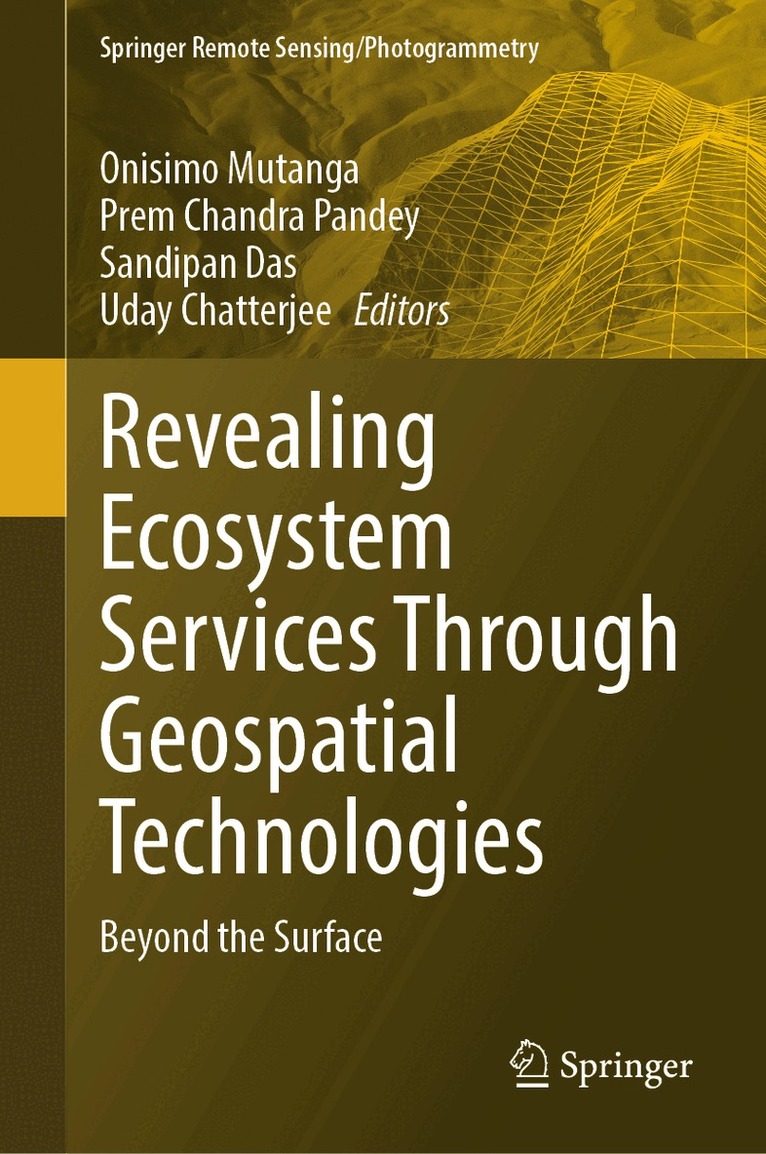
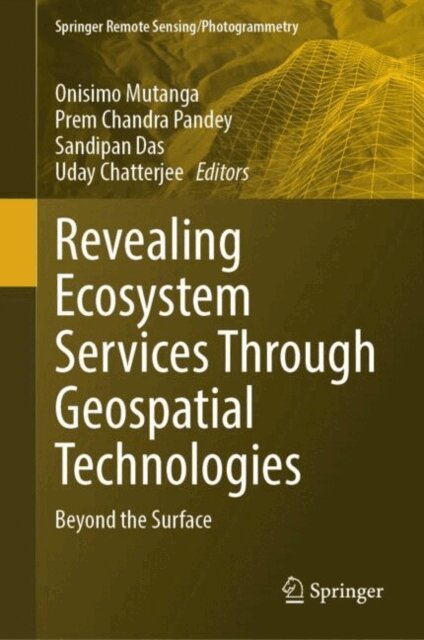
Revealing Ecosystem Services Through Geospatial Technologies
Beyond the Surface
Av Onisimo Mutanga, Prem Chandra Pandey m. fl.
Inbunden, 2025
1750 kr
Lägg i varukorg
This book covers the quantification of forests, grasslands, and woodlands ecosystem services from the supply side (e.g., regulatory and provisioning services) to the demand side, including human cultural needs. The Millennium Ecosystem Assessment (MA, 2005) defines ecosystem services as simply the …
Revealing Ecosystem Services Through Geospatial Technologies
Beyond the Surface
Av Uday Chatterjee, Sandipan Das m. fl.
E-bok, 2025
2274 kr
Lägg i varukorg
This book covers the quantification of forests, grasslands, and woodlands ecosystem services from the supply side (e.g., regulatory and provisioning services) to the demand side, including human cultural needs. The Millennium Ecosystem Assessment (MA, 2005) defines ecosystem services as simply the …