Organisation for Economic Co-operation and Development (OECD) – författare
Visar alla böcker från författaren Organisation for Economic Co-operation and Development (OECD). Handla med fri frakt och snabb leverans.
20 produkter
20 produkter
Inbunden, Engelska, 2004
1 169 kr
Skickas inom 10-15 vardagar
Differences in the growth performances of OECD countries during the 1990s revived the debate over the underlying causes of economic growth. This debate prompted the OECD to undertake a number of in depth studies into this issue. The main theme can be expressed in a simple question: what has driven economic growth in OECD countries in recent decades? Following on from this, what effects, if any, have other developments not least the spread of information technology (IT) had on the determinants of overall economic growth? How, and how much, do government policies and other aspects of the business environment contribute to long term growth, and what policies should therefore be advocated? And, finally, what impact has restructuring within and between industries had on overall growth performances?
Häftad, Engelska, 2014
565 kr
Skickas
This publication sets out the challenge for freshwater in a changing climate and provides policy guidance on how to navigate this new "waterscape". It examines the range and complexity of possible changes in the water cycle and the challenges of making practical, on-site adaptation decisions for water. It offers policymakers a risk-based framework and guidance to "know", "cap" and "manage" water risks in order to provide flexibility and improve decisions despite the lack of reliable predictions. It draws insights from a stock take of current policy efforts to adapt water systems across all 34 member countries and the European Union, including water-related aspects of National Adaptation Plans and Strategies, specific policy measures, and financing programmes. Finally, the report examines the use of economic instruments to promote adaptation (e.g. insurance schemes, water markets and banks, water pricing), incentives for ‘green’ infrastructure and ecosystem-based approaches, and financing issues.
Häftad, Engelska, 2014
1 061 kr
Skickas
This publication examines the critical issues surrounding water security (water shortage, water excess, inadequate water quality, the resilience of freshwater systems), providing a rationale for a risk-based approach and the management of trade-offs between water and other (sectoral and environmental) policies. The report sets out a three-step process to "know", "target" and "manage" water risks: (1) appraising the risks, (2) judging the tolerability and acceptability of risks and weighing risk-risk trade-offs, and (3) calibrating appropriate responses. The publication provides policy analysis and guidance on the use of market-based instruments and the complex links between water security and other policy objectives, such as food security, energy security, climate mitigation and biodiversity protection.
Häftad, Engelska, 2014
627 kr
Skickas
This report analyses the adaptive capacity in agricultural water management, adaptation in agriculture to water variability and extreme events, (floods and droughts), mitigation, (water and energy) and uncertainty about further climate change.
Häftad, Engelska, 2015
627 kr
Skickas
This report focuses on the urban water management challenges facing cities across OECD countries, and explores both national and local policy responses with respect to water-risk exposure, the state of urban infrastructures and dynamics, and institutional and governance architectures. The analyses focus on four mutually dependent dimensions – finance, innovation, urban-rural co-operation and governance – and proposes a solutions-oriented typology based on urban characteristics. The report underlines that sustainable urban water management will depend on collaboration across different tiers of government working together with local initiatives and stakeholders.
Häftad, Engelska, 2015
503 kr
Skickas
Water resources allocation determines who is able to use water resources, how, when and where. It directly affects the value (economic, ecological, socio-cultural) that individuals and society obtain from water resources. This report overviews how allocation works in a range of countries and how the performance of allocation arrangements can be improved to adjust to changing conditions. Capturing information from 27 OECD countries and key partner economies, the report presents key findings from the OECD Survey of Water Resources Allocation and case studies of successful allocation reform. It provides practical policy guidance for water allocation in the form of a "health check", which can be used to assess the performance of current arrangements and manage the transition to improved regimes.
Häftad, Engelska, 2016
503 kr
Skickas
Groundwater has provided great benefits to agriculture irrigation in semi-arid OECD countries, but its intensive use beyond recharge in certain regions has depleted resources and generated significant negative environmental externalities. The report provides a characterisation of the diversity of groundwater systems, reviews policies in OECD countries, and proposes a package of recommendations to ensure that groundwater can sustain its services to agriculture and contribute to climate change adaptation.
Häftad, Engelska, 2016
503 kr
Skickas
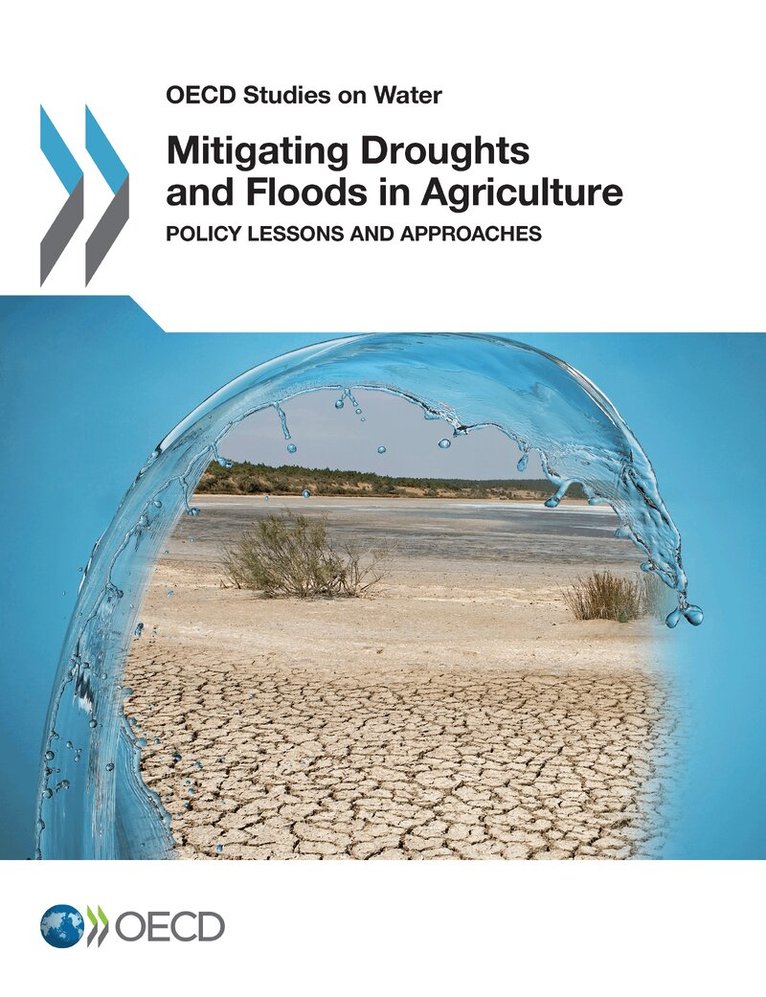
Climate change is expected to increase the frequency and magnitude of extreme weather events, notably of droughts and floods to which the agriculture sector is particularly exposed. While agricultural productivity growth and policy development have allowed to better cope with these risks and reduce overall impacts on the sector and commodity markets, there is substantial room to improve policy responses and co-ordinate across policy domains, including with respect to water rights and allocation, weather and hydrological information, innovation and education, and insurance and compensation schemes. Indeed, drought and flood risks are likely to become a major policy concern as increasing population will increase the demand for food, feed, fibre, and energy, not to mention the competition for water resources, and urbanisation will increase the demand for flood protection and mitigation, raising the issue of the allocation of flood risks across sectors and areas.
Häftad, Engelska, 2016
503 kr
Skickas
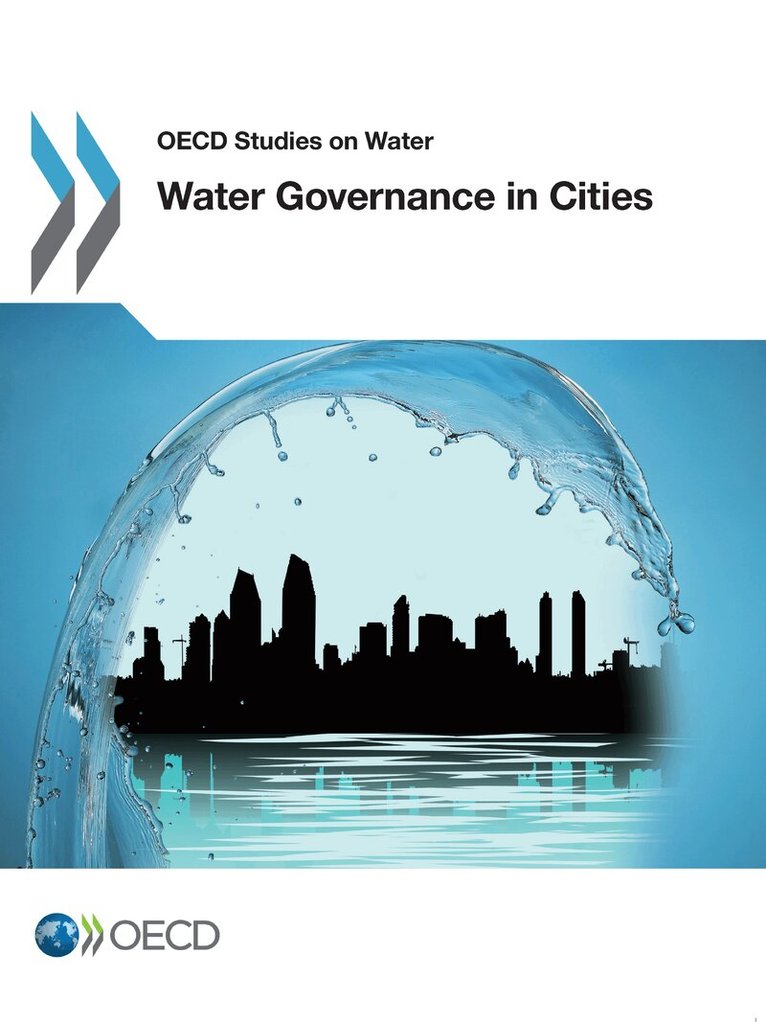
Urban, demographic and climate trends are increasingly exposing cities to risks of having too little, too much and too polluted water. Facing these challenges requires robust public policies and sound governance frameworks to co-ordinate across multiple scales, authorities, and policy domains. Building on a survey of 48 cities in OECD countries and emerging economies, the report analyses key factors affecting urban water governance, discusses trends in allocating roles and responsibilities across levels of government, and assesses multi-level governance gaps in urban water management. It provides a framework for mitigating territorial and institutional fragmentation and raising the profile of water in the broader sustainable development agenda, focusing in particular on the contribution of metropolitan governance, rural-urban partnerships and stakeholder engagement.
Häftad, Engelska, 2017
379 kr
Skickas
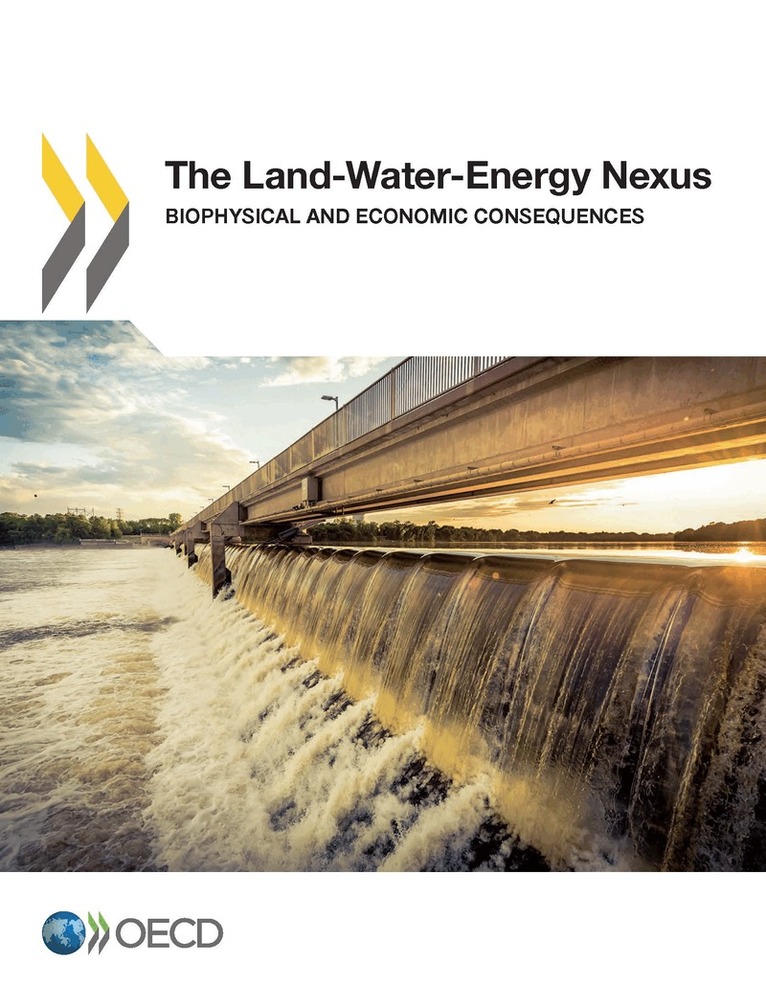
This report contributes to the discussion of interconnections between scarce resources by highlighting the nexus between land, water and energy (the LWE nexus). It focuses on a dynamic, integrated, and disaggregated analysis of how land, water and energy interact in the biophysical and economic systems. The report provides projections for the biophysical and economic consequences of nexus bottlenecks until 2060, highlighting that while the LWE nexus is essentially local, there can be significant large-scale repercussions in vulnerable regions, notably on forest cover and in terms of food and water security.The analysis is based on coupling a gridded biophysical systems model with a multi-regional, multi-sectoral dynamic general equilibrium modelling assessment. Numerical insights are provided by investigating a carefully selected set of scenarios that are designed to illustrate the key bottlenecks: one scenario for each resource bottleneck, plus two scenarios that combine all bottlenecks, with and without an overlay of climate change.
Häftad, Engelska, 2017
627 kr
Skickas
Agriculture is expected to face increasing water risks that will impact production, markets, trade and food security - risks that can be mitigated with targeted policy actions on water hotspots. This report develops the hotspot approach, provides an application at the global scale, and presents a mitigation policy action plan. The People’s Republic of China, India and the United States are identified as countries facing the greatest water risks for agriculture production globally.A global simulation shows that, in the absence of action, water risks in Northeast China, Northwest India and the Southwest United States in particular could have significant production, price and trade consequences. Agriculture water risks could also result in broader socio-economic and food security concerns. Farmers, agro food companies, and governments can all play a role in responding to water risks at hotspot locations. A three-tier policy action plan is proposed to confront water risk hotspots, encompassing targeted responses, adapted national policies, strengthened market integration and international collaboration.
Häftad, Engelska, 2017
379 kr
Skickas
The report, building on a policy dialogue with a range of stakeholders in Korea, analyses how economic policy instruments under the responsibility of the Korean Ministry of Land, Infrastructure and Transport can be adjusted to contribute to water policy objectives. It also investigates how Smart Water Management Korea, an initiative by K-water that combines information and communication technology with water technology, can be harnessed to better contribute to water management in the country. Finally, it identifies some of the limitations of prevalent water allocation regimes which need to be addressed to make the best use of available water resources.Since 1965, the Korean Government has invested heavily in quantitative development strategies to meet water needs, and despite highly variable water availability, this has allowed for and facilitated rapid urbanisation and economic growth. However, several long-term trends are expected to affect the capacity of the current water management system to adequately respond to current and future water risks, such as rapid ageing of the population, fiscal consolidation and climate change. These call for a renewed emphasis on water use efficiency.
Häftad, Engelska, 2017
379 kr
Skickas
Groundwater allocation determines who is able to use groundwater resources, how, when and where. It directly affects the value (economic, ecological, socio-cultural) that individuals and society obtain from groundwater, today and in the future. Building on the 2015 OECD publication Water Resources Allocation: Sharing Risks and Opportunities, this report focuses on groundwater and how its allocation can be improved in terms of economic efficiency, environmental effectiveness and social equity. Drawing on an analysis of groundwater’s distinctive features and nine case studies of groundwater allocation in a range of countries, the report provides practical policy guidance for groundwater allocation in the form of a "health check". This health check can be used to assess the performance of current arrangements and manage the transition towards improved allocation.
Häftad, Engelska, 2019
570 kr
Skickas
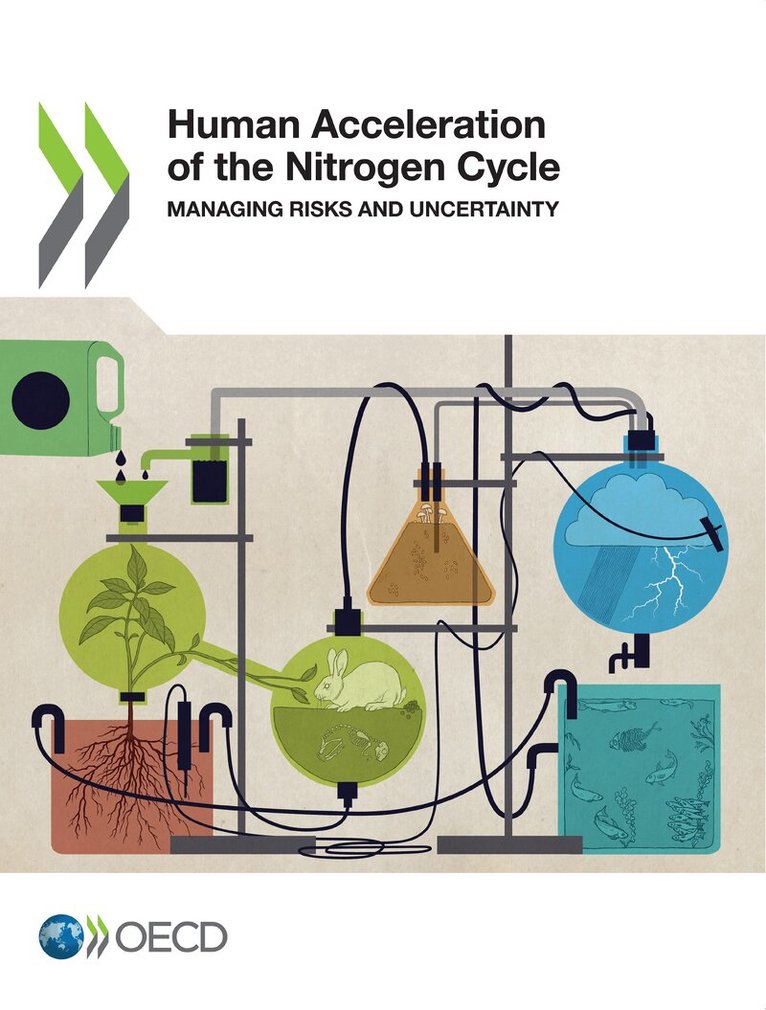
This publication examines the risks associated with the release of excessive nitrogen into the environment (climate change, depletion of the ozone layer, air pollution, water pollution, loss of biodiversity, deterioration of soil quality). The report also examines the uncertainty associated with the ability of nitrogen to move from one ecosystem to another and cause "cascading effects". In addition to better management of nitrogen risks at the local level, there is a need to consider the global risks associated with the continued increase in nitrous oxide concentrations and to prevent excess nitrogen in all its forms by developing cost-effective strategies for all its sources. Other than the reduction of nitrogen pollution, this report provides guidance on the use of nitrogen policy instruments and how to ensure coherence with objectives such as food security, energy security and environmental objectives.
Häftad, Engelska, 2005
1 496 kr
Skickas
The sequencing batch reactor (SBR) is perhaps the most promising and viable of the proposed activated sludge modifications today for the removal of organic carbon and nutrients. In a relatively short period, it has become increasingly popular for the treatment of domestic and industrial wastewaters, as an effective biological treatment system due to its simplicity and flexibility of operation. Mechanism and Design of Sequencing Batch Reactors for Nutrient Removal has been prepared with the main objective to provide a unified design approach for SBR systems, primarily based on relevant process stoichiometry. Specific emphasis has been placed upon the fact that such a unified design approach is also by nature the determining factor for the selection of the most appropriate cyclic operation scheme, the sequence of necessary phases and filling patterns for the particular application. The proposed basis for design is developed and presented in a stepwise approach to cover both organic carbon and nutrient removal, domestic and industrial wastewaters, strong and specific wastes. The merits of model simulation as an integral complement of process design, along with performance evaluation of SBR models are also emphasized. Scientific and Technical Report No. 19
Häftad, Engelska, 2015
1 071 kr
Tillfälligt slut
This report assesses the current trends, drivers, obstacles, mechanisms, impacts, costs and benefits of stakeholder engagement in the water sector. It builds on empirical data collected through an extensive survey across 215 stakeholders, within and outside the water sector, and 69 case studies collected worldwide. It highlights the increasing importance of stakeholder engagement in the water sector as a principle of good governance and the need for better understanding of the pressing and emerging issues related to stakeholder engagement. These include: the shift of power across stakeholders; the arrival of new entrants that ought to be considered; the external and internal drivers that have triggered engagement processes; innovative tools that have emerged to manage the interface between multiple players, and types of costs and benefits incurred by engagement at policy and project levels. This report provides pragmatic policy guidance to decision makers and practitioners in the form of key principles and a Checklist for Public Action with indicators, international references and self-assessment questions, which together can help policy makers to set up the appropriate framework conditions needed to yield the short and long-term benefits of stakeholder engagement.
Häftad, Engelska, 2015
503 kr
Tillfälligt slut
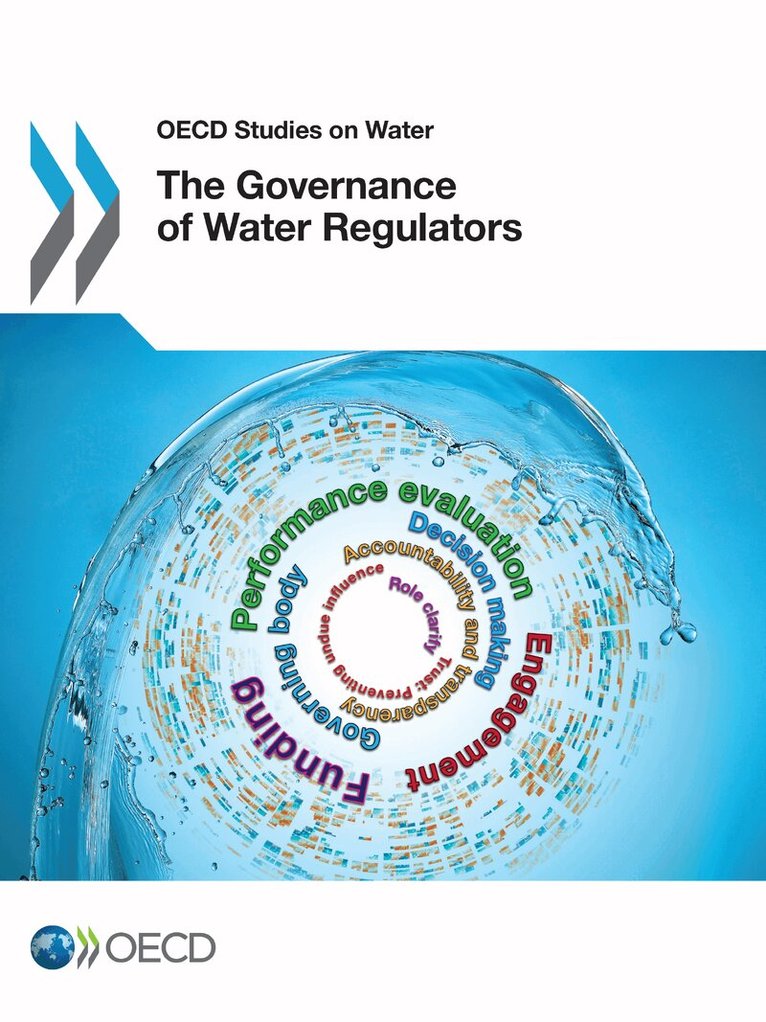
The establishment of dedicated regulatory bodies in charge of regulating water services, whilst being recent, is nevertheless a consistent trend among OECD and non-OECD countries. This report presents a picture as of September 2014 of the governance arrangements, operational modalities and use of regulatory tools across a sample of 34 established water regulators. It relies on the OECD Best Practice Principles for Regulatory Policy: The Governance of Regulators to structure the information collected through a survey exercise. It has been developed in close co-operation with the OECD Network of Economic Regulators (NER). The results from the survey show that the 34 water regulators show generally a high level of adoption of good governance principles and practices. They display functions and powers that are in line with their objectives. Water regulators also show a strong culture of consultation. Other areas, in particular evaluation of regulatory impacts, could be further strengthened.
Häftad, Engelska, 2016
379 kr
Tillfälligt slut
Disasters present a broad range of human, social, financial, economic and environmental impacts, with potentially long-lasting, multi-generational effects. The financial management of these impacts is a key challenge for individuals and governments in developed and developing countries. G20 Finance Ministers and Central Bank Governors and APEC Finance Ministers have recognised the importance and priority of disaster risk management strategies and, in particular, disaster risk assessment and risk financing. The OECD has supported the development of strategies for the financial management of natural and man-made disaster risks, under the guidance of the OECD High-Level Advisory Board on Financial Management of Large-scale Catastrophes and the OECD Insurance and Private Pensions Committee. This work has included the elaboration of an OECD Recommendation on Good Practices for Mitigating and Financing Catastrophic Risks and a draft Recommendation on Disaster Risk Financing Strategies; The Financial Management of Flood Risk extends this work by applying the lessons from the OECD’s analysis of disaster risk financing practices and the development of its guidance to the specific case of floods.
Häftad, Engelska, 2017
508 kr
Tillfälligt slut
This report explores the growth prospects for the ocean economy, its capacity for future employment creation and innovation, and its role in addressing global challenges. Special attention is devoted to the emerging ocean-based industries in light of their high growth and innovation potential, and contribution to addressing challenges such as energy security, environment, climate change and food security.The report examines the risks and uncertainties surrounding the future development of ocean industries, the innovations required in science and technology to support their progress, their potential contribution to green growth and some of the implications for ocean management. Finally, and looking across the future ocean economy as a whole, it explores possible avenues for action that could boost its long-term development prospects while managing the use of the ocean itself in responsible, sustainable ways. This book belongs to the OECD Report Series
Häftad, Engelska, 2020
441 kr
Tillfälligt slut
This report calls for a better understanding of the effects of pharmaceutical residues in the environment, greater international collaboration and accountability distribution, and policy actions to prevent and remedy emerging concerns. Laboratory and field tests show traces of oral contraceptives causing the feminisation of fish and amphibians, and residues of psychiatric drugs altering fish behaviour. Antimicrobial resistance, linked to the overuse of antibiotics, has rapidly escalated into a global health crisis. Unless adequate measures are taken to manage the risks, pharmaceutical residues will increasingly be released into the environment as ageing populations, advances in healthcare, and intensification of meat and fish production spur the demand for pharmaceuticals worldwide. The report outlines a collective, life?cycle approach to managing pharmaceuticals in the environment. A policy mix of source?directed, use?orientated and end?of?pipe measures, involving several policy sectors, can help to improve health and protect the environment.