Orkhan Mir-Kasimov – författare
Visar alla böcker från författaren Orkhan Mir-Kasimov. Handla med fri frakt och snabb leverans.
5 produkter
5 produkter
E-bok
PDF, Engelska, 2019424 kr
Läs direkt efter köp
I.B. Tauris in association with the Institute of Ismaili StudiesHow has the Ismaili branch of Shi'i Islam interacted with other Islamic communities throughout history? The groups and movements that make up Islamic civilisation are diverse and varied yet, while scholarship has analysed many branches of Islam in isolation, the exchanges and mutual influences between them has not been sufficiently recognised. This book traces the interactions between Ismaili intellectual thought and the philosophies of other Islamic groups to shed light on the complex and interwoven nature of Islamic civilisation.Based on a broad range of primary sources from the early medieval to the late nineteenth century, the book brings together different disciplines within Islamic Studies to cover polemical and doctrinal literature, law, mysticism, rituals and philosophy. The main Ismaili groups, such as the Fatimids, Nizaris and Tayyibis, are represented, as well as lesser known traditions such as that associated with the mountain region of Badakhshan in Central Asia. Religious syncretism, particularly in the Indian subcontinent and in Yemen, is considered alongside cultural interactions as reflected in the circulation of books in Fatimid markets, and various literary and mythical traditions, some still little explored. The chapters include contributions from leading experts in the field shed new light on the close and complex relationships very different Islamic groups and movements have enjoyed throughout the centuries.
E-bok
Engelska, 2019424 kr
Läs direkt efter köp
I.B. Tauris in association with the Institute of Ismaili StudiesHow has the Ismaili branch of Shi'i Islam interacted with other Islamic communities throughout history? The groups and movements that make up Islamic civilisation are diverse and varied yet, while scholarship has analysed many branches of Islam in isolation, the exchanges and mutual influences between them has not been sufficiently recognised. This book traces the interactions between Ismaili intellectual thought and the philosophies of other Islamic groups to shed light on the complex and interwoven nature of Islamic civilisation.Based on a broad range of primary sources from the early medieval to the late nineteenth century, the book brings together different disciplines within Islamic Studies to cover polemical and doctrinal literature, law, mysticism, rituals and philosophy. The main Ismaili groups, such as the Fatimids, Nizaris and Tayyibis, are represented, as well as lesser known traditions such as that associated with the mountain region of Badakhshan in Central Asia. Religious syncretism, particularly in the Indian subcontinent and in Yemen, is considered alongside cultural interactions as reflected in the circulation of books in Fatimid markets, and various literary and mythical traditions, some still little explored. The chapters include contributions from leading experts in the field shed new light on the close and complex relationships very different Islamic groups and movements have enjoyed throughout the centuries.
Häftad, Engelska, 2019
407 kr
Skickas inom 10-15 vardagar
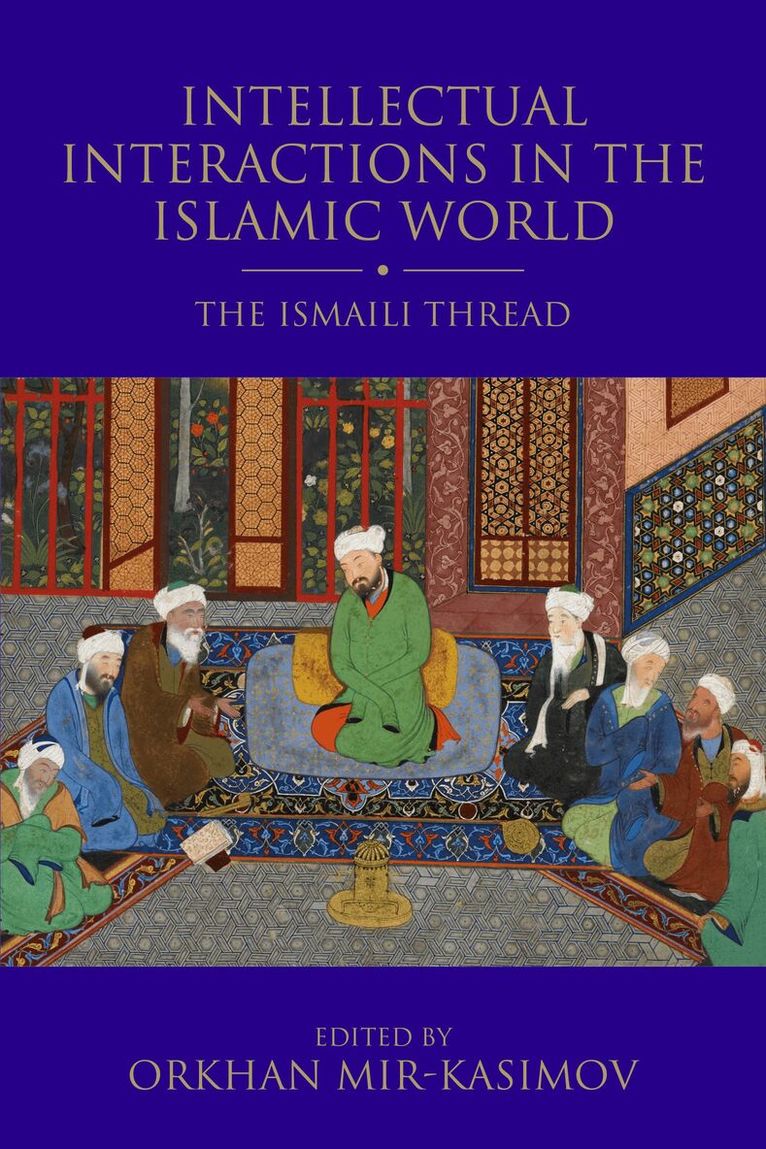
I.B. Tauris in association with the Institute of Ismaili StudiesHow has the Ismaili branch of Shi‘i Islam interacted with other Islamic communities throughout history? The groups and movements that make up Islamic civilisation are diverse and varied yet, while scholarship has analysed many branches of Islam in isolation, the exchanges and mutual influences between them has not been sufficiently recognised. This book traces the interactions between Ismaili intellectual thought and the philosophies of other Islamic groups to shed light on the complex and interwoven nature of Islamic civilisation.Based on a broad range of primary sources from the early medieval to the late nineteenth century, the book brings together different disciplines within Islamic Studies to cover polemical and doctrinal literature, law, mysticism, rituals and philosophy. The main Ismaili groups, such as the Fatimids, Nizaris and Tayyibis, are represented, as well as lesser known traditions such as that associated with the mountain region of Badakhshan in Central Asia. Religious syncretism, particularly in the Indian subcontinent and in Yemen, is considered alongside cultural interactions as reflected in the circulation of books in Fatimid markets, and various literary and mythical traditions, some still little explored. The chapters include contributions from leading experts in the field shed new light on the close and complex relationships very different Islamic groups and movements have enjoyed throughout the centuries.
E-bok
PDF, Engelska, 20162 047 kr
Läs direkt efter köp
In Christian Apocalyptic Texts in Islamic Messianic Discourse Orkhan Mir-Kasimov offers an account of the interpretation of these Christian texts by Fadl Allah Astarabadi (d. 796/1394), the founder of a mystical and messianic movement which was influential in medieval Iran and Anatolia. This interpretation can be situated within the tradition of 'positive' Muslim hermeneutics of the Christian and Jewish scriptures which was particularly developed in Shii?i and especially Ismai?li circles. Fadl Allah incorporates the Christian apocalyptic texts into an Islamic eschatological context, combining them with Qur?an and hadith material. In addition to an introductory study, the book contains a critical edition and an English translation of the relevant passages from Fadl Allah's magnum opus, the Javidan-nama-yi kabir.