Otto E. Rossler – författare
Visar alla böcker från författaren Otto E. Rossler. Handla med fri frakt och snabb leverans.
10 produkter
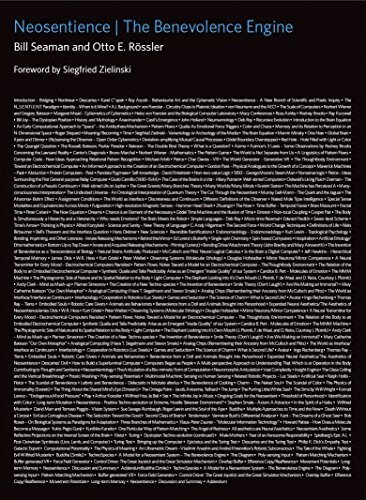
Neosentience
The Benevolence Engine
Av Bill Seaman, Otto E. Rossler
Häftad, 2011
417 kr
Lägg i varukorg
The study addressed in this 'book' puts forward a project that is twofold. Firstly, it discusses the conceptual basis within which it would be possible for the construction of a 'neosentient' system, a machine endowed with the capacity to perceive or feel things in the world, as if manifesting a …
Neosentience
The Benevolence Engine
Av Otto E. Rossler, Bill Seaman
E-bok, 2011
385 kr
Lägg i varukorg
The study addressed in this ''book'' puts forward a project that is twofold. Firstly, it discusses the conceptual basis within which it would be possible for the construction of a ''neosentient'' system, a machine endowed with the capacity to perceive or feel things in the world, as if manifesting …
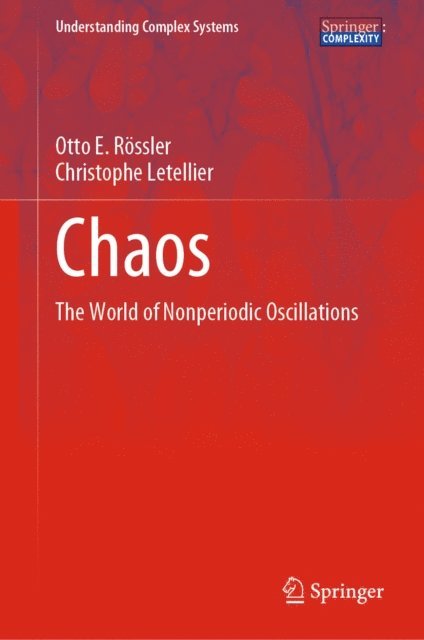
Chaos
The World of Nonperiodic Oscillations
Av Christophe Letellier, Otto E. Rossler
E-bok, 2020
2111 kr
Lägg i varukorg
Written in the 1980s by one of the fathers of chaos theory, Otto E. Rössler, the manuscript presented in this volume eventually never got published. Almost 40 years later, it remains astonishingly at the forefront of knowledge about chaos theory and many of the examples discussed have never been …
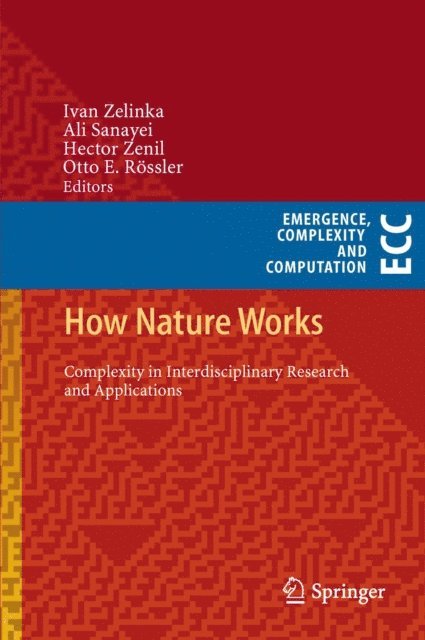
How Nature Works
Complexity in Interdisciplinary Research and Applications
Av Otto E. Rossler, Hector Zenil m. fl.
E-bok, 2013
2065 kr
Lägg i varukorg
This book is based on the outcome of the “2012 Interdisciplinary Symposium on Complex Systems” held at the island of Kos. The book consists of 12 selected papers of the symposium starting with a comprehensive overview and classification of complexity problems, continuing by chapters about …
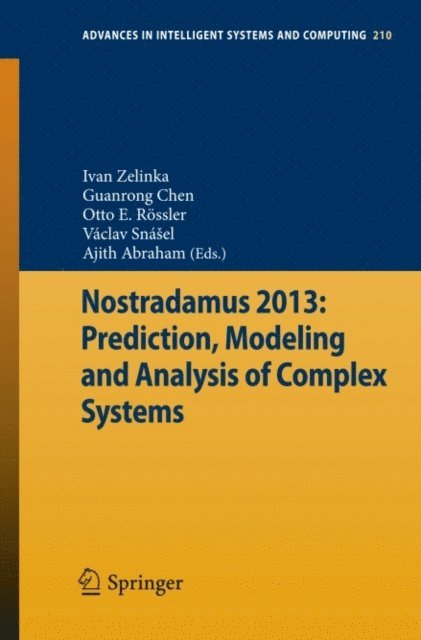
Nostradamus 2013: Prediction, Modeling and Analysis of Complex Systems
Av Ajith Abraham, Vaclav Snasel m. fl.
E-bok, 2013
2925 kr
Lägg i varukorg
Prediction of behavior of the dynamical systems, analysis and modeling of its structure is vitally important problem in engineering, economy and science today. Examples of such systems can be seen in the world around us and of course in almost every scientific discipline including such “exotic” …
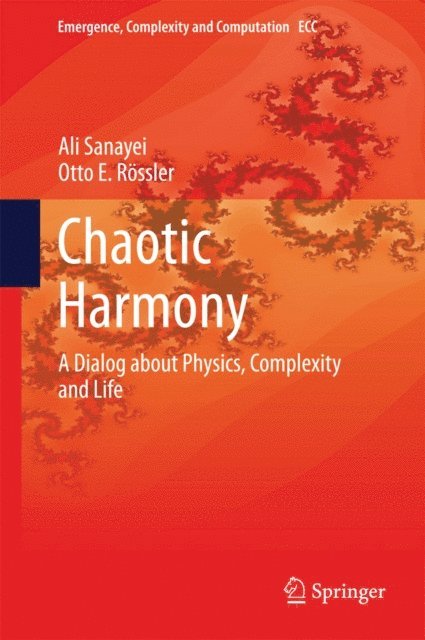
Chaotic Harmony
A Dialog about Physics, Complexity and Life
Av Otto E. Rossler, Ali Sanayei
E-bok, 2014
1459 kr
Lägg i varukorg
This fascinating book written by Ali Sanayei and Otto E. Rössler is not a classic scientific publication, but a vivid dialogue on science, philosophy and the interdisciplinary intersections of science and technology with biographic elements. Chaotic Harmony: A Dialog about Physics, Complexity and …
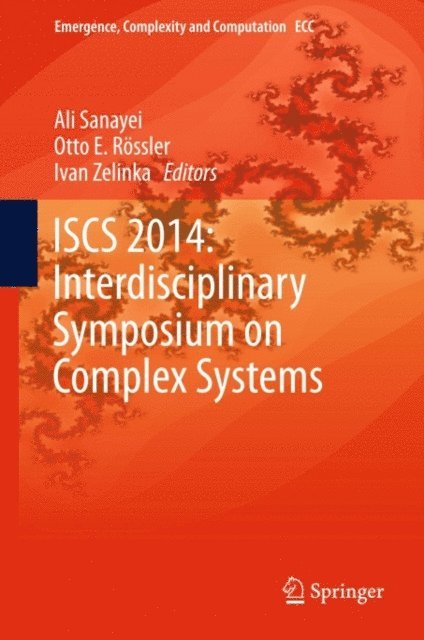
ISCS 2014: Interdisciplinary Symposium on Complex Systems
Av Ivan Zelinka, Otto E. Rossler m. fl.
E-bok, 2014
1427 kr
Lägg i varukorg
The book you hold in your hands is the outcome of the “2014 Interdisciplinary Symposium on Complex Systems” held in the historical city of Florence. The book consists of 37 chapters from 4 areas of Physical Modeling of Complex Systems, Evolutionary Computations, Complex Biological Systems and …
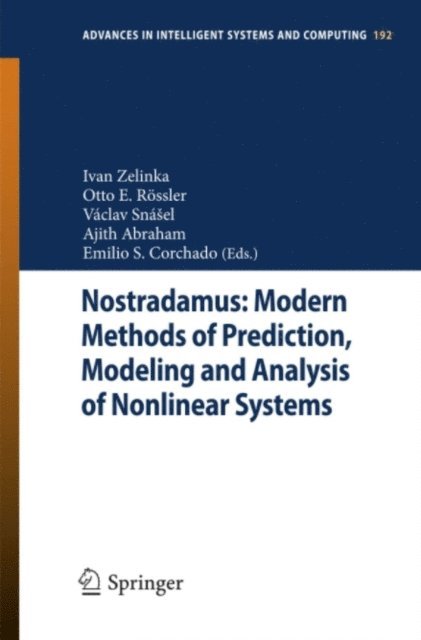
Nostradamus: Modern Methods of Prediction, Modeling and Analysis of Nonlinear Systems
Av Emilio S. Corchado, Ajith Abraham m. fl.
E-bok, 2012
2065 kr
Lägg i varukorg
This proceeding book of Nostradamus conference (http://nostradamus-conference.org) contains accepted papers presented at this event in 2012. Nostradamus conference was held in the one of the biggest and historic city of Ostrava (the Czech Republic, http://www.ostrava.cz/en), in September 2012. …
ISCS 2013: Interdisciplinary Symposium on Complex Systems
Av Otto E. Rossler, Ivan Zelinka m. fl.
E-bok, 2014
1427 kr
Lägg i varukorg
The book you hold in your hands is the outcome of the "ISCS 2013: Interdisciplinary Symposium on Complex Systems" held at the historical capital of Bohemia as a continuation of our series of symposia in the science of complex systems. Prague, one of the most beautiful European cities, has its own …
Encounter with Chaos
Self-Organized Hierarchical Complexity in Semiconductor Experiments
Av Ruedi Stoop, Otto E. Rossler m. fl.
E-bok, 2012
1459 kr
Lägg i varukorg
Our life is a highly nonlinear process. It starts with birth and ends with death; in between there are a lot of ups and downs. Quite often, we believe that stable and steady situations, probably easy to capture by linearization, are paradisiacal, but already after a short period of everyday routine …