Ousmane Badiane - Böcker
Visar alla böcker från författaren Ousmane Badiane. Handla med fri frakt och snabb leverans.
4 produkter
4 produkter
268 kr
Skickas inom 10-15 vardagar
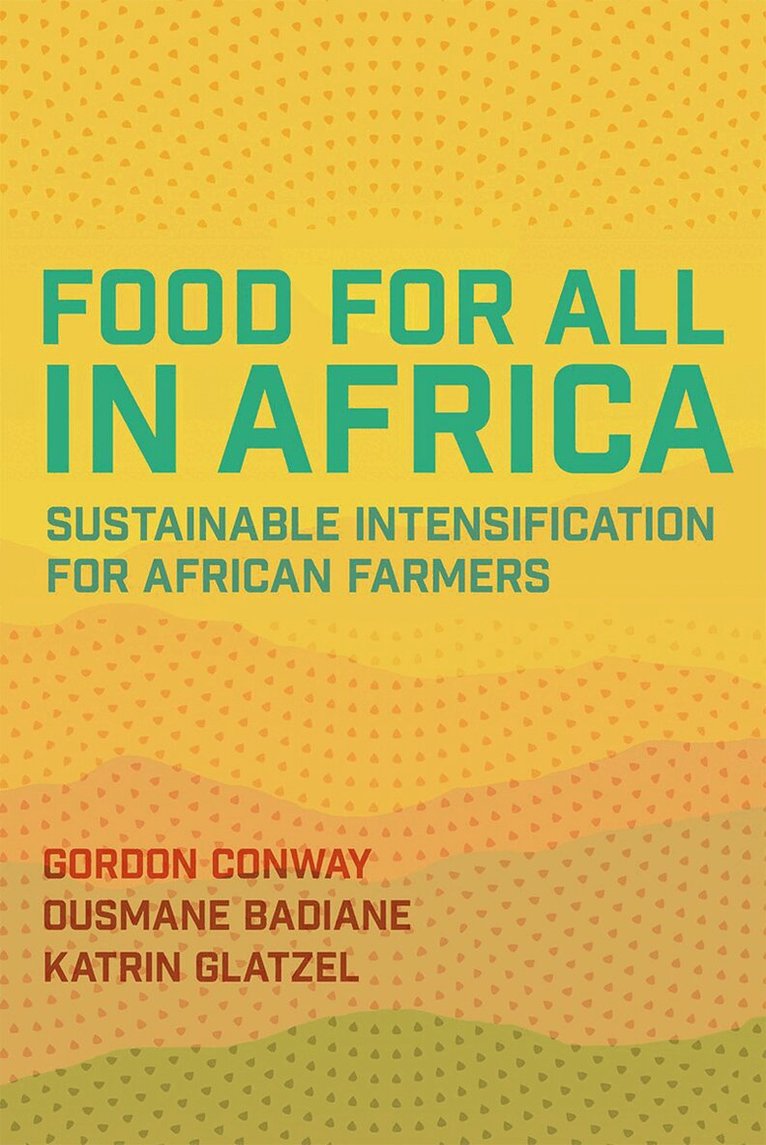
Africa requires a new agricultural transformation that is appropriate for Africa, that recognizes the continent's diverse environments and climates, and that takes into account its histories and cultures while benefiting rural smallholder farmers and their families.In this boldly optimistic book, Sir Gordon Conway, Ousmane Badiane, and Katrin Glatzel describe the key challenges faced by Africa's smallholder farmers and present the concepts and practices of Sustainable Intensification (SI) as opportunities to sustainably transform Africa's agriculture sector and the livelihoods of millions of smallholders. The way forward, they write, will be an agriculture sector deeply rooted within SI: producing more with less, using fertilizers and pesticides more prudently, adapting to climate change, improving natural capital, adopting new technologies, and building resilience at every stage of the agriculture value chain.Food for All in Africa envisions a virtuous circle generated through agricultural development rooted in SI that results in greater yields, healthier diets, improved livelihoods for farmers, and sustainable economic opportunities for the rural poor that in turn generate further investment. It describes the benefits of digital technologies for farmers and the challenges of transforming African agricultural policies and creating effective and inspiring leadership.Food for All in Africa demonstrates why we should take on the challenge and provides ideas and methods through which it can be met.
536 kr
Skickas inom 10-15 vardagar
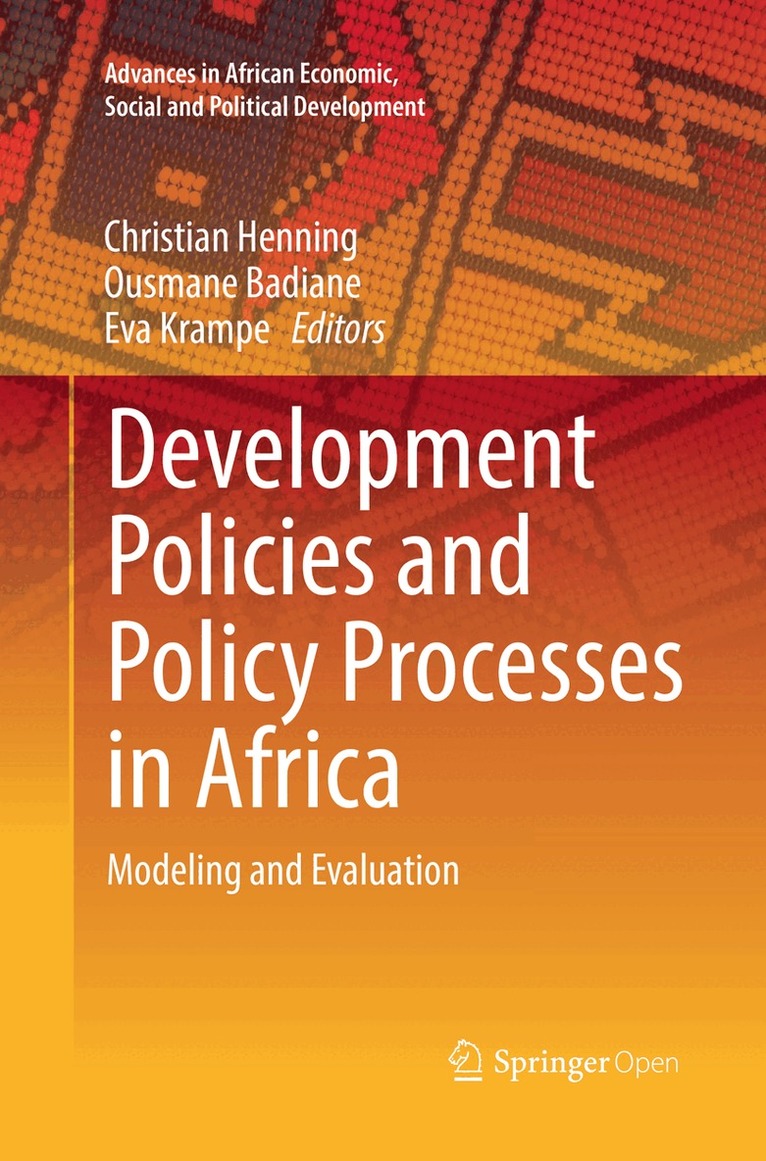
This book is open access under a CC BY 4.0 license.The book examines the methodological challenges in analyzing the effectiveness of development policies. It presents a selection of tools and methodologies that can help tackle the complexities of which policies work best and why, and how they can be implemented effectively given the political and economic framework conditions of a country. The contributions in this book offer a continuation of the ongoing evidence-based debate on the role of agriculture and participatory policy processes in reducing poverty. They develop and apply quantitative political economy approaches by integrating quantitative models of political decision-making into existing economic modeling tools, allowing a more comprehensive growth-poverty analysis. The book addresses not only scholars who use quantitative policy modeling and evaluation techniques in their empirical or theoretical research, but also technical experts, including policy makers and analysts from stakeholder organizations, involved in formulating and implementing policies to reduce poverty and to increase economic and social well-being in African countries.
536 kr
Skickas inom 10-15 vardagar
This book is open access under a CC BY 4.0 license.The book examines the methodological challenges in analyzing the effectiveness of development policies. It presents a selection of tools and methodologies that can help tackle the complexities of which policies work best and why, and how they can be implemented effectively given the political and economic framework conditions of a country. The contributions in this book offer a continuation of the ongoing evidence-based debate on the role of agriculture and participatory policy processes in reducing poverty. They develop and apply quantitative political economy approaches by integrating quantitative models of political decision-making into existing economic modeling tools, allowing a more comprehensive growth-poverty analysis. The book addresses not only scholars who use quantitative policy modeling and evaluation techniques in their empirical or theoretical research, but also technical experts, including policy makers and analysts from stakeholder organizations, involved in formulating and implementing policies to reduce poverty and to increase economic and social well-being in African countries.
1 390 kr
Skickas inom 5-8 vardagar
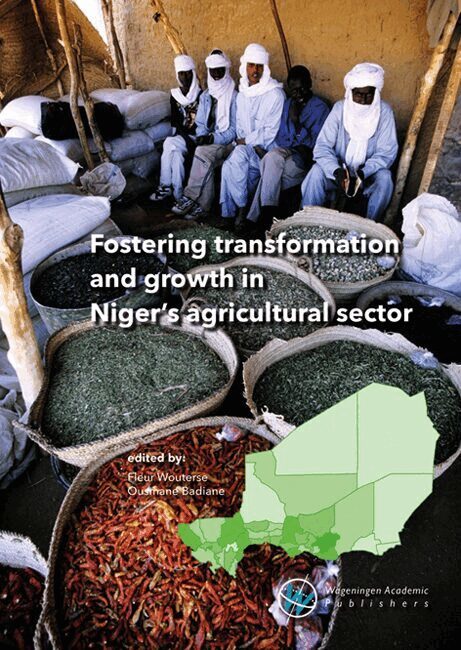
For Niger, the development of agriculture is essential to strategies to raise incomes and eradicate poverty in a sustainable manner, without further depleting its natural resource base. While traditional approaches to agricultural development have emphasized food security and have been rather technology focused, African countries are increasingly emphasizing the role of innovation in development.'Fostering transformation and growth in Niger's agricultural sector' seeks to further the understanding of potential innovations that can sustainably transform the agriculture sector in Niger. This publication uses the agricultural value chain perspective to provide a reference point for improvements in supporting services and the business environment. The first part describes several innovations that could contribute to enhancing agricultural productivity. Particularly interesting is the emphasis on the grassroots nature of some of these innovations. The second part offers a reference point for improvements in supporting services, the business and institutional environments that can contribute to pro-poor initiatives and to a stronger linkage of smallholders to markets. The comprehensive approach taken in this book ensures its contribution to an understanding of transformative innovations in agriculture as well as enabling conditions.