oystein Linnebo – författare
682 kr
Läs direkt efter köp
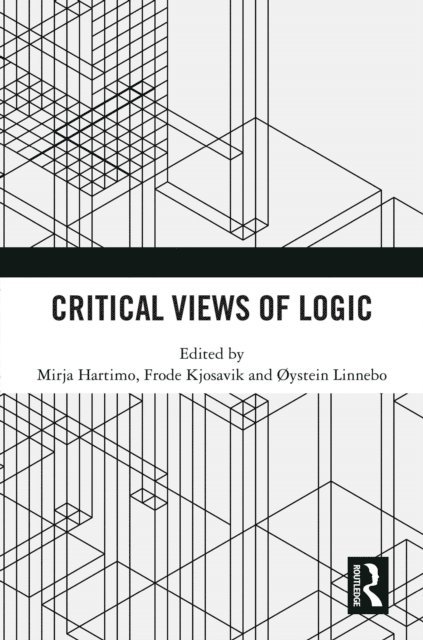
This book examines positions that challenge the Fregean logic-first view. It raises critical
questions about logic by examining various ways in which logic may be entangled with mathematics and metaphysics.
Is logic topic-neutral and general? Can we take the application of logic for granted? This book suggests that we should not be dogmatic about logic but ask similar critical questions about logic as those Kant raised about metaphysics and mathematics. It challenges the Fregean logic-first view according to which logic is fundamental and hence independent of any extra-logical considerations. Whereas Quine assimilated logic and mathematics to the theoretical parts of empirical science, the present volume explores views that stop short of his thoroughgoing holism but instead take logic to be answerable to or entangled with some particular disciplines. The contributions provide views that assign primacy to mathematical reasons, Kantian metaphysical grounds, Husserlian transcendental phenomenological reflection, or normative considerations about how terms ought to be defined in various fields of empirical science or mathematics. Space is thereby carved out between a Fregean position on the one hand and Quinean holism on the other.
Critical Views of Logic will be a key resource for academics, researchers, and advanced students of philosophy, linguistics, mathematics, and computer science, as well as those engaged in various fields of empirical science. The chapters in this book, except for chapter 4, were originally published in the journal Inquiry.
682 kr
Läs direkt efter köp
This book examines positions that challenge the Fregean logic-first view. It raises critical
questions about logic by examining various ways in which logic may be entangled with mathematics and metaphysics.
Is logic topic-neutral and general? Can we take the application of logic for granted? This book suggests that we should not be dogmatic about logic but ask similar critical questions about logic as those Kant raised about metaphysics and mathematics. It challenges the Fregean logic-first view according to which logic is fundamental and hence independent of any extra-logical considerations. Whereas Quine assimilated logic and mathematics to the theoretical parts of empirical science, the present volume explores views that stop short of his thoroughgoing holism but instead take logic to be answerable to or entangled with some particular disciplines. The contributions provide views that assign primacy to mathematical reasons, Kantian metaphysical grounds, Husserlian transcendental phenomenological reflection, or normative considerations about how terms ought to be defined in various fields of empirical science or mathematics. Space is thereby carved out between a Fregean position on the one hand and Quinean holism on the other.
Critical Views of Logic will be a key resource for academics, researchers, and advanced students of philosophy, linguistics, mathematics, and computer science, as well as those engaged in various fields of empirical science. The chapters in this book, except for chapter 4, were originally published in the journal Inquiry.
294 kr
Läs direkt efter köp
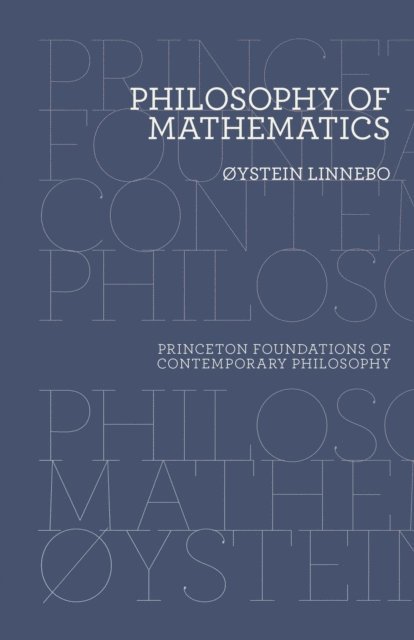
A sophisticated, original introduction to the philosophy of mathematics from one of its leading contemporary scholarsMathematics is one of humanity''s most successful yet puzzling endeavors. It is a model of precision and objectivity, but appears distinct from the empirical sciences because it seems to deliver nonexperiential knowledge of a nonphysical reality of numbers, sets, and functions. How can these two aspects of mathematics be reconciled? This concise book provides a systematic yet accessible introduction to the field that is trying to answer that question: the philosophy of mathematics.Written by Øystein Linnebo, one of the world''s leading scholars on the subject, the book introduces all of the classical approaches to the field, including logicism, formalism, intuitionism, empiricism, and structuralism. It also contains accessible introductions to some more specialized issues, such as mathematical intuition, potential infinity, the iterative conception of sets, and the search for new mathematical axioms. The groundbreaking work of German mathematician and philosopher Gottlob Frege, one of the founders of analytic philosophy, figures prominently throughout the book. Other important thinkers whose work is introduced and discussed include Immanuel Kant, John Stuart Mill, David Hilbert, Kurt Gödel, W. V. Quine, Paul Benacerraf, and Hartry H. Field.Sophisticated but clear and approachable, this is an essential introduction for all students and teachers of philosophy, as well as mathematicians and others who want to understand the foundations of mathematics.