P.-E. Lippens – författare
Visar alla böcker från författaren . Handla med fri frakt och snabb leverans.
6 produkter
6 produkter
Inbunden, Engelska, 2007
1 603 kr
Skickas inom 10-15 vardagar
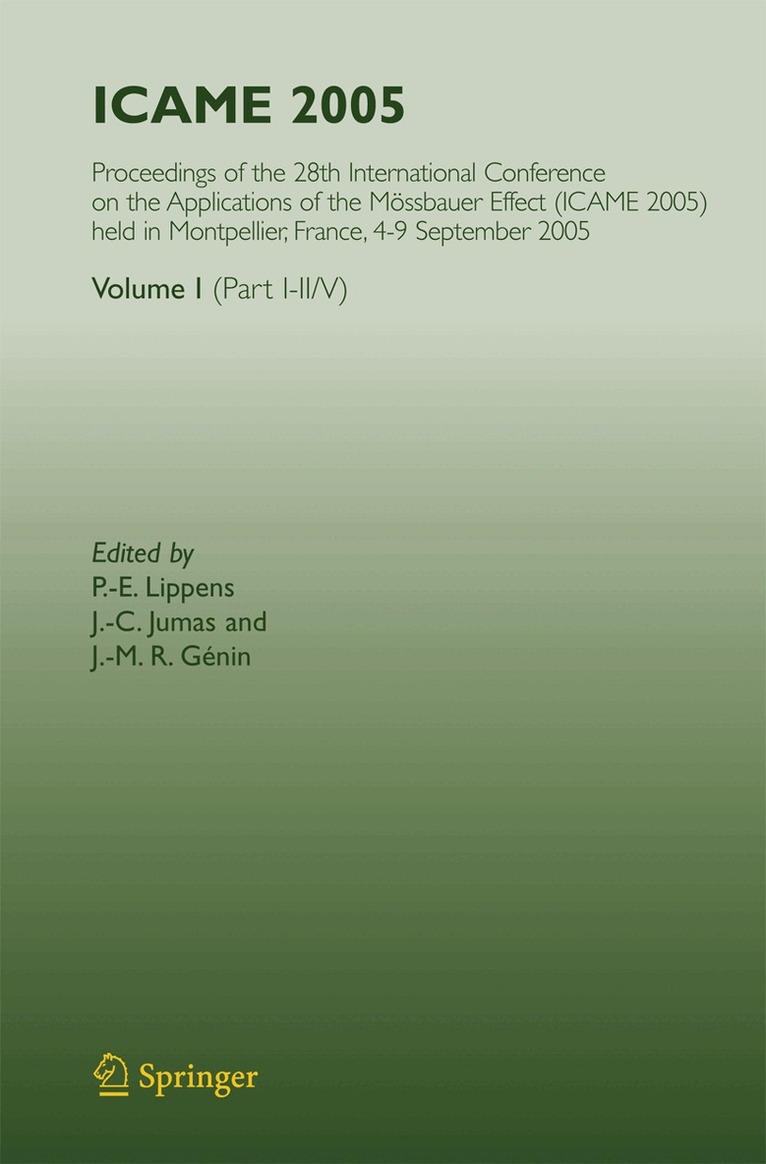
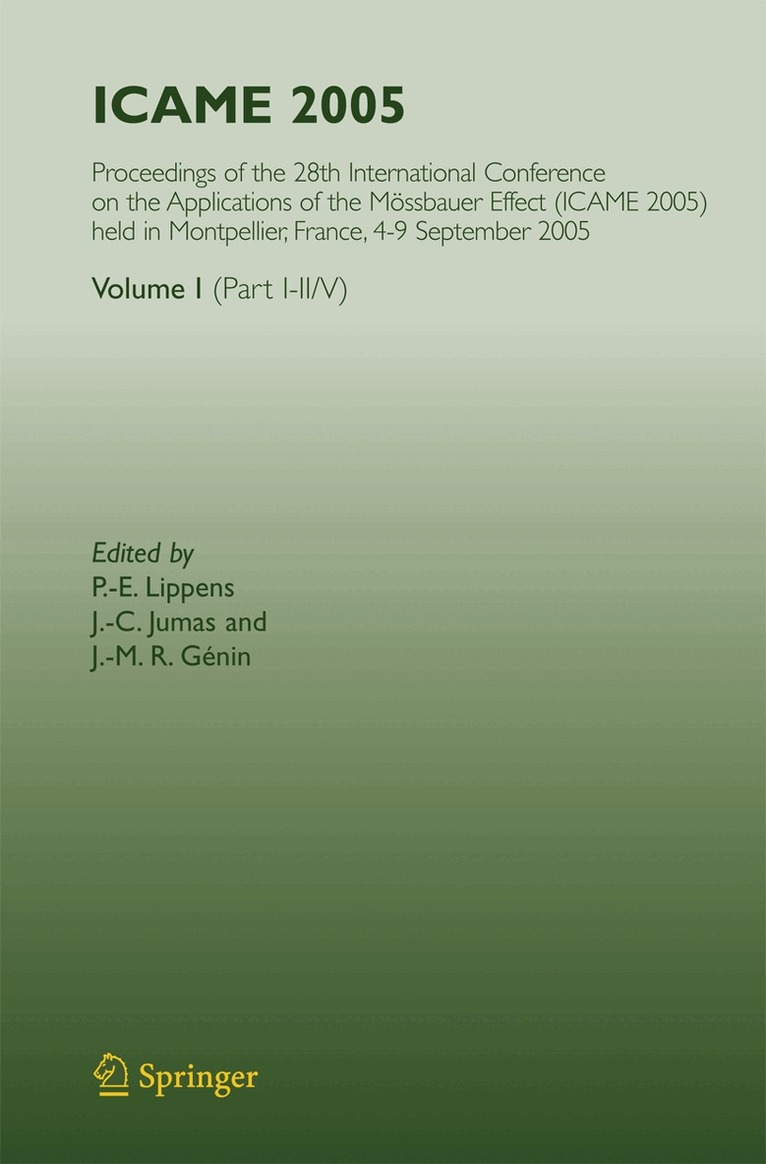
This book provides an up-to-date overview of the Mossbauer effect in physics, chemistry, electrochemistry, catalysis, biology, medicine, geology, mineralogy, archaeology and materials science. It is of great interest for graduate students and researchers who work in one of these scientific areas or use the Mossbauer spectroscopy. In addition to the traditional topics, the book contains the most recent developments of the technique especially in the fields of nanoparticles, thin films, surfaces, interfaces, magnetism, experimentation, theory, medical and industrial applications and Mars exploration.
E-bok
PDF, Engelska, 20072 049 kr
Läs direkt efter köp
This book provides an up-to-date overview of the Mössbauer effect in physics, chemistry, electrochemistry, catalysis, biology, medicine, geology, mineralogy, archaeology and materials science. Coverage details the most recent developments of the technique especially in the fields of nanoparticles, thin films, surfaces, interfaces, magnetism, experimentation, theory, medical and industrial applications and Mars exploration.
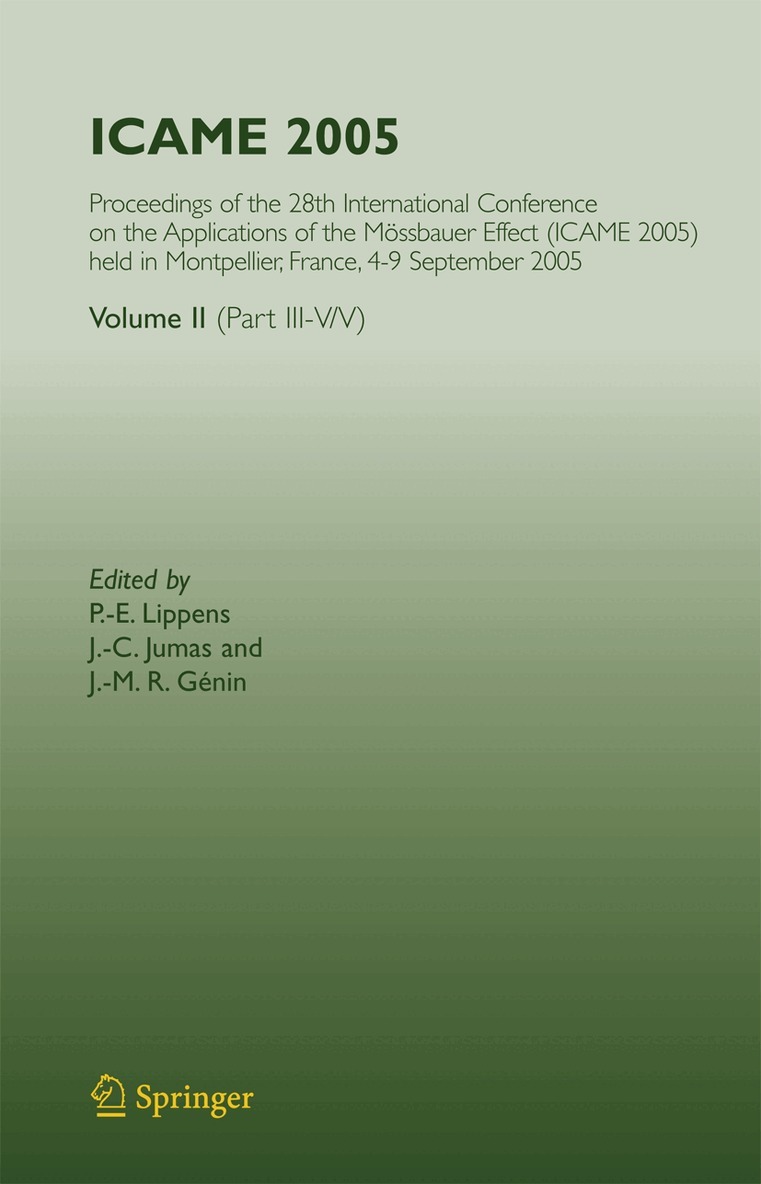
Inbunden, Engelska, 2007
2 135 kr
Skickas inom 10-15 vardagar
Since January 2004, Mossbauer spectrometers [1] have been making measurements on Mars as a component of the Athena instrument suite because the technique can "yield information about early Martian environmental conditions" and can help in "identifying minerals formed in hot, watery environments that could preserve fossil evidence of Martian life" (from an early Athena web site; cf. [2]). The spectrometers are mounted on the instrument deployment armsoftwo Mars Exploration Rovers, MER-A (Spirit) and MER-B (Opportunity), where they have access to a wide range of rocks and soils. Initial measurements at the Spirit site showed that surface samples contained primarily basaltic minerals with weathering by physical processes [3], while mineralogy inferred from data acquired at the Opportunity site provided evidence for past aqueous processes [4]. More recently, Mossbauer spectroscopy has identified goethite at Columbia Hills [5] and contributed to an understanding of the nature of Martian atmospheric dust and its implications for the history of water on Mars [6]. It is important that MER-team results be verified and expanded upon. Since August 2004, Mars Mossbauer and related data, with supporting documentation, have been made available to the science community via the Planetary Data System (PDS) at the MER Analyst's Notebook download site (http://www. anserverl. eprsl. wustl. edu/) and at the PDS Geosciences Node (http://www. pds-geosciences. wustl. edu/).
E-bok
PDF, Engelska, 20102 840 kr
Läs direkt efter köp
Since January 2004, Mossbauer spectrometers [1] have been making measurements on Mars as a component of the Athena instrument suite because the technique can "yield information about early Martian environmental conditions" and can help in "identifying minerals formed in hot, watery environments that could preserve fossil evidence of Martian life" (from an early Athena web site; cf. [2]). The spectrometers are mounted on the instrument deployment armsoftwo Mars Exploration Rovers, MER-A (Spirit) and MER-B (Opportunity), where they have access to a wide range of rocks and soils. Initial measurements at the Spirit site showed that surface samples contained primarily basaltic minerals with weathering by physical processes [3], while mineralogy inferred from data acquired at the Opportunity site provided evidence for past aqueous processes [4]. More recently, Mossbauer spectroscopy has identified goethite at Columbia Hills [5] and contributed to an understanding of the nature of Martian atmospheric dust and its implications for the history of water on Mars [6]. It is important that MER-team results be verified and expanded upon. Since August 2004, Mars Mossbauer and related data, with supporting documentation, have been made available to the science community via the Planetary Data System (PDS) at the MER Analyst''s Notebook download site (http://www. anserverl. eprsl. wustl. edu/) and at the PDS Geosciences Node (http://www. pds-geosciences. wustl. edu/).
Häftad, Engelska, 2010
1 603 kr
Skickas inom 10-15 vardagar
This book provides an up-to-date overview of the Mossbauer effect in physics, chemistry, electrochemistry, catalysis, biology, medicine, geology, mineralogy, archaeology and materials science. Coverage details the most recent developments of the technique especially in the fields of nanoparticles, thin films, surfaces, interfaces, magnetism, experimentation, theory, medical and industrial applications and Mars exploration.
Häftad, Engelska, 2014
2 135 kr
Skickas inom 10-15 vardagar
Since January 2004, Mossbauer spectrometers [1] have been making measurements on Mars as a component of the Athena instrument suite because the technique can "yield information about early Martian environmental conditions" and can help in "identifying minerals formed in hot, watery environments that could preserve fossil evidence of Martian life" (from an early Athena web site; cf. [2]). The spectrometers are mounted on the instrument deployment armsoftwo Mars Exploration Rovers, MER-A (Spirit) and MER-B (Opportunity), where they have access to a wide range of rocks and soils. Initial measurements at the Spirit site showed that surface samples contained primarily basaltic minerals with weathering by physical processes [3], while mineralogy inferred from data acquired at the Opportunity site provided evidence for past aqueous processes [4]. More recently, Mossbauer spectroscopy has identified goethite at Columbia Hills [5] and contributed to an understanding of the nature of Martian atmospheric dust and its implications for the history of water on Mars [6]. It is important that MER-team results be verified and expanded upon. Since August 2004, Mars Mossbauer and related data, with supporting documentation, have been made available to the science community via the Planetary Data System (PDS) at the MER Analyst's Notebook download site (http://www. anserverl. eprsl. wustl. edu/) and at the PDS Geosciences Node (http://www. pds-geosciences. wustl. edu/).