P. Fabbri – författare
Visar alla böcker från författaren P. Fabbri. Handla med fri frakt och snabb leverans.
7 produkter
Semi-Enclosed Seas
Exchange of environmental experiences between Mediterranean and Caribbean countries
Häftad, 2019
1069 kr
Lägg i varukorg
Proceedings of the International Meeting on UNEP's Regional Programmes in Mediterranean and Caribbean Seas, Genoa, Italy, 12-14 February 1992 which concentrated on three issues of particular interest: water quality, coastal zone management, sea-level rise and the risks and consequences of erosion …
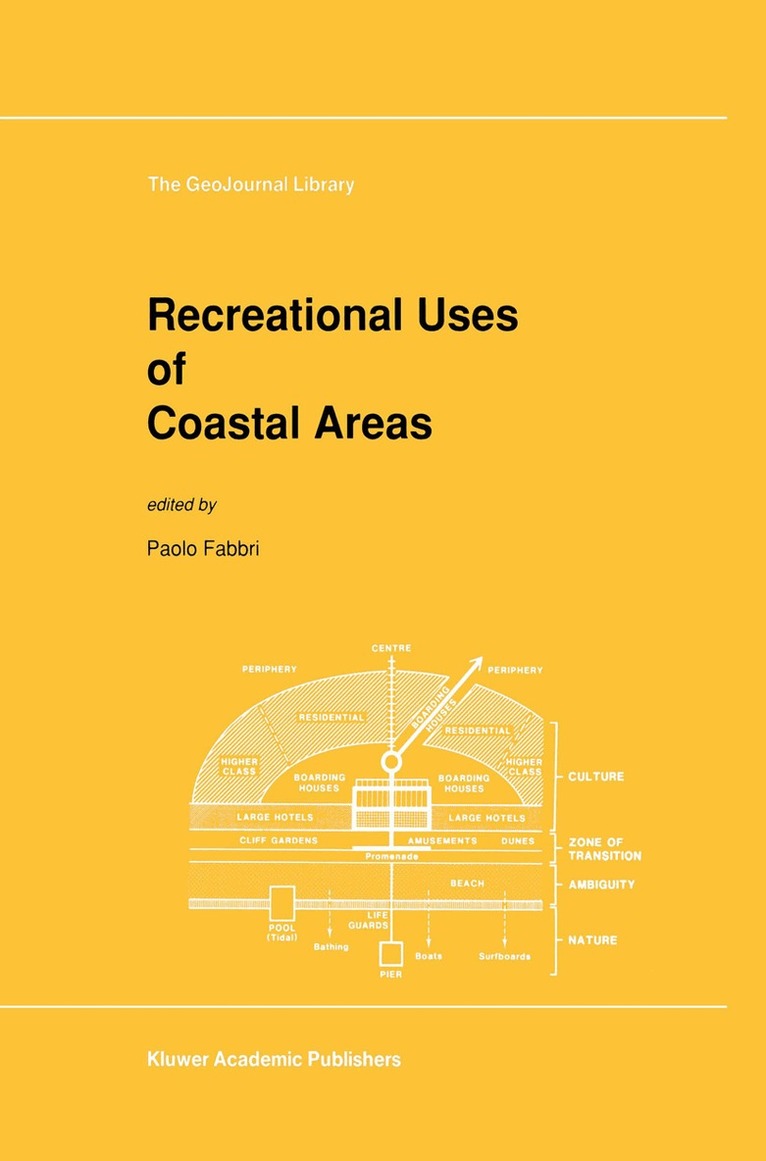
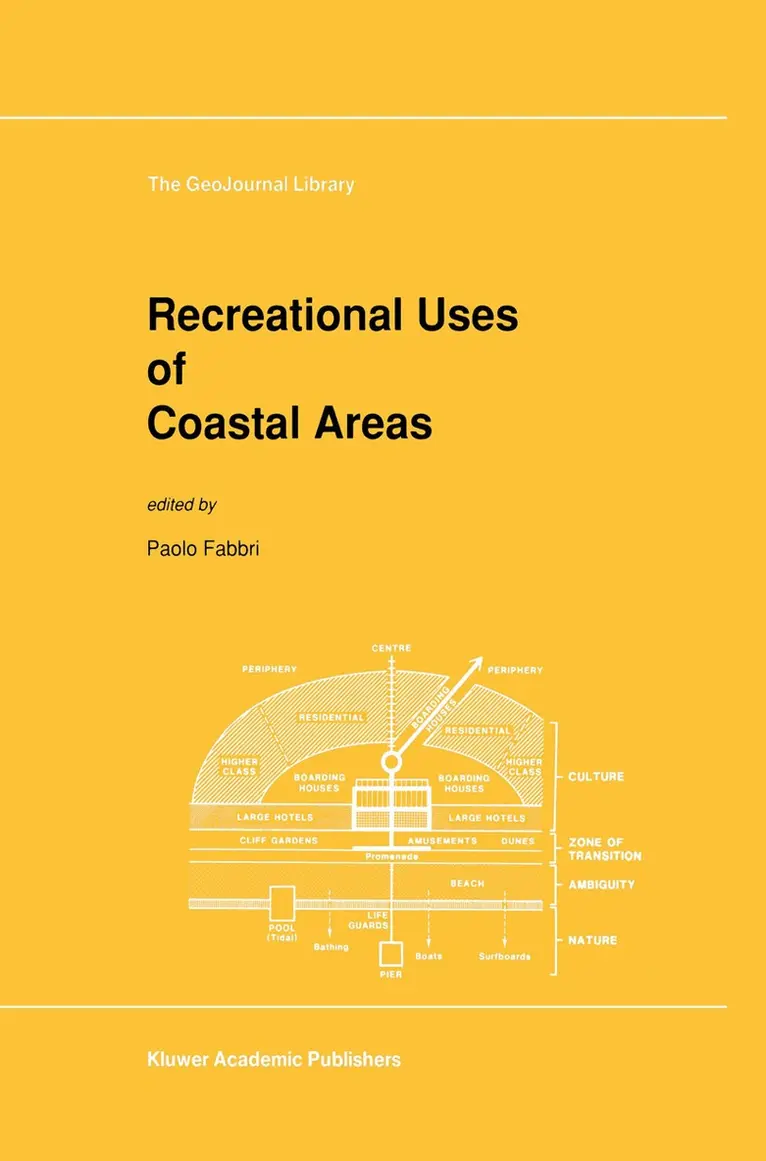
Recreational Uses of Coastal Areas
A Research Project of the Commission on the Coastal Environment, International Geographical Union
Av P. Fabbri
Inbunden, 1989
1636 kr
Lägg i varukorg
Human clustering in coastal areas The coastal zone has gained a solid reputation as a place vocated for recreational activities and this is generally related to the presence of the sea. The relationship, however, does not appear univocal or simple: the sea can be perceived as a hostile element by …
Semi-Enclosed Seas
Exchange of environmental experiences between Mediterranean and Caribbean countries
E-bok, 2003
1237 kr
Lägg i varukorg
Proceedings of the International Meeting on UNEP''s Regional Programmes in Mediterranean and Caribbean Seas, Genoa, Italy, 12-14 February 1992 which concentrated on three issues of particular interest: water quality, coastal zone management, sea-level rise and the risks and consequences of erosion …
Semi-Enclosed Seas
Exchange of environmental experiences between Mediterranean and Caribbean countries
E-bok, 2003
1264 kr
Lägg i varukorg
Proceedings of the International Meeting on UNEP''s Regional Programmes in Mediterranean and Caribbean Seas, Genoa, Italy, 12-14 February 1992 which concentrated on three issues of particular interest: water quality, coastal zone management, sea-level rise and the risks and consequences of erosion …
Semi-Enclosed Seas
Exchange of environmental experiences between Mediterranean and Caribbean countries
Inbunden, 1992
5659 kr
Lägg i varukorg
Proceedings of the International Meeting on UNEP's Regional Programmes in Mediterranean and Caribbean Seas, Genoa, Italy, 12-14 February 1992 which concentrated on three issues of particular interest: water quality, coastal zone management, sea-level rise and the risks and consequences of erosion …
Recreational Uses of Coastal Areas
A Research Project of the Commission on the Coastal Environment, International Geographical Union
Av P. Fabbri
E-bok, 2012
2111 kr
Lägg i varukorg
Human clustering in coastal areas The coastal zone has gained a solid reputation as a place vocated for recreational activities and this is generally related to the presence of the sea. The relationship, however, does not appear univocal or simple: the sea can be perceived as a hostile element by …
Recreational Uses of Coastal Areas
A Research Project of the Commission on the Coastal Environment, International Geographical Union
Av P. Fabbri
Häftad, 2011
1636 kr
Lägg i varukorg
Human clustering in coastal areas The coastal zone has gained a solid reputation as a place vocated for recreational activities and this is generally related to the presence of the sea. The relationship, however, does not appear univocal or simple: the sea can be perceived as a hostile element by …