P. R. Ashurst – författare
Visar alla böcker från författaren . Handla med fri frakt och snabb leverans.
7 produkter
7 produkter
Häftad, Engelska, 2012
545 kr
Skickas inom 10-15 vardagar
In the period of about five years since the first edition of this book appeared, many changes have occurred in the fruit juice and beverage markets. The growth of markets has continued, blunted to some extent, no doubt, by the recession that has featured prominently in the economies of the major consuming nations. But perhaps the most significant area that has affected juices in particular is the issue of authenticity. Commercial scandals of substantial proportions have been seen on both sides of the Atlantic because of fraudulent practice. Major strides have been made in the development of techniques to detect and measure adulterants in the major juices. A contri bution to Chapter 1 describes one of the more important scientific techniques to have been developed as a routine test method to detect the addition of carbohydrates to juices. Another, and perhaps more welcome, development in non-carbonated beverages during the past few years is the rapid growth of sports drinks. Beverages based on glucose syrup have been popular for many years, and in some parts of the world isotonic products have long featured in the sports arena. A combination of benefits is now available from a wide range of preparations formulated and marketed as sports drinks and featuring widely in beverage markets world-wide. A new chapter reviews their formulation and performance characteristics. Another major trend in the area offruit-containing non-carbonated bever ages is the highly successful marketing of ready-to-drink products.
Häftad, Engelska, 2012
1 083 kr
Skickas inom 10-15 vardagar
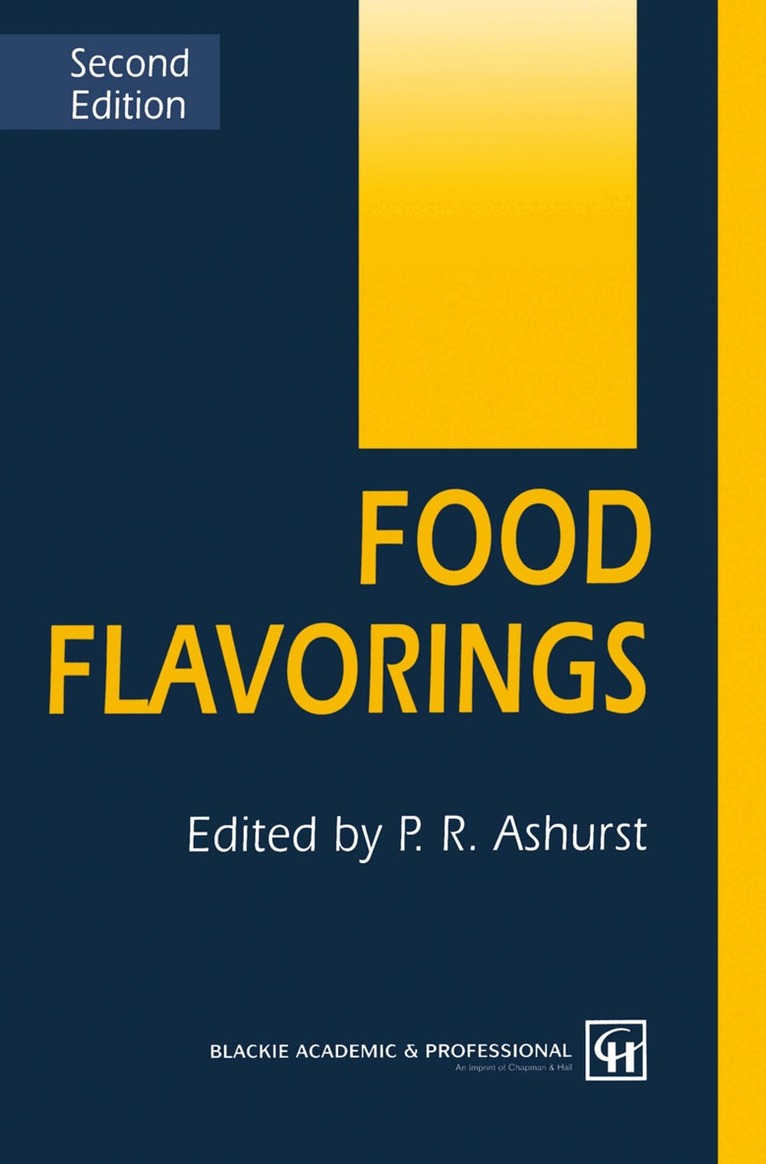
The need for a further edition of a book is gratifying for contributors and editor alike. When faced with the corresponding challenge to identify what has changed in one sector of a particular industry, however, initial enthusiasm frequently declines. Nowhere is this more evident than in this book on food flavourings, because the industry still remains the tantalising blend of art, science and technology that was alluded to in the first edition. Instrumentation and analytical skills can now identify flavour components down to nanogram and picogram concentrations and yet the skilled flavourist is often still able to defeat this scientific ability. Many parts of the food industry, and in particular the more traditional outlets such as baking and confectionery, use flavours and methods of application that have changed little in fifty years. At the other end of the spectrum, advanced synthetic chemistry methods and computer-controlled natural product processes can give the flavour industry a greater selection of higher quality materials than ever before. The industry itself has, in recent years, undergone many commercial changes, and in the U.K. some manufacturers' names known for a century or more have disappeared to become part of larger corporate entities. Flavours are for the first time controlled, albeit in a small way, by statute based on a European Directive.
E-bok
PDF, Engelska, 2012712 kr
Läs direkt efter köp
In the period of about five years since the first edition of this book appeared, many changes have occurred in the fruit juice and beverage markets. The growth of markets has continued, blunted to some extent, no doubt, by the recession that has featured prominently in the economies of the major consuming nations. But perhaps the most significant area that has affected juices in particular is the issue of authenticity. Commercial scandals of substantial proportions have been seen on both sides of the Atlantic because of fraudulent practice. Major strides have been made in the development of techniques to detect and measure adulterants in the major juices. A contri bution to Chapter 1 describes one of the more important scientific techniques to have been developed as a routine test method to detect the addition of carbohydrates to juices. Another, and perhaps more welcome, development in non-carbonated beverages during the past few years is the rapid growth of sports drinks. Beverages based on glucose syrup have been popular for many years, and in some parts of the world isotonic products have long featured in the sports arena. A combination of benefits is now available from a wide range of preparations formulated and marketed as sports drinks and featuring widely in beverage markets world-wide. A new chapter reviews their formulation and performance characteristics. Another major trend in the area offruit-containing non-carbonated bever ages is the highly successful marketing of ready-to-drink products.
E-bok
PDF, Engelska, 20121 416 kr
Läs direkt efter köp
The need for a further edition of a book is gratifying for contributors and editor alike. When faced with the corresponding challenge to identify what has changed in one sector of a particular industry, however, initial enthusiasm frequently declines. Nowhere is this more evident than in this book on food flavourings, because the industry still remains the tantalising blend of art, science and technology that was alluded to in the first edition. Instrumentation and analytical skills can now identify flavour components down to nanogram and picogram concentrations and yet the skilled flavourist is often still able to defeat this scientific ability. Many parts of the food industry, and in particular the more traditional outlets such as baking and confectionery, use flavours and methods of application that have changed little in fifty years. At the other end of the spectrum, advanced synthetic chemistry methods and computer-controlled natural product processes can give the flavour industry a greater selection of higher quality materials than ever before. The industry itself has, in recent years, undergone many commercial changes, and in the U.K. some manufacturers'' names known for a century or more have disappeared to become part of larger corporate entities. Flavours are for the first time controlled, albeit in a small way, by statute based on a European Directive.
Häftad, Engelska, 2013
545 kr
Skickas inom 10-15 vardagar
The need for a further edition of a book is gratifying for contributors and editor alike. When faced with the corresponding challenge to identify what has changed in one sector of a particular industry, however, initial enthusiasm frequently declines. Nowhere is this more evident than in this book on food flavourings, because the industry still remains the tantalising blend of art, science and technology that was alluded to in the first edition. Instrumentation and analytical skills can now identify flavour components down to nanogram and picogram concentrations and yet the skilled flavourist is often still able to defeat this scientific ability. Many parts of the food industry, and in particular the more traditional outlets such as baking and confectionery, use flavours and methods of application that have changed little in fifty years. At the other end of the spectrum, advanced synthetic chemistry methods and computer-controlled natural product processes can give the flavour industrya greater selection of higher quality materials than ever before. The industry itself has, in recent years, undergone many commercial changes, and in the U.K. some manufacturers' names known for a century or more have disappeared to become part of larger corporate entities. Flavours are for the first time controlled, albeit in a small way, by statute based on a European Directive.
E-bok
PDF, Engelska, 2012687 kr
Läs direkt efter köp
Del 25 - Fortschritte der Chemie organischer Naturstoffe Progress in the Chemistry of Organic Natural Products
Progress in the Chemistry of Organic Natural Products / Fortschritte der Chemie Organischer Naturstoffe / Progrès dans la Chimie des Substances Organiques Naturelles
Häftad, Engelska, 2012
545 kr
Skickas inom 10-15 vardagar
Mit Beitragen zahlreicher Fachwissenschaftler