P. Schroeder – författare
Visar alla böcker från författaren P. Schroeder. Handla med fri frakt och snabb leverans.
5 produkter
5 produkter
E-bok
PDF, Engelska, 2016865 kr
Läs direkt efter köp
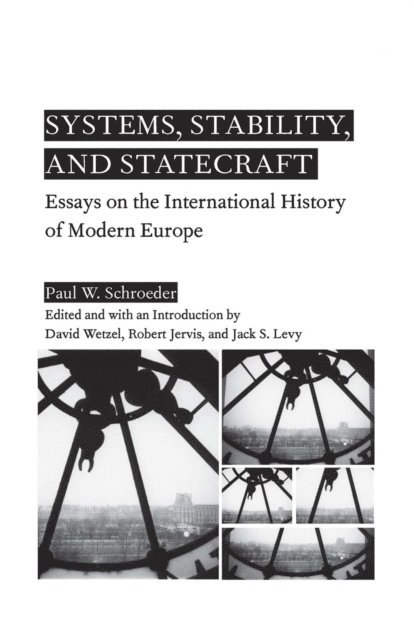
Few scholars have provided as much insight into the struggle of leaders, ideas, and policies as Paul W. Schroeder. Constantly challenging conventional views, and drawing upon a masterly command of the sources and literature, Schroeder provides new answers to old questions about international history and politics since the age of Napoleon. Were European international relations really driven by balance of power politics, or has that traditional view blinded us to an underlying normative consensus on the ''rules of the game'' that frequently contributed to cooperation among the leading states in the system? Are alliances primarily a means of the aggregation of power against stronger states, or do states often use alliances as instruments of influence or control over their allies? Was World War I contingent upon a confluence of independent processes that intersected in 1914, or was it the product of more deeply-rooted and interconnected structural forces that pushed inevitably toward war? What is the role of moral judgment in historical investigation? Raising new questions and offering provocative new interpretations, Schroeder encourages historians and political scientists alike to reconsider their long-standing beliefs about the evolution and dynamics of modern diplomacy.
Inbunden, Engelska, 2003
1 681 kr
Skickas inom 10-15 vardagar
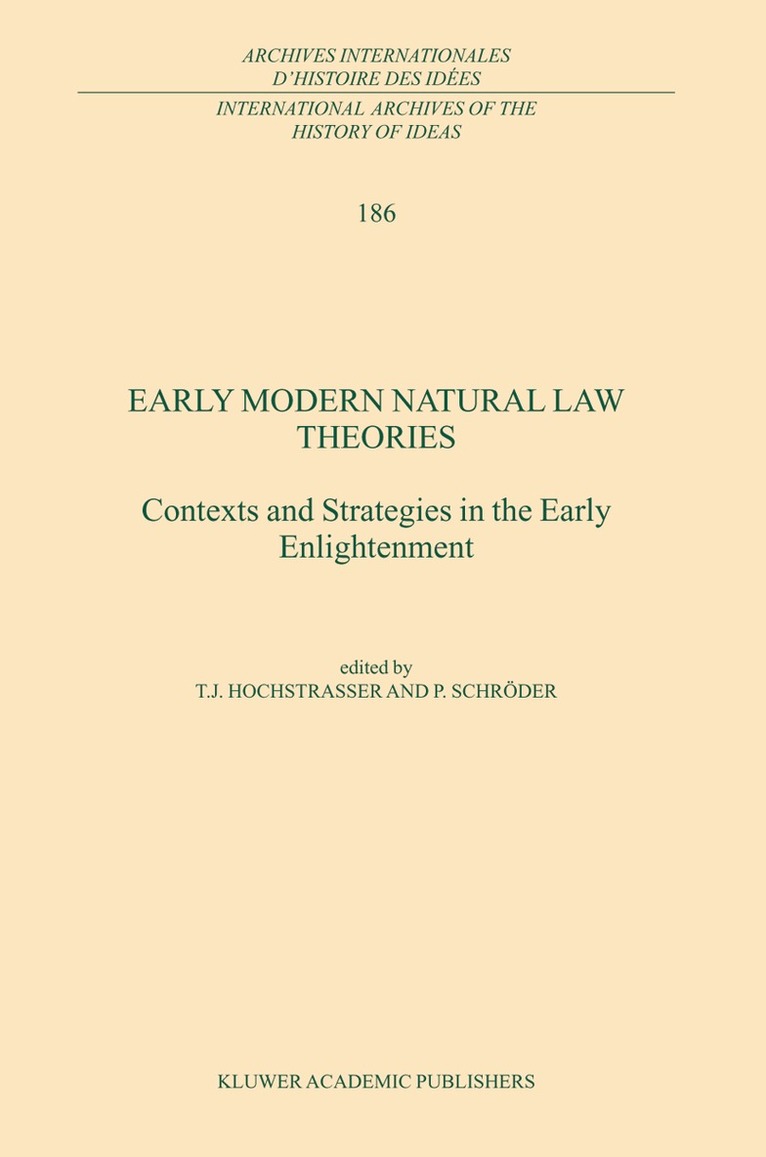
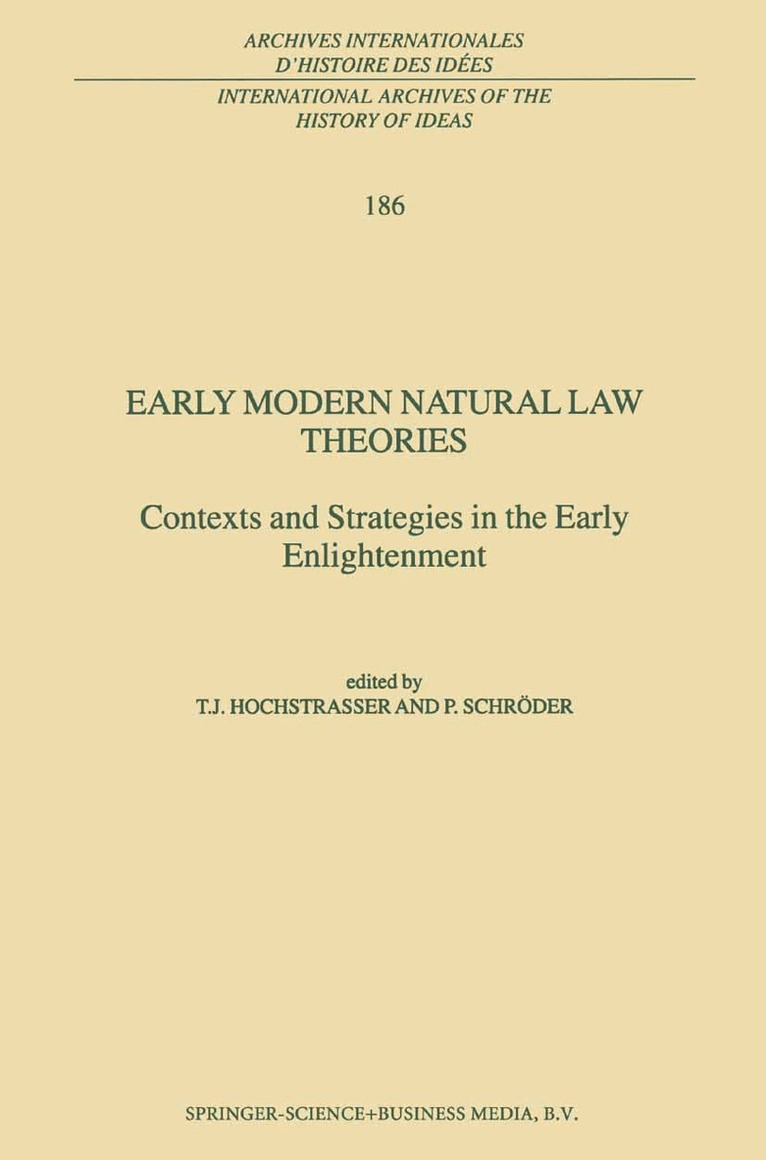
The study of natural law theories in the early Enlightenment continues to be one of the most fruitful areas of research in early modern intellectual history. In recent years there have been substantial reassessments of Grotius, Pufendorf, Thomasius 1 and the whole university-based tradition associated with the Frühaujklärung. The appeal of the discourse of natural jurisprudence to groups and individuals operating outside conventional educational and political structures - such as the Huguenot diaspora - has also been highlighted? Moreover the contextual understanding of the work of unambiguously major philosophers such as Hobbes and Kant - and its reception - has been greatly enhanced by studies that have sought to view them as 3 participants in rather than bystanders alongside the discourse of natural law. Thus thinkers previously not considered central to this discourse have been incorporated into it afresh. However, there is no danger of natural jurisprudence going unchallenged as the meta-discourse of political theory in this period, for recently new studies of the role of libertine and jansenist thought in shaping the priorities of the early Republic of Letters have challenged its position among the intellectual 4 achievements of the social and political theory of the early Enlightenment. This volume therefore offers a timely opportunity to reassess both the coherence of the concept of 'early Enlightenment' and the specific contribution of natural law theories to it.
Inbunden, Engelska, 2004
911 kr
Skickas inom 5-8 vardagar
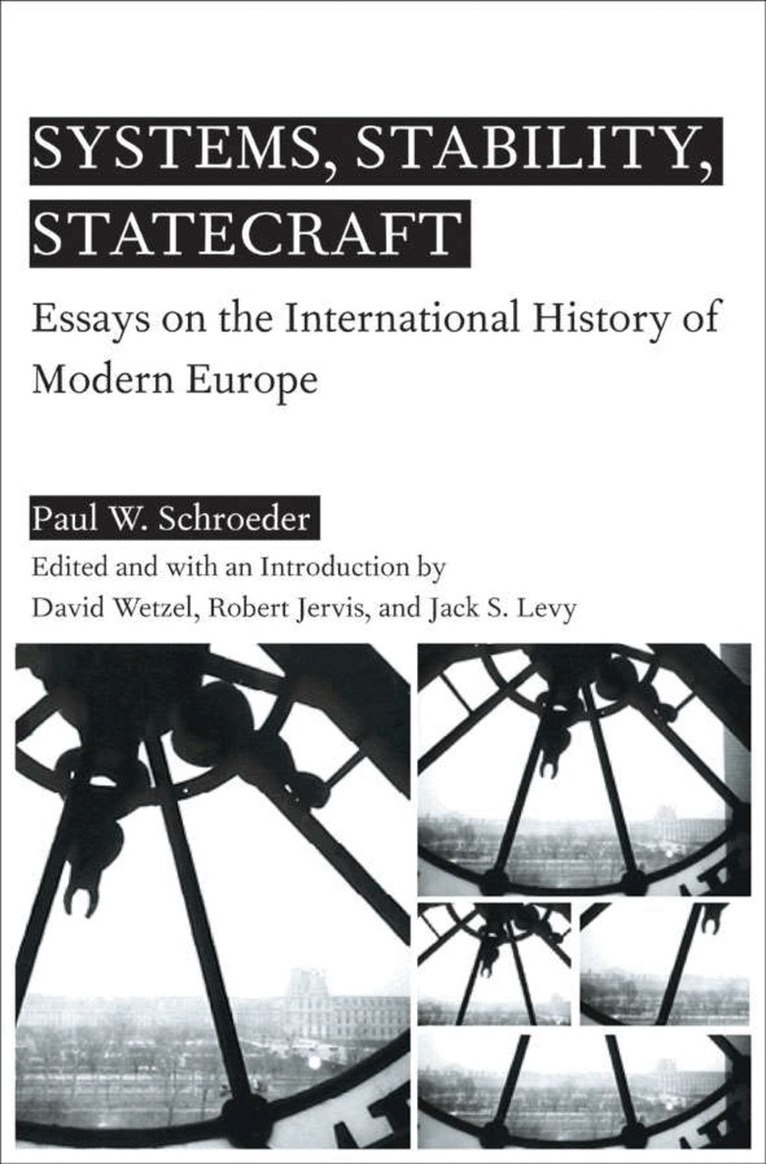
Few scholars have provided as much insight into the struggle of leaders, ideas, and policies as Paul W. Schroeder. Constantly challenging conventional views, and drawing upon a masterly command of the sources and literature, Schroeder provides new answers to old questions about international history and politics since the age of Napoleon. Were European international relations really driven by balance of power politics, or has that traditional view blinded us to an underlying normative consensus on the 'rules of the game' that frequently contributed to cooperation among the leading states in the system? Are alliances primarily a means of the aggregation of power against stronger states, or do states often use alliances as instruments of influence or control over their allies? Was World War I contingent upon a confluence of independent processes that intersected in 1914, or was it the product of more deeply-rooted and interconnected structural forces that pushed inevitably toward war? What is the role of moral judgment in historical investigation? Raising new questions and offering provocative new interpretations, Schroeder encourages historians and political scientists alike to reconsider their long-standing beliefs about the evolution and dynamics of modern diplomacy.
Häftad, Engelska, 2004
631 kr
Skickas inom 5-8 vardagar
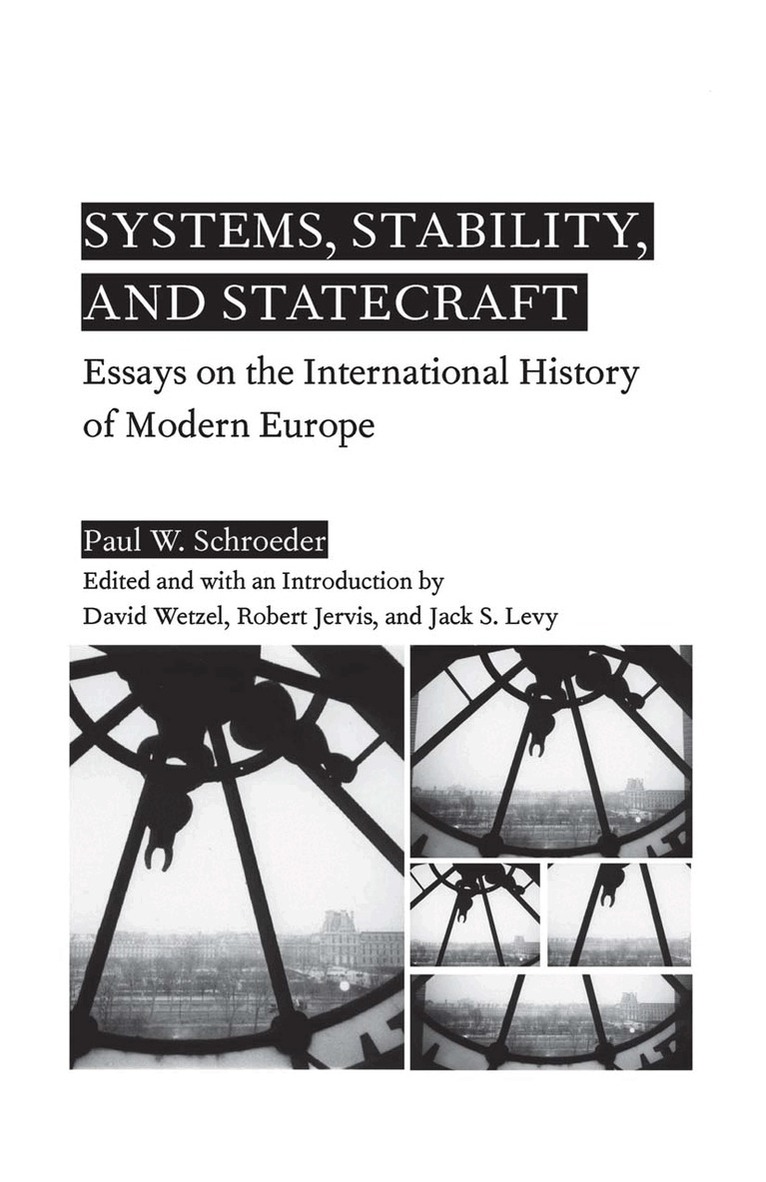
Few scholars have provided as much insight into the struggle of leaders, ideas, and policies as Paul W. Schroeder. Constantly challenging conventional views, and drawing upon a masterly command of the sources and literature, Schroeder provides new answers to old questions about international history and politics since the age of Napoleon. Were European international relations really driven by balance of power politics, or has that traditional view blinded us to an underlying normative consensus on the 'rules of the game' that frequently contributed to cooperation among the leading states in the system? Are alliances primarily a means of the aggregation of power against stronger states, or do states often use alliances as instruments of influence or control over their allies? Was World War I contingent upon a confluence of independent processes that intersected in 1914, or was it the product of more deeply-rooted and interconnected structural forces that pushed inevitably toward war? What is the role of moral judgment in historical investigation? Raising new questions and offering provocative new interpretations, Schroeder encourages historians and political scientists alike to reconsider their long-standing beliefs about the evolution and dynamics of modern diplomacy.
Häftad, Engelska, 2010
1 635 kr
Skickas inom 10-15 vardagar
The study of natural law theories in the early Enlightenment continues to be one of the most fruitful areas of research in early modern intellectual history. In recent years there have been substantial reassessments of Grotius, Pufendorf, Thomasius 1 and the whole university-based tradition associated with the Frühaujklärung. The appeal of the discourse of natural jurisprudence to groups and individuals operating outside conventional educational and political structures - such as the Huguenot diaspora - has also been highlighted? Moreover the contextual understanding of the work of unambiguously major philosophers such as Hobbes and Kant - and its reception - has been greatly enhanced by studies that have sought to view them as 3 participants in rather than bystanders alongside the discourse of natural law. Thus thinkers previously not considered central to this discourse have been incorporated into it afresh. However, there is no danger of natural jurisprudence going unchallenged as the meta-discourse of political theory in this period, for recently new studies of the role of libertine and jansenist thought in shaping the priorities of the early Republic of Letters have challenged its position among the intellectual 4 achievements of the social and political theory of the early Enlightenment. This volume therefore offers a timely opportunity to reassess both the coherence of the concept of 'early Enlightenment' and the specific contribution of natural law theories to it.