P.A. Hancock – författare
Visar alla böcker från författaren P.A. Hancock. Handla med fri frakt och snabb leverans.
7 produkter
7 produkter
E-bok
PDF, Engelska, 1987653 kr
Läs direkt efter köp
This book is a collection of contemporary applications of psychological insights into practical human factors issues. The topics are arranged largely according to an information processing/energetic approach to human behavior. Consideration is also given to human-computer interaction and organizational design.
E-bok
PDF, Engelska, 20111 213 kr
Läs direkt efter köp
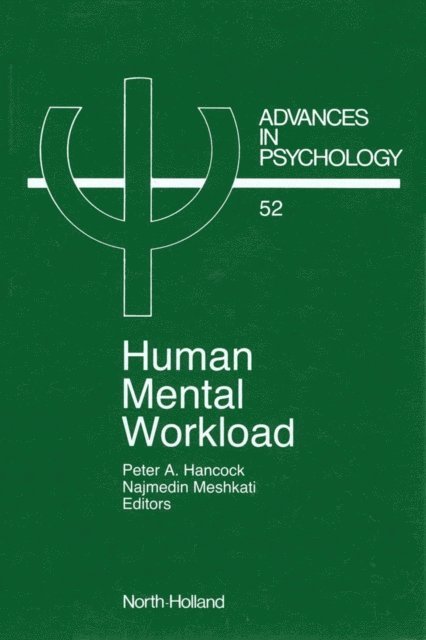
The purpose of this volume is to look at the developments and changes that have occurred in the area of mental workload and its assessment since the NATO symposium was held in 1979. This has been achieved by inviting prominent researchers to survey their respective areas of expertise.Examined are the current methodologies, individual differences, unanswered questions, and future directions for the mental workload issue. Particular topics discussed include the properties of workload assessment techniques, physiological measures, heart rate variability, effort and fatigue in relation to the workload experienced during normal daily routines, subjective assessment techniques, and the cognitive psychology of subjective workload. A preliminary proposal for a cohesive model of mental load is presented. A bibliographic listing of contemporary research reports completes the volume.
Del 47 - Advances in Psychology
Human Factors Psychology
Inbunden, Engelska, 1987
953 kr
Skickas inom 5-8 vardagar
This book is a collection of contemporary applications of psychological insights into practical human factors issues. The topics are arranged largely according to an information processing/energetic approach to human behavior. Consideration is also given to human-computer interaction and organizational design.
Inbunden, Engelska, 2012
2 316 kr
Skickas inom 10-15 vardagar
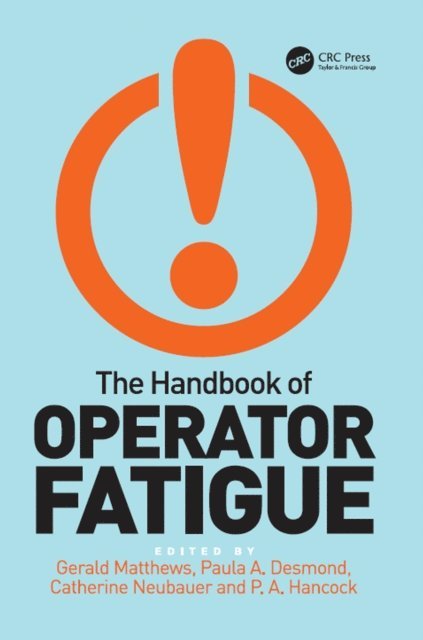
Fatigue is a recognized problem in many facets of the human enterprise. It is not confined to any one area of activity but enters all situations in which humans have to perform for extended intervals of time. Most problematic are the circumstances in which obligatory action is continuous and the results of failure are evidently serious or even catastrophic. Therefore, the modern media especially highlights fatigue-related failures in industries such as transportation, materials processing and healthcare. It can be, and indeed is, no coincidence that most of the spectacular failures in process control that have resulted in the world's largest industrial accidents have occurred in the small hours of the morning when the circadian rhythm is lowest and operator fatigue itself peaks. While there have been legislative efforts made at state, federal and international levels to regulate working hours of employees, the appropriate implementation of such legislation is still a long way off. The Handbook of Operator Fatigue provides a comprehensive account of the subject to serve as the definitive reference work for researchers, students and practitioners alike. The volume features 30 chapters written by experts from around the world to address each important facet of fatigue, including: the scale of the fatigue problem (Section I), the nature of fatigue (Section II), how to assess fatigue (Section III), the impact of fatigue on health (Section IV), fatigue in the workplace (Section V), the neurological basis of fatigue (VI), sleep disorders (VII), and the design of countermeasures to fatigue (VIII).
Häftad, Engelska, 2018
890 kr
Skickas inom 10-15 vardagar
Fatigue is a recognized problem in many facets of the human enterprise. It is not confined to any one area of activity but enters all situations in which humans have to perform for extended intervals of time. Most problematic are the circumstances in which obligatory action is continuous and the results of failure are evidently serious or even catastrophic. Therefore, the modern media especially highlights fatigue-related failures in industries such as transportation, materials processing and healthcare. It can be, and indeed is, no coincidence that most of the spectacular failures in process control that have resulted in the world's largest industrial accidents have occurred in the small hours of the morning when the circadian rhythm is lowest and operator fatigue itself peaks. While there have been legislative efforts made at state, federal and international levels to regulate working hours of employees, the appropriate implementation of such legislation is still a long way off. The Handbook of Operator Fatigue provides a comprehensive account of the subject to serve as the definitive reference work for researchers, students and practitioners alike. The volume features 30 chapters written by experts from around the world to address each important facet of fatigue, including: the scale of the fatigue problem (Section I), the nature of fatigue (Section II), how to assess fatigue (Section III), the impact of fatigue on health (Section IV), fatigue in the workplace (Section V), the neurological basis of fatigue (VI), sleep disorders (VII), and the design of countermeasures to fatigue (VIII).
E-bok
Engelska, 20171 022 kr
Läs direkt efter köp
Fatigue is a recognized problem in many facets of the human enterprise. It is not confined to any one area of activity but enters all situations in which humans have to perform for extended intervals of time. Most problematic are the circumstances in which obligatory action is continuous and the results of failure are evidently serious or even catastrophic. Therefore, the modern media especially highlights fatigue-related failures in industries such as transportation, materials processing and healthcare. It can be, and indeed is, no coincidence that most of the spectacular failures in process control that have resulted in the world''s largest industrial accidents have occurred in the small hours of the morning when the circadian rhythm is lowest and operator fatigue itself peaks. While there have been legislative efforts made at state, federal and international levels to regulate working hours of employees, the appropriate implementation of such legislation is still a long way off. The Handbook of Operator Fatigue provides a comprehensive account of the subject to serve as the definitive reference work for researchers, students and practitioners alike. The volume features 30 chapters written by experts from around the world to address each important facet of fatigue, including: the scale of the fatigue problem (Section I), the nature of fatigue (Section II), how to assess fatigue (Section III), the impact of fatigue on health (Section IV), fatigue in the workplace (Section V), the neurological basis of fatigue (VI), sleep disorders (VII), and the design of countermeasures to fatigue (VIII).
E-bok
PDF, Engelska, 20171 022 kr
Läs direkt efter köp
Fatigue is a recognized problem in many facets of the human enterprise. It is not confined to any one area of activity but enters all situations in which humans have to perform for extended intervals of time. Most problematic are the circumstances in which obligatory action is continuous and the results of failure are evidently serious or even catastrophic. Therefore, the modern media especially highlights fatigue-related failures in industries such as transportation, materials processing and healthcare. It can be, and indeed is, no coincidence that most of the spectacular failures in process control that have resulted in the world''s largest industrial accidents have occurred in the small hours of the morning when the circadian rhythm is lowest and operator fatigue itself peaks. While there have been legislative efforts made at state, federal and international levels to regulate working hours of employees, the appropriate implementation of such legislation is still a long way off. The Handbook of Operator Fatigue provides a comprehensive account of the subject to serve as the definitive reference work for researchers, students and practitioners alike. The volume features 30 chapters written by experts from around the world to address each important facet of fatigue, including: the scale of the fatigue problem (Section I), the nature of fatigue (Section II), how to assess fatigue (Section III), the impact of fatigue on health (Section IV), fatigue in the workplace (Section V), the neurological basis of fatigue (VI), sleep disorders (VII), and the design of countermeasures to fatigue (VIII).