Pablo A. Goloboff - Böcker
Visar alla böcker från författaren Pablo A. Goloboff. Handla med fri frakt och snabb leverans.
6 produkter
6 produkter
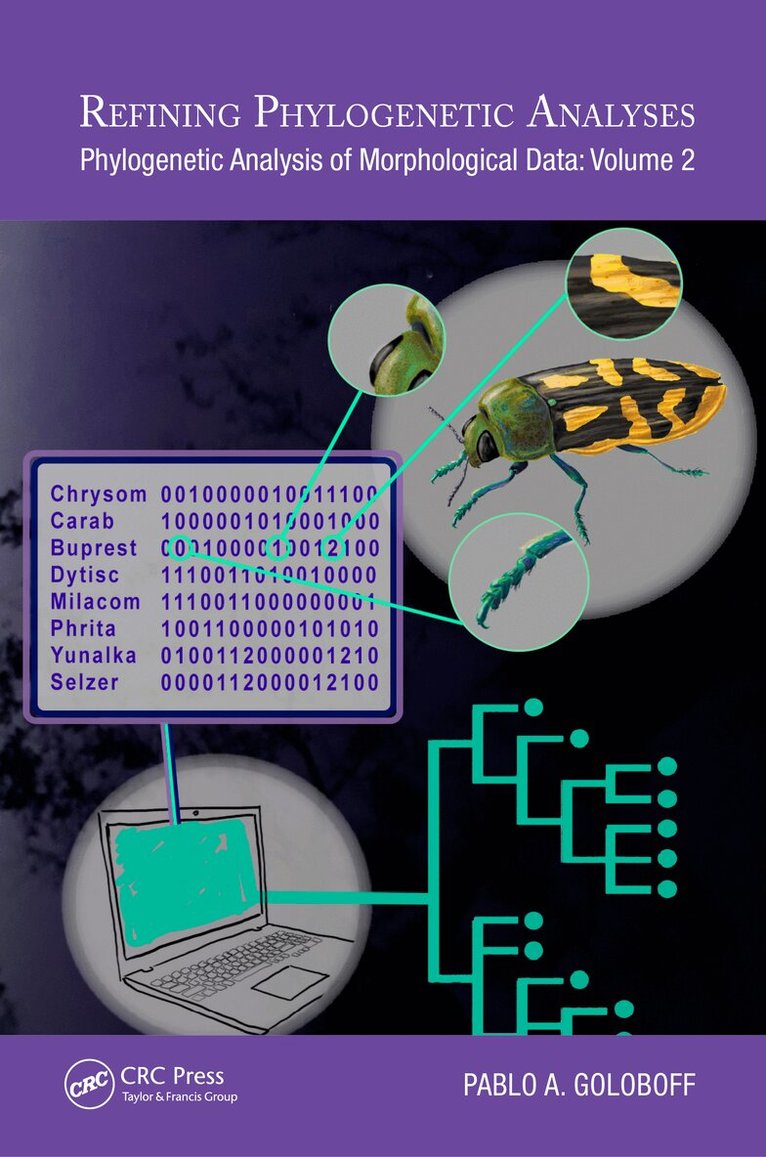
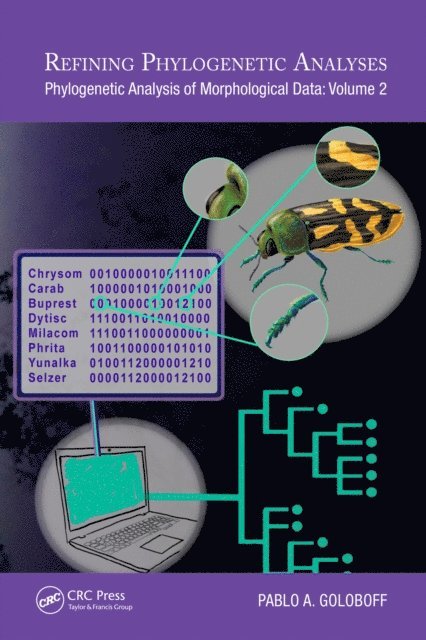
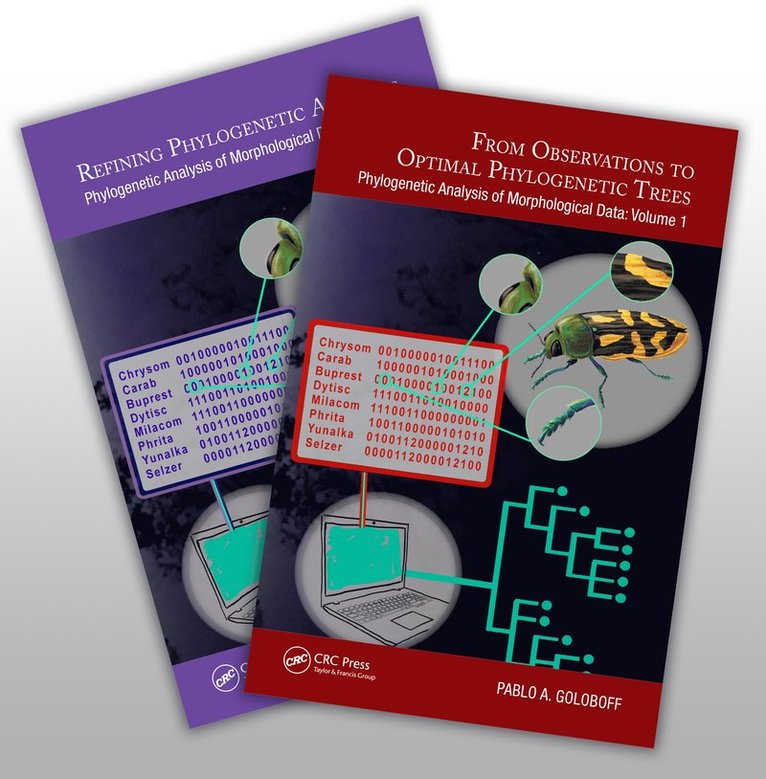
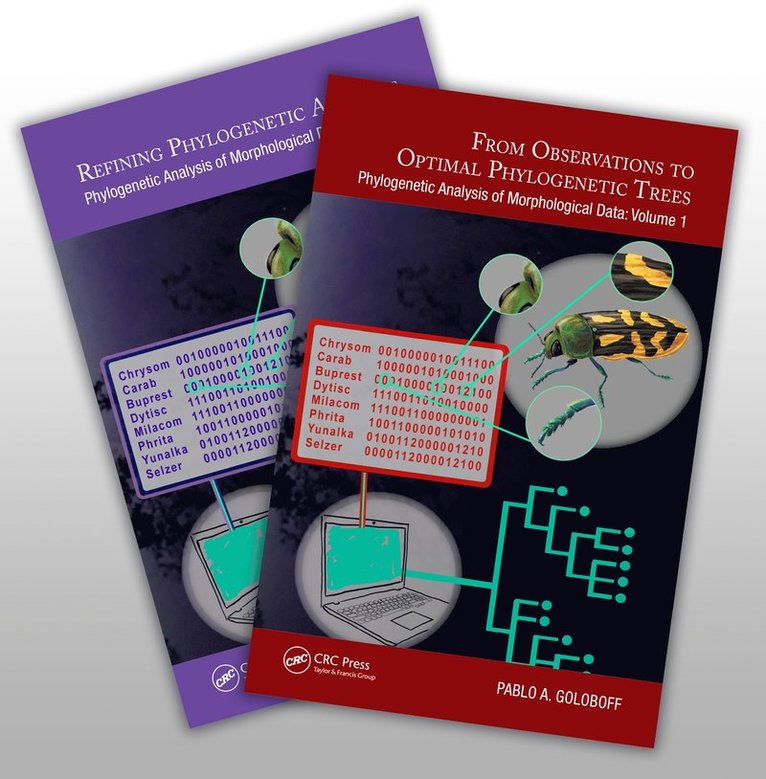
Refining Phylogenetic Analyses
Phylogenetic Analysis of Morphological Data: Volume 2
Inbunden, Engelska, 2022
1 618 kr
Skickas inom 10-15 vardagar
This volume discusses the aspects of a phylogenetic analysis that go beyond basic calculation of most parsimonious trees. Practical application of all principles discussed is illustrated by reference to TNT, a freely available software package that can perform all the steps needed in a phylogenetic analysis. The first problem considered is how to summarize and compare multiple trees (including identification and handling wildcard taxa). Evaluation of the strength of support for groups, another critical component of any phylogenetic analysis, is given careful consideration. The different interpretations of measures of support are discussed and connected with alternative implementations. The book reviews rationales for estimating character reliability on the basis of homoplasy, with particular attention to morphological characters. The main methods for character weighting and their practical implementation, several of them unique to TNT, are discussed ad libitum. Also unique to TNT is the ability to directly analyze morphometric data (including landmarks), on the same footing as discrete characters. Finally, the scripting language of TNT is introduced. With scripting, it is possible to "program" TNT to create personalized routines and automate complex calculations, taking analyses to the next level and allowing exploration of new methods and ideas.Key FeaturesDiscusses the treatment of ambiguity in phylogenetic analyses in depth, for summarizing results or comparing treesReviews literature on arguments and methods for weighting morphological characters and their practical applicationDescribes theory and application of methods for evaluating strength of group support, based on either resampling or comparisons with suboptimal treesDiscusses the use of morphometric characters in phylogenetic analysisPresents extensive information on commands and options of the TNT computer program, including the use and creation of scripts
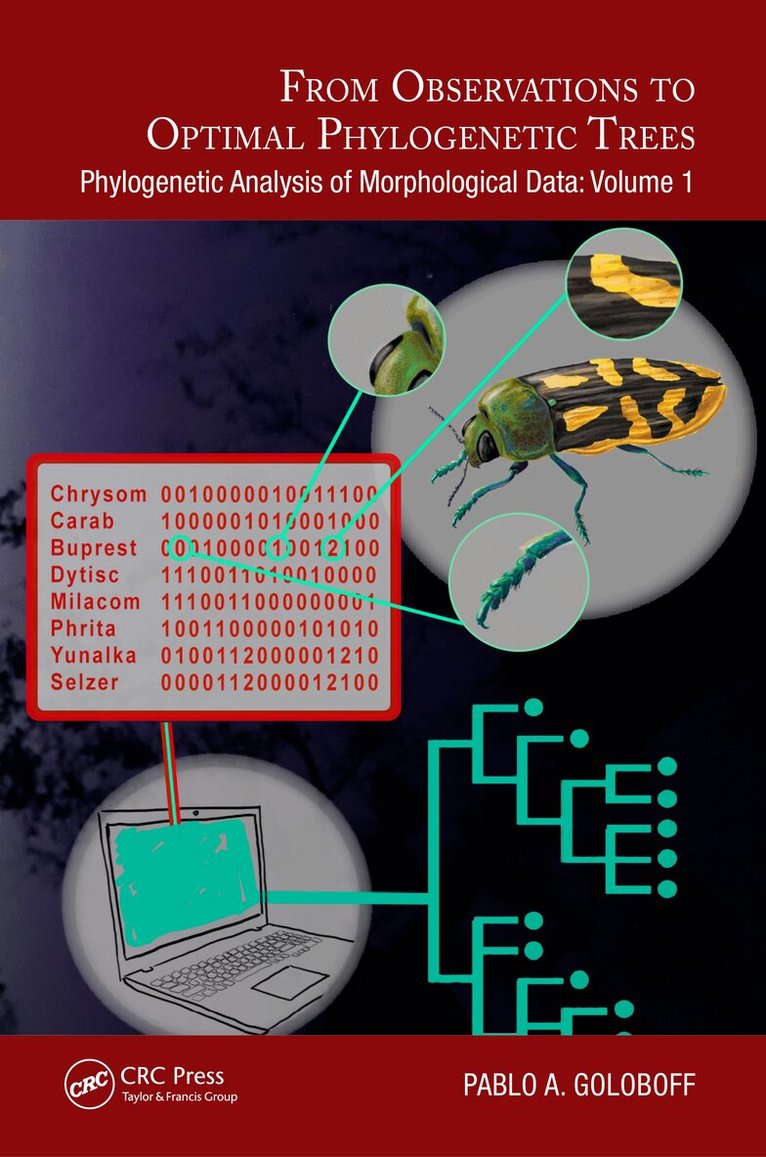
From Observations to Optimal Phylogenetic Trees
Phylogenetic Analysis of Morphological Data: Volume 1
Inbunden, Engelska, 2022
1 618 kr
Skickas inom 10-15 vardagar
Taxonomists specializing in different groups once based phylogenetic analysis only on morphological data; molecular data was used more rarely. Although molecular systematics is routine today, the use of morphological data continues to be important, especially for phylogenetic placement of many taxa known only from fossils and rare or difficult to collect species. In addition, morphological analyses help identify potential biases in molecular analyses. And finally, scenarios with respect to morphology continue to motivate biologists: the beauty of a cheetah or a baobab does not lie in their DNA sequence, but instead on what they are and do! This book is an up-to-date revision of methods and principles of phylogenetic analysis of morphological data. It is also a general guide for using the computer program TNT in the analysis of such data. The book covers the main aspects of phylogenetic analysis and general methods to compare classifications derived from molecules and morphology. The basic aspects of molecular analysis are covered only as needed to highlight the differences with methods and assumptions for analysis of morphological datasets.
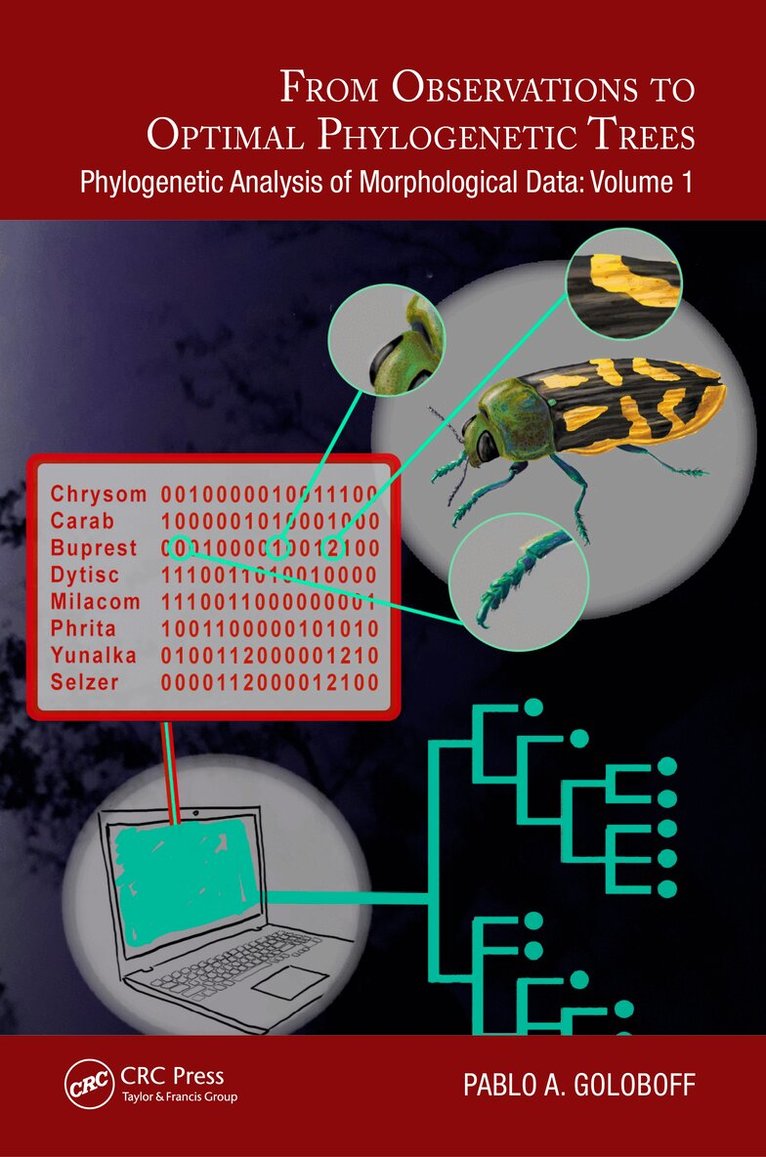
From Observations to Optimal Phylogenetic Trees
Phylogenetic Analysis of Morphological Data: Volume 1
Häftad, Engelska, 2024
671 kr
Skickas inom 10-15 vardagar
Taxonomists specializing in different groups once based phylogenetic analysis only on morphological data; molecular data was used more rarely. Although molecular systematics is routine today, the use of morphological data continues to be important, especially for phylogenetic placement of many taxa known only from fossils and rare or difficult to collect species. In addition, morphological analyses help identify potential biases in molecular analyses. And finally, scenarios with respect to morphology continue to motivate biologists: the beauty of a cheetah or a baobab does not lie in their DNA sequence, but instead on what they are and do! This book is an up-to-date revision of methods and principles of phylogenetic analysis of morphological data. It is also a general guide for using the computer program TNT in the analysis of such data. The book covers the main aspects of phylogenetic analysis and general methods to compare classifications derived from molecules and morphology. The basic aspects of molecular analysis are covered only as needed to highlight the differences with methods and assumptions for analysis of morphological datasets.
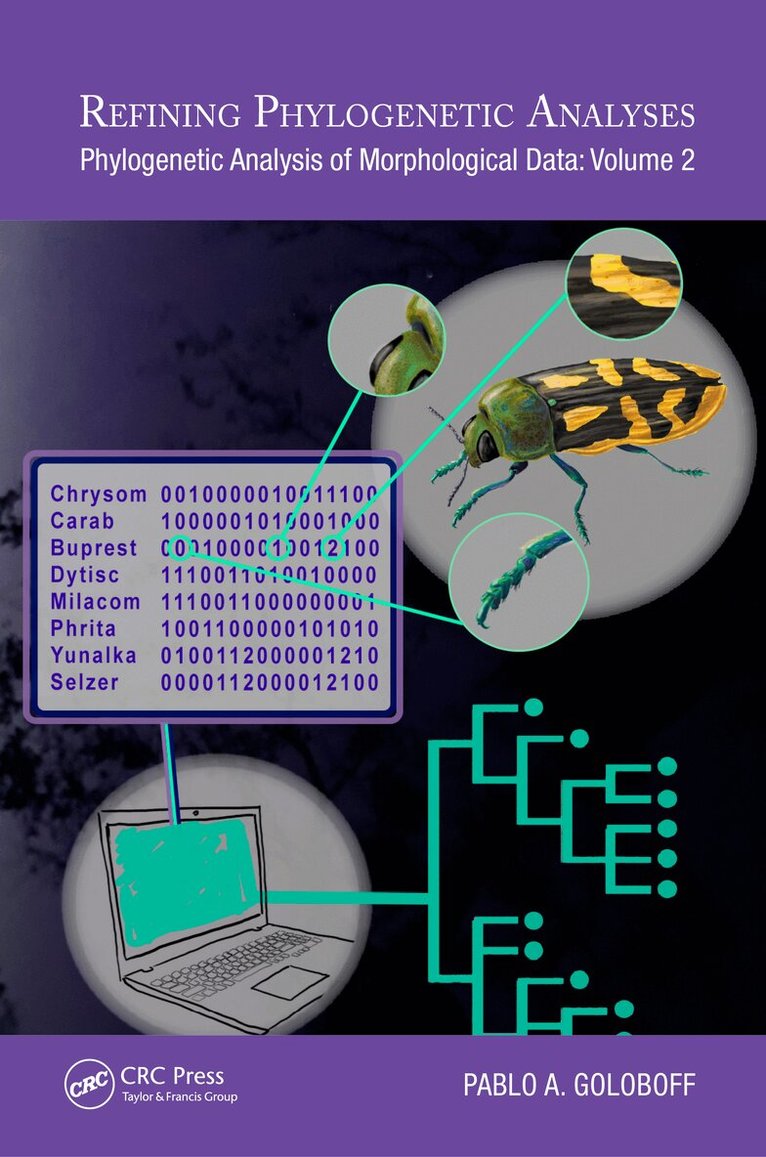
Refining Phylogenetic Analyses
Phylogenetic Analysis of Morphological Data: Volume 2
Häftad, Engelska, 2024
671 kr
Skickas inom 10-15 vardagar
This volume discusses the aspects of a phylogenetic analysis that go beyond basic calculation of most parsimonious trees. Practical application of all principles discussed is illustrated by reference to TNT, a freely available software package that can perform all the steps needed in a phylogenetic analysis. The first problem considered is how to summarize and compare multiple trees (including identification and handling wildcard taxa). Evaluation of the strength of support for groups, another critical component of any phylogenetic analysis, is given careful consideration. The different interpretations of measures of support are discussed and connected with alternative implementations. The book reviews rationales for estimating character reliability on the basis of homoplasy, with particular attention to morphological characters. The main methods for character weighting and their practical implementation, several of them unique to TNT, are discussed ad libitum. Also unique to TNT is the ability to directly analyze morphometric data (including landmarks), on the same footing as discrete characters. Finally, the scripting language of TNT is introduced. With scripting, it is possible to "program" TNT to create personalized routines and automate complex calculations, taking analyses to the next level and allowing exploration of new methods and ideas.Key FeaturesDiscusses the treatment of ambiguity in phylogenetic analyses in depth, for summarizing results or comparing treesReviews literature on arguments and methods for weighting morphological characters and their practical applicationDescribes theory and application of methods for evaluating strength of group support, based on either resampling or comparisons with suboptimal treesDiscusses the use of morphometric characters in phylogenetic analysisPresents extensive information on commands and options of the TNT computer program, including the use and creation of scripts
3 771 kr
Skickas inom 10-15 vardagar
This two-volume book is an up-to-date revision of methods and principles of phylogenetic analysis of morphological data. It is also a general guide for using the computer program TNT in the analysis of such data. The book covers the main aspects of phylogenetic analysis, and general methods to compare classifications derived from molecules and morphology. Practical application of all principles discussed is illustrated by reference to TNT, a freely available software package that can perform all the steps needed in a phylogenetic analysis. Key Features Provides in depth discussion of the connections between hypotheses of homology and the parsimony criterion Helps understand the basis for designing different aspects of a morphological study, from hints on delimiting the problem and data collecting, to character definitions and analysis Discusses the applicability of statistical models coopted from sequence analysis to the analysis of morphological data Gives detailed descriptions of the principles behind algorithms for evaluating and searching phylogenetic trees Presents extensive information on commands and options of the TNT computer program
1 590 kr
Skickas inom 10-15 vardagar
This two-volume book is an up-to-date revision of methods and principles of phylogenetic analysis of morphological data. It is also a general guide for using the computer program TNT in the analysis of such data. The book covers the main aspects of phylogenetic analysis, and general methods to compare classifications derived from molecules and morphology. Practical application of all principles discussed is illustrated by reference to TNT, a freely available software package that can perform all the steps needed in a phylogenetic analysis. Key Features Provides in depth discussion of the connections between hypotheses of homology and the parsimony criterion Helps understand the basis for designing different aspects of a morphological study, from hints on delimiting the problem and data collecting, to character definitions and analysis Discusses the applicability of statistical models coopted from sequence analysis to the analysis of morphological data Gives detailed descriptions of the principles behind algorithms for evaluating and searching phylogenetic trees Presents extensive information on commands and options of the TNT computer program