Pablo Avanzas – författare
Visar alla böcker från författaren Pablo Avanzas. Handla med fri frakt och snabb leverans.
4 produkter
4 produkter
Häftad, Engelska, 2013
506 kr
Skickas inom 10-15 vardagar
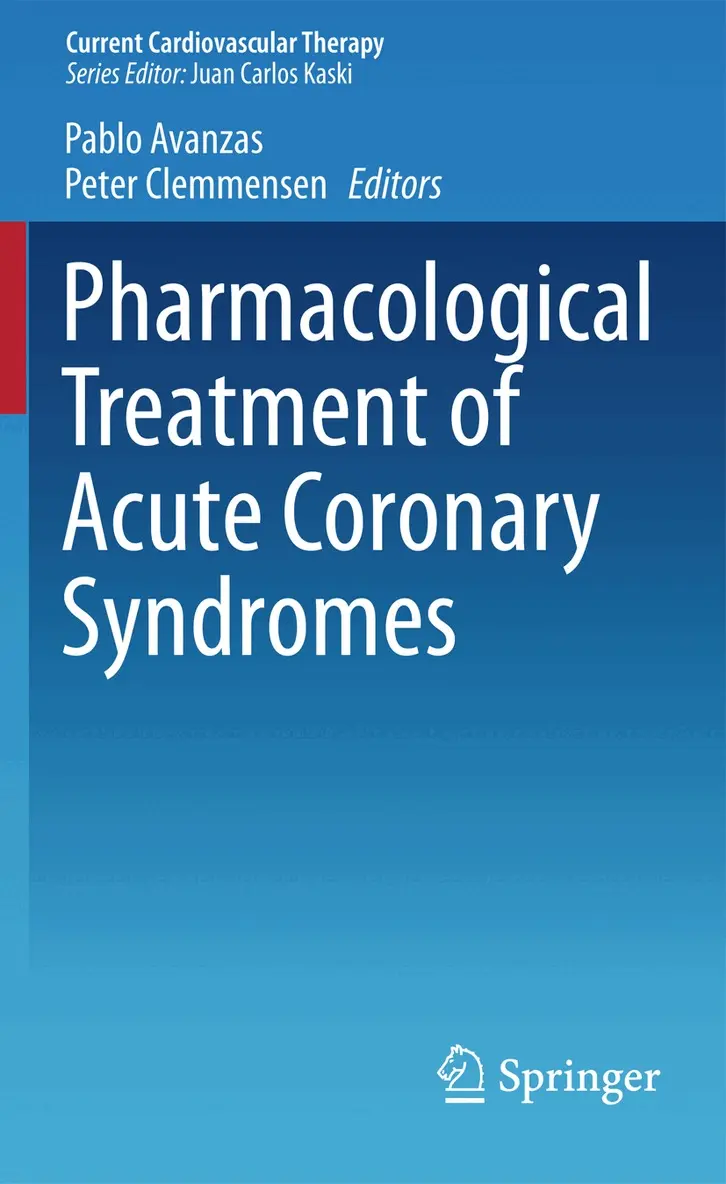
Cardiovascular pharmacotherapy is a fast-moving and complex discipline within cardiology in general. New studies, trials and indications are appearing on a regular basis. This series, and this particular title within the series, is designed to establish the baseline level of knowledge that a cardiovascular professional needs to know on a day-to-day basis. The information within is designed to allow readers to learn quickly and with certainty the mode of action, the possible adverse effects, and the management of patients prescribed these drugs. The emphasis is on current practice, but with an eye to the near-future direction of treatment. This book is intended to update clinicians on recent data on the medical management of patients with Acute Coronary Syndromes. Alongside each book in the series, this title has been established to allow rapid publication of new editions to cover developments in the field.
E-bok
PDF, Engelska, 2013652 kr
Läs direkt efter köp
Cardiovascular pharmacotherapy is a fast-moving and complex discipline within cardiology in general. New studies, trials and indications are appearing on a regular basis. This series, and this particular title within the series, is designed to establish the baseline level of knowledge that a cardiovascular professional needs to know on a day-to-day basis. The information within is designed to allow readers to learn quickly and with certainty the mode of action, the possible adverse effects, and the management of patients prescribed these drugs. The emphasis is on current practice, but with an eye to the near-future direction of treatment. This book is intended to update clinicians on recent data on the medical management of patients with Acute Coronary Syndromes. Alongside each book in the series, this title has been established to allow rapid publication of new editions to cover developments in the field.
Häftad, Engelska, 2015
562 kr
Skickas inom 10-15 vardagar
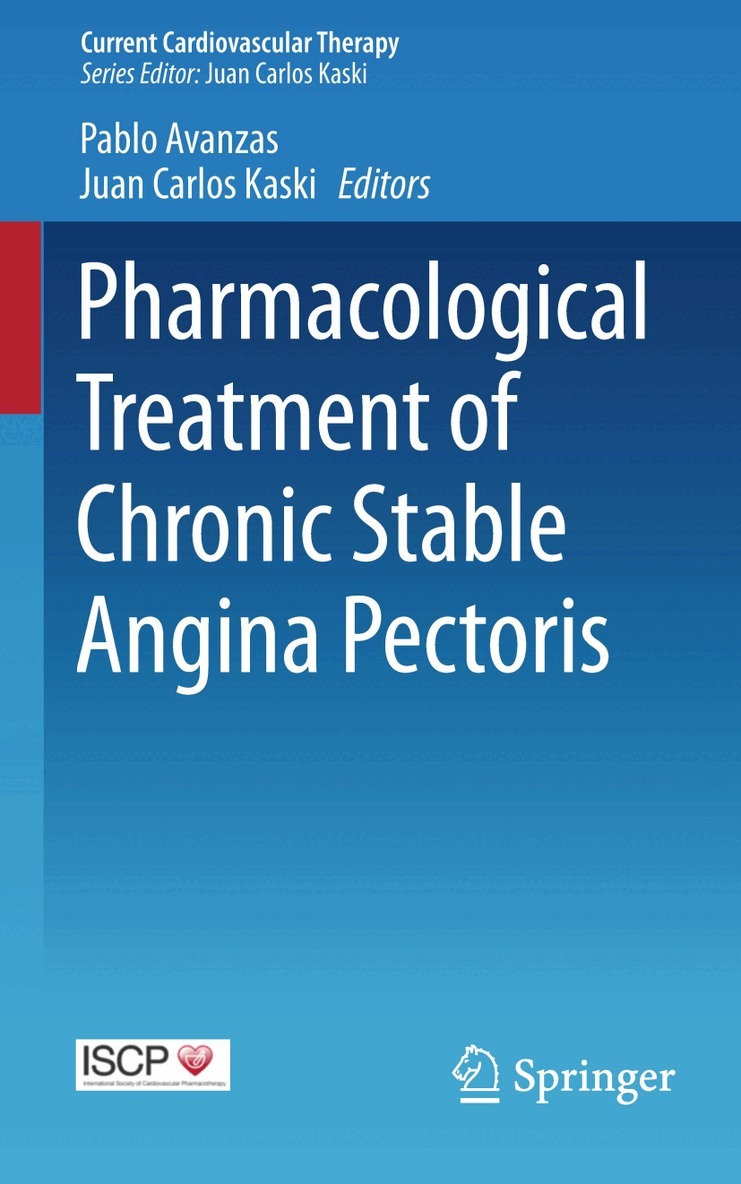
This book is intended for general cardiologists and other physicians involved in the care of patients with chronic stable angina (CSA). The goal of this book is to update clinicians on recent data on the medical management of patients with CSA. Ischemic heart disease remains a major public health problem. Chronic stable angina is the initial manifestation of ischemic heart disease in approximately one half of patients. Stable coronary artery disease is generally characterized by episodes of reversible myocardial demand/supply mismatch, related to ischaemia or hypoxia, which are usually inducible by exercise, emotion or other stress and reproducible—but, which may also be occurring spontaneously. Such episodes of ischaemia/hypoxia are commonly associated with transient chest discomfort (angina pectoris). The aim of the management of CSA is to reduce symptoms and improve prognosis. The management of these patients encompasses lifestyle modification, control of coronary artery disease risk factors, evidence-based pharmacological therapy and patient education. All patients with stable angina should be offered optimal medical treatment, defined as one or two anti-anginal drugs as necessary, plus drugs for secondary prevention of cardiovascular disease. Regarding the role of revascularization, randomised trials provide compelling evidence that myocardial revascularisation by coronary artery bypass grafting or by percutaneous coronary intervention improves symptoms of angina relative to continued medical treatment.
E-bok
PDF, Engelska, 2015734 kr
Läs direkt efter köp
This book is intended for general cardiologists and other physicians involved in the care of patients with chronic stable angina (CSA). The goal of this book is to update clinicians on recent data on the medical management of patients with CSA. Ischemic heart disease remains a major public health problem. Chronic stable angina is the initial manifestation of ischemic heart disease in approximately one half of patients. Stable coronary artery disease is generally characterized by episodes of reversible myocardial demand/supply mismatch, related to ischaemia or hypoxia, which are usually inducible by exercise, emotion or other stress and reproducible—but, which may also be occurring spontaneously. Such episodes of ischaemia/hypoxia are commonly associated with transient chest discomfort (angina pectoris). The aim of the management of CSA is to reduce symptoms and improve prognosis. The management of these patients encompasses lifestyle modification, control of coronary artery disease risk factors, evidence-based pharmacological therapy and patient education. All patients with stable angina should be offered optimal medical treatment, defined as one or two anti-anginal drugs as necessary, plus drugs for secondary prevention of cardiovascular disease. Regarding the role of revascularization, randomised trials provide compelling evidence that myocardial revascularisation by coronary artery bypass grafting or by percutaneous coronary intervention improves symptoms of angina relative to continued medical treatment.