Pablo González de Santos - Böcker
Visar alla böcker från författaren Pablo González de Santos. Handla med fri frakt och snabb leverans.
3 produkter
3 produkter
1 578 kr
Skickas inom 10-15 vardagar
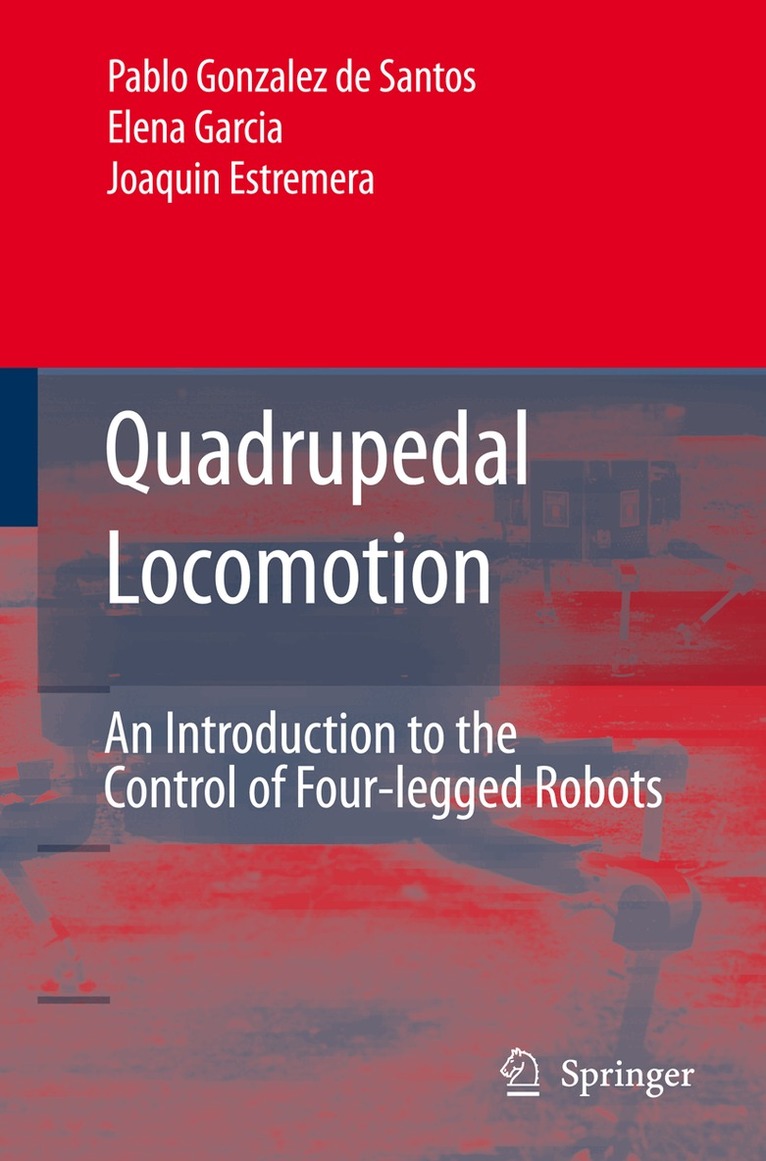
Legged robots have proven to be a promising locomotion system, capable of performing tasks that conventional vehicles cannot perform. Even more exc- ing is the fact that this is a rapidly developing ?eld of study for researchers from a variety of disciplines. Over the past three decades, legged locomotion technology has been developed all over the world, resulting in the invention of many important new machines and methods. However, only a few books have been published on the subject of multi-legged robots. The main objective of this book was to explore some of the major issues that the authors have been analyzing over the past ten years. A second objective was to write a book that only encompasses quadruped locomotion, the ?rst specialized book on this topic. The book is divided into two parts: Walking Measurements and Algorithms, and Control Techniques. The ?rst part is devoted exclusively to the theoretical aspects of quadrupeds. The ?rst chapter is an introduction to the historic development of multi-legged robots, highlighting their advantages and disadvantages, main features, and potential and actual applications, as well as discussing basic concepts and the trade-o? between quadrupeds and hexapods. Finally, new and traditional stability measurements and gait g- eration algorithms for quadrupeds are explained. The second part of the book deals with general design and control algorithms (kinematics and dynamics) and techniques aimed at improving the main features of robots, such as speed and ground detection, interfaces,etc.
1 578 kr
Skickas inom 10-15 vardagar
Legged robots have proven to be a promising locomotion system, capable of performing tasks that conventional vehicles cannot perform. Even more exc- ing is the fact that this is a rapidly developing ?eld of study for researchers from a variety of disciplines. Over the past three decades, legged locomotion technology has been developed all over the world, resulting in the invention of many important new machines and methods. However, only a few books have been published on the subject of multi-legged robots. The main objective of this book was to explore some of the major issues that the authors have been analyzing over the past ten years. A second objective was to write a book that only encompasses quadruped locomotion, the ?rst specialized book on this topic. The book is divided into two parts: Walking Measurements and Algorithms, and Control Techniques. The ?rst part is devoted exclusively to the theoretical aspects of quadrupeds. The ?rst chapter is an introduction to the historic development of multi-legged robots, highlighting their advantages and disadvantages, main features, and potential and actual applications, as well as discussing basic concepts and the trade-o? between quadrupeds and hexapods. Finally, new and traditional stability measurements and gait g- eration algorithms for quadrupeds are explained. The second part of the book deals with general design and control algorithms (kinematics and dynamics) and techniques aimed at improving the main features of robots, such as speed and ground detection, interfaces,etc.
Climbing and Walking Robots
Proceedings of the 7th International Conference CLAWAR 2004
Inbunden, Engelska, 2005
2 615 kr
Skickas inom 10-15 vardagar
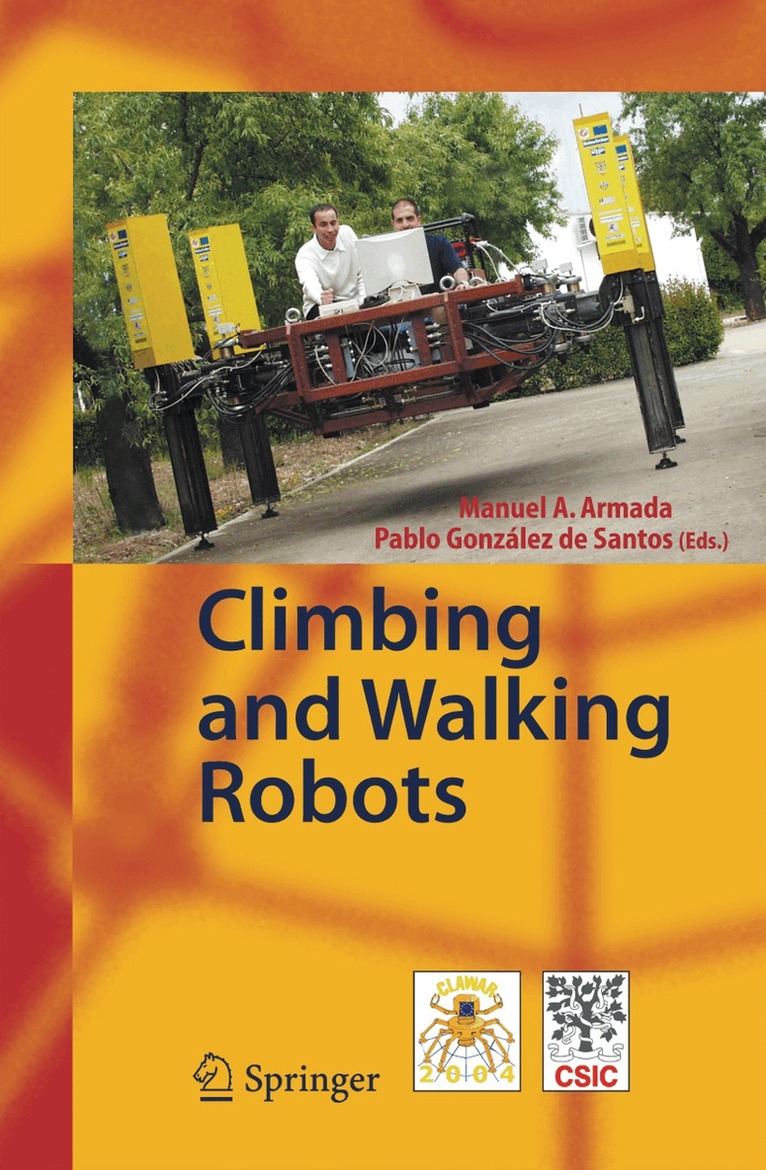
Interest in climbing and walking robots (CLAWAR) has increased remarkably over recent years. Novel solutions for complex and very diverse application fields (exploration/intervention in severe environments, personal services, emergency rescue operations, transportation, entertainment, medical, etc.), have been anticipated by great progress in this area of robotics. This book contains the proceedings of the 7th Climbing and Walking Robots 2004 (CLAWAR 2004) Conference, offering the international scientific community one of the most excellent forums for academics, researchers and industrialists interested in this motivating area of climbing and walking robots. It provides a wide forum of original state-of-the-art contributions from various industrial and new/emerging research fields, presenting a full picture of climbing and walking robots. The conference, held in Madrid, Spain, September 22-24 2004, was organized by the Thematic Network "CLAWAR 2" and funded by the European Commission under the GROWTH Program.