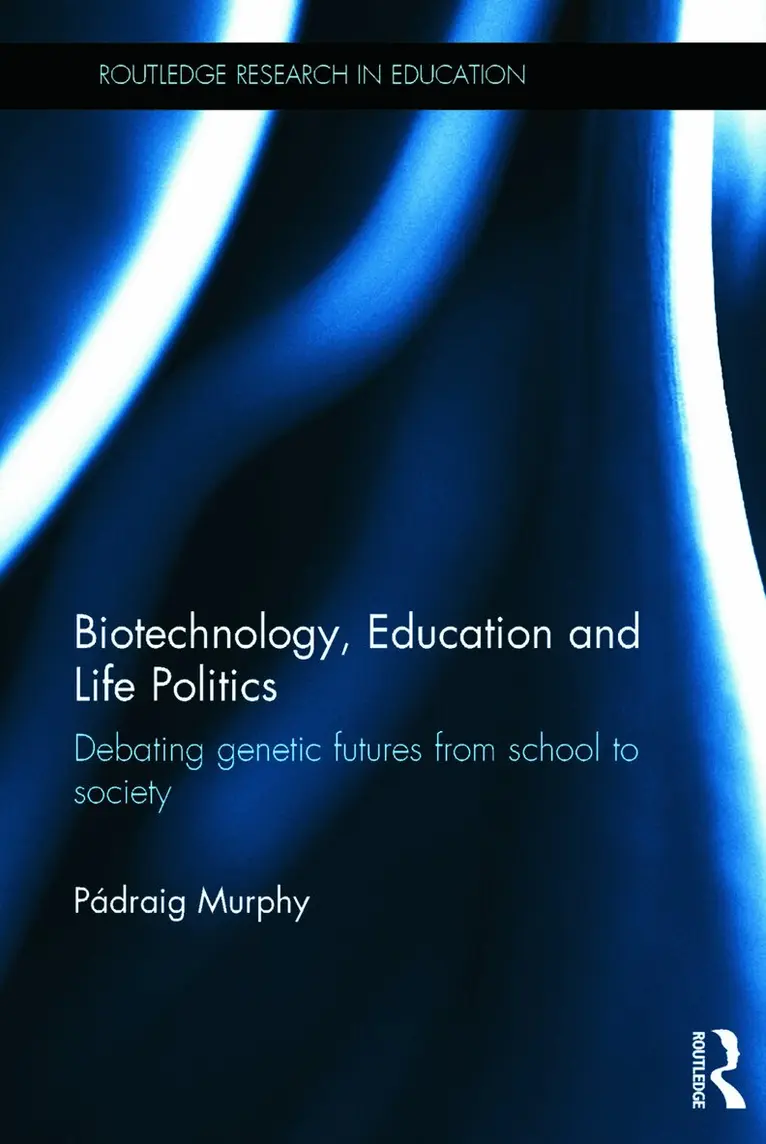
Pádraig Murphy – författare
2 320 kr
Skickas inom 10-15 vardagar
866 kr
Läs direkt efter köp
What should individuals and society do when genetic screening becomes widely available and with its impact on current and future generations still uncertain? How can our education systems around the world respond to these developments?
Reproductive and genetic technologies (RGTs) are increasingly controversial and political. We are entering an era where we can design future humans, firstly, by genetic screening of "undesirable" traits or indeed embryos, but perhaps later by more radical genetic engineering. This has a profound effect on what we see as normal, acceptable and responsible.
This book argues that these urgent and biopolitical issues should be central to how biology is taught as a subject. Debate about life itself has always been at the forefront of connected molecular, genetic and social/personal identity levels, and each of these levels requires processes of communication and debate, what Anthony Giddens called in passing life politics. In this book Pádraig Murphy opens the term up, with examples from field research in schools, student responses to educational films exploring the future of RGTs, and science studies of strategic biotechnology and the lab practices of genetic screening. Life political debate is thoroughly examined and is identified as a way of connecting mainstream education of biology with future generations.
Biotechnology, Education and Life Politics will appeal to post-graduates and academics involved with science education, science communication, communication studies and the sociology of education.
866 kr
Läs direkt efter köp
What should individuals and society do when genetic screening becomes widely available and with its impact on current and future generations still uncertain? How can our education systems around the world respond to these developments?
Reproductive and genetic technologies (RGTs) are increasingly controversial and political. We are entering an era where we can design future humans, firstly, by genetic screening of "undesirable" traits or indeed embryos, but perhaps later by more radical genetic engineering. This has a profound effect on what we see as normal, acceptable and responsible.
This book argues that these urgent and biopolitical issues should be central to how biology is taught as a subject. Debate about life itself has always been at the forefront of connected molecular, genetic and social/personal identity levels, and each of these levels requires processes of communication and debate, what Anthony Giddens called in passing life politics. In this book Pádraig Murphy opens the term up, with examples from field research in schools, student responses to educational films exploring the future of RGTs, and science studies of strategic biotechnology and the lab practices of genetic screening. Life political debate is thoroughly examined and is identified as a way of connecting mainstream education of biology with future generations.
Biotechnology, Education and Life Politics will appeal to post-graduates and academics involved with science education, science communication, communication studies and the sociology of education.
774 kr
Skickas inom 10-15 vardagar
342 kr
Skickas inom 3-6 vardagar
451 kr
Skickas inom 3-6 vardagar
560 kr
Skickas inom 3-6 vardagar
506 kr
Skickas inom 3-6 vardagar
451 kr
Skickas inom 3-6 vardagar
451 kr
Skickas inom 3-6 vardagar
560 kr
Skickas inom 3-6 vardagar
451 kr
Skickas inom 3-6 vardagar
466 kr
Skickas inom 3-6 vardagar
451 kr
Skickas inom 3-6 vardagar
614 kr
Skickas inom 3-6 vardagar
492 kr
Skickas inom 3-6 vardagar
398 kr
Skickas inom 3-6 vardagar
506 kr
Skickas inom 3-6 vardagar