Paolo Cecconi – författare
Visar alla böcker från författaren Paolo Cecconi. Handla med fri frakt och snabb leverans.
6 produkter
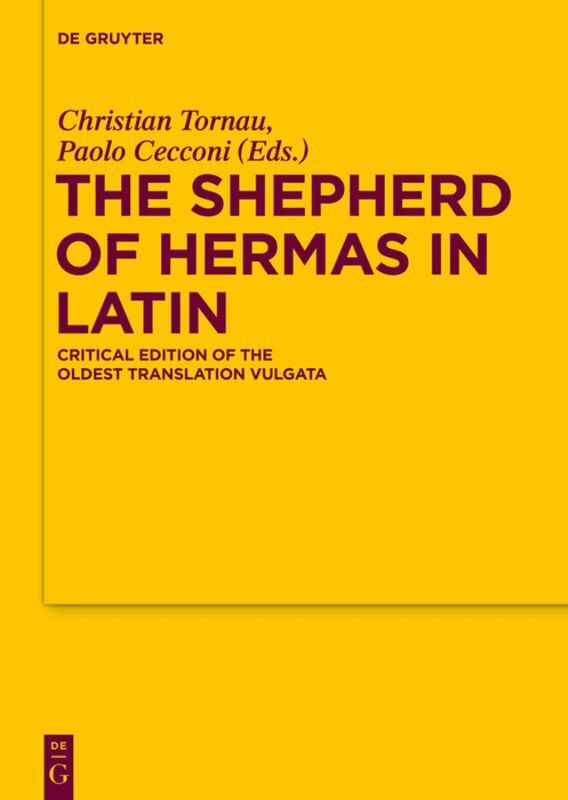
Shepherd of Hermas in Latin
Critical Edition of the Oldest Translation Vulgata
Av Christian Tornau, Paolo Cecconi
Inbunden, 2014
1920 kr
Lägg i varukorg
The Shepherd of Hermas is a Greek visionary text written in Rome during the 2nd century CE with the aim to exhort men to change life and repent for their sins, taking advantage of the last chance given by the Lord before world’s end. The Shepherd is a very important witness of history of the early …
Shepherd of Hermas in Latin
Critical Edition of the Oldest Translation Vulgata
Av Paolo Cecconi, Christian Tornau
E-bok, 2014
1939 kr
Lägg i varukorg
The Shepherd of Hermas is a Greek visionary text written in Rome during the 2nd century CE with the aim to exhort men to change life and repent for their sins, taking advantage of the last chance given by the Lord before world’s end. The Shepherd is a very important witness of history of the early …
Shepherd of Hermas in Latin
Critical Edition of the Oldest Translation Vulgata
Av Paolo Cecconi, Christian Tornau
E-bok, 2014
1982 kr
Lägg i varukorg
The Shepherd of Hermas is a Greek visionary text written in Rome during the 2nd century CE with the aim to exhort men to change life and repent for their sins, taking advantage of the last chance given by the Lord before world’s end. The Shepherd is a very important witness of history of the early …
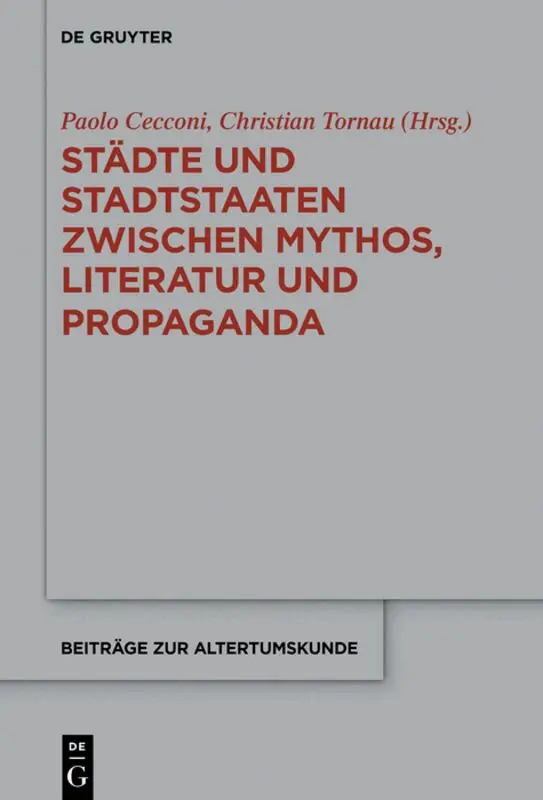
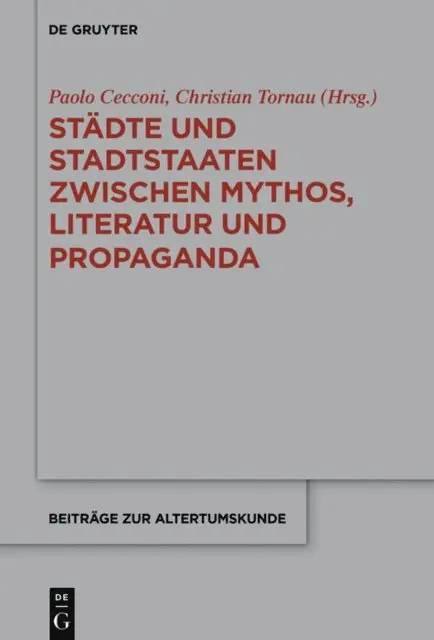
Städte und Stadtstaaten zwischen Mythos, Literatur und Propaganda
Av Paolo Cecconi, Christian Tornau
Inbunden, 2020
1908 kr
Lägg i varukorg
Hauptziel dieser interdisziplinären Analyse der Repräsentationen der Städte in griechischen und lateinischen Texten vom 7. Jh. v.Chr. bis zum 5. Jh. n.Chr. sind die Einflüsse politischer Faktoren auf die Entwicklung ihrer Darstellungsformen von der Klassik bis zur Kaiserzeit und Spätantike.Die …
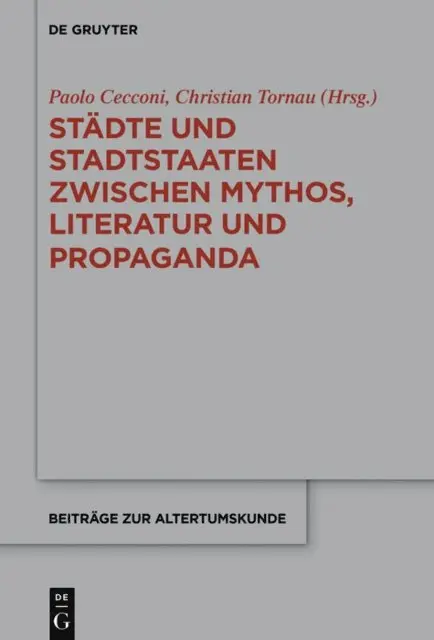
Städte und Stadtstaaten zwischen Mythos, Literatur und Propaganda
Av Christian Tornau, Paolo Cecconi
E-bok, 2020
1814 kr
Lägg i varukorg
Hauptziel dieser interdisziplinären Analyse der Repräsentationen der Städte in griechischen und lateinischen Texten vom 7. Jh. v.Chr. bis zum 5. Jh. n.Chr. sind die Einflüsse politischer Faktoren auf die Entwicklung ihrer Darstellungsformen von der Klassik bis zur Kaiserzeit und Spätantike. Die …
Städte und Stadtstaaten zwischen Mythos, Literatur und Propaganda
Av Christian Tornau, Paolo Cecconi
E-bok, 2020
1814 kr
Lägg i varukorg
Hauptziel dieser interdisziplinären Analyse der Repräsentationen der Städte in griechischen und lateinischen Texten vom 7. Jh. v.Chr. bis zum 5. Jh. n.Chr. sind die Einflüsse politischer Faktoren auf die Entwicklung ihrer Darstellungsformen von der Klassik bis zur Kaiserzeit und Spätantike. Die …