Paolo Gualtieri – författare
Visar alla böcker från författaren Paolo Gualtieri. Handla med fri frakt och snabb leverans.
9 produkter
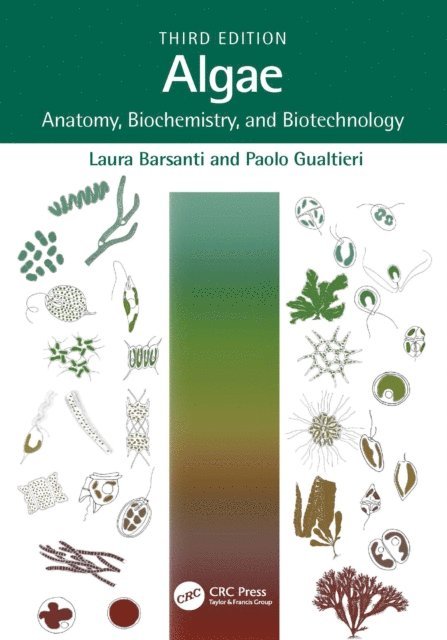
Algae
Anatomy, Biochemistry, and Biotechnology
Av Paolo Gualtieri, Laura Barsanti
E-bok, 2022
2202 kr
Lägg i varukorg
A single-source reference on the biology of algae, the third edition of Algae: Anatomy, Biochemistry, and Biotechnology examines the most important taxa and structures for freshwater, marine, and terrestrial forms of algae. Its comprehensive coverage goes from algae''s historical role through its …
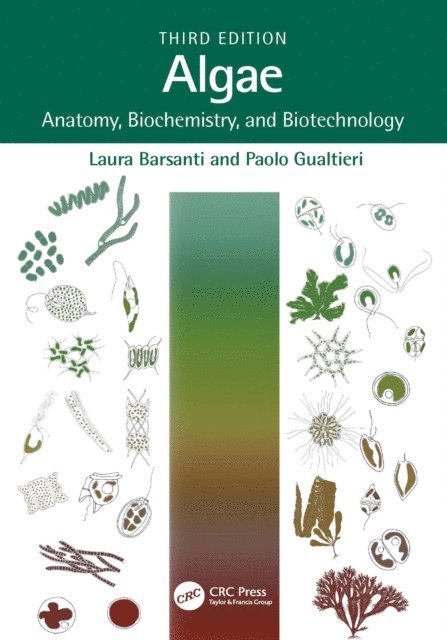
Algae
Anatomy, Biochemistry, and Biotechnology
Av Paolo Gualtieri, Laura Barsanti
E-bok, 2022
2251 kr
Lägg i varukorg
A single-source reference on the biology of algae, the third edition of Algae: Anatomy, Biochemistry, and Biotechnology examines the most important taxa and structures for freshwater, marine, and terrestrial forms of algae. Its comprehensive coverage goes from algae''s historical role through its …
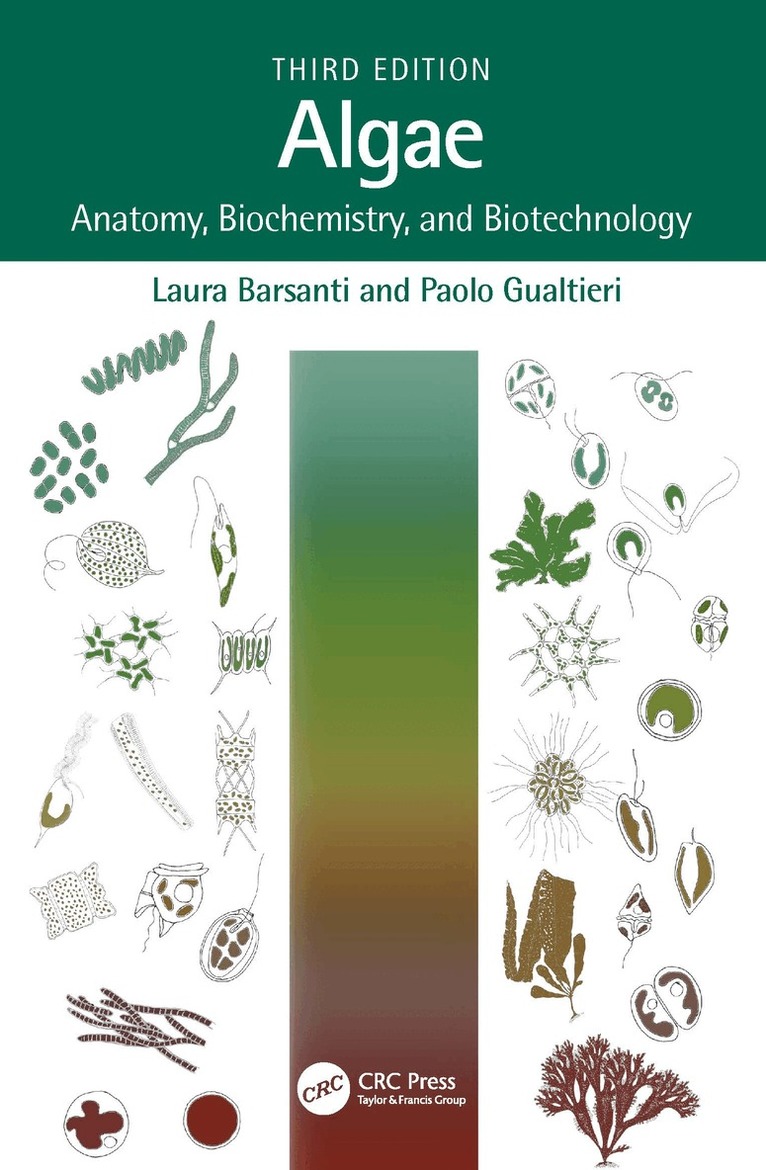
Algae
Anatomy, Biochemistry, and Biotechnology
Av Laura Barsanti, Paolo Gualtieri
Inbunden, 2022
2133 kr
Lägg i varukorg
A single-source reference on the biology of algae, the third edition of Algae: Anatomy, Biochemistry, and Biotechnology examines the most important taxa and structures for freshwater, marine, and terrestrial forms of algae. Its comprehensive coverage goes from algae's historical role through its …
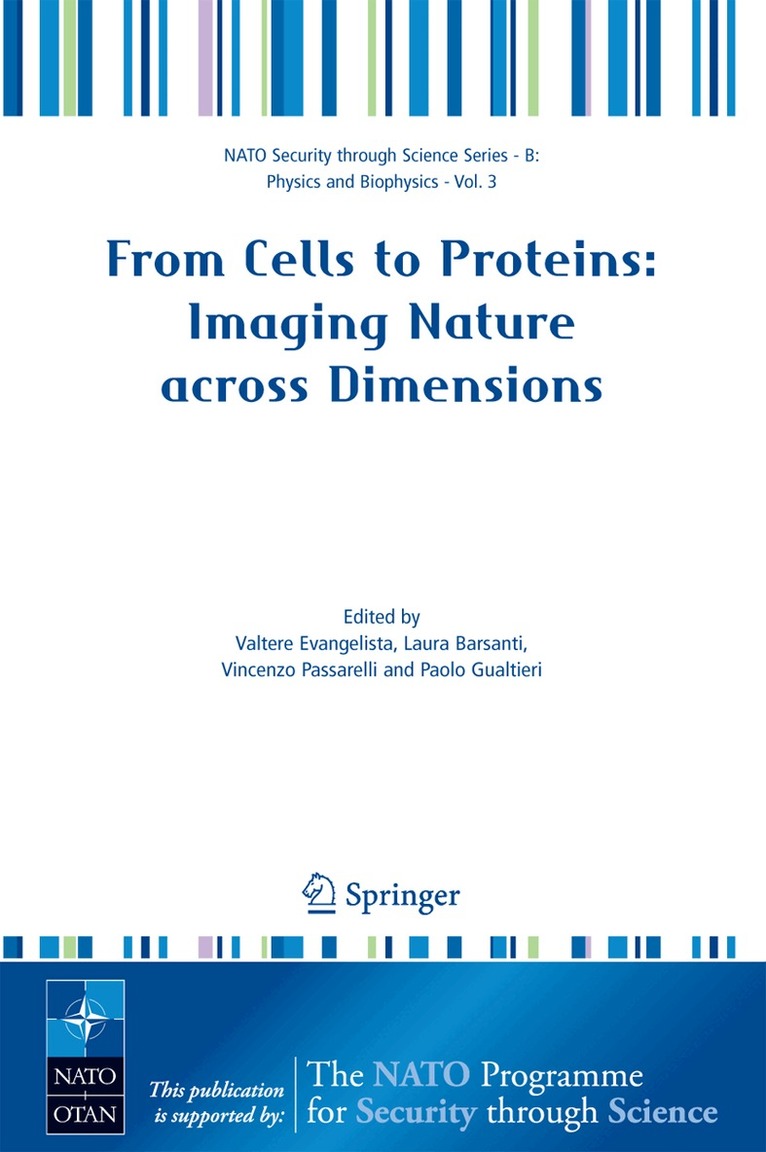
From Cells to Proteins: Imaging Nature across Dimensions
Proceedings of the NATO Advanced Study Institute, held in Pisa, Italy, 12-23 September 2004
Av Valtere Evangelista, Laura Barsanti m. fl.
Inbunden, 2005
3279 kr
Lägg i varukorg
How deep we can see inside Nature's smallest secrets? Will it be possible some day in the near future to investigate living structures at atomic level? This area of study is very interdisciplinary, since it applies the principles and the techniques of biology, physics, chemistry, mathematics, and …
From Cells to Proteins: Imaging Nature across Dimensions
Proceedings of the NATO Advanced Study Institute, held in Pisa, Italy, 12-23 September 2004
Av Valtere Evangelista, Laura Barsanti m. fl.
Häftad, 2005
3279 kr
Lägg i varukorg
How deep we can see inside Nature's smallest secrets? Will it be possible some day in the near future to investigate living structures at atomic level? This area of study is very interdisciplinary, since it applies the principles and the techniques of biology, physics, chemistry, mathematics, and …
From Cells to Proteins: Imaging Nature across Dimensions
Proceedings of the NATO Advanced Study Institute, held in Pisa, Italy, 12-23 September 2004
Av Paolo Gualtieri, Vincenzo Passarelli m. fl.
E-bok, 2007
4066 kr
Lägg i varukorg
How deep we can see inside Nature''s smallest secrets? Will it be possible some day in the near future to investigate living structures at atomic level? This area of study is very interdisciplinary, since it applies the principles and the techniques of biology, physics, chemistry, mathematics, and …
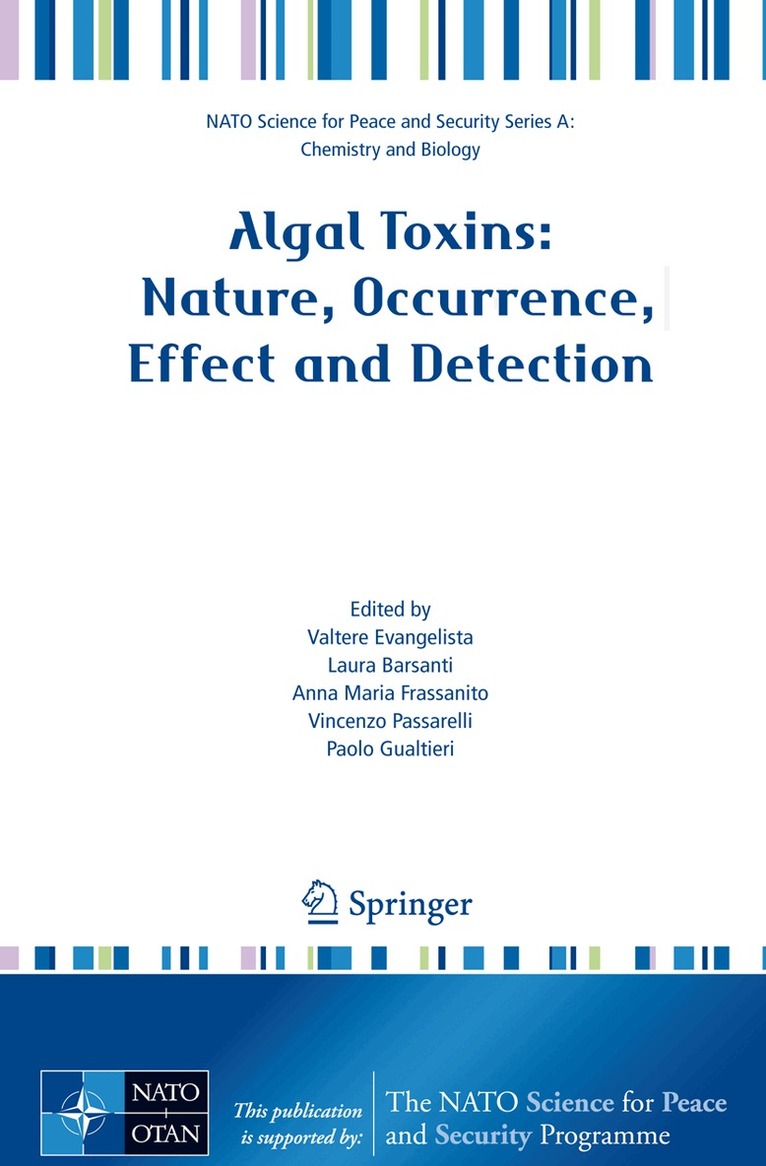
Algal Toxins: Nature, Occurrence, Effect and Detection
Av Valtere Evangelista, Laura Barsanti m. fl.
Inbunden, 2008
2183 kr
Lägg i varukorg
This volume contains the lectures and seminars given at the NATO Advanced Study Institute on “Sensor Systems for Biological Threads: The Algal Toxins Case”, held in Pisa, Italy in October, 2007. The Institute was sponsored and funded by the Scientific Affairs Division of NATO. It is my pleasant …
Algal Toxins: Nature, Occurrence, Effect and Detection
Av Valtere Evangelista, Laura Barsanti m. fl.
Häftad, 2008
2183 kr
Lägg i varukorg
This volume contains the lectures and seminars given at the NATO Advanced Study Institute on “Sensor Systems for Biological Threads: The Algal Toxins Case”, held in Pisa, Italy in October, 2007. The Institute was sponsored and funded by the Scientific Affairs Division of NATO. It is my pleasant …
Algal Toxins: Nature, Occurrence, Effect and Detection
Av Paolo Gualtieri, Vincenzo Passarelli m. fl.
E-bok, 2008
2925 kr
Lägg i varukorg
This volume contains the lectures and seminars given at the NATO Advanced Study Institute on “Sensor Systems for Biological Threads: The Algal Toxins Case”, held in Pisa, Italy in October, 2007. The Institute was sponsored and funded by the Scientific Affairs Division of NATO. It is my pleasant …