Parvaneh Joharinad – författare
Visar alla böcker från författaren Parvaneh Joharinad. Handla med fri frakt och snabb leverans.
6 produkter
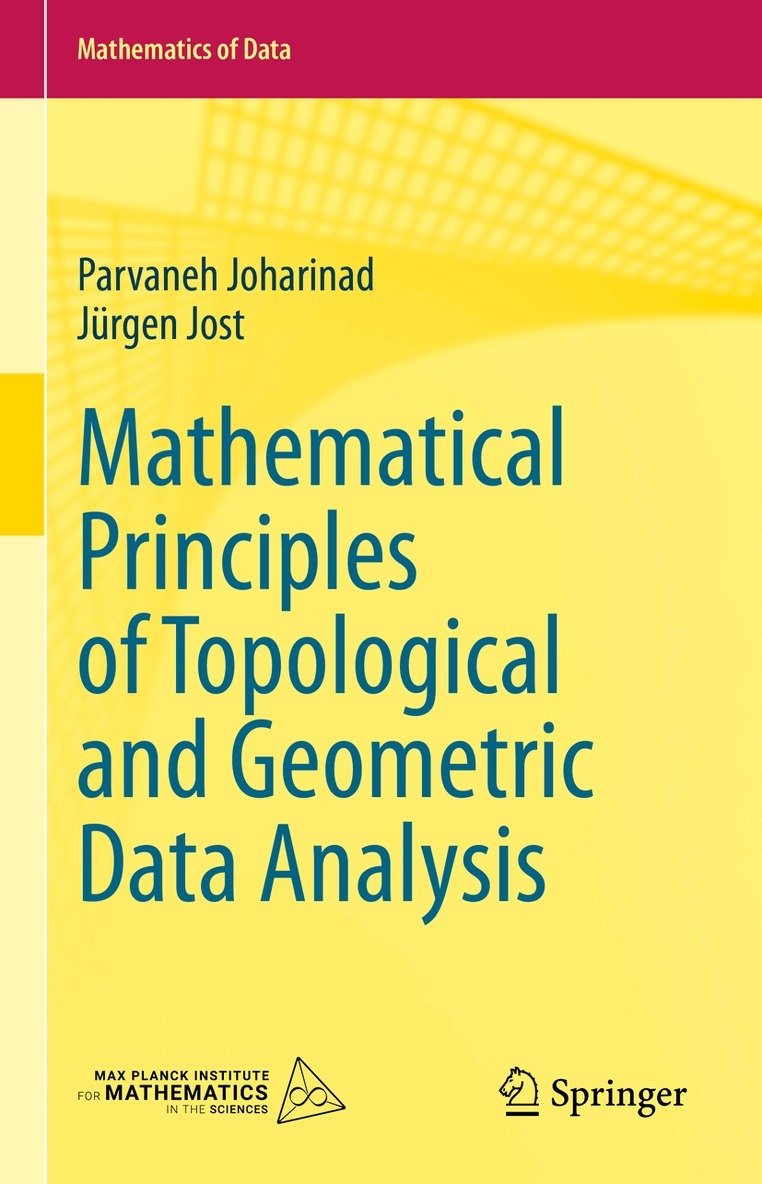
Mathematical Principles of Topological and Geometric Data Analysis
Av Parvaneh Joharinad, Jürgen Jost
Inbunden, 2023
824 kr
Lägg i varukorg
This book explores and demonstrates how geometric tools can be used in data analysis. Beginning with a systematic exposition of the mathematical prerequisites, covering topics ranging from category theory to algebraic topology, Riemannian geometry, operator theory and network analysis, it goes on …
Mathematical Principles of Topological and Geometric Data Analysis
Av Jurgen Jost, Parvaneh Joharinad
E-bok, 2023
815 kr
Lägg i varukorg
This book explores and demonstrates how geometric tools can be used in data analysis. Beginning with a systematic exposition of the mathematical prerequisites, covering topics ranging from category theory to algebraic topology, Riemannian geometry, operator theory and network analysis, it goes on …
Mathematical Principles of Topological and Geometric Data Analysis
Av Parvaneh Joharinad, Jürgen Jost
2023
652 kr
Lägg i varukorg
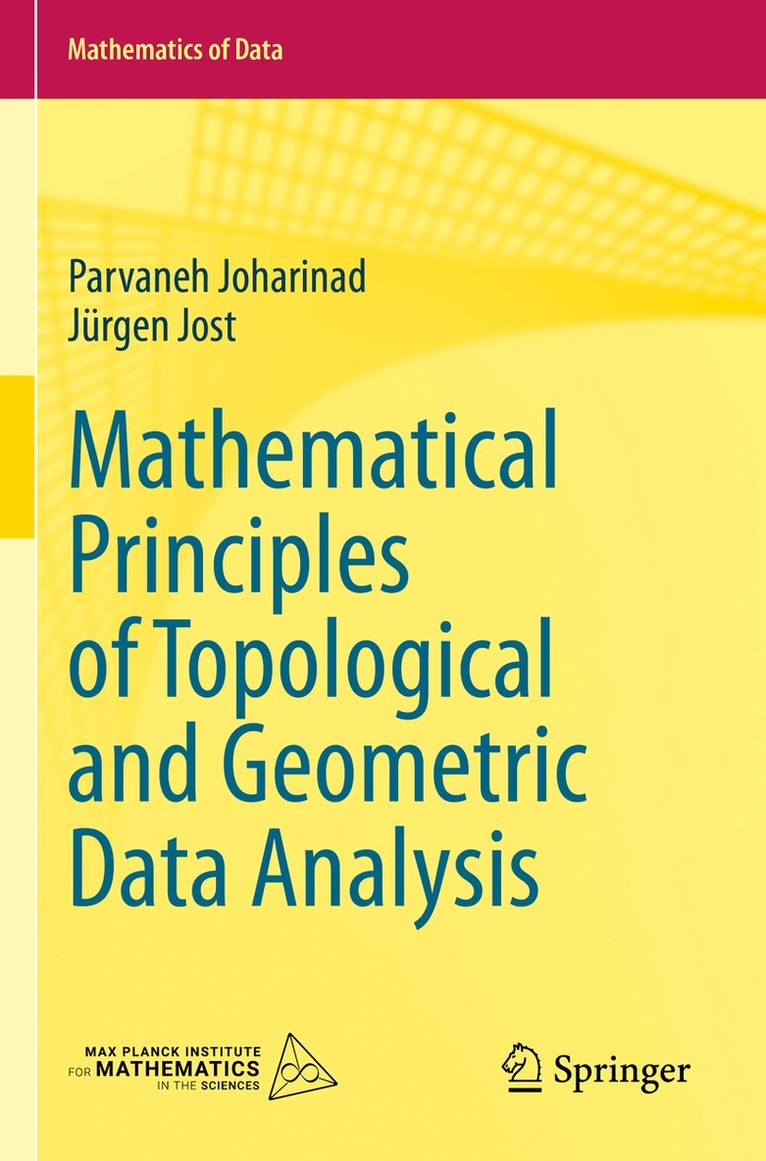
Mathematical Principles of Topological and Geometric Data Analysis
Av Parvaneh Joharinad, Jürgen Jost
Häftad, 2024
606 kr
Lägg i varukorg
This book explores and demonstrates how geometric tools can be used in data analysis. Beginning with a systematic exposition of the mathematical prerequisites, covering topics ranging from category theory to algebraic topology, Riemannian geometry, operator theory and network analysis, it goes on …
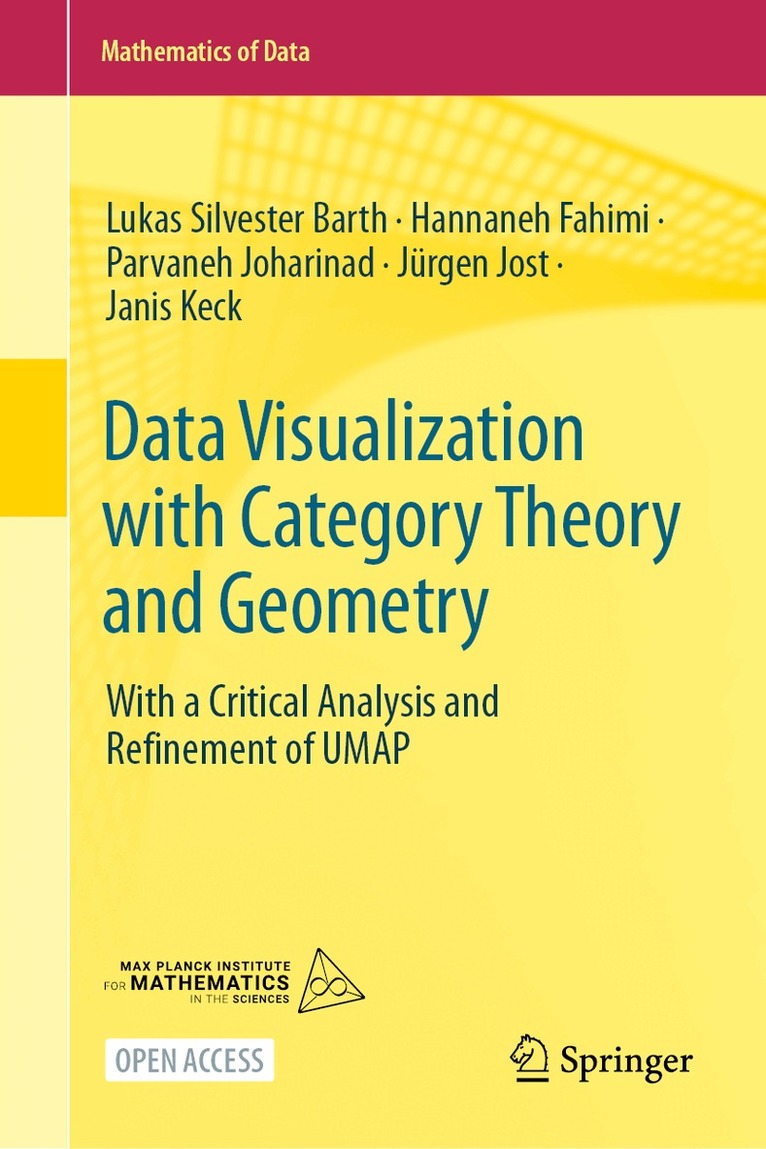
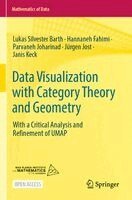
Data Visualization with Category Theory and Geometry
With a Critical Analysis and Refinement of UMAP
Av Lukas Silvester Barth, Hannaneh Fahimi m. fl.
Inbunden, 2025
748 kr
Lägg i varukorg
This open access book provides a robust exposition of the mathematical foundations of data representation, focusing on two essential pillars of dimensionality reduction methods, namely geometry in general and Riemannian geometry in particular, and category theory.Presenting a list of examples …
Data Visualization with Category Theory and Geometry
With a Critical Analysis and Refinement of UMAP
Av Lukas Silvester Barth, Hannaneh Fahimi m. fl.
Häftad, 2026
443 kr
Lägg i varukorg
This open access book provides a robust exposition of the mathematical foundations of data representation, focusing on two essential pillars of dimensionality reduction methods, namely geometry in general and Riemannian geometry in particular, and category theory.Presenting a list of examples …